A fruit-shaped vase can attract attention immediately.
A lemon silhouette, a rounded fruit-inspired body or a sculptural botanical form can give a tabletop display something that an ordinary cylindrical vase cannot.
But there is a commercial challenge.
One attractive product does not automatically make a successful collection.
If a retailer simply adds five similar fruit-shaped vases in slightly different colours, the result may look repetitive. If every product uses a completely different shape, the collection may lose its identity.
For buyers considering fruit vase wholesale, the opportunity is to develop a recognizable design language that can support several products without making them look identical.
The objective is not to sell more versions of the same fruit.
It is to turn one strong visual idea into a commercially meaningful product family.
Start With a Design Motif, Not a Product List
A common approach to tabletop décor development is to begin with a list of products.
A vase, a bowl, a tray, a candle holder and a decorative object.
The problem is that this can produce a collection without a clear identity.
A stronger approach starts with one recognizable design motif.
For a fruit-inspired collection, that motif might be:
- Organic fruit silhouettes.
- Rounded, sculptural proportions.
- Natural colour transitions.
- Textured surfaces inspired by fruit skin.
- A combination of playful form and refined finishing.
These elements can become the visual language of the collection.
However, buyers should avoid applying every design element to every product.
A lemon-shaped vase does not need a lemon-shaped tray beside it. A coordinated collection should share a design language, not repeat the same silhouette.
Three Ways to Interpret a Fruit-Inspired Design
Not every fruit-inspired product needs to look like a realistic piece of fruit.
There are three useful design routes.
Route 1: Recognizable Fruit Shapes
<text> </text>
The product directly references a fruit’s natural shape.
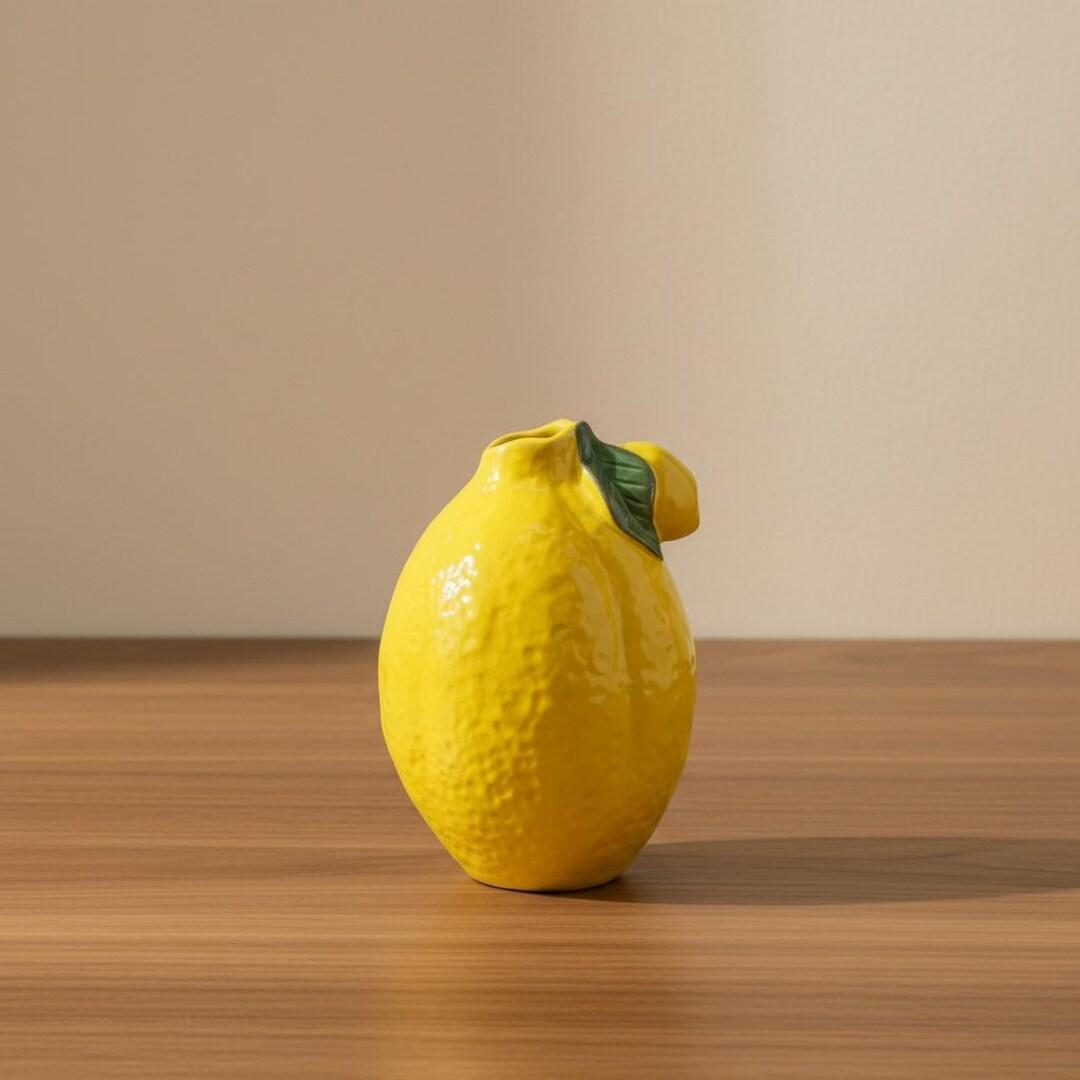
A lemon vase, for example, may use an elongated body, slightly irregular contours and a distinctive tapered end.
Its advantage is immediate recognition.
Its challenge is avoiding an overly novelty-oriented appearance.
The proportions, surface treatment and opening need to feel intentional rather than simply decorative.
Route 2: Abstract Organic Forms
Instead of reproducing a fruit literally, the designer extracts its basic geometry.
A rounded body, a gentle asymmetrical curve or a natural-looking indentation can create a more sophisticated product.
This approach is useful for retailers who want sculptural tabletop décor that remains compatible with contemporary interiors.
Route 3: Fruit-Inspired Surface Language
The fruit reference can appear through colour, texture or decorative details rather than the overall silhouette.
For example:
- A subtle yellow-to-cream glaze transition.
- A textured surface suggesting natural peel.
- A small sculptural stem detail.
- An organic colour palette.
This gives the collection more flexibility.
A buyer can use the same surface language across several different product forms.
Build the Collection Around Three Product Roles
A good collection needs more than visual consistency.
Each SKU should have a clear commercial purpose.
Consider a hypothetical fruit-inspired tabletop collection.
| Product Role | Product Direction | Commercial Purpose |
|---|---|---|
| Hero Product | Large sculptural lemon vase | Attract attention and establish identity |
| Supporting Product | Smaller fruit-inspired vase | Offer a more accessible price point |
| Bridge Product | Coordinated organic tabletop object | Extend the collection beyond vases |
The hero product should have the strongest visual identity.
Supporting products should make the collection easier to merchandise and purchase.
Bridge products should introduce a different function or display role without breaking the design language.
This is more useful than simply producing many variations of one shape.
For a wider understanding of how ceramic products can be developed into coordinated collections, see Ceramic Decor with Meaning: From Craft Story to Commercial Collection.
The Difference Between a Novelty Product and a Retail-Ready Design
Fruit-inspired products have an obvious visual advantage: customers can recognize their theme quickly.
But recognition alone is not enough.
A product must also fit the intended retail environment.
Consider two hypothetical lemon vase designs.
Design A
- Highly realistic fruit shape.
- Bright yellow finish.
- Strong decorative character.
- Limited compatibility with other interior styles.
Design B
- Simplified lemon-inspired silhouette.
- Softer yellow and cream finish.
- More balanced proportions.
- Easier to coordinate with neutral tabletop accessories.
Neither is automatically better.
Design A may suit a playful gift assortment, while Design B may fit a broader home décor collection.
The buyer should first determine the intended customer and retail channel.
A novelty-led product and an interior-oriented decorative object can both succeed, but they should not be evaluated against exactly the same merchandising objectives.
Teruier’s Ceramic Decor Wholesale: Why a Vase Is Not Just a Thing That Holds Flowers discusses the broader commercial role of ceramic décor beyond its basic function.
Five Design Decisions That Should Be Settled Before Sampling
A fruit vase may look simple in an inspiration image, but its physical form creates several development decisions.
1. Silhouette and Proportion
The body, neck, opening and base need to work together.
A highly rounded body may create a strong visual impression, but the opening should still suit the intended decorative or floral use.
Buyers should review the product from the front, side and top rather than approving it from one photograph.
2. Surface and Colour
A fruit-inspired design can easily become visually excessive if colour, texture and shape all compete for attention.
A useful approach is to establish one dominant visual feature and let the remaining elements support it.
For example, a sculptural lemon silhouette may work better with a restrained finish than with multiple decorative details.
3. Product Function
The buyer should establish whether the vase is intended for:
- Fresh flowers.
- Artificial flowers.
- Dry decorative stems.
- Decorative display only.
These are different product requirements.
A decorative object should not be marketed as a functional water-holding vase without appropriate verification.
The opening, interior finish and product construction should match the intended use.
4. Base Stability and Weight
Organic silhouettes can create unusual weight distribution.
A product that looks balanced in a rendering may behave differently when manufactured.
The base, centre of gravity and overall dimensions should be reviewed using physical samples.
Weight also affects handling, carton design and international freight.
5. Repeatable Surface Quality
Fruit-inspired products often rely heavily on colour and texture.
If the first sample has a beautiful finish but the next production batch looks noticeably different, the collection loses its visual consistency.
Buyers should establish approved colour references and acceptable surface variation.
Teruier’s Glaze Consistency QC for Ceramic Buyers provides a useful reference for controlling ceramic surface variation.
One Collection, Different Price Positions
A product family should not consist entirely of products at the same size and price level.
A better assortment can include:
| Position | Design Characteristics | Buyer Objective |
|---|---|---|
| Entry | Smaller and simpler form | Accessible purchase |
| Mid-range | More distinctive silhouette or finish | Main collection volume |
| Statement | Larger or more sculptural design | Visual impact and premium positioning |
This structure gives retailers more flexibility.
A customer may not purchase the largest statement vase, but may choose a smaller companion product.
For the buyer, the collection becomes more than a group of attractive samples.
It becomes an assortment with different commercial roles.
However, each price position should be validated against actual manufacturing cost, packaging and the target retail channel.
Packaging Can Change the Best Design Choice
A highly sculptural product may look excellent in a showroom but create packaging difficulties.
Fruit-inspired forms can have protruding details, narrow sections or irregular surfaces.
These features may increase the risk of impact damage during transportation.
Before approving a design, buyers should consider:
- Whether protruding details need additional protection.
- Whether the product can be securely positioned inside the carton.
- Whether different sizes can share a packaging structure.
- Whether the product can be packed efficiently.
- Whether protective materials affect the landed cost.
A design that is slightly easier to pack may sometimes be a better commercial choice than a more complicated alternative.
Teruier’s Plastic-Free Packaging: How U.S. Home Décor Buyers Reduce Damage Without Overpacking explores the relationship between product protection, packaging structure and shipping efficiency.
For ceramic-specific specifications, see Ceramic Spec Sheet for Sellers: The No-Surprises QC & Packaging Playbook That Protects Reorders.
How to Develop a Fruit Vase Collection Without Overcomplicating It
A practical development process can be organized into four stages.
Stage 1: Select the visual direction
Decide whether the collection should be realistic, abstract or surface-led.
Do not mix too many design languages at the beginning.
Stage 2: Develop the hero sample
Create one product with a strong and recognizable identity.
Review its silhouette, proportions, finish, function and packaging requirements.
Stage 3: Expand through controlled variations
Develop supporting products using related design elements.
Each new SKU should offer a different size, function, visual role or price position.
Stage 4: Evaluate the complete collection
Place the products together.
Ask whether they look related without appearing repetitive.
Also review their combined display footprint, packaging requirements and price structure.
The goal is a coherent collection that retailers can merchandise in several ways.
What Buyers Should Request From a Fruit Vase Supplier
Before confirming a wholesale order, buyers should request more than product photographs.
A useful product information package should include:
| Information | Buyer Requirement |
|---|---|
| Product identity | Model number and product name |
| Dimensions | Height, width, opening and base |
| Materials | Ceramic body and surface finish |
| Intended use | Fresh flowers, dry flowers or decorative use |
| Colour | Approved colour and finish reference |
| Weight | Actual product weight |
| Packaging | Individual and master carton information |
| Quality | Approved sample and inspection criteria |
| Commercial | MOQ, price and production lead time |
This information helps buyers compare different products on a consistent basis.
It also makes it easier to decide which items deserve further development.
Teruier’s Ceramic Spec Sheet for Sellers provides a more detailed framework for ceramic product specifications.
How Teruier Approaches Tabletop Décor Development
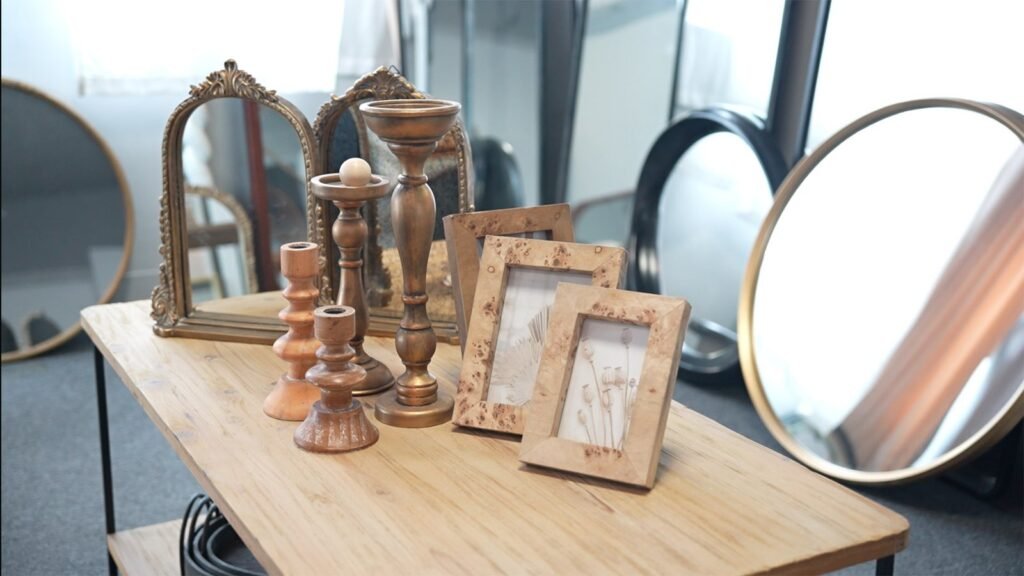
Teruier works with international buyers on tabletop décor, decorative ceramics, storage, mirrors and accent furniture.
For a fruit-inspired product concept, the development discussion can begin with the buyer’s target market, design references and intended product role.
From there, the team can review product proportions, materials, surface finishes, physical samples, packaging and manufacturing requirements.
The objective is not to turn every creative idea into a large collection.
It is to identify which designs have a clear commercial purpose and can be developed into a coherent product range.
For buyers planning a wider assortment, the Ceramic Decor Wholesale collection approach offers a useful starting point for discussing shape, finish, product function and display value.
FAQ
What makes a fruit vase suitable for wholesale?
A suitable wholesale product should have a recognizable design, an appropriate price position, clear product specifications, consistent finishing and packaging suitable for the intended distribution channel.
Is a lemon vase suitable for year-round retail?
It can be, depending on its design language and target customer. A highly seasonal or novelty-oriented version may have a narrower selling window, while a more restrained sculptural design may fit a wider range of interiors.
Should every product in a fruit vase collection use the same shape?
No. The collection should share a recognizable design language, but different products should have distinct proportions, functions or merchandising roles.
What should buyers check when approving a ceramic fruit vase?
Review the silhouette, opening, base stability, surface finish, intended function, weight, dimensions and packaging. The finished sample should be compared with the written product specification.
Can a fruit vase be developed as a private-label product?
Yes. Buyers can discuss customized shapes, colours, finishes, dimensions and packaging. Any exclusive design or intellectual property arrangements should be agreed separately.
Turn a Creative Motif Into a Commercial Tabletop Collection
A fruit-inspired vase can be more than a decorative novelty.
With the right design direction, it can become the starting point for a recognizable tabletop collection with different sizes, product roles and retail price positions.
For international buyers, the real opportunity is to combine visual identity with functional design, production feasibility and a clear assortment strategy.
Teruier welcomes importers, retailers, home décor brands and product developers to discuss ceramic décor concepts, physical samples, customization and wholesale sourcing.
Contact Teruier to discuss your next tabletop décor development programme.