
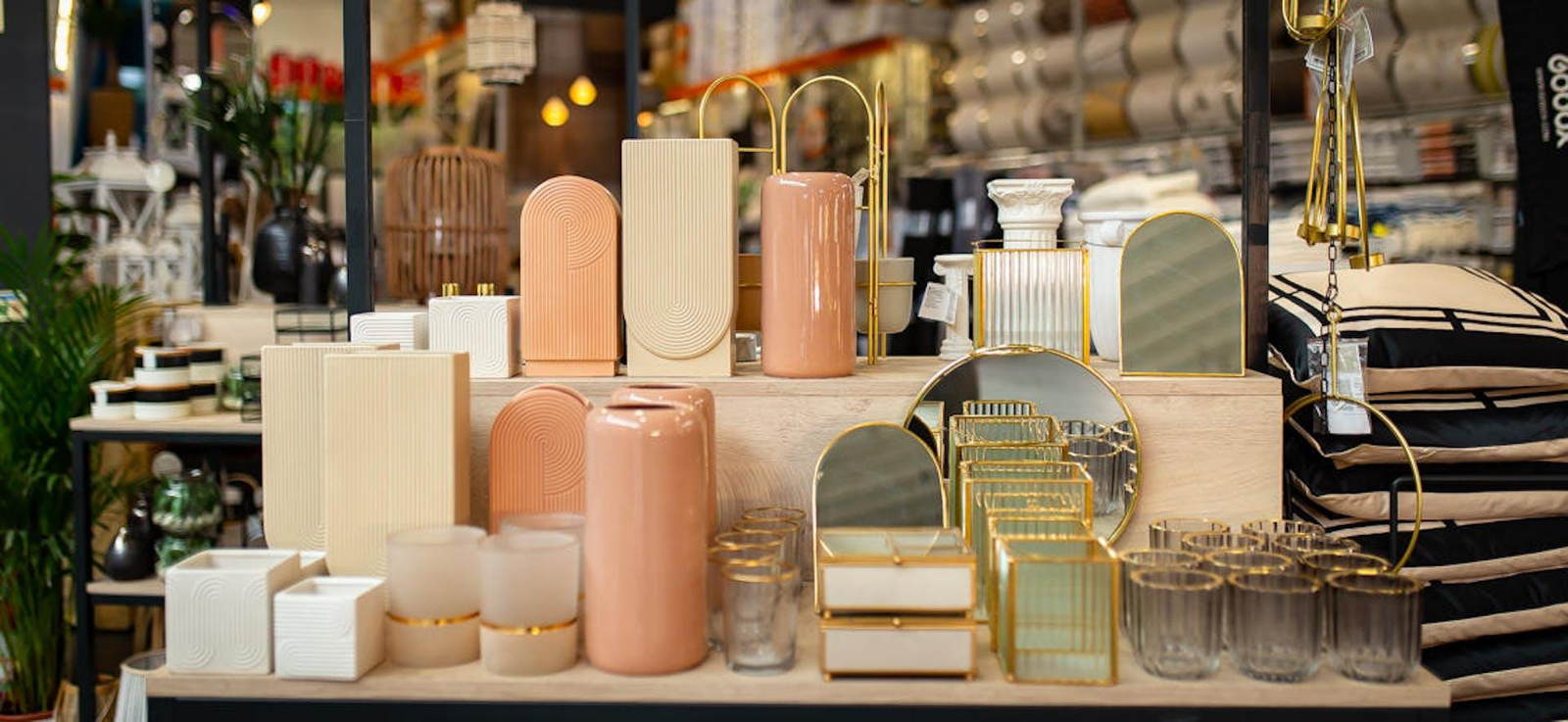
A spring collection can look perfect when it is approved.
The colours are fresh, the products coordinate, and the catalogue looks ready for the new season.
But there is a question that often receives less attention:
What happens if the products arrive after the strongest selling period has already passed?
A spring vase, a pastel decorative tray and a seasonal accent mirror may all be attractive products. Yet their commercial value depends partly on when they reach the retailer, how long customers remain interested, and whether the buyer can replenish them before the season ends.
For buyers planning a spring home décor assortment, the challenge is not simply choosing the right products.
It is matching product selection, purchasing quantities, delivery schedules and inventory decisions to the selling calendar.
A successful seasonal assortment needs an exit strategy before it needs a purchase order.
The Three Product Roles in a Spring Collection
One common mistake is treating every spring product as equally seasonal.
In reality, different products have different commercial lifecycles.
A useful assortment structure separates products into three groups.
| Product Role | Typical Characteristics | Buying Strategy |
|---|---|---|
| Core Carryover | Neutral colours, versatile designs and year-round applications | Support repeat purchasing |
| Seasonal Refresh | Spring colours, lighter finishes and seasonal decorative details | Control quantities and timing |
| Test Products | New silhouettes, unusual materials or experimental combinations | Start with limited exposure |
This structure helps buyers avoid placing large orders for products that may have only a short selling window.
Consider a collection containing decorative mirrors, ceramic vases, storage accessories and upholstered stools.
The mirror may remain relevant throughout the year. A soft yellow ceramic vase may have stronger spring appeal. A new sculptural tabletop design may still need market validation.
They should not automatically receive the same purchasing commitment.
Why Seasonal Products Should Have Different Reorder Rules
A core product and a seasonal product can have identical sales figures but very different replenishment value.
Imagine two products.
Product A is a neutral decorative storage box that sells consistently throughout the year.
Product B is a bright spring-themed tabletop accessory.
Both sell well during the first few weeks of a seasonal launch.
However, Product A may remain relevant after spring, while Product B may lose its strongest merchandising opportunity.
If both products are reordered simply because current sales are strong, the buyer may create unnecessary inventory risk.
A better decision considers four factors:
- Current sales performance.
- Remaining seasonal selling window.
- Supplier replenishment lead time.
- Expected demand after the season.
The key calculation is:
Last Safe Reorder Date = Planned Season End − Replenishment Lead Time − Receiving Buffer
The dates should be based on the supplier’s confirmed production and delivery schedule.
If the replenishment order cannot arrive before the remaining selling opportunity becomes too short, strong current sales may not justify another purchase.
This is particularly important for imported home décor, where production, international transportation and warehouse receiving all consume time.
Plan the Collection Backwards From the Retail Launch
Instead of asking suppliers when they can deliver, buyers should start with the intended retail launch date.
Then work backwards.
| Milestone | Main Decision |
|---|---|
| Retail launch | When must products be available for sale? |
| Warehouse receiving | When must goods arrive and pass inspection? |
| International shipping | What is the confirmed transportation window? |
| Bulk production | When must the purchase order be released? |
| Sample approval | When must the final reference be approved? |
| Product selection | Which SKUs deserve development and purchasing investment? |
This is a more useful approach than simply asking for a standard lead time.
A supplier may quote a production period, but the buyer also needs to consider sample revisions, material availability, packaging confirmation, shipment consolidation and warehouse receiving.
Different product categories may require different schedules.
A standard decorative mirror, a customized upholstered stool and a new ceramic design should not automatically be assigned the same development timeline.
For more information about moving from product selection to approved physical samples, see Teruier’s Wholesale Home Décor Catalog & Sample Guide.
Do Not Let Spring Colours Determine the Entire Assortment
Seasonal colours are useful, but they should not become the only reason for purchasing a product.
A collection consisting entirely of seasonal colours may look coordinated in a catalogue but become difficult to sell when the season changes.
A more flexible approach is to use a stable product foundation and introduce seasonal colour selectively.
For example:
| Category | Core Direction | Seasonal Refresh |
|---|---|---|
| Decorative Mirrors | Warm metallic and neutral finishes | Selected softer or brighter accents |
| Ceramic Décor | Cream, sand and natural finishes | Yellow, pink and muted blue |
| Storage | Natural wood and versatile neutrals | Selected seasonal colours |
| Upholstered Furniture | Cream, taupe and textured neutrals | Controlled accent fabrics |
| Tabletop Accessories | Neutral and natural materials | Seasonal decorative details |
This allows products to belong to the same collection without making every SKU dependent on one seasonal colour story.
Teruier’s 2027 Spring Home Décor Color Development explores proposed seasonal colours and how they can be applied across different materials and product categories.
The present article addresses a different decision: how buyers should manage the commercial lifecycle of the products selected from those directions.
The Hidden Risk of Buying Too Many Similar Products
When buyers prepare a new seasonal collection, there is often a temptation to increase the number of SKUs.
Five similar vases in slightly different colours may look like a broad assortment.
But from an inventory perspective, they may compete for the same customer and display position.
The buyer needs to understand whether each additional SKU creates a genuinely different selling opportunity.
A useful review compares products according to their commercial roles.
| Review Question | What It Reveals |
|---|---|
| Does the product serve a different customer need? | Functional differentiation |
| Does it create a different price position? | Price ladder |
| Does it offer a different visual role? | Merchandising value |
| Can it remain relevant after spring? | Seasonal exposure |
| Can it be replenished independently? | Purchasing flexibility |
If two products perform almost the same role, buyers should consider whether both deserve separate inventory investment.
A smaller collection with clearly differentiated products may be easier to manage than a larger collection containing too many similar choices.
For a broader framework, see Teruier’s Retail Assortment Planning: How U.S. Home Décor Buyers Build Collections That Actually Sell.
Use Initial Orders to Learn, Not Just to Fill the Warehouse
The first order should provide a useful commercial test.
Instead of treating the first purchase as a commitment to the entire season, buyers can separate the purchasing decision into stages.
Stage 1: Initial assortment
Select the core products, seasonal refresh items and limited test products.
Stage 2: Early performance review
Review actual sales, customer feedback, product returns and stock movement.
Stage 3: Selective replenishment
Reorder products that demonstrate both demand and sufficient remaining selling time.
Stage 4: Seasonal transition
Reduce exposure to products whose selling window is closing and shift purchasing attention toward products with longer-term relevance.
This process does not mean every product must be purchased in very small quantities.
MOQ, production efficiency and shipping costs still matter.
The purpose is to avoid committing the entire seasonal purchasing budget before buyers have enough evidence.
When Should a Buyer Stop Reordering?
This is one of the most important decisions in seasonal assortment planning.
A product may still be selling, but that does not automatically mean another order is appropriate.
Consider a hypothetical situation.
A retailer launches a spring tabletop collection. One decorative vase sells faster than expected during the opening weeks.
The buyer requests a replenishment quotation.
However, the supplier’s confirmed production and delivery schedule indicates that the new shipment may arrive close to the end of the planned seasonal display period.
The buyer now has three choices:
- Place the order and accept the risk of leftover inventory.
- Reduce the quantity to match the remaining selling opportunity.
- Stop replenishment and redirect purchasing toward year-round products.
The correct decision depends on the product’s ability to remain commercially relevant after spring.
A neutral ceramic vase may continue selling in summer and autumn. A strongly seasonal decorative item may not.
The buyer should therefore evaluate the product’s next selling opportunity, not only its current sales performance.
Build an Exit Strategy Before the First Order
Seasonal products should have a planned destination after their main selling period.
This is often overlooked because buyers naturally concentrate on launching the collection.
There are four possible outcomes.
1. Carry Forward
Products with versatile designs and neutral finishes can remain in the regular assortment.
2. Reposition
Some products can move into another merchandising story.
A decorative tray introduced for spring entertaining may later become part of a year-round tabletop collection.
3. Bundle
Related items may be combined into a coordinated display or gift-oriented offer, provided the combination creates genuine customer value.
4. Controlled Markdown
Products with limited seasonal relevance may need an agreed markdown strategy.
The objective is to make the decision before excess inventory becomes a serious problem.
A buyer who understands the exit options can make a more realistic initial purchasing decision.
A Practical Example: Three Different Products, Three Different Buying Decisions
Imagine a retailer preparing a spring home décor assortment with three proposed products.
| Product | Commercial Role | Suggested Buying Approach |
|---|---|---|
| Neutral framed wall mirror | Core carryover | Maintain year-round availability |
| Soft yellow ceramic vase | Seasonal refresh | Align initial quantity with the spring selling window |
| New sculptural decorative tray | Test product | Validate customer response before expanding |
The retailer should not use one replenishment rule for all three.
The mirror may justify a repeat order because its design remains relevant beyond spring.
The vase may need a stricter final reorder date.
The tray may require more evidence before additional investment.
The value of this approach is not that it guarantees better sales.
It is that each purchasing decision is connected to the product’s actual commercial role.
What Buyers Should Request From Suppliers
Seasonal inventory management cannot be completed by the buyer alone.
The supplier needs to provide information that allows the buyer to make realistic decisions.
For each selected product, buyers should confirm:
- MOQ and available quantity options.
- Sample approval requirements.
- Confirmed production lead time.
- Replenishment lead time.
- Material and finish availability.
- Whether seasonal colours can be repeated.
- Packaging dimensions and shipping configuration.
- Possibility of mixed-SKU or phased shipments.
- Production capacity during the intended purchasing period.
The ability to reorder a product is particularly important.
A supplier that can produce an attractive sample but cannot confirm repeat availability may create additional inventory risk.
Teruier’s Reorder-Ready Home Décor Supplier: A Buyer’s Checklist explores why repeatability should be considered before the first order.
How Teruier Connects Seasonal Design With Wholesale Sourcing
Teruier develops home décor products across decorative mirrors, tabletop accessories, storage and upholstered accent furniture.
For seasonal programmes, the development discussion can begin with the buyer’s target launch date, intended market, product categories and desired design direction.
From there, the team can review existing products, proposed seasonal variations, physical samples, specifications, packaging and manufacturing arrangements.
Teruier’s 2027 Striped Storage and Wall Décor Collection provides an example of a shared design direction being applied across different product forms.
The products can contribute to one collection while maintaining different functions and commercial roles.
This is important for wholesale buyers: coordination should not mean unnecessary duplication.
A successful collection should offer a coherent visual story, but each product still needs a reason to occupy a place in the assortment.
FAQ
When should buyers start planning a spring home décor assortment?
Start from the intended retail launch date and work backwards through sample approval, purchasing, production, shipping and warehouse receiving. The actual schedule depends on product complexity, supplier capacity and destination.
Should every spring product be purchased in large quantities?
No. Core products, seasonal products and experimental products have different demand and replenishment characteristics. Purchasing commitments should reflect their commercial roles.
How can buyers reduce leftover seasonal inventory?
Set a final reorder date, monitor stock movement, distinguish seasonal products from year-round products, and establish an exit plan before placing the initial order.
Should buyers reorder a product simply because it sells quickly?
Not necessarily. The remaining selling window, replenishment lead time, stock coverage and expected demand after the season should also be considered.
Can seasonal home décor products become year-round products?
Yes, particularly when their shapes, materials and colours are versatile. However, this should be supported by customer demand and actual merchandising performance rather than assumed in advance.
Build a Spring Collection That Knows When to Grow and When to Stop
A successful seasonal assortment is not measured by how many products it contains.
It is measured by how effectively those products move through selection, launch, sales, replenishment and the end of the season.
For international retailers, importers and home décor brands, the most useful purchasing strategy is to give every SKU a clear role and every seasonal order a clear decision point.
Teruier welcomes discussions about seasonal product selection, coordinated home décor development, sample review and wholesale sourcing.
Contact Teruier to discuss your next spring collection, target launch schedule and product development requirements.