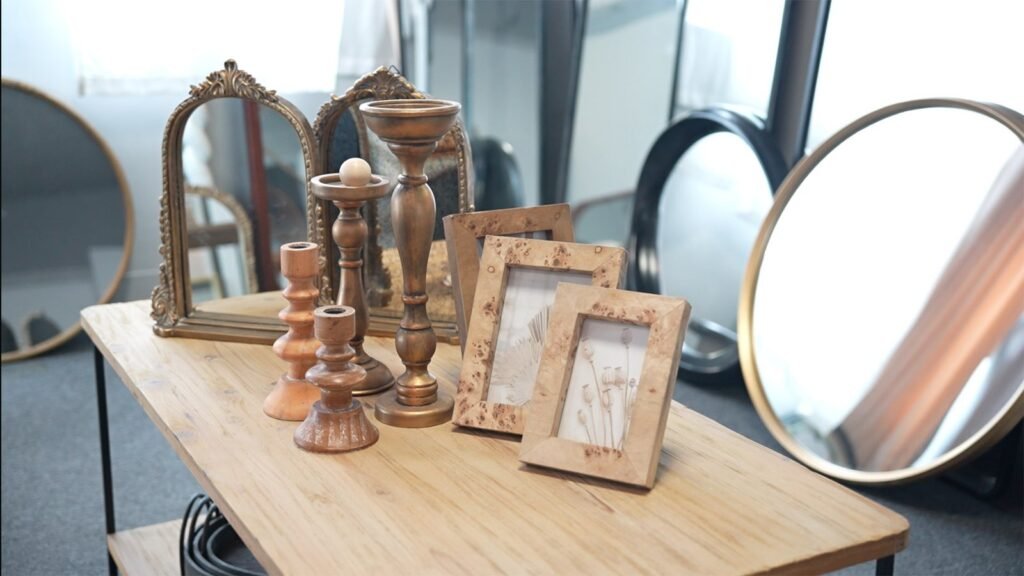
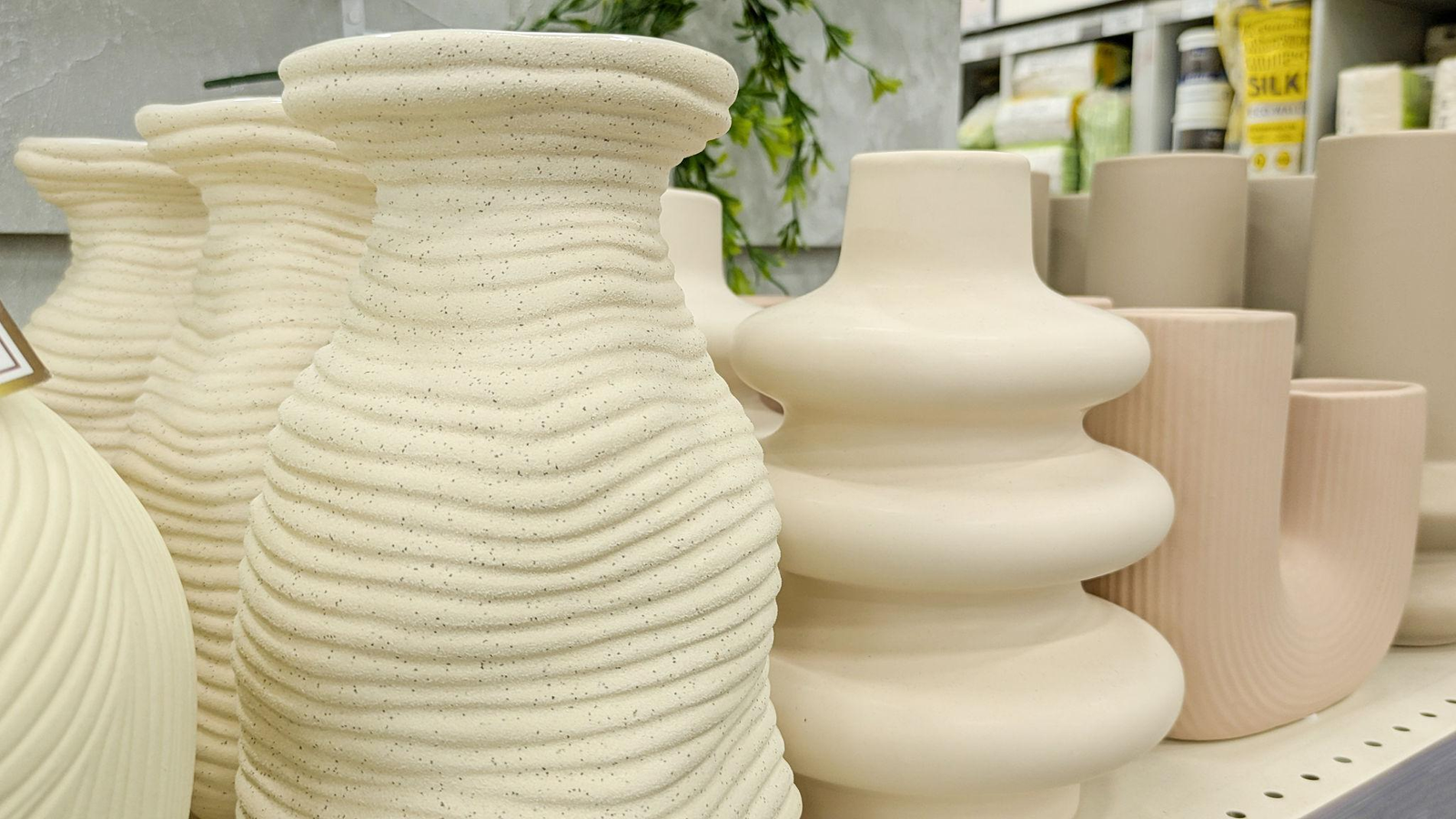
A vase can attract attention in a showroom and still struggle on a retail shelf.
Consider a wiggle vase: an irregular, flowing silhouette with curves that make it look more like a small sculpture than a traditional flower container.
It stands out immediately. But when a retailer places several different shapes together, another question appears.
Does the product still look distinctive when surrounded by other merchandise? Does it occupy too much shelf space? Can customers understand its shape from a small product image on a mobile screen?
For buyers sourcing wiggle vase designs, these questions matter just as much as colour, material and finish.
The commercial challenge is to make a sculptural object work in two environments: the physical retail space and the digital product catalogue.
The Difference Between Visual Impact and Retail Visibility
A distinctive shape is not automatically a commercially effective shape.
A vase may have an unusual silhouette, but if its curves overlap visually with neighbouring products, its individual identity becomes less obvious.
Buyers should distinguish three levels of visibility.
| Viewing Situation | What Customers Need to See | Design Consideration |
|---|---|---|
| Across the store | A recognisable silhouette | Overall shape and proportion |
| At shelf level | Surface details and material character | Curves, texture and finish |
| On a mobile screen | A clear product outline | Photography angle and visual simplicity |
This is particularly relevant to sculptural ceramics.
Traditional cylindrical vases are relatively easy to recognise from almost any angle. An irregular vase depends more heavily on its silhouette.
Its strongest design feature can also become its biggest merchandising challenge.
Measure the Display Footprint, Not Just the Product Size
A conventional product specification may provide height, width and depth.
For a sculptural vase, those measurements are necessary but not always sufficient for shelf planning.
Buyers should consider three different dimensions.
1. Base Footprint
How much physical space does the bottom of the product occupy?
This affects stability, shelf compatibility and the available space for neighbouring products.
2. Maximum Visual Envelope
How far do the widest curves extend?
A vase with a relatively narrow base may have a much wider body. Its maximum width, rather than its base diameter, determines how much horizontal space it visually occupies.
3. Display Clearance
How much additional space is needed so that neighbouring products do not interfere with its shape?
A sculptural vase placed directly against another decorative object may lose the visual effect that makes it attractive.
A useful planning calculation is:
Estimated units per shelf row = Usable shelf width ÷ (Maximum product width + Planned side clearance)
This is a merchandising estimate, not a universal retail standard. Shelf depth, product stability, visibility and customer access must also be considered.
For buyers, the lesson is simple: two vases with similar heights may have very different retail space requirements.
Three Ways to Merchandise a Sculptural Vase
Not every sculptural vase should be displayed in the same way.
A buyer can test three basic arrangements before finalising an assortment.
1. The Hero Display
Display one distinctive vase with enough surrounding space to make its silhouette immediately visible.
This works when the product has a particularly recognisable shape, finish or colour.
The objective is not to fill the shelf. It is to make the product noticeable.
2. The Shape Rhythm Display
Combine two or three different silhouettes.
For example:
- One tall, narrow vase.
- One rounded, irregular vase.
- One lower, wider decorative vessel.
The variation creates visual rhythm.
However, the products should have a shared design relationship, such as a common finish direction or colour family.
3. The Mixed Tabletop Display
Combine the vase with a tray, decorative bowl or candleholder.
This shows customers how the product might work within a wider interior setting.
For wholesale tabletop décor, the advantage is that the retailer can create a more complete display without requiring every item to be sold as a fixed set.
Teruier’s Tabletop Decor: How German Buyers Build a Coherent, Retail-Ready Category explores this wider approach to category planning.
The Digital Shelf Creates a Different Design Challenge
A product that looks impressive in a physical store may appear ordinary in an online catalogue.
The reason is simple: customers cannot walk around the object.
They depend on photographs to understand its form.
For sculptural vases, buyers should request a consistent image set.
| Image Type | What It Should Communicate |
|---|---|
| Front view | Main silhouette and proportions |
| 45-degree view | Depth and three-dimensional form |
| Side view | Shape changes and body profile |
| Detail view | Surface texture and finish |
| Lifestyle image | Scale and relationship with surrounding décor |
A common mistake is using only a decorative lifestyle photograph.
Flowers, furniture, lighting and other accessories can make the image attractive, but they may also hide the product’s actual silhouette.
The main product photograph should make the vase understandable before the customer reads its description.
For an example of how a clearly defined ceramic product can communicate shape and surface character, see Teruier’s Siena Ribbed Sand Ceramic Vase.
One Shape Can Create Several Retail Price Positions
A distinctive silhouette does not have to become a single product.
A buyer may explore a controlled product family based on the same design language.
For example:
| Version | Design Direction | Possible Retail Role |
|---|---|---|
| Small | Compact and playful | Accessible decorative purchase |
| Medium | Balanced proportions | Main assortment item |
| Large | More sculptural presence | Statement décor |
| Two-tone | Stronger colour contrast | Visual accent |
| Textured finish | More tactile appearance | Premium decorative positioning |
The important point is not to create every variation.
Each proposed SKU should have a reason to exist.
A new size should provide a different display opportunity. A new finish should offer a meaningful visual difference. A new shape should contribute something that the existing products cannot.
This is where assortment planning becomes more important than simply increasing the number of designs.
For a wider comparison of how ceramic shapes, finishes and price positions work together, see Ceramic Decor for German Retailers: Building a Collection with Finish, Motif and Margin.
The Shape Must Still Work in Production
A sculptural form may look simple in a rendering but become more complicated during manufacturing.
Curved walls, irregular openings and asymmetrical bodies can create different production considerations.
Before approving a new design, buyers should review:
- Whether the product stands steadily on its intended surface.
- Whether the base is sufficiently level.
- Whether the opening and neck are suitable for the intended use.
- Whether the thickness and construction are appropriate.
- Whether the finish can be reproduced consistently.
- Whether the finished shape can be protected effectively during transport.
These questions should be answered for the actual product and manufacturing method.
For ceramic products, an unusual shape may also influence the design of internal packaging. Protruding curves and narrow sections may require different protection from a conventional cylindrical vase.
Teruier’s Ceramic Decor Wholesale: Why a Vase Is Not Just a Thing That Holds Flowers discusses the wider relationship between ceramic shape, surface, display and commercial requirements.
A Retail Buyer Guide: Five Checks Before Adding a Wiggle Vase
Before introducing a sculptural vase into a new collection, buyers can use five practical checks.
| Review Area | Buyer Question |
|---|---|
| Recognition | Can customers identify the shape quickly? |
| Shelf efficiency | Does the product fit the intended shelf dimensions? |
| Display flexibility | Can it work alone and alongside other décor? |
| Online presentation | Is its silhouette clear in product photographs? |
| Commercial value | Does it offer a meaningful reason to occupy an additional SKU position? |
A physical sample is particularly useful here.
A rendering can communicate the design idea, but a real sample allows buyers to assess its actual footprint, visual weight, stability and relationship with neighbouring products.
Teruier’s Wholesale Home Décor Catalog & Sample Guide provides a related approach to moving from catalogue selection to physical sample approval.
When Should a Buyer Reject an Attractive Design?
Sometimes the most commercially intelligent decision is not to add another attractive product.
A buyer should reconsider a wiggle vase if:
- Its shape is difficult to understand from standard product photography.
- It occupies substantially more shelf space without adding sufficient visual value.
- Its base or construction creates stability concerns.
- Its manufacturing process produces unacceptable variation.
- Its packaging requirements make the intended retail price difficult to support.
- It duplicates the role of an existing product in the assortment.
This does not mean retailers should avoid unusual designs.
It means that visual novelty should be evaluated alongside retail practicality.
A product should earn its place in the assortment.
How Teruier Approaches Sculptural Home Décor Development
Teruier works with international home décor buyers across ceramic décor, tabletop accessories, decorative mirrors, storage and accent furniture.
For a sculptural product, development discussions can include the original design reference, silhouette, material, surface finish, dimensions, display role and packaging requirements.
The objective is to connect the visual idea with a commercially workable product specification.
Buyers can also review Teruier’s Home Décor Category Guide: How German Buyers Build Cohesive, Retail-Ready Collections for a broader view of how different products contribute to a retail assortment.
The final material, production feasibility, MOQ, packaging and pricing should be confirmed for each selected design.
FAQ
What makes a wiggle vase different from a traditional vase?
A wiggle vase uses an irregular, flowing or wavy silhouette as its main visual feature. Its design is often more sculptural than a conventional symmetrical vessel.
Are sculptural vases suitable for wholesale retail?
Yes, when their visual identity, dimensions, price position and display requirements fit the intended retail channel.
Should buyers order different sizes of the same sculptural vase?
Different sizes can create a useful product family, but each size should serve a distinct display or customer requirement.
What should buyers check before approving a wiggle vase sample?
Review its maximum width, base stability, opening, finish, physical proportions, shelf compatibility and packaging requirements.
How should sculptural vases be photographed for online retail?
Use clear front, side and angled views, supported by detail and lifestyle photography. The product silhouette should remain understandable without relying on decorative backgrounds.
Give Every Sculptural Product a Commercial Role
A successful decorative product does more than attract attention.
It should be recognisable, easy to merchandise, suitable for its intended channel and capable of supporting a profitable assortment.
For international buyers developing distinctive tabletop collections, Teruier can discuss product selection, sample development, material options and wholesale sourcing.
Contact Teruier to discuss your preferred vase shapes, target retail positioning and new tabletop décor development plans.