A wholesale home décor catalog is a starting point for retail sourcing—not a substitute for product evaluation. For U.S. retail buyers, the most effective approach is to shortlist products by assortment role, review physical samples, confirm specifications and packaging, and only then prepare a purchasing decision.
This is particularly important when a collection includes decorative mirrors, upholstered furniture, storage products, and tabletop accessories. Each category carries different requirements, even when the products share one design direction.
Start With the Retail Assortment, Not the Number of Products
Imagine a U.S. home furnishings buyer planning a spring collection with warm wood finishes, softly curved silhouettes, and textured upholstery.
The supplier catalog may contain hundreds of attractive designs. The challenge is deciding which products deserve space in the assortment.
A practical buying brief should establish:
- Category role: Will the product be a statement piece, core assortment item, or complementary accessory?
- Retail positioning: Does it fit the intended customer and price range?
- Merchandising: Can it coordinate with existing furniture and home décor?
- Operational requirements: Are the dimensions, packaging, and expected order quantities appropriate for the channel?
A wholesale catalog becomes more valuable when these decisions guide the selection process.
From Digital Catalog to Physical Product Review
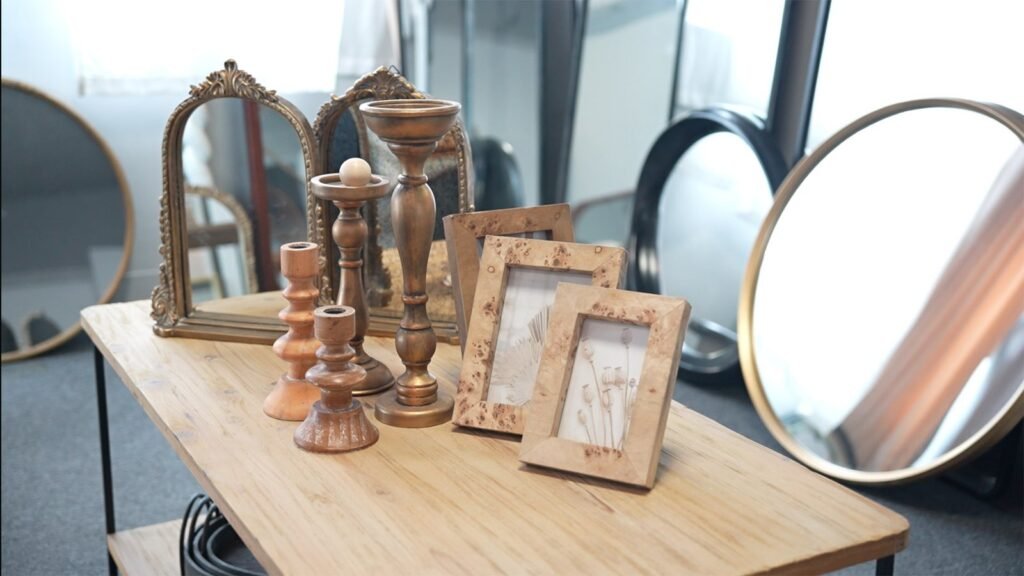
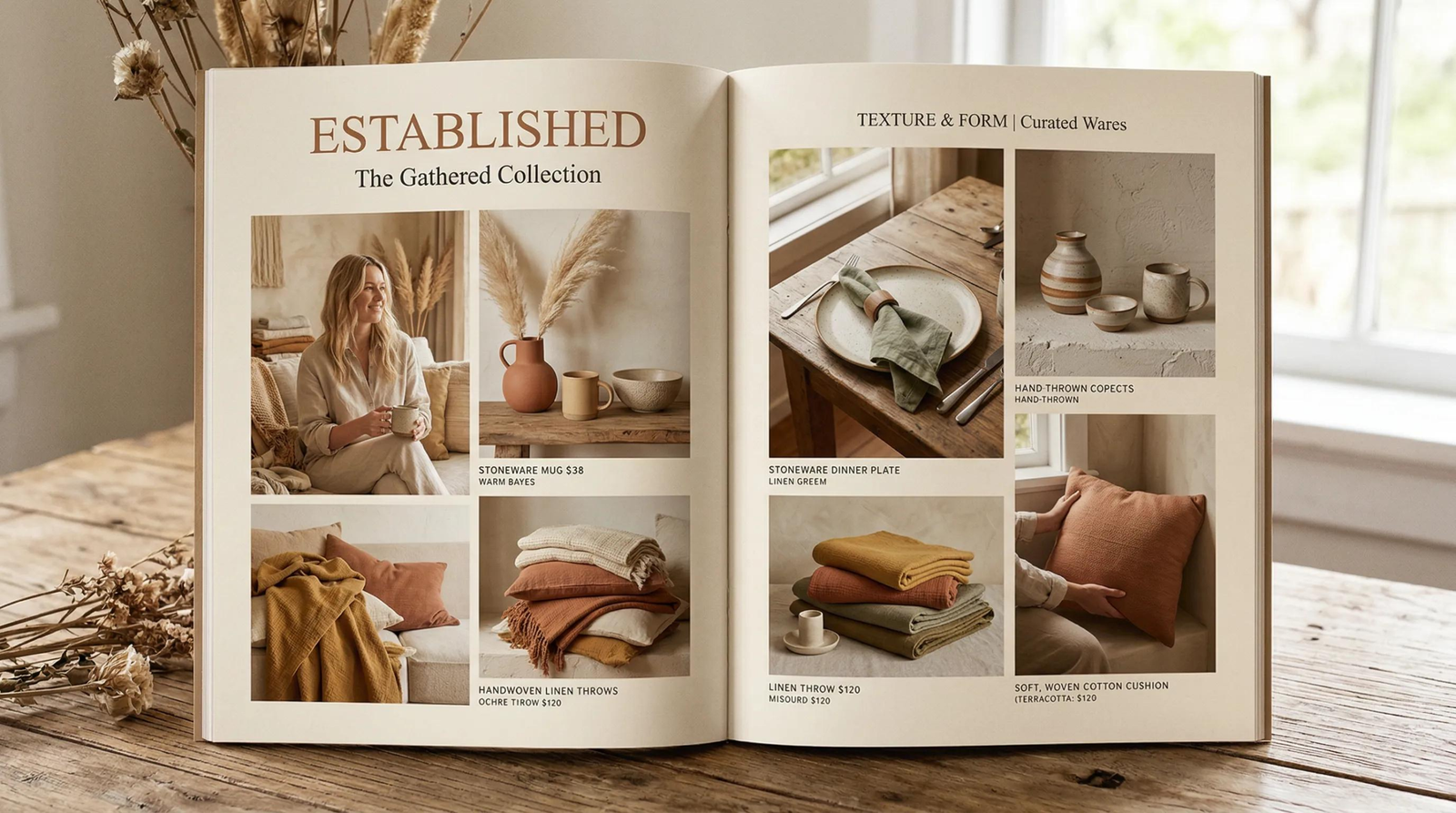
Teruier has assembled more than 20 home décor product catalogs covering several hundred designs, supported by physical samples. The collections include decorative mirrors, upholstered stools, storage pieces, tabletop décor, and other home accessories.
Selected samples have also been presented at the Autumn Canton Fair, allowing buyers to connect catalog references with real products.
For a retail team, this creates a more useful sourcing process.
A buyer can identify several preferred models, compare available samples, and discuss which features should remain unchanged or require further development.
The distinction is important:
| Catalog Review | Physical Sample Review |
|---|---|
| Compare silhouettes and styles | Verify actual proportions |
| Identify color directions | Examine finish and texture |
| Build a preliminary SKU shortlist | Inspect structure and workmanship |
| Evaluate assortment coordination | Compare products side by side |
| Identify potential customization | Define practical changes |
A catalog helps buyers identify what they want. A sample helps them determine whether the product meets their expectations.
What Should Buyers Inspect Before Approving a Sample?
Different home décor categories require different inspection priorities.
Decorative Mirrors
Review frame construction, actual dimensions, mirror appearance, backing materials, mounting hardware, and protective packaging.
A decorative mirror may look elegant in a catalog but require a different frame depth, mounting arrangement, or carton structure for the intended retail channel.
Upholstered Stools and Ottomans
Evaluate fabric texture, seam alignment, cushion support, stability, and overall proportions.
For storage ottomans, inspect the lid and internal construction. An attractive fabric selection cannot compensate for a poorly functioning structure.
Ceramic and Tabletop Décor
Examine glaze or surface-finish consistency, base stability, visible workmanship, and protective packaging.
For coordinated collections, compare multiple samples together. Colors that appear similar in individual product photographs may look different under the same lighting conditions.
Physical review does not automatically establish production consistency. Buyers should also confirm whether the sample is a development prototype, a production-intent sample, or an approved production reference.
How Home Décor Sample Development Improves a Buying Decision
Home décor sample development is not simply the process of making a physical copy of a design.
It connects the intended product appearance with manufacturing feasibility, cost, functionality, and packaging.
Consider an illustrative retail development scenario:
A buyer selects an arched decorative mirror from a catalog. The silhouette fits the collection, but the proposed frame adds unnecessary weight and makes the shipping carton larger than desired.
Before committing to an order, the buyer could request an evaluation of alternative frame construction, dimensions, and protective packaging.
The objective would be to preserve the visual concept while reviewing material use, shipping requirements, and manufacturing feasibility.
Teruier’s product development approach brings market requirements, design collaboration, and manufacturing coordination together. Its position within the Fuzhou and Minhou home décor manufacturing network supports discussions involving different materials, processes, and product categories.
The value is not customization for its own sake. It is helping buyers identify which modifications make commercial sense before production decisions are finalized.
Turn the Sample Review Into a Clear RFQ
A quotation request should refer to a defined product rather than an attractive image alone.
For each shortlisted SKU, buyers should confirm:
- Product model or catalog reference
- Dimensions, materials, colors, and finishes
- Requested modifications and sample approval status
- Estimated quantity and MOQ requirements
- Retail packaging and export carton expectations
- Target market, delivery requirements, and applicable documentation
This information allows the buyer and supplier to discuss pricing and feasibility against the same requirements.
For products requiring new development, sampling costs, production tooling, and approval schedules should be reviewed separately from standard catalog items.
FAQ
Can U.S. buyers request custom products from a wholesale home décor catalog?
Yes. Existing catalog designs can serve as references for discussing changes to dimensions, finishes, materials, construction, or packaging. Feasibility, MOQ, pricing, and sampling requirements depend on the requested modification.
Does a physical showroom sample guarantee bulk-production quality?
No. A showroom sample demonstrates the characteristics of that particular item. Buyers should establish approved specifications, production references, appropriate inspections, and relevant documentation before bulk production.
What information should buyers send when requesting product catalogs?
Identify your retail channel, product categories, preferred design direction, approximate quantities, and purchasing timeline. This helps the supplier recommend relevant collections instead of sending unrelated product options.
Explore Teruier’s Wholesale Home Décor Collections
For U.S. retail buyers, a productive sourcing relationship starts with clearer product decisions.
Teruier supports buyers exploring decorative mirrors, accent furniture, storage, and tabletop décor by connecting catalog selection with product development and manufacturing discussions.
Contact Teruier to request relevant wholesale catalogs, identify samples for review, or discuss a custom home décor development project.