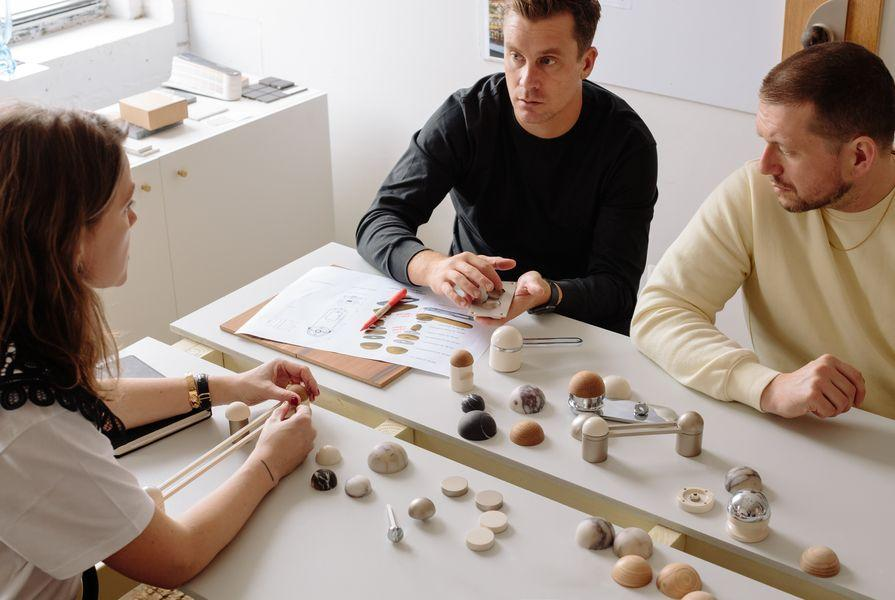
An interior designer develops a beautiful concept for a new home décor collection. The buyer likes the direction but needs to meet a specific retail price. The manufacturer reviews the drawings and identifies a structural problem.
Three parties are involved. All three have valid concerns.
But who decides what happens next?
This is one of the most important questions in international design collaboration. Designers understand visual identity and spatial experience. Buyers understand customers, channels and commercial positioning. Manufacturers understand materials, construction and production constraints.
The problem begins when these responsibilities overlap without a clear decision process.
A successful collaboration does not require everyone to agree on every detail. It requires everyone to understand which decisions they own, which decisions they can influence, and which changes require approval.
Three Different Responsibilities, One Final Product
A common mistake is treating the manufacturer as the final decision-maker simply because the product will be made in its factory.
Manufacturing knowledge is essential, but it does not automatically give the manufacturer ownership of the design direction.
Likewise, a designer may create an impressive concept, but the designer does not necessarily control the final commercial specification.
A practical collaboration model separates three responsibilities.
| Participant | Primary Responsibility | Main Question |
|---|---|---|
| Interior designer | Design identity and visual experience | Does the product express the intended design language? |
| Buyer or brand owner | Market positioning and commercial approval | Will customers buy it at the intended price and channel? |
| Manufacturer | Technical feasibility and production execution | Can it be manufactured consistently and delivered reliably? |
The three roles should influence one another, but their approval responsibilities should remain clear.
A manufacturer can recommend changing a frame structure. A designer can assess whether the change damages the visual concept. The buyer can decide whether the revised product still meets the commercial brief.
That is collaboration, rather than simply passing drawings from one party to another.
Separate Design Intent From Manufacturing Method
Not every design detail has equal importance.
Some elements define the identity of a product. Others are simply ways of achieving the desired result.
Consider a decorative mirror developed for a contemporary hospitality collection.
The designer may identify four important features:
- An asymmetrical silhouette.
- A specific frame proportion.
- A warm metallic appearance.
- A distinctive decorative detail.
These features may form the visual identity of the product.
However, the manufacturer may discover that the original internal support arrangement is difficult to produce consistently.
Does the design need to be abandoned?
Not necessarily.
The manufacturer could propose an alternative support structure while preserving the approved external silhouette and decorative appearance.
The distinction is important:
The design intent should be protected, but the manufacturing method should remain open to technical improvement.
A useful development brief separates requirements into three groups.
| Requirement | Decision Status | Approval |
|---|---|---|
| Signature silhouette | Design-critical | Designer and buyer |
| Main colour and finish direction | Design-critical | Designer and buyer |
| Hidden reinforcement | Technically adaptable | Manufacturer proposes; buyer approves |
| Joining and assembly method | Technically adaptable | Manufacturer proposes |
| Packaging structure | Operationally adaptable | Buyer approves against requirements |
| Changes affecting retail price | Commercially controlled | Buyer or brand owner |
This prevents two opposite mistakes: manufacturing teams changing too much, and designers rejecting useful technical improvements simply because they differ from the original drawing.
The Most Expensive Problem Is an Unapproved Change
Imagine a buyer approves a sample with a specific frame profile and antique-gold finish.
During production preparation, the supplier discovers that one decorative component is difficult to reproduce.
The supplier makes a small adjustment without asking the buyer.
The finished product is technically acceptable, but the visual appearance has changed.
From the factory’s perspective, the adjustment may seem minor.
From the brand’s perspective, the product is no longer exactly the one that was approved.
This is why home décor sample development needs a clear change-control process.
Every meaningful revision should answer five questions:
- What was originally approved?
- What is being changed?
- Why is the change necessary?
- What impact does it have on appearance, quality, cost and delivery?
- Who has the authority to approve it?
A verbal message such as “make it a little stronger” is not sufficient for a product with several design and construction details.
A dated drawing, annotated photograph or revised specification should record the change.
Build a Design Decision Record
A simple document can prevent many unnecessary discussions.
For every important design decision, record the following:
| Field | Example |
|---|---|
| Product reference | MIR-01 |
| Design element | External frame profile |
| Original requirement | Asymmetrical curved profile |
| Proposed change | Revised internal support |
| Reason | Improve assembly consistency |
| Visual impact | No intended change to external silhouette |
| Cost impact | To be confirmed |
| Approval owner | Buyer, after designer review |
| Revision status | Pending / Approved / Rejected |
This is not a complicated project-management system.
It is a shared record that allows the designer, buyer and manufacturer to work from the same information.
It is particularly useful when several products are being developed simultaneously or when a project involves teams in different countries.
Why International Teams Need More Than Mood Boards
A mood board is excellent for communicating atmosphere.
It can show colour, materials, textures, architectural references and the overall emotional direction of a collection.
But it cannot answer every manufacturing question.
For example, a reference image may show a soft, sculptural upholstered stool.
The designer may interpret the image through its proportions and fabric texture. The buyer may see a product suitable for a particular retail price range. The manufacturer needs to understand the frame, foam, upholstery construction, dimensions and packaging.
These are three different interpretations of the same image.
A stronger collaboration process uses three connected documents:
1. Design Direction Brief
Defines the visual identity, references, signature details and target aesthetic.
2. Commercial Product Brief
Defines the target customer, retail or project channel, target price, product dimensions and quantity expectations.
3. Manufacturing Specification
Defines materials, construction, finish, tolerances, packaging and approved production requirements.
The documents should be connected, not treated as independent files.
Teruier’s A Better Spec Pack Starts Before the Sample Is Made discusses why visual references need to become specific product information before sampling begins.
A Realistic Example: One Design, Three Different Market Decisions
Consider a hypothetical international brand developing an upholstered accent stool.
The original design has a rounded silhouette, textured upholstery and a decorative metal base.
Three markets express different preferences.
| Market Direction | Design Priority | Potential Adjustment |
|---|---|---|
| European contemporary retail | Restrained texture and balanced proportions | Softer colours and cleaner detailing |
| North American lifestyle retail | Stronger visual presence and practical versatility | More expressive fabric options |
| Hospitality and project use | Maintenance and specification requirements | Appropriate upholstery, construction and project documentation |
The underlying product identity can remain recognizable.
However, the final specifications may differ according to the market and intended application.
This is where design direction and style routes become commercially useful.
Rather than developing three completely unrelated products, the team can explore controlled variations around one core design.
The buyer should decide which variations deserve investment, while the designer protects the visual language and the manufacturer evaluates production feasibility.
These are proposed development routes, not claims that one identical product automatically meets every market’s technical requirements.
What European Design Fairs Can Teach International Teams
European design events provide useful references for international collaboration.
Maison&Objet connects designers, brands, manufacturers and retail professionals around design, craftsmanship and material expression.
Ambiente brings together consumer goods, interior design, retail and hospitality-related business.
The important lesson is not to copy a particular exhibition product.
It is to understand how a design idea is interpreted differently by different participants.
A designer may notice a new material combination. A buyer may recognize a retail opportunity. A manufacturer may identify a practical way to reproduce the visual effect.
The strongest collaboration happens when these observations are brought into one product discussion.
A trade fair should therefore be treated as a starting point for design research, not a substitute for a defined development brief.
How to Manage the Final Approval Process
A good collaboration needs clear approval stages.
| Stage | Main Activity | Decision Owner |
|---|---|---|
| 1. Concept | Establish design direction and style references | Designer |
| 2. Commercial review | Confirm market, channel and target price | Buyer |
| 3. Technical review | Assess materials, structure and feasibility | Manufacturer |
| 4. Sample review | Compare the physical product with the brief | Designer and buyer |
| 5. Final specification | Lock approved dimensions, materials and finishes | Buyer |
| 6. Production release | Manufacture against the approved specification | Manufacturer, under buyer authorization |
A change after final approval should return to the relevant review stage.
This prevents the common situation in which a factory begins production based on an old drawing while the designer is still discussing a revised version.
For more detail on the information needed before approval, see Teruier’s Home Decor Spec Sheets: Where Pretty Products Go to Become Real Business.
What Buyers Should Look for in an International Design Partner
A good design partner should not simply agree with every request.
Buyers should look for someone who can:
- Understand the intended market and design language.
- Explain why a proposed modification is necessary.
- Distinguish visual requirements from technical preferences.
- Present alternatives with clear cost and production implications.
- Keep sample versions and revisions traceable.
- Communicate when a change requires renewed approval.
The manufacturer should be comfortable explaining why something cannot be made exactly as drawn.
The designer should be comfortable reviewing practical alternatives.
The buyer should be prepared to make a final commercial decision.
This creates a much stronger foundation for wholesale home décor collections than relying on informal messages and repeated sample revisions.
How Teruier Connects Design and Manufacturing
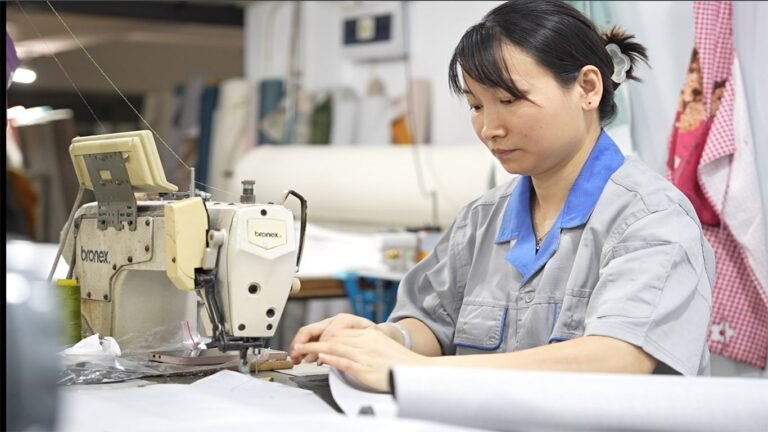
Teruier’s product-development work connects international market requirements with the manufacturing resources of the Fuzhou–Minhou home décor industry.
Its Home Décor Sourcing & ODM/OEM Manufacturing hub presents the relationship between design development, material and process control, quality checkpoints, packaging and delivery coordination.
The approach is especially relevant when a buyer is developing several related products rather than purchasing a single standard item.
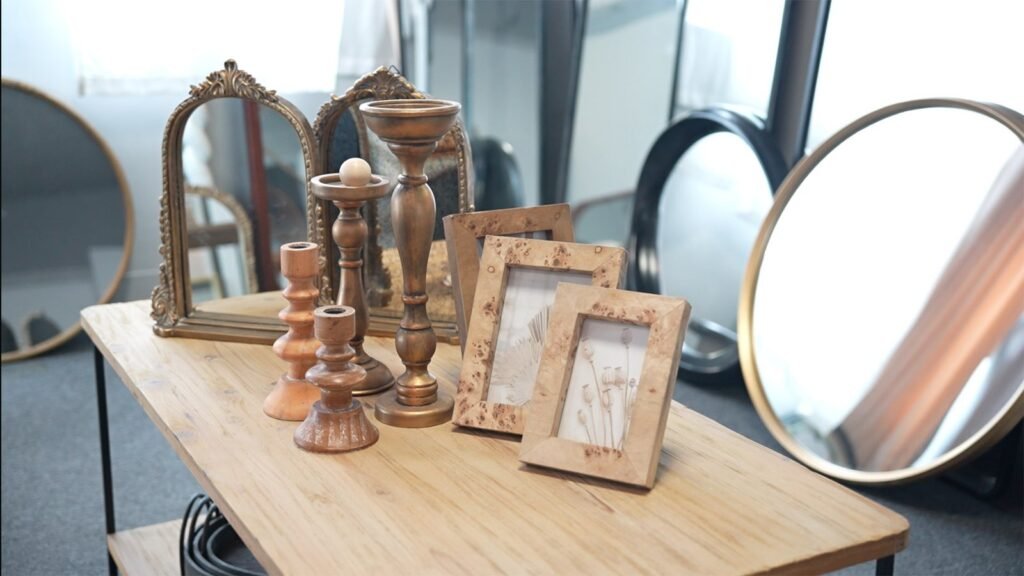
At the 2026 Autumn Canton Fair, Teruier also presented physical samples across decorative mirrors, upholstered furniture, storage and tabletop décor. These products provided a practical starting point for international buyers to compare proportions, finishes and possible product adaptations.
See Teruier Meets International Buyers at Canton Fair 2026 for a closer look at these discussions.
For buyers, the objective is to make the design conversation more specific: what should remain unchanged, what can be adapted, and what evidence is needed before production approval.
FAQ
Who should have the final say in product design?
The brand owner or authorized buyer should normally control final commercial approval. Designers should protect the intended visual direction, while manufacturers should provide technical recommendations and confirm production feasibility.
Can manufacturers change a designer’s original concept?
Manufacturers can propose changes, but design-critical modifications should be reviewed and approved by the relevant designer and buyer before implementation.
How can international teams avoid repeated sample revisions?
Use a defined design brief, clear acceptance criteria, dated revision records and an approval process. Each new sample should address an identified issue rather than introduce uncontrolled changes.
Does international design collaboration mean creating different products for every country?
Not necessarily. A core design can often support several controlled variations. The appropriate changes depend on local preferences, channel requirements, pricing and technical conditions.
Create Better Products Through Clearer Design Collaboration
The best international design collaboration does not mean that designers, buyers and manufacturers all make the same decisions.
It means that each participant contributes the expertise they understand best.
Designers protect the idea. Buyers protect the commercial objective. Manufacturers protect technical feasibility and production consistency.
When these responsibilities are clearly connected, a creative concept has a much better chance of becoming a successful, repeatable product.
Teruier welcomes international designers, home décor brands, importers and project buyers to discuss product concepts, design references, sample requirements and manufacturing feasibility.
Contact Teruier to discuss your next home décor development project.