
Why Wholesale Ceramic Home Decor Is Winning Again—And Why the Best Pieces Feel Personal, Not Generic
If you walk a U.S. market floor right now, the message is hard to miss.
As buyers, we are no longer rewarded for sourcing ceramic décor that merely fills a shelf. We are rewarded for finding pieces that feel specific, emotionally legible, and easy to merchandise across stores, online, and seasonal resets. That direction is visible in the market itself: Winter 2026 Las Vegas Market positioned discovery around 3,500+ product lines, 400+ temporary exhibitors, handmade resources, and programming focused on color, AI, and future-forward design, while ASID’s Spring 2026 High Point conversation framed the year around expressive, personality-driven interiors, elevated craftsmanship, and design rooted in purpose and performance.
That matters for anyone sourcing wholesale ceramic home decor for a chain store, a regional home décor group, or a lifestyle retail concept. The customer walking into our stores is not looking for another anonymous beige accessory. She wants a piece that says something about her taste without making her home feel overdesigned. And the merchant on the buying side wants the same thing translated into business language: strong first impression, clean assortment logic, good photography, and reorder potential.
Academic research helps explain why this shift is so powerful. A 2025 peer-reviewed study in Frontiers found that home décor choices are closely tied to identity construction, emotional fulfillment, and cultural expression. In other words, décor is not just décor anymore. It is part of how customers narrate themselves. That is exactly why ceramics with personality are outperforming generic filler pieces.
The smartest ceramic assortments now sit between comfort and surprise.
That is where this category gets interesting. The winning assortment is not made of extremes. It is not all minimalist, and it is not all novelty. It lives in the middle: familiar enough to feel easy, fresh enough to feel worth buying.
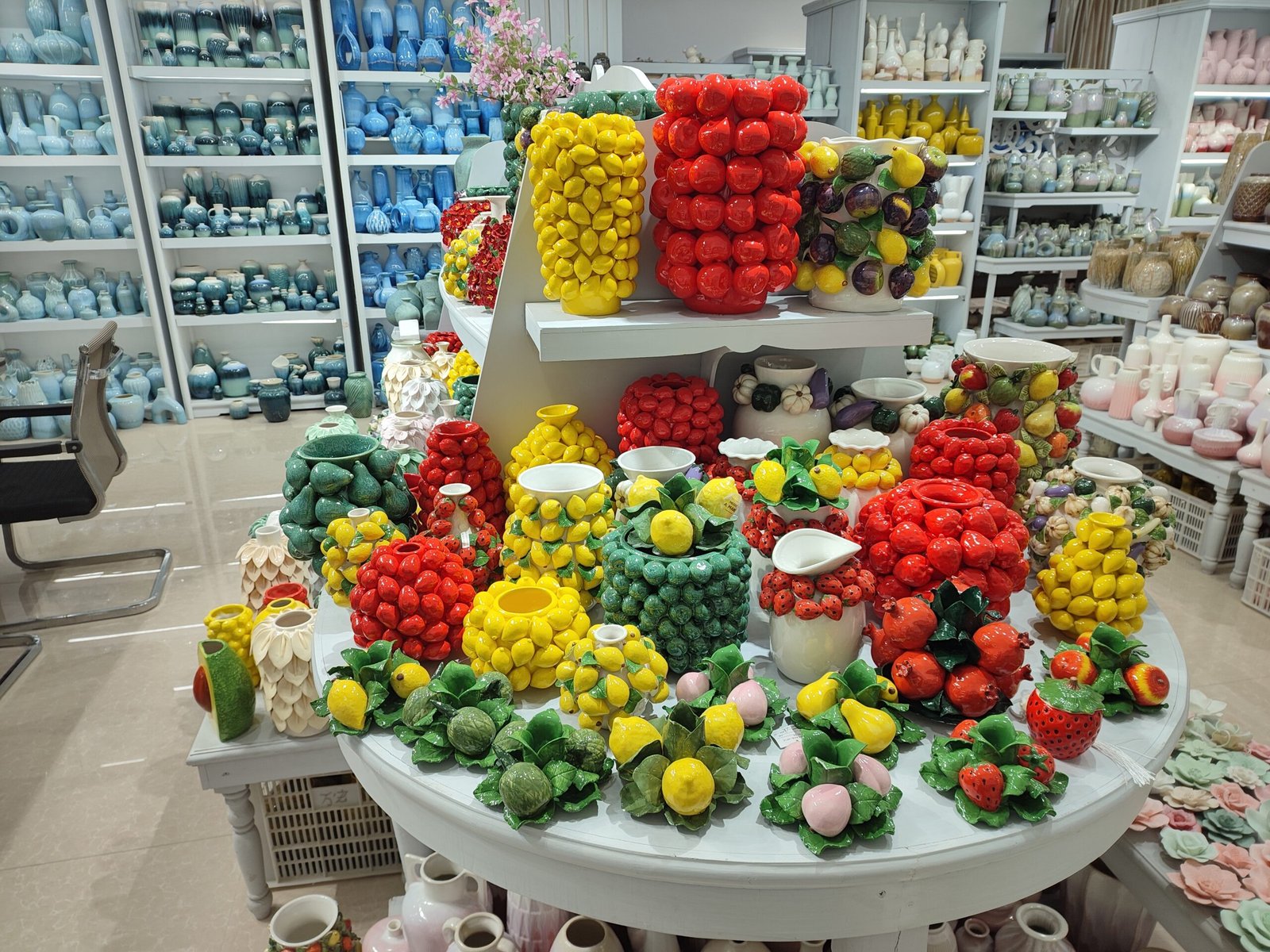
A wiggle vase works because it introduces motion without chaos. A lemon vase works because it carries optimism, color, and an easy Mediterranean cue that reads well in-store and online. Grandmillennial china decor works because nostalgia has returned in a more edited, more stylish way. A striped vase works because pattern is back, but it is back with more confidence and structure. A harlequin vase works because geometry now feels less cold and more expressive.
That reading is consistent with what we are seeing in the broader design conversation. Research on nostalgic consumption shows that nostalgia meaningfully shapes consumer behavior, while current interiors coverage points to “nostalgia-core” and “grandma chic” as part of the 2026 return to personality, memory, and familiarity in the home. For buyers, that means nostalgia is no longer a fringe aesthetic. It is a commercial signal—when handled with restraint.
Pattern is back—but it has grown up.
One reason I believe ceramic décor is especially well positioned now is that it can carry trend language without overcommitting the customer. At High Point Fall 2025, editors repeatedly highlighted tailored pattern, pinstripes, windowpane, depth, and a more intentional use of classic motifs. Around the same time, official High Point Style Spotter commentary emphasized expressive form and playful silhouettes. That is a strong clue for ceramic buyers: pattern should not feel childish or random; it should feel shaped, edited, and purposeful.
This is where a striped vase becomes more than a stripe. It becomes a merchandising tool. It can sharpen a tabletop story, break up soft organic silhouettes, and give clean visual rhythm to a shelf. Better Homes & Gardens’ 2026 stripe coverage even points out that bold stripes are moving into decorative accents such as vases and table settings, while designers recommend balancing strong linear pattern with softer curves and floral contrast. That is exactly the formula that makes ceramics commercially useful: one graphic piece, one softer form, one textural neutral.
The same goes for a harlequin vase. What used to read as overly decorative can now read as intelligent and warm if the scale, color, and finish are right. Homes & Gardens notes that checkerboard and related graphic geometry are resonating again because they balance familiarity with visual interest and can adapt across traditional, contemporary, eclectic, and minimalist rooms. For a retail buyer, that flexibility matters. It means one patterned ceramic can serve more than one customer story.
The buyer this article is really written for already knows the hard part.
The hard part is not finding ceramics. The hard part is finding ceramics that can survive the real conditions of retail.
You need items that photograph well for ecommerce thumbnails. You need shapes that read from six feet away. You need color stories that can sit beside textiles, wood, mirrors, and lighting without collapsing the visual hierarchy. You need a price architecture that lets the customer buy one piece on impulse, two pieces as a pair, or three pieces as a styled cluster. And if you are buying for a chain or multi-location format, you also need packaging discipline, repeatability, and a supplier who understands that the same product must work on a shelf, in a vignette, and in a replenishment conversation.
That is why the future of wholesale ceramic home decor will not belong to factories that only make objects. It will belong to suppliers that can translate trends into sellable retail language.
That is where Teruier’s value translation matters.
A good ceramic supplier can copy a shape. A better one can interpret a mood. But the most useful one for a U.S. retail buyer can do something rarer: turn a trend signal into a reorder-ready assortment.
This is where Teruier’s cross-border design-manufacturing collaboration model becomes commercially relevant. The advantage is not simply that ceramics can be produced. The advantage is that trend language can be translated into SKU language. A playful wiggle vase is not just “cute”; it becomes the motion piece inside a broader tabletop story. A lemon vase is not just seasonal; it becomes an optimism anchor inside spring and summer assortments. Grandmillennial china decor is not just nostalgic; it becomes the emotional bridge between heritage styling and younger shoppers who want collected, character-rich homes. A striped vase brings editorial structure. A harlequin vase adds rhythm and surprise.
That is what buyers need now: not one hero item, but a coherent ceramic family with different jobs to do.
The best assortment strategy is simple.
For most U.S. home décor chains, the strongest ceramic program is usually built like this:
Start with a base of easy solids and textural neutrals that support volume.
Layer in two or three conversation shapes, such as a wiggle vase or a soft sculptural form.
Add one cheerful color cue, such as a lemon vase, to increase emotional pickup.
Introduce one pattern-led piece, like a striped vase or harlequin vase, to make the assortment feel current.
Then anchor the whole story with one nostalgia-inflected accent—something in the world of grandmillennial china decor—so the display feels collected instead of algorithmic.
That mix works because it respects how customers actually shop. Most people do not buy a whole trend. They buy an entry point.
So what wins in 2026?
Not louder ceramics. Smarter ceramics.
The next winning wave in wholesale ceramic home decor will come from pieces that are expressive but still easy to place, nostalgic but not dusty, graphic but not harsh, and playful without losing retail discipline. Buyers do not need ceramic décor that tries to do everything. We need ceramic décor that knows its role in the assortment—and performs it beautifully.
That is the opportunity now. Not to fill shelves with more product, but to fill them with better signals.
And when those signals are translated correctly, a vase stops being a vase. It becomes margin, memory, and a reason to reorder.



