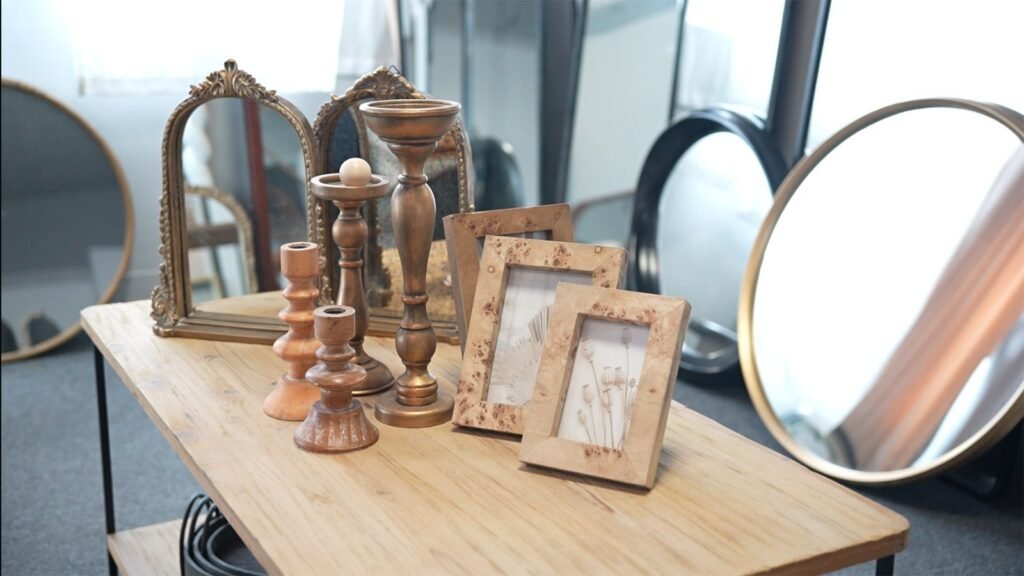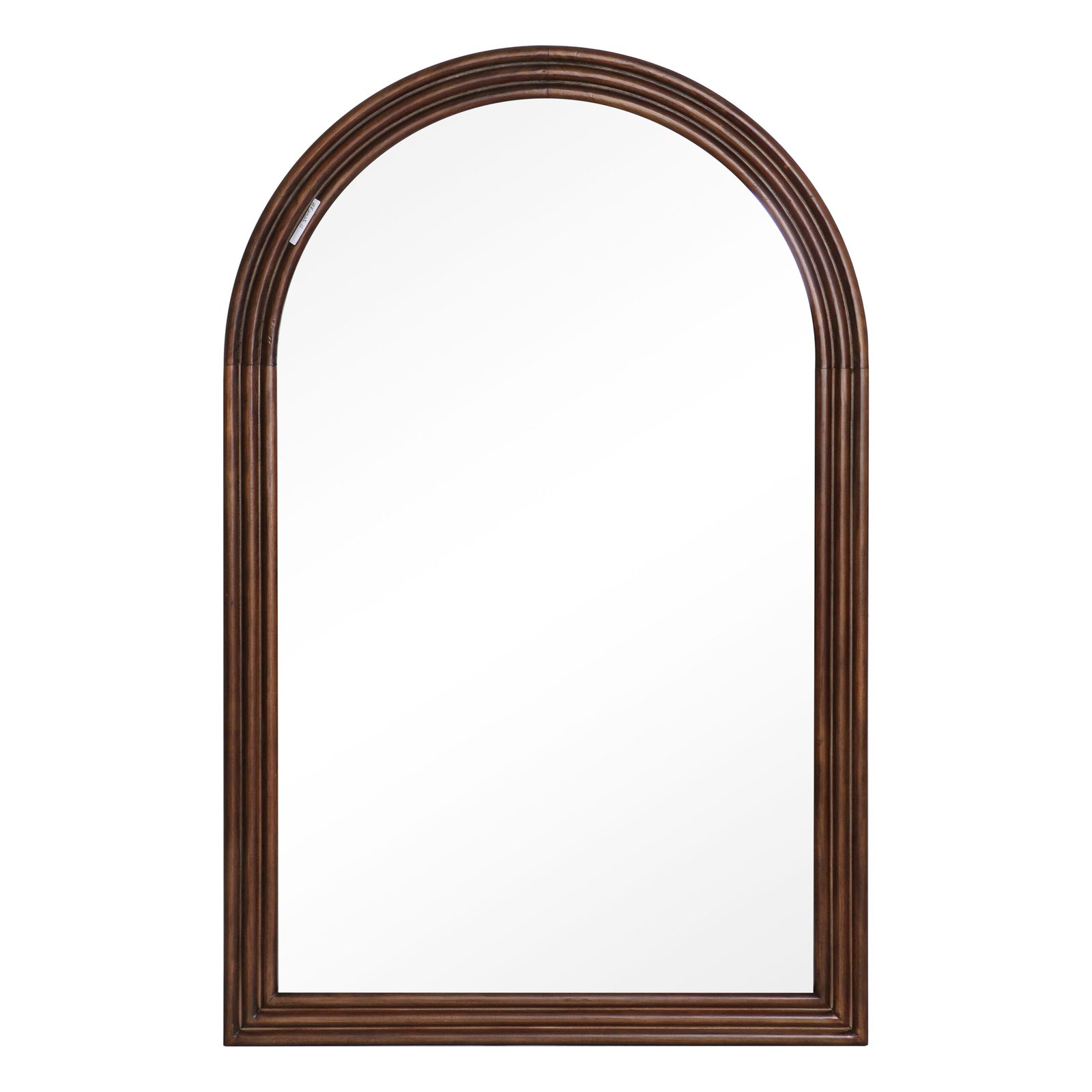
Why Organic Wall Mirrors Are Suddenly Everywhere
Organic wall mirrors are having a very good moment.
You see them in boutique hotels, small apartments, concept stores, design studios, and probably also in that one café where the chair is uncomfortable but the lighting is excellent.
The shape is usually soft, irregular, wavy, pebble-like, cloud-like, or gently asymmetrical. It does not shout. It does not behave like a strict rectangle. It gives a wall some movement without making the room look like a nightclub from 2008.
For German buyers, home décor retailers, interior designers, and project sourcing teams, the question is not simply:
“Is this mirror nice?”
That is too easy.
The real question is:
“Can we build a sellable, repeatable, well-explained assortment around this style?”
That is where organic wall mirror similar styles wholesale becomes useful.
Not exact copies.
Not risky lookalikes.
Not “we saw a designer piece online, can you make the same one but cheaper?” — which is not a strategy, it is a future email from a lawyer.
The better approach is to develop similar style directions: organic shapes, soft edges, warm finishes, retail-ready sizes, practical packaging, and clear product notes.
In other words: the feeling of the trend, without stealing someone’s homework.
Definition: What Does “Organic Wall Mirror Similar Styles Wholesale” Mean?
Organic wall mirror similar styles wholesale refers to a group of mirror designs that share the same design language, but are not identical copies.
They may use:
soft irregular shapes
rounded asymmetric outlines
thin metal frames
warm wood or wood-look frames
frameless wavy edges
smoked or bronze-tinted mirror glass
small-space-friendly proportions
neutral finishes that coordinate with other home décor items
The key word is similar.
For serious buyers, “similar style” should mean:
same design direction
same room mood
same customer need
same retail logic
different shape, proportion, finish, or construction detail
A good supplier does not just say, “Yes, we can make this.”
A good supplier says:
“This style direction can become three wall mirrors, one full-length mirror, and one coordinated small décor story. Here is the safer version. Here is the bolder version. Here is the one that will not frighten your logistics team.”
That is the difference between product copying and assortment planning.
Why German Buyers Should Care About Assortment Logic
German buyers usually appreciate beauty, but they also appreciate things like measurements, finish consistency, carton logic, and not discovering production surprises after the deposit.
Very reasonable. Very German. Very good.
An organic mirror may look relaxed, but the buying process should not be relaxed.
A retail buyer wants to know:
Can the shape be repeated?
Can the frame finish stay consistent?
Will the carton protect the irregular edge?
Does the mirror fit small homes?
Can it coordinate with ottomans, ceramics, wall décor, or side tables?
Can a sales team explain why this mirror belongs in the range?
A designer wants to know:
Can I use it in an entrance area, powder room, bedroom, or hospitality project?
Does it support the project mood?
Is it soft enough for a calm interior, but distinct enough to be noticed?
Will the product note help me specify it without guessing?
This is why assortment planning matters.
One organic mirror is a product.
Three related organic mirrors with clear sizes, finishes, and use cases become a commercial story.
And commercial stories are what buyers can actually sell.
Teruier’s Value Translation: From Trend Shape to Buyer-Ready Product
At Teruier, we often talk about value translation.
This means we do not only translate language between markets. We translate product value between different decision-makers.
A factory may understand production.
A designer may understand mood.
A buyer may understand margin, reorder risk, and shelf logic.
A retailer may understand what a customer can explain in ten seconds without needing a design degree and a small emotional breakdown.
Value translation connects these worlds.
For organic wall mirrors, this means turning a visual trend into:
a clear product role
a safer wholesale version
a coordinated finish story
a practical size range
a product note buyers can use
a style direction interior designers can specify
a retail argument that does not sound like decorative fog
The goal is not to make the product boring.
The goal is to make it understandable.
Because if a mirror needs six paragraphs of abstract poetry to explain why it exists, it may not be a mirror range. It may be a personality problem.
What Makes Organic Mirrors Work in an Assortment?
Organic mirrors work best when they are not treated as isolated “statement pieces”.
They should be planned as part of cohesive home decor materials and finishes.
For example:
An organic wall mirror with a warm metal frame can sit next to a neutral ottoman with soft woven texture.
A wavy frameless mirror can support a bathroom, hallway, or vanity story.
A soft wood-framed mirror can coordinate with ceramic vases, woven trays, and natural storage pieces.
A bronze-tinted organic mirror can add a slightly elevated look without becoming too precious for everyday retail.
The mirror becomes stronger when it belongs to a material family.
Warm metal.
Soft neutral fabric.
Matte ceramic.
Natural wood tone.
Subtle woven texture.
That is a story a buyer can understand.
Not “random beautiful objects”.
That is how assortments become expensive-looking chaos.
Comparison: Good Similar Style vs Bad Copycat Version
| Buying Point | Good Similar Style Wholesale | Bad Copycat Version |
|---|---|---|
| Design logic | Inspired by a broader organic trend | Too close to one existing designer product |
| Shape | Adapted proportion and outline | Nearly identical outline |
| Finish | Selected for assortment coordination | Chosen because the reference image had it |
| Buyer risk | Lower | Higher |
| Project use | Easier for designers to specify | May feel too trend-dependent |
| Retail story | Clear room and material logic | “It looks like that famous one” |
| Reorder potential | Better if specs are controlled | Risky if shape and finish are unstable |
| Brand value | Builds own range | Looks like a shortcut |
The shortcut may look clever for five minutes.
Then comes QC, packaging, buyer questions, and possibly a very serious person asking about design rights.
Suddenly, the shortcut is not so charming.
Organic Mirrors and Small Home Solutions
Organic wall mirrors are especially useful for small home solutions.
Small homes need objects that do more than sit there looking decorative.
A good mirror can:
make an entrance feel brighter
soften a narrow hallway
add depth to a compact bedroom
work above a small console
support a vanity corner
make a rental apartment feel less like a rental apartment
The organic shape helps because it feels softer than a strict rectangle.
A small wall does not always need a huge dramatic mirror. Sometimes it needs a compact, rounded, friendly shape that says, “I have taste,” not “I bought a palace mirror by mistake.”
For German home retailers and designers, this gives organic mirrors practical commercial value.
They are not only trend items.
They are space-improving items.
That matters.
A mirror that solves a small-home problem is easier to sell than a mirror that only says, “Look at me, I am interesting.”
Where Ottomans Fit Into the Same Assortment
Ottomans may seem unrelated to organic wall mirrors, but in retail assortment planning, they can support the same room story.
A small organic mirror and a compact ottoman can create a dressing corner.
A neutral ottoman and a warm metal mirror can support a bedroom assortment.
A textured cube ottoman and a soft-edged wall mirror can work well for apartment living.
A storage ottoman and a mirror can be part of a practical small-space story.
This is where cohesive home decor materials and finishes matter again.
The mirror should not be designed in one universe and the ottoman in another.
If the mirror has a warm brushed metal frame, the ottoman can use warm neutral fabric.
If the mirror has a soft wood tone, the ottoman can use linen-look, boucle, or textured upholstery.
If the mirror is frameless and wavy, the ottoman can bring the material warmth.
The customer may not describe this professionally. They will simply say:
“It works together.”
That sentence is worth money.
Project Potential for Interior Designers
Organic mirrors have strong project potential for interior designers because they can soften commercial and residential spaces without making them feel overdecorated.
They work in:
boutique hotels
small hospitality projects
residential entryways
apartment developments
retail fitting rooms
salons and beauty spaces
showrooms
cafés and lifestyle stores
compact bedrooms
bathroom vanity areas
But designers need more than a nice product photo.
They need dimensions, weight, hanging method, mirror thickness, frame material, finish description, carton information, and project notes.
A designer does not want to ask five times whether the mirror can hang vertically, horizontally, or only emotionally.
Good product notes help the designer specify with confidence.
That is why a wholesale mirror range should include clear spec sheets and product notes, not just glossy images.
Glossy images attract attention.
Clear specs close the decision.
Assortment Planning: A Simple Range Structure
For a German Buyer Desk assortment, an organic mirror range could be planned like this:
| Range Role | Product Type | Best Use | Finish Direction |
|---|---|---|---|
| Core Item | Medium organic wall mirror | Entryway, bedroom, hallway | Warm metal or soft black |
| Small Home Item | Compact wavy mirror | Apartment, vanity corner, small hallway | Frameless or thin metal |
| Project Item | Larger organic wall mirror | Hospitality, salon, boutique | Brushed metal or bronze tint |
| Soft Natural Item | Wood-look organic mirror | Warm interiors, natural home décor | Light oak or walnut tone |
| Statement-Safe Item | Irregular full-length mirror | Bedroom, dressing area | Slim frame, neutral finish |
This gives the buyer choice without turning the range into a zoo.
A good assortment has variation.
A bad assortment has twelve mirrors having a nervous breakdown together.
FAQ: Organic Wall Mirror Similar Styles Wholesale
What is an organic wall mirror?
An organic wall mirror is a mirror with a soft, irregular, rounded, wavy, or asymmetrical shape. It usually feels more natural and less strict than a rectangular or perfectly round mirror.
What does “similar styles wholesale” mean?
It means developing products inspired by a wider design trend, not copying one specific product. Similar styles may share the same mood, shape language, or finish direction, while still using original proportions, details, and specifications.
Why are organic mirrors good for German home retailers?
They fit current soft interior trends, work well in small home solutions, and can be used across entryways, bedrooms, bathrooms, and retail spaces. They also allow retailers to build a modern assortment without relying only on basic rectangles.
Are organic mirrors suitable for interior designers?
Yes. They have strong project potential for interior designers, especially in boutique hospitality, salons, dressing areas, apartments, and soft contemporary residential projects. Designers need clear spec sheets and product notes to use them confidently.
Which finishes work best for organic wall mirrors?
Warm metal, brushed brass, soft black, light wood tone, walnut tone, frameless polished edge, smoked mirror, and bronze-tinted glass can all work. The best choice depends on the surrounding assortment and target customer.
How can organic mirrors coordinate with ottomans?
They can share a material and room story. For example, a warm metal organic mirror can pair with a neutral textured ottoman for a dressing corner or bedroom range. This creates cohesive home decor materials and finishes.
Are organic mirrors only trend products?
No. The strongest organic mirrors are trend-aware but practical. If the size, finish, packaging, and product role are controlled, they can become stable assortment pieces rather than short-life trend experiments.
What should buyers ask before placing a wholesale order?
Buyers should ask about size options, frame material, mirror thickness, hanging method, carton size, packaging protection, finish consistency, MOQ, lead time, and whether product notes are available for retail or project use.
Final Thought: The Best Organic Mirror Is Not the Weirdest One
The organic mirror trend is not an invitation to make every wall look like melted furniture.
The best wholesale styles are soft, useful, explainable, and repeatable.
They give a room personality without making the buyer nervous.
For German buyers, home décor retailers, and interior designers, the smartest move is not to chase the most dramatic shape. It is to build a calm, coordinated, easy-to-explain assortment around the trend.
That means clear sizes.
Clear finishes.
Clear usage scenarios.
Clear spec sheets.
Clear product notes.
At Teruier, this is where value translation matters most.
We help turn a design trend into a buyer-ready product range: mirrors that work with ottomans, materials that work across categories, and products that are easier to explain, specify, sell, and reorder.
Because in home décor, beauty is important.
But beauty with a clear buying reason?
Much better.