
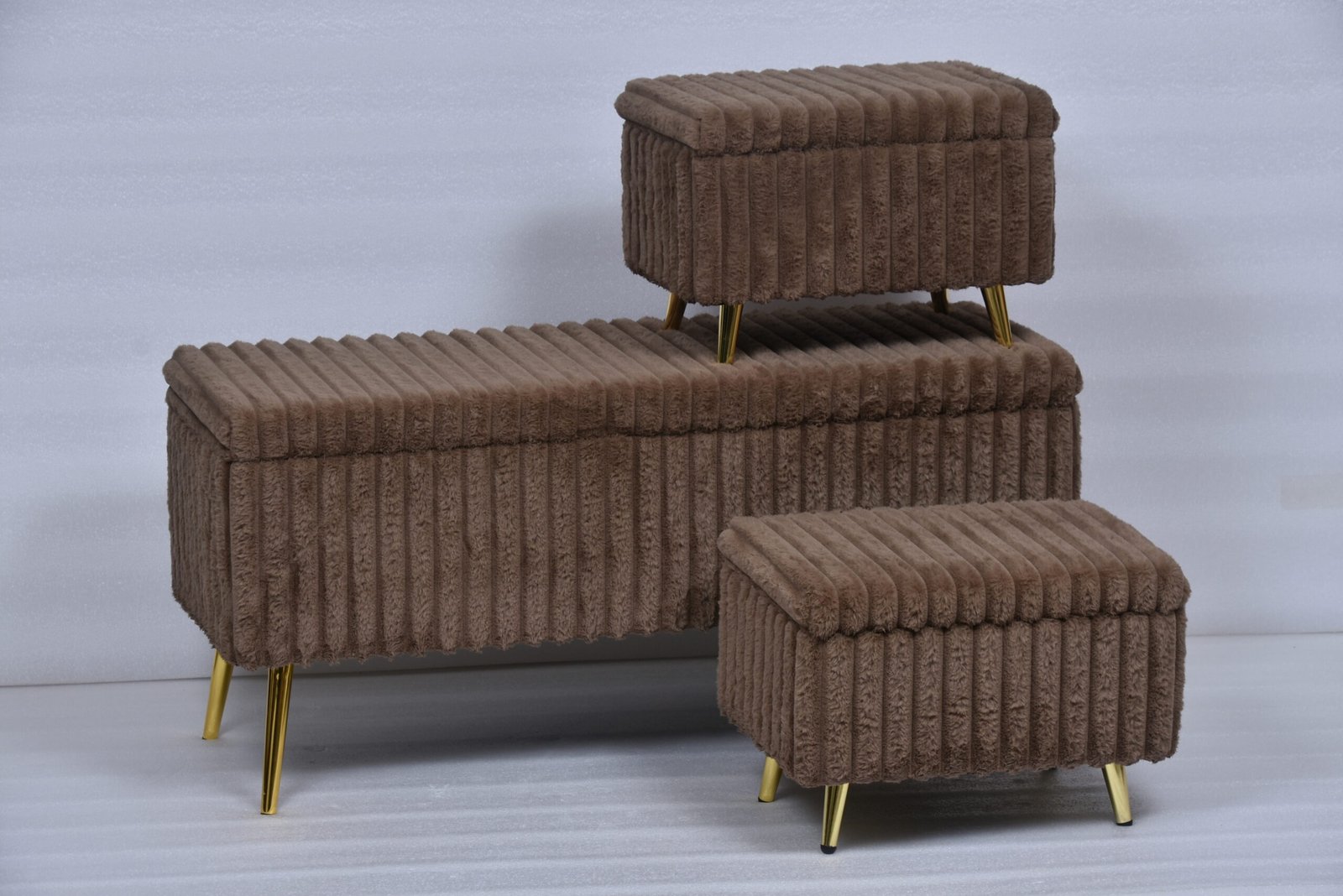
Why Materials and Finishes Belong in Assortment Planning
A home decor assortment does not fail because one vase is ugly.
It fails because the mirror frame does not speak to the ottoman fabric, the ceramic finish looks like it came from another season, and the storage basket feels like it joined the party by accident.
That is why home decor materials and finishes are not just “product details”. They are assortment structure.
For German buyers, home decor retailers and interior designers, materials and finishes answer very practical questions:
Can this product sit next to the rest of the range?
Can the colour be repeated next season?
Can the finish survive handling, shipping and retail display?
Can the customer understand the style in three seconds?
Can the designer specify it without writing five emails and quietly losing patience?
Assortment Planning is not only about choosing products. It is about making products belong together.
And yes, “belong together” is a much better strategy than “we found twelve nice things online and hoped they would become a collection.”
Definition: What Are Home Decor Materials and Finishes?
In home decor, materials are what the product is made from.
Examples:
Metal
Wood
MDF
Resin
Ceramic
Glass
Mirror glass
Fabric
Bouclé
Linen-look upholstery
Rattan or woven materials
Stone-look or marble-look surfaces
Finishes are how those materials look and feel on the surface.
Examples:
Brushed brass
Soft black
Warm gold
Walnut tone
Light oak tone
Matte ceramic glaze
Glossy ceramic glaze
Textured fabric
Smoked mirror
Bronze tinted mirror
Fluted surface
Woven texture
In buying terms, materials and finishes decide whether a product feels cheap, commercial, calm, premium, seasonal, risky, or reorder-friendly.
A mirror is not just a mirror.
A black metal mirror, warm gold mirror, smoked mirror and oak-look mirror are four different buying stories.
An ottoman is not just a small stool.
A bouclé ottoman, velvet ottoman, linen-look ottoman and woven stripe ottoman belong to different customer moods and price expectations.
This is where buyers need structure.
Because if every product in the assortment has a different material language, the shelf starts to look like a group project where nobody read the brief.
The Assortment Planning Rule: Materials First, Products Second
Many buyers start with products:
“We need mirrors.”
“We need ottomans.”
“We need storage.”
“We need small decor.”
That is correct, but incomplete.
A stronger assortment starts with the material and finish story first.
For example:
Warm metal + soft neutral fabric + matte ceramic
Light wood tone + woven texture + natural ceramic
Soft black metal + smoked mirror + textured upholstery
Walnut tone + bronze finish + warm ivory fabric
Now the products can be selected under a clear direction.
This helps when planning:
Mirrors
Ottomans
Benches
Ceramic decor
Wall decor
Trays
Storage boxes
Baskets
Small accent furniture
Decorative objects
A buyer should be able to look at the assortment and think:
“Yes, these products know each other.”
Not:
“Why is this chrome mirror standing next to a rustic basket and a pink ceramic mushroom?”
Unless the theme is “warehouse after a difficult Tuesday”, this is not ideal.
Teruier’s Cross-Border Design-Manufacturing Coordination Model
At Teruier, we often use the Teruier Cross-Border Design-Manufacturing Coordination Model to turn market taste into supplier-ready product decisions.
That sounds serious because it is. But the idea is simple.
German buyers and designers do not only need nice products. They need products that can move from trend idea to sample, production, shipping, retail display and reorder without losing their meaning on the way.
This model connects four things:
Market direction
Design interpretation
Factory production reality
Buyer-side assortment logic
For example, a German buyer may want a softer, warmer assortment for small apartments.
That is not enough as a production instruction.
It must be translated into:
A warm metal mirror frame
A compact neutral ottoman
A matte ceramic tray
A storage box with woven texture
A finish palette that can repeat across categories
Product notes that explain the room use
Spec sheets that reduce confusion
Packaging rules that protect the product
This is how an idea becomes a product range.
Not magic.
Not moodboard poetry.
Actual coordination.
Very unfashionable. Very useful.
Why German Buyers Should Care About Finish Consistency
German buyers tend to ask the right boring questions.
And in sourcing, boring questions save money.
Can the brushed brass finish be repeated?
Will the black powder coating stay stable?
Can the walnut tone match between mirror and storage unit?
Will the fabric colour shift between batches?
Can the ceramic glaze be controlled enough for reorder?
These questions matter because a first order is only the beginning.
A real assortment needs reorder stability.
A reorder stability manufacturer is not simply a factory that can produce once. It is a supplier who can control materials, finishes, packaging, production notes and quality expectations across repeated orders.
That is especially important for German retailers and project buyers.
One batch looking good is nice.
The second batch matching the first batch is business.
Comparison: Product-Led Buying vs Material-Led Assortment Planning
| Buying Approach | Product-Led Buying | Material-Led Assortment Planning |
|---|---|---|
| Starting point | “We like this item.” | “This finish story supports the range.” |
| Risk | Products may not coordinate | Range feels more coherent |
| Mirror selection | Shape first | Shape + frame finish + room role |
| Ottoman selection | Fabric looks nice | Fabric supports colour and texture palette |
| Storage selection | Added as separate product | Supports storage and organization story |
| Reorder control | Often unclear | Material and finish notes are documented |
| Designer use | Harder to specify | Easier to place in projects |
| Retail display | Can look random | Easier to merchandise |
| Buyer confidence | Depends on taste | Supported by logic |
Taste is important.
But taste without structure is how a store ends up with seven “statement pieces” and no actual statement.
Mirrors: The Finish Does Most of the Talking
Mirrors are one of the best categories for showing why finishes matter.
A mirror frame changes the whole product meaning.
A warm gold frame can feel soft, decorative and slightly elevated.
A black metal frame feels clean, practical and architectural.
A light wood frame works for natural, Scandinavian or warm minimalist interiors.
A smoked mirror or bronze tinted mirror feels more boutique and project-ready.
A frameless wavy mirror feels softer and more trend-led.
For Assortment Planning, the question is not:
“Which mirror is the prettiest?”
The better question is:
“Which mirror finish supports the wider home decor range?”
If the assortment already includes warm neutral ottomans, matte ceramic decor and woven storage pieces, then warm metal or light wood mirrors may fit naturally.
If the range is more modern, with black hardware and clean storage solutions, then soft black mirror frames may be stronger.
If the range targets boutique hospitality or interior designers, smoked or bronze tinted mirrors may create stronger project potential.
A mirror finish is not decoration.
It is a signal.
Ottomans: Fabric Is Not a Small Detail
Ottomans are small, but their fabric decisions are not small.
A compact ottoman can support small-space seating, bedroom styling, dressing corners, hallway use and soft retail display.
But the wrong fabric can make it look dated before the container arrives.
Useful ottoman finish directions include:
Bouclé for soft texture
Linen-look fabric for safe neutral interiors
Windowpane fabric for quiet pattern
Ticking stripe for casual European warmth
Velvet for a more decorative range
Woven texture for natural assortments
Neutral beige, taupe, ivory and soft grey for low-risk retail placement
For German buyers, the ottoman should not only look cosy.
It should have:
Clear fabric description
Colour reference
Usage scenario
Weight and size information
Carton size
Care note if needed
Production stability
Reorder plan
A “cute little ottoman” is not a buying strategy.
It is a sentence people use right before the product becomes hard to explain.
Storage and Organization: The Category Where Materials Must Behave
Storage and organization is one of the most practical home decor categories, especially for small homes.
But practical does not mean ugly.
A storage box, basket, shelf bin or decorative storage piece can support the whole assortment if the material story is right.
Good material directions include:
Woven texture
Natural-look fibre
Light wood tone
Warm neutral fabric
Soft black metal detail
Matte ceramic knobs or small decorative accents
Stackable shapes
Compact proportions
For small space assortment planning, storage products should do two jobs:
Solve a real space problem
Still look like part of the home decor range
That means the storage item must not feel like office equipment that wandered into the living room wearing a basket costume.
A good storage item should connect with mirrors, ottomans and small decor through colour, texture or finish.
For example:
Light wood mirror + woven storage basket + neutral ottoman
Soft black mirror + structured storage box + textured bench
Warm gold mirror + ivory fabric ottoman + matte ceramic tray
This is how practical products become attractive assortment anchors.
What Interior Designers Should Ask Before Requesting a Custom Size or Finish
Custom size and custom finish requests can be useful.
They can also become a beautiful little trap.
Before requesting a custom size or finish, interior designers should ask:
What is the exact installation space?
Is the custom size necessary, or just nice to have?
Will the new size affect packaging and freight cost?
Will the product still pass safe handling requirements?
Can the finish be repeated for future phases?
Does the finish match other items in the project?
Is the MOQ realistic?
Will the lead time still work?
Can the supplier provide a finish sample?
Can the product note be updated for the project?
This is especially important for mirrors and ottomans.
A custom mirror size may affect glass safety, frame strength, carton structure and shipping risk.
A custom ottoman fabric may affect MOQ, colour consistency, abrasion performance and reorder stability.
Customisation is not bad.
Uncontrolled customisation is where budgets go to become ghosts.
FAQ: Home Decor Materials and Finishes
What does “home decor materials and finishes” mean?
It refers to both the physical material of a product and the surface treatment or appearance. For example, metal is a material, while brushed brass or soft black powder coating is a finish. Ceramic is a material, while matte glaze or reactive glaze is a finish.
Why are materials and finishes important in Assortment Planning?
They help products coordinate across categories. A buyer can build a stronger range when mirrors, ottomans, storage pieces and ceramic decor share a clear material and finish direction.
How do materials and finishes affect reorder stability?
If a finish is hard to control, future batches may look different from the first order. Reorder stability depends on documented finish standards, material sourcing, production control and clear quality expectations.
What finishes are safer for German home decor assortments?
Warm metal, soft black, light oak tone, walnut tone, matte ceramic, woven texture, neutral upholstery and smoked mirror finishes are often useful because they can coordinate across different home decor categories.
How should mirrors be planned in a materials and finishes assortment?
Mirrors should be planned by frame material, finish, room use and style role. A range may include warm metal mirrors, black metal mirrors, wood-look mirrors and smoked mirror options, depending on the target customer and retail story.
How should ottomans be planned?
Ottomans should be planned by fabric, shape, function and room scenario. A compact neutral ottoman can support small-space living, bedroom use, hallway seating or dressing areas.
Why is storage and organization important in small space assortment planning?
Small homes need products that solve space problems without making the room look crowded or purely functional. Storage products should be practical, but still coordinate with the wider home decor range.
What should interior designers ask before requesting a custom size or finish?
They should ask about MOQ, lead time, finish sample availability, packaging impact, installation space, colour consistency, reorder possibility and whether the supplier can update the product notes and spec sheet.
What makes a supplier useful for materials and finishes planning?
A useful supplier can provide finish options, material explanations, product notes, spec sheets, packaging information, sample support and stable reorder communication.
Final Thought: The Finish Is Not the Last Detail. It Is the Buying Logic.
In home decor, materials and finishes are often treated as the final surface layer.
That is a mistake.
For German buyers, retailers and designers, the finish is often the thing that decides whether the product belongs in the assortment at all.
A mirror frame finish can connect the wall story.
An ottoman fabric can soften the room story.
A storage material can make practical products feel decorative.
A ceramic glaze can pull the shelf together.
This is why Assortment Planning should not start with random products.
It should start with a clear material and finish direction.
At Teruier, our Cross-Border Design-Manufacturing Coordination Model helps turn these decisions into workable product ranges: clear enough for buyers, flexible enough for designers, practical enough for production and stable enough for reorder.
Because the best assortment is not the one with the most products.
It is the one where every product looks like it has a reason to be there.
And frankly, that is already more elegant than half the moodboards on the internet.



