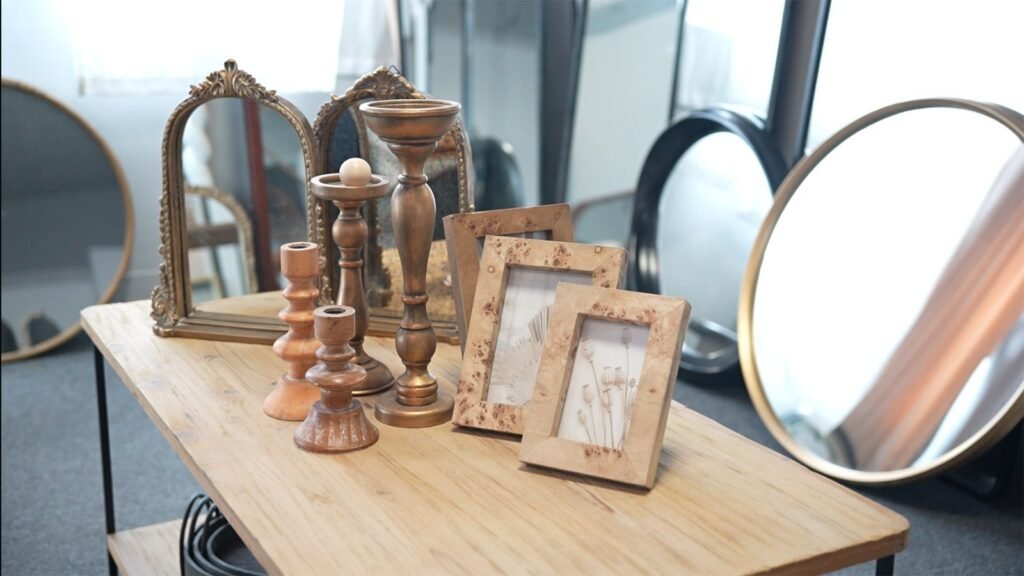
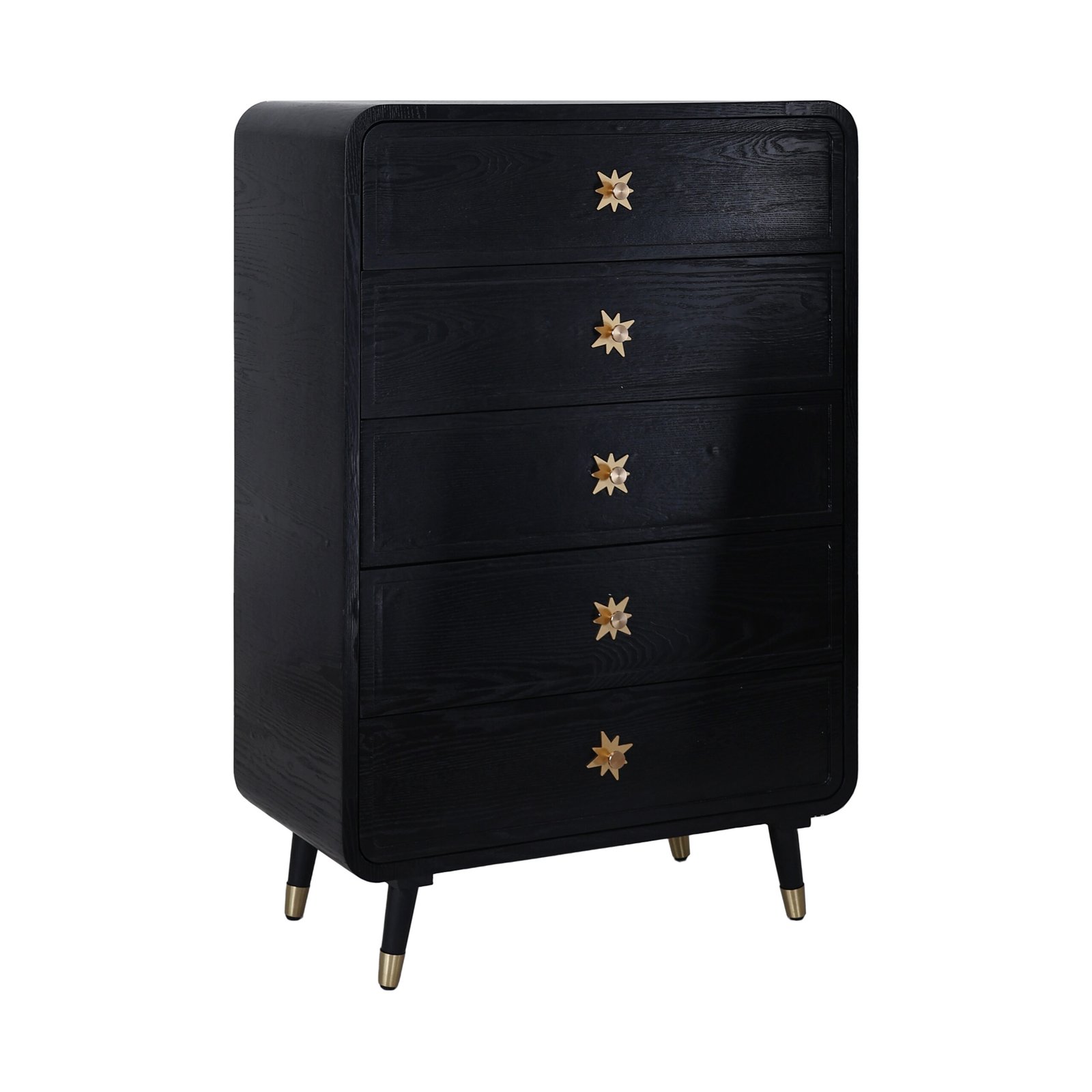
Some home decor products look beautiful in a showroom, then become oddly silent on a retail shelf.
The mirror is nice.
The ottoman is nice.
The ceramic object is… also nice.
But when the buyer asks, “Why this one?” everyone suddenly becomes very poetic.
That is usually the first problem.
For a German buyer, an interior designer, or a project sourcing team, a product must not only look good. It must be easy to explain, easy to specify, easy to place in an assortment, and easy to reorder without starting a small detective investigation.
This is where easy to explain home decor becomes important.
It is not about making products boring. Please, no. The world already has enough beige rectangles with emotional names.
It means the product has a clear role, a clear material logic, a clear price position, and clear selling arguments.
At Teruier, we call this part of our value translation work: translating design, factory capability, buyer expectations, and shelf logic into products that are easier to understand and easier to sell.
Definition: What Is Easy to Explain Home Decor?
Easy to explain home decor means a product can be understood quickly by the people who must sell, specify, buy, or display it.
A mirror should not only be “modern.”
An ottoman should not only be “cosy.”
A ceramic vase should not only be “artistic,” which is often the polite word for “nobody knows where to put it.”
A product becomes easy to explain when the buyer can answer four questions without suffering:
What room is it for?
What style does it support?
What material or finish makes it relevant?
Why should this SKU exist in the assortment?
For example:
A slim brushed metal mirror can be explained as a clean entryway, bedroom, or boutique hotel mirror with low visual risk.
A textured neutral ottoman can be explained as a soft seating accent for living rooms, bedrooms, and dressing corners.
A matte ceramic decor item can be explained as a shelf-friendly styling piece for neutral, warm, or natural interiors.
That is already much better than “nice decorative product.”
“Nice” does not build an assortment.
“Nice” just stands there and hopes for mercy.
Why German Buyers Care About Explanation
German buyers usually do not fall in love with chaos.
They like structure.
They like documents.
They like measurements.
They like knowing what they are buying before the container has already left the port.
This does not mean German buyers are cold. It means they have seen enough beautiful product photos hiding ugly operational problems.
A good assortment needs logic.
A mirror line may include arched mirrors, round mirrors, full-length mirrors, and smoked mirror options. But if every item has a different frame finish, different carton rule, different thickness, and no clear product note, the assortment becomes a furniture-themed headache.
An ottoman collection may include cube ottomans, storage ottomans, bench ottomans, and vanity stools. But without fabric notes, weight limits, carton size, upholstery descriptions, and usage scenarios, it is not an assortment. It is a soft little mystery.
For the German Buyer Desk, the goal is simple:
Products should be attractive, but the explanation should be sober.
A little charm is welcome. Confusion is not.
The Difference Between Decorative Products and Assortment Products
A decorative product is something that looks good.
An assortment product is something that earns its place.
That is the difference.
| Product Type | Decorative Product | Assortment Product |
|---|---|---|
| Mirror | “Beautiful gold mirror” | 24×36 inch warm gold metal frame mirror for entryway, bedroom, and retail wall display |
| Ottoman | “Cute fabric stool” | Compact textured neutral ottoman for small-space seating, dressing areas, and add-on furniture assortment |
| Ceramic Decor | “Handmade look vase” | Matte ceramic shelf decor with warm neutral glaze, suitable for coordinated living room and tabletop display |
| Wall Decor | “Trendy wall piece” | Lightweight wall decor item with clear carton spec, finish note, and room-use positioning |
The first type depends on taste.
The second type supports buying decisions.
And taste alone is dangerous. Taste changes when someone with a spreadsheet enters the room.
Where Value Translation Comes In
Teruier does not only look at the product as an object.
We look at what the product must become in the buyer’s system.
That is the essence of value translation.
A factory may say:
“This is a mirror.”
A buyer may ask:
Can it fit into a neutral home decor assortment?
Can it be packed safely?
Can the finish be repeated?
Can my sales team explain it?
Can an interior designer specify it?
Can the product note reduce back-and-forth communication?
Value translation means we do not stop at “we can make it.”
We translate the product into:
a retail role
a room scenario
a material and finish story
a spec-ready product note
a shelf logic
a reorder argument
a buyer-friendly explanation
This matters especially for categories such as mirrors, ottomans, ceramic decor, small furniture, and mixed-material home decor, because these products often sell through a combination of look, touch, proportion, finish, and practical confidence.
A product photo may open the door.
But spec sheets and product notes are what keep the conversation alive.
What Makes a Supplier Spec-Ready?
A spec-ready supplier for interior designers or retail buyers is not just a supplier who can send a catalogue.
A catalogue is easy.
A useful catalogue is harder.
A spec-ready supplier can provide product information in a way that supports decision-making.
That usually includes:
Product size
Material and finish
Frame or fabric details
Carton size
Gross weight and net weight
MOQ
Production lead time
Packaging notes
Room-use suggestion
Style positioning
Product comparison notes
Customisation options
Care or usage notes when relevant
This is not glamorous.
But neither is a delayed shipment because nobody checked carton size.
In home decor sourcing, glamour should stay in the showroom. The documents should behave like adults.
Example: Mirror Assortment Logic
A mirror assortment should not be built by collecting every shape that looks nice.
That is how you end up with five mirrors fighting each other like cousins at a wedding.
A better mirror assortment may include:
One clean rectangular mirror for broad use
One arched mirror for soft contemporary interiors
One round mirror for bathroom and hallway styling
One full-length mirror for bedroom and dressing use
One finish-driven item, such as brushed metal, smoked tint, or warm wood
Now the buyer can explain the assortment.
Each item has a role.
Each shape supports a different room.
Each finish has a reason.
Each SKU is not merely “another mirror.”
This is easy to explain home decor in practice.
Example: Ottoman Assortment Logic
Ottomans are small, but they can create large confusion.
Is it seating?
Is it storage?
Is it a footrest?
Is it a decorative accent?
Is it strong enough for actual use, or only strong enough for a lifestyle photo with one magazine on top?
An ottoman assortment should usually define:
Shape: cube, round, bench, storage, vanity stool
Fabric: boucle, linen-look, velvet, woven texture, stripe, windowpane
Room: living room, bedroom, hallway, dressing area
Function: extra seat, footrest, storage, styling accent
Price role: entry, mid, statement piece
A textured neutral ottoman is often easier to sell than a wildly printed one because it works across more interiors.
That does not mean every ottoman must look like oatmeal.
It means the assortment needs a safe core, then controlled personality around it.
Controlled personality is good.
Uncontrolled personality becomes clearance stock.
Comparison: Easy to Explain vs Hard to Explain Home Decor
| Buying Question | Easy to Explain Product | Hard to Explain Product |
|---|---|---|
| What is it? | Clear category and function | Vague decorative object |
| Where is it used? | Room scenario is obvious | “Anywhere”, which often means nowhere |
| Why this finish? | Matches trend, material, or assortment logic | Finish chosen because it looked nice that day |
| Can it be specified? | Has size, material, carton, notes | Needs five emails and one nervous call |
| Can it be reordered? | Repeatable material and finish | First batch looks different from second batch |
| Can sales explain it? | Simple product story | Needs emotional interpretation |
| Buyer confidence | Higher | Lower |
In other words, the easier the product is to explain, the easier it is to buy.
This sounds obvious.
So does “do not put metal in the microwave,” yet here we are as a civilisation.
FAQ: Easy to Explain Home Decor
What does “easy to explain home decor” mean for buyers?
It means the product has a clear purpose, room use, material description, finish logic, and price role. Buyers can understand why the item belongs in the assortment without relying only on taste or product photography.
Is easy to explain home decor the same as simple design?
No. Simple design can still be badly explained. A product can be visually calm but commercially unclear. Easy to explain means the design, specification, usage scenario, and assortment role all work together.
Why are spec sheets and product notes important?
Because they reduce uncertainty. Good spec sheets and product notes help buyers, designers, importers, and project teams compare items, confirm suitability, and avoid unnecessary communication delays.
How does this help interior designers?
Interior designers need products that can be specified with confidence. A spec-ready supplier for interior designers provides clear dimensions, materials, finishes, packaging information, and usage notes, so the designer does not need to guess.
Can decorative products still have personality?
Yes, and they should. But personality should be supported by product logic. A mirror can have a beautiful brushed metal frame. An ottoman can have a charming textured fabric. The point is not to remove character. The point is to make character sellable.
Why is this important for German buyers?
German buyers often prefer clear product structure, reliable documentation, and practical sourcing communication. A product that is easy to explain is easier to compare, approve, order, and reorder.
Final Thought: The Best Product Is Not Always the Loudest One
In assortment planning, the best product is not always the most dramatic.
Sometimes the winner is the mirror that fits three room scenarios, packs safely, repeats well, and has a product note that does not read like a perfume advertisement.
Sometimes the best ottoman is not the wildest one, but the one that makes the buyer think:
“Yes. I know exactly where this belongs.”
That is the point of easy to explain home decor.
At Teruier, we believe good home decor should have design value, but also buying logic. It should look good, yes. But it should also be clear enough for buyers, designers, retailers, and sourcing teams to move forward without needing a therapy session.
Good assortment planning is not about making everything safe.
It is about making every product easier to understand, easier to place, and easier to sell.
And frankly, that is already quite stylish.