
Why This Topic Belongs in Assortment Planning
Every buyer knows this moment.
You see a mirror. It is good.
You see an ottoman. Also good.
You see a ceramic piece. Fine, charming, harmless.
Then someone says:
“Can we make it a little bigger?”
“Can we change the finish?”
“Can we use another fabric?”
“Can we make the colour more warm, but not too warm, something between beige and not-beige?”
And suddenly, what looked like a simple product decision becomes a small international conference.
That is why custom size vs custom finish matters in Assortment Planning.
For German buyers, home decor retailers and interior designers, customisation is useful. But not every custom request has the same cost, risk or production consequence.
A custom finish may improve assortment coordination.
A custom size may affect packaging, freight, safety, MOQ and lead time.
One is often a controlled adjustment.
The other can quietly open the door to chaos wearing a very polite suit.
Definition: What Is Custom Size?
Custom size means changing the physical dimensions of a product.
For mirrors, this may include:
height
width
frame thickness
mirror glass size
full-length proportion
wall mirror diameter
arched top height
hanging orientation
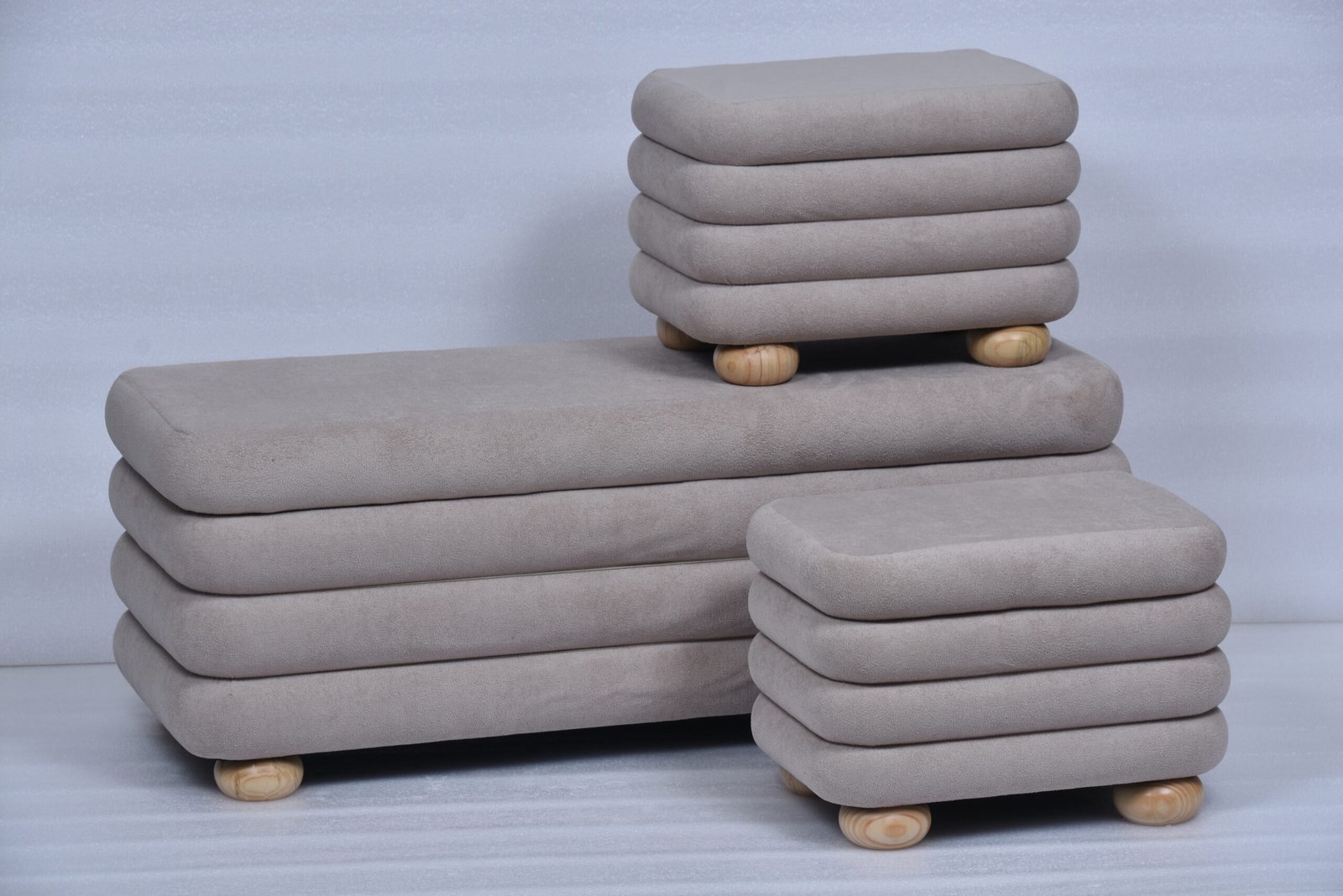
For ottomans, this may include:
seat height
cube size
bench length
storage depth
cushion thickness
leg height
overall volume
For ceramic decor, this may include:
vase height
opening diameter
base width
wall thickness
tray size
decorative object scale
Custom size sounds simple.
It is not always simple.
A larger mirror may need stronger packaging.
A wider ottoman may need different inner structure.
A taller ceramic vase may need better balance.
A larger carton may change freight cost.
A bigger item may no longer fit the shelf, the container plan, or the buyer’s patience.
Custom size changes the product body.
And when the body changes, many other things follow.
Definition: What Is Custom Finish?
Custom finish means changing the surface look or material expression of a product without necessarily changing its main structure.
For mirrors, this may include:
brushed brass
soft black
warm gold
antique gold
bronze tint
smoked mirror
light oak tone
walnut tone
matte black frame
champagne metal finish
For ottomans, this may include:
bouclé
linen-look fabric
velvet
woven stripe
windowpane check
warm taupe fabric
cream textured upholstery
soft neutral upholstery
For ceramic decor, this may include:
matte white glaze
warm ivory glaze
reactive glaze
tonal ceramic finishes
speckled glaze
soft green
sand beige
charcoal matte
cream and taupe tonal finish
Custom finish often changes how the product fits into the assortment.
It can make one SKU feel more German retail, more project-ready, more neutral, more seasonal, or more interior-designer friendly.
But finish customisation still needs control.
A “slightly warmer beige” can become a tragedy if nobody defines what “slightly” means.
The Simple Rule: Change Finish Before Size, Unless Size Is the Real Problem
In Assortment Planning, the safer starting point is usually:
Change the finish first.
Change the size only when the size blocks the sale.
Why?
Because finish often improves the product’s market fit without completely rebuilding the product.
For example:
A mirror in warm gold may feel too decorative. Change it to brushed brass or soft black, and it becomes easier for German buyers to place.
An ottoman in bright velvet may feel too risky. Change the ottoman fabric texture to linen-look taupe or soft woven neutral, and it becomes more suitable for broad retail.
A ceramic vase in glossy blue may feel too specific. Change it to tonal ceramic finishes in ivory, sand or warm grey, and it becomes easier to coordinate.
These changes can improve the assortment without turning the product into a new engineering project.
But if the mirror is too large for German apartment walls, or the ottoman is too low for actual seating, or the ceramic object is too tall for retail shelves, then size becomes the real issue.
Then yes, custom size is justified.
But it should be done with documents, not vibes.
Vibes are lovely for candles.
Less lovely for carton calculation.
Teruier’s Value Translation: Turning Custom Requests Into Buyer Logic
At Teruier, we often use value translation to handle custom requests.
This means we do not treat customisation as a random wish list.
We translate the request into buyer-side value.
A designer may say:
“Can we make this mirror softer?”
A factory may hear:
“Change something.”
But value translation asks:
Does “softer” mean a warmer finish?
A thinner frame?
A rounder shape?
A smaller size?
A less shiny surface?
A more neutral tone for the project?
A buyer may say:
“This ottoman needs to feel more premium.”
That could mean:
better fabric texture
cleaner seam detail
slightly higher seat
darker wood leg
better packaging
better product note
more stable colour story
A retailer may say:
“This ceramic range needs to look more cohesive.”
That may not require new moulds.
It may only require tonal ceramic finishes across several shapes.
Good customisation is not about doing whatever is asked.
It is about finding the smallest change that creates the biggest buying value.
That is the kind of sentence which sounds boring until it saves money.
Comparison: Custom Size vs Custom Finish
| Question | Custom Size | Custom Finish |
|---|---|---|
| What changes? | Product dimensions and structure | Surface look, colour, material expression |
| Common categories | Mirrors, ottomans, benches, storage, ceramics | Mirrors, ottomans, ceramics, wall decor, trays |
| Main risk | Packaging, freight, safety, structure, MOQ | Colour consistency, finish matching, batch control |
| Usually affects lead time? | Often yes | Sometimes |
| Usually affects carton size? | Very often | Usually not, unless material thickness changes |
| Best reason to choose it | Product does not fit the space, shelf or usage need | Product does not fit the assortment style |
| Buyer difficulty | Higher | Medium |
| Designer value | Strong when project dimensions are fixed | Strong when mood and material coordination matter |
| Reorder risk | Higher if specs are not controlled | Manageable with finish samples and standards |
| German buyer advice | Use carefully | Use strategically |
In short:
Custom finish helps a product belong.
Custom size helps a product fit.
Do not confuse the two.
That is how an innocent mirror becomes a logistics villain.
Mirror Finish Coordination: The Most Common Custom Finish Question
Mirrors are often the first category where buyers notice finish problems.
A mirror shape may be acceptable, but the frame finish can make or break the product.
This is why mirror finish coordination is important.
A German buyer may need:
soft black for modern apartments
brushed brass for warm contemporary interiors
champagne gold for safer decorative retail
light oak for natural home decor assortments
walnut tone for warmer, more mature room settings
smoked mirror for boutique and hospitality projects
bronze tint for a softer premium look
The wrong finish makes a mirror feel disconnected.
The right finish helps it coordinate with:
ottoman legs
ceramic decor
storage baskets
wall decor
lighting accents
small furniture hardware
retail display fixtures
A mirror should not look like it came from a different buying meeting.
Unless, of course, the buying meeting was very bad.
Ottoman Fabric Texture: When Finish Is Not Just Colour
For ottomans, “finish” often means fabric.
And fabric is not only colour.
Ottoman fabric texture decides whether the product feels casual, premium, soft, seasonal, cheap, durable, cosy or impossible to explain.
A beige velvet ottoman and a beige woven ottoman are not the same product.
A bouclé cube ottoman and a linen-look cube ottoman may share the same size, but they belong to different price stories and room moods.
Good fabric customisation may include:
switching from shiny velvet to woven neutral
using ticking stripe instead of large floral print
changing bright colour to warm taupe
adding windowpane texture for quiet pattern
using bouclé only on compact shapes to reduce risk
matching fabric tone with mirror frame and ceramic glaze
For German buyers, a safe ottoman assortment often needs one core neutral, one textured neutral, and one controlled pattern.
Not twelve “fun fabrics”.
Twelve fun fabrics are not an assortment.
They are a fabric committee with no adult supervision.
Tonal Ceramic Finishes: The Quiet Hero of Cohesive Assortments
Ceramic decor is where finish control becomes very useful.
A ceramic shape may not be new, but the finish can make it feel current.
Tonal ceramic finishes are especially helpful for German home decor assortments because they create quiet coordination.
Examples:
ivory matte
sand beige
warm grey
soft taupe
stone white
cream reactive glaze
light terracotta
charcoal matte
soft sage
muted clay tone
These finishes allow buyers to build a shelf story without making every item identical.
A vase, tray, candle holder and small decorative bowl can all sit together if the finish palette is controlled.
This is good for retail display.
It is also good for designers.
Interior designers do not always want one loud object screaming in the corner. Often they need pieces that support the room without behaving like they are auditioning for attention.
Tonal ceramic finishes do that well.
They are calm.
Not boring. Calm.
There is a difference, and many catalogues would benefit from learning it.
When Custom Size Is Worth It
Custom size is worth considering when the current product size creates a real commercial problem.
For mirrors:
The mirror is too large for standard apartment walls.
The full-length mirror is too heavy for retail handling.
The wall mirror does not fit above standard consoles.
The arched mirror proportion feels too narrow or too bulky.
The carton size creates freight or damage risk.
For ottomans:
The seat height is too low for practical use.
The cube size is too large for small-space retail.
The bench length does not fit bedroom or hallway use.
The storage ottoman is not deep enough to be meaningful.
The product is too bulky for the target price point.
For ceramics:
The vase is too tall for shelf display.
The tray is too large for tabletop use.
The base is too narrow and unstable.
The object is too heavy for shipping economics.
The size does not match the intended set or collection.
Custom size should solve a practical problem.
It should not be used just because someone had a feeling.
Feelings are welcome.
But dimensions require numbers.
What Interior Designers Should Ask Before Requesting a Custom Size or Finish
For a designer resource center for interior designers, this is one of the most useful checklists.
Before requesting a custom size or finish, interior designers should ask:
What exact room or project problem am I solving?
Is the issue about size, or actually about finish?
Will the new size affect installation or hanging safety?
Will the new size affect carton size and freight cost?
Can the supplier repeat this finish in later phases?
Do I need a physical finish sample before approval?
Does the finish coordinate with other materials in the room?
Is the custom request realistic for the project timeline?
Does the MOQ still make sense?
Can the supplier update the spec sheet and product notes?
This last point matters.
A custom product without updated specs is not a custom product.
It is a future misunderstanding.
Assortment Planning Example: Same Mirror, Three Better Decisions
Let us say a buyer likes an organic wall mirror, but it does not quite fit the range.
Option 1: Change the size
Make it smaller for apartments or larger for hospitality projects.
Good when the current size blocks use.
Option 2: Change the finish
Move from shiny gold to brushed brass, soft black, or light wood tone.
Good when the shape is fine but the assortment fit is weak.
Option 3: Build a small family
Use the same shape language across two sizes and two finishes.
Good when the buyer wants range logic, not one random item.
For German buyers, option 3 is often the strongest.
One mirror can sell.
A small, controlled mirror family can build a category.
And categories are usually more interesting than lonely SKUs standing around looking nervous.
FAQ: Custom Size vs Custom Finish
What is the difference between custom size and custom finish?
Custom size changes the product dimensions, such as height, width, depth or overall proportion. Custom finish changes the surface appearance, such as metal colour, wood tone, mirror tint, ceramic glaze or fabric texture.
Which is safer for assortment planning?
Custom finish is usually safer because it often keeps the product structure unchanged. Custom size can affect packaging, freight, safety, production tools, MOQ and lead time.
When should a buyer choose custom size?
Choose custom size when the existing size does not fit the target room, retail shelf, project requirement or practical use. For example, a mirror may need a different height for apartment living, or an ottoman may need a better seat height.
When should a buyer choose custom finish?
Choose custom finish when the product shape is acceptable but the style does not fit the assortment. For example, changing a mirror frame from shiny gold to brushed brass may make it more suitable for German retail.
Why does mirror finish coordination matter?
Mirror finish coordination helps mirrors connect with other products in the range, such as ottomans, ceramics, storage items and metal accents. It makes the assortment feel planned rather than random.
How does ottoman fabric texture affect buying decisions?
Ottoman fabric texture changes the product’s perceived value, comfort and style. Bouclé, linen-look fabric, velvet, woven stripe and windowpane textures all create different retail stories.
Are tonal ceramic finishes useful for retail assortments?
Yes. Tonal ceramic finishes help buyers build cohesive shelf displays. They are especially useful for neutral, warm and natural home decor ranges.
Should interior designers request both custom size and custom finish at the same time?
Only when necessary. Changing both size and finish increases complexity. It is better to identify whether the real issue is proportion, installation, room fit, material coordination or visual style.
What documents should be updated after customisation?
The supplier should update the spec sheet, product notes, carton information, finish description, material details, MOQ, lead time and any project-specific notes.
Final Thought: Customisation Should Make the Product Easier to Buy, Not Harder to Explain
Customisation is not the problem.
Unclear customisation is the problem.
For German buyers, home decor retailers and interior designers, the best custom decision is usually the smallest change that makes the product more sellable, more spec-ready and more coherent in the assortment.
Sometimes that means a new mirror finish.
Sometimes it means a better ottoman fabric texture.
Sometimes it means tonal ceramic finishes across a shelf story.
And sometimes, yes, it means changing the size.
But every custom request should answer one question:
Does this make the product easier to place, explain, sell and reorder?
If the answer is yes, good.
If the answer is “it feels more interesting,” please be careful. That phrase has caused many products to end up in clearance.
At Teruier, we treat custom size and custom finish as part of value translation: turning design wishes into buyer-ready product decisions.
Because a good assortment does not need endless customisation.
It needs the right customisation.
And honestly, that is much more stylish than making everything “special” until nothing works.



