
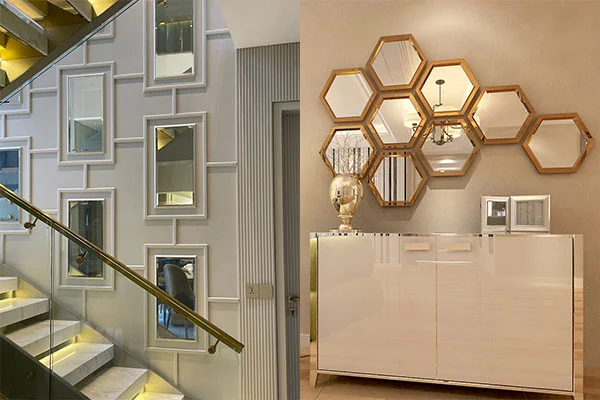
Buyers Don’t Need More Products. They Need Fewer Surprises.
Let’s be honest.
Most buyers do not lose margin because they missed a trend on Instagram.
They lose margin because the beautiful product that looked perfect in the sample room turns into a small operational tragedy somewhere between approval, production, packing, shipping, installation, and replenishment.
That is the real story.
And that is also where Teruier becomes interesting.
Because Teruier is not only selling mirrors, ceramic décor, or project pieces. Teruier is selling something far more useful to a serious buyer: a way to make attractive products behave like reliable business assets.
That is the difference.
A supplier can send you a photo.
A better supplier can help you build a line.
A very good supplier can help you build a line that still makes sense after the first container, the second reorder, the fit-out deadline, the damaged carton report, and the inevitable internal meeting where somebody asks, “Why is this batch not exactly like the approved sample?”
The real buyer problem is not taste. It is translation.
A buyer may like a mirror because it looks elegant, architectural, modern, or warm. But in the real world, that mirror also needs a wholesale floor mirror carton size gross weight, a mirror packaging for shipping strategy, a clear wholesale wall mirror MOQ lead time, and sometimes even an oversized leaning mirror packaging spec carton size before it becomes a commercially responsible decision.
Likewise, a ceramic buyer may fall in love with a pear ceramic vase, a wabi sabi ceramic vase, a fish motif ceramic platter, or a piece of majolica ceramic decor. But once it enters production, the conversation quickly becomes less romantic and more adult:
- how stable is the glaze?
- what is the acceptable variation?
- can the reorder still match the original?
- is this artisanal variation or just inconsistency with better branding?
This is why I think the strongest suppliers today are no longer “product suppliers.” They are translators between beauty and business.
Teruier should position itself exactly there.
On the mirror side, packaging is not packaging. It is product performance.
A mirror is one of the most unforgiving home décor categories in the supply chain.
It is fragile, bulky, reflective, scratch-sensitive, and often one damaged corner away from becoming a warehouse complaint. So if a supplier still treats packaging like a final admin step, that is already a warning sign.
A project-ready mirror program should answer practical questions before the buyer even asks twice:
- What is the mirror packaging for shipping logic?
- What is the wholesale floor mirror carton size gross weight?
- What changes when the mirror becomes oversized?
- What does the wholesale wall mirror MOQ lead time look like by size tier?
- Does the box protect only the glass, or also the frame finish, corners, raised detailing, and surface coating?
This is especially important when the assortment includes more specification-sensitive pieces such as:
- smoked mirror thickness tint level specification
- brass frame mirror finish options brushed polished
- decorative floor mirrors
- leaning mirrors
- illuminated bathroom mirrors
Because the truth is simple: a mirror that looks premium but arrives damaged is not premium. It is a cost center with flattering proportions.
On the LED mirror side, beauty without spec discipline is a trap.
An LED bathroom mirror is not just a mirror with lights. It is a decorative electrical product. That means the buyer should not only be shown the glow effect. They should be shown the specification intelligence behind it.
That includes things like:
- LED mirror IP rating
- backlit bathroom mirror spec sheet voltage wattage CCT
- anti-fog bathroom mirror defogger wattage heating pad size
- driver location
- dimming logic
- switch type
- wet-zone suitability
- installation method
This is exactly where many suppliers become vague. They love the look, but get strangely shy around the details. A serious buyer, meanwhile, knows that the problem is not whether the mirror photographs well. The problem is whether the electrician, installer, and end user can all live with it after handover.
So again, the value is not “mirror with light.”
The value is “mirror with light, spec sheet, packaging logic, and project readability.”
On the ceramic side, glaze consistency is not a small detail. It is the reorder test.
Ceramics are deceptive.
They often look softer, more playful, more forgiving than mirrors. But commercially, they carry a different kind of risk: visual inconsistency, especially in glaze.
This is where glaze consistency QC matters enormously.
Not because buyers want every ceramic piece to look dead and identical. They do not. Buyers love expressive surfaces. They love texture. They love natural pooling, reactive effects, and handcrafted feeling.
But there is a line between:
- controlled variation,
and - “why does this batch look like it had a personal crisis?”
A reliable ceramic supplier should know how to manage that line.
That matters whether the assortment includes:
- a pear ceramic vase for a modern shelf story
- a wabi sabi ceramic vase for earthy styling
- a fish motif ceramic platter for coastal or playful collections
- majolica ceramic decor for maximalist table stories
- oyster plate decor for seafood-inspired display
- artichoke ceramic decor for botanical humor
- a cabbage leaf serving bowl for statement tabletop retail
If the sample is charming but the bulk looks unrelated, the buyer does not have a design story. The buyer has a replenishment problem.
Fit-out projects change everything.
A retail project, hospitality project, or interior roll-out creates a different game.
Now the issue is no longer just product-by-product approval. Now it becomes timing, sequencing, installation readiness, and phased handover. That is why phased delivery for fit-out projects should be treated as part of the product system, not just the logistics system.
A project-ready supplier should be able to think like this:
- what must be approved first?
- what should be shipped first?
- what needs mock-up confirmation?
- which mirrors belong to public areas, wet areas, fitting rooms, or guestrooms?
- what should be held back for final punch-list replacement?
- how should packaging and labels match installation sequence?
This is especially relevant when a project mixes:
- floor mirrors
- smoked mirrors
- brass-framed mirrors
- backlit bathroom mirrors
- anti-fog bathroom mirrors
- decorative wall mirrors
Sending everything at once may feel efficient on paper. On site, it often feels like chaos wearing a delivery note.
A phased model is simply more intelligent.
What Teruier should really be saying
Teruier should not mainly say:
“We make nice mirrors and ceramic décor.”
That is too small. Too ordinary. Too easy to forget.
Teruier should be saying something closer to this:
We help buyers turn attractive home décor products into commercially stable, shipment-ready, project-ready assortments.
That means we think in:
- specification sheets
- QC checkpoints
- packaging logic
- delivery phases
- reorder consistency
- installation sequence
- buyer approval flow
This is what I mean by cross-border design-manufacturing coordination.
Not just “we can produce.”
But “we can help translate design into something that survives contact with real business.”
One simple buyer case to illustrate the point
Imagine a buyer starts with a scattered moodboard:
- one smoked mirror
- one brass framed wall mirror
- one LED bathroom mirror
- one anti-fog vanity mirror
- one pear ceramic vase
- one fish motif platter
- one cabbage leaf serving bowl
On the surface, this looks like six product decisions.
In reality, it is at least six system decisions:
- mirror packaging for shipping
- gross weight and carton logic
- LED mirror spec compliance
- anti-fog component integration
- glaze consistency QC
- project sequencing or retail rollout timing
A weak supplier sells all six as separate objects.
A stronger supplier helps the buyer reduce confusion:
- which pieces are safe for immediate volume
- which require mock-up or technical approval
- which need tighter QC controls
- which need phased delivery
- which belong to a seasonal drop versus a permanent line
- which are beautiful but risky
- which are commercially quiet but operationally strong
That is where real buyer confidence comes from.
Final thought
The home décor business is not short of beautiful products.
It is short of products that are easy to buy well.
That is why the future belongs less to the supplier with the most SKUs, and more to the supplier who can make those SKUs readable, spec-ready, QC-ready, packaging-ready, and project-ready.
That is the opening.
And if Teruier wants to win more serious buyers, that is exactly the territory it should own.
Not just inspiration.
Not just aesthetics.
Not just manufacturing.
But decision quality.
Because at the end of the day, buyers do not remember who showed them the prettiest sample.
They remember who helped them avoid the stupidest mistake.



