
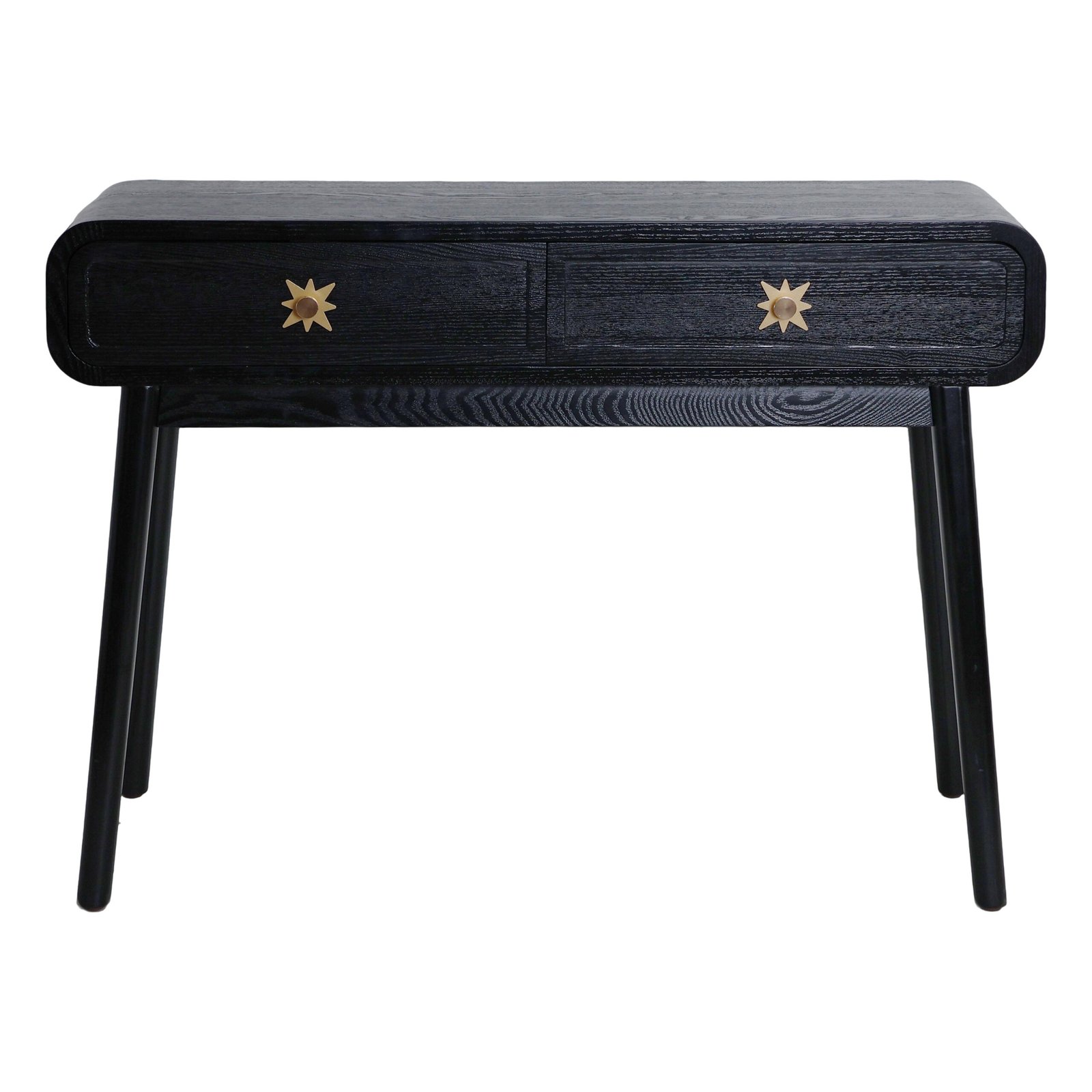
Why small home solutions are becoming a serious assortment question
Small furniture used to be treated like the polite little cousin of “real furniture”. A side table here, a pouf there, perhaps a mirror squeezed into the catalogue because someone had a gap on page 42.
That logic is now rather outdated.
For German buyers, small home solutions are not only about tiny apartments. They are about flexible living, rental homes, tighter budgets, smaller rooms, and customers who want their home to look considered without rebuilding half the flat. Eurostat’s housing data shows Germany is a particularly rental-heavy market: in 2023, Germany was the only EU country where renting was more common than owning, with 52% of the population living as tenants. Germany also had one of the EU’s highest shares of people living in flats, at 61%.
That matters. A tenant does not usually want a dramatic built-in solution. A tenant wants furniture that works, moves, fits, and does not require a philosophical discussion with the landlord.
Even overcrowding is not just a Southern or Eastern European issue. Destatis reported that 11.7% of Germany’s population lived in overcrowded dwellings in 2025, still below the EU average of 16.8%, but significant enough to make space-saving furniture commercially relevant.
In plain buyer language: small furniture is no longer “filler”. It is shelf strategy.
What do we mean by small home solutions?
Small home solutions are compact home décor and furniture products designed to solve one or more space problems without looking like emergency furniture.
They may include:
- compact ottomans and stools
- small benches
- narrow console tables
- slim mirrors
- nesting tables
- storage poufs
- lightweight accent chairs
- small side tables
- wall-friendly decorative storage
The key is not simply size. A small product that does nothing is just clutter with a barcode.
A good small home product should do at least one of these jobs:
- save floor space
- add storage
- create visual openness
- support flexible use
- make a small room feel more finished
A mirror, for example, may not store anything. But a slim arched wall mirror can make a hallway feel brighter and less like a corridor where shoes go to die. That counts.
The German buyer’s problem: small pieces must still look serious
German customers are not usually impressed by furniture that looks “cute but useless”. There is a limit to how much charm a wobbling stool can carry.
For small space assortment planning, the product needs to pass three tests:
1. Does it fit real rooms?
Not showroom rooms. Not California rooms. Real German flats with radiators, sloped ceilings, narrow entrances, and one suspicious corner where nothing ever fits.
2. Does it explain itself quickly?
A storage ottoman should look like storage. A slim mirror should clearly solve a hallway or bedroom problem. If the customer needs five minutes to understand the use case, the product is already losing.
3. Does the finish look retail-ready?
Small furniture is often placed close to the customer’s eye. Bad stitching, strange fabric, cheap metal colour, or fake wood texture cannot hide behind scale.
Small furniture has no place to run.
Custom size vs custom finish: which matters more?
This is where many buyers accidentally make life difficult for themselves.
Custom size sounds practical. And yes, sometimes it is necessary. But for small furniture trends, custom finish often creates more commercial value than custom size.
| Decision Point | Custom Size | Custom Finish |
|---|---|---|
| Best for | Project-specific rooms, hospitality, unusual spaces | Retail assortments, seasonal updates, brand differentiation |
| Risk | Slower sampling, more packaging changes, more production control | Colour mismatch, material consistency, finish approval |
| Buyer benefit | Exact fit | Easier assortment refresh |
| Best product examples | narrow console, custom mirror, bench for project room | ottoman fabric, mirror frame finish, ceramic glaze, metal legs |
| Commercial advice | Use selectively | Use often, but control carefully |
For a German retailer or design-led buyer, the smarter question is not always:
“Can we change the size?”
The better question is often:
“Can we keep the structure stable and change the finish so the product feels new?”
That is how an ottoman becomes three SKUs instead of one. Same shape, different ottoman upholstery materials. One bouclé, one woven neutral, one striped fabric. Nobody needs to reinvent the wheel. The wheel is already tired.
Ottoman upholstery materials: small product, big judgement
Ottomans are especially useful in small home assortments because they are flexible. They can be seating, footrest, soft table, bedroom accent, dressing corner piece, or “please hide these magazines quickly” furniture.
But upholstery decides whether the product looks like a smart small-space solution or like a waiting room apology.
For German buyers, safer ottoman upholstery materials usually include:
- textured neutral fabrics
- warm taupe woven fabric
- soft cream bouclé
- subtle stripe or windowpane patterns
- durable linen-look polyester blends
- low-pile performance fabric
- recycled-look woven textures, when the handfeel is good
Avoid fabrics that photograph well but collapse in real life. A fabric that looks poetic online but pills after two weeks is not a trend. It is a customer service ticket.
Mirrors belong in small furniture trends too
Mirrors are often treated as wall décor, but in small homes they behave like spatial tools.
A slim mirror can make an entrance feel wider.
A full-length mirror can turn a bedroom corner into a dressing area.
A softly rounded mirror can reduce the hard, boxy feel of a small flat.
For small home solutions, mirror development should focus on:
- slim frame profiles
- soft metal finishes such as champagne, brushed brass, soft black, or warm nickel
- arched and rounded shapes
- lightweight but stable construction
- packaging that protects corners and glass properly
- sizes that fit rental flats, not only large suburban homes
The mirror is not just a decorative object here. It is a space-management product with better manners.
Teruier’s value translation: from product idea to buyer-ready SKU
This is where Teruier’s “value translation” approach becomes useful.
A factory can make a stool.
A supplier can quote a mirror.
But a buyer needs something slightly more useful than “yes, we can make”.
The real work is translating a product idea into a business-ready SKU:
- What room problem does it solve?
- Which size is safe for retail?
- Which finish makes it feel current?
- Which fabric can survive handling?
- Which packaging reduces damage?
- Which price ladder makes sense in the assortment?
- Which version is hero SKU, and which version is support SKU?
That is value translation.
It is not adding poetry to a product. Please, no. The industry has enough poetic side tables.
It is turning design, production, pricing, packaging, and buyer logic into one product decision.
Compare suppliers before comparing prices
German buyers are usually good at comparing prices. Sometimes too good. A spreadsheet can make everyone feel clever until the cheapest product arrives with the emotional stability of wet cardboard.
Before comparing prices, compare suppliers.
A useful supplier for small furniture should be able to answer:
- Can you control fabric colour across batches?
- Can you explain the difference between sample finish and mass production finish?
- Can you adjust packaging for glass, metal legs, or upholstered corners?
- Can you provide product notes clearly enough for designers and buyers?
- Can you support small space assortment planning, not only single-item quoting?
- Can you help decide when to customise size and when to customise finish?
This is why a factory direct supplier for interior designers should not only be “factory direct”. Directly producing the wrong product is still wrong, just faster.
An easy to work with supplier for interior designers should help reduce decision friction. That means clearer material options, faster sample feedback, practical product notes, and a realistic understanding of how buyers actually build assortments.
A practical small furniture assortment structure
For a German small furniture trend section, a balanced assortment could look like this:
| Role in Assortment | Product Type | Buyer Logic |
|---|---|---|
| Space opener | slim mirror, arched mirror | Makes small rooms feel larger and lighter |
| Flexible seat | cube ottoman, round stool, small bench | Multi-use and easy to place |
| Soft storage | storage ottoman, upholstered box stool | Solves clutter without looking like storage furniture |
| Narrow surface | slim console, small side table | Works for hallway, bedroom, sofa side |
| Style connector | ceramic stool, textured accent piece | Adds finish and material story |
| Add-on SKU | trays, baskets, small wall hooks | Helps complete the shelf logic |
The strongest small home assortment is not a random collection of small objects. It is a room logic.
A buyer should be able to say:
“This group helps a customer finish a small entrance.”
“This group helps a renter improve a bedroom corner.”
“This group helps a designer add seating without blocking the room.”
That is much better than:
“Here are nine small things. Good luck.”
FAQ
What are small home solutions in furniture buying?
Small home solutions are compact furniture and décor products designed for real space problems: storage, flexible seating, visual openness, narrow rooms, and rental-friendly living. They include ottomans, slim mirrors, small benches, nesting tables, storage stools, and narrow consoles.
Why are small furniture trends important for German buyers?
Germany has a strong rental culture and a high share of flat living, which makes flexible, movable, space-conscious furniture commercially relevant. Small furniture gives retailers and designers practical ways to serve apartment living without relying on renovation-heavy solutions.
Is custom size or custom finish better for small furniture?
For retail assortments, custom finish is often more efficient. It allows buyers to refresh a proven shape with new fabric, colour, or frame finish. Custom size is useful for project-specific work, but it can slow sampling, packaging, and production.
Which ottoman upholstery materials work best for small space assortments?
Textured neutrals, bouclé, woven taupe, linen-look fabrics, subtle stripes, and soft windowpane patterns are usually safer than loud prints. The goal is to make the ottoman easy to place across many rooms.
How should buyers compare suppliers before comparing prices?
Buyers should first compare supplier capability: material control, sample accuracy, packaging logic, finish consistency, communication speed, and ability to support assortment planning. Price matters, of course. But the cheapest small stool is not cheap if it creates returns, delays, and complaints.
Can mirrors be part of Small Furniture Trends?
Yes. In small homes, mirrors are not just decoration. They are spatial tools. Slim, rounded, and full-length mirrors can improve light, depth, and room function, especially in hallways, bedrooms, and compact living areas.
Final thought: small furniture must earn its centimetres
Small furniture is not about making everything smaller.
It is about making every centimetre work harder.
For German buyers, the opportunity is clear: build small home solutions that are flexible, well-finished, easy to explain, and commercially repeatable. A good ottoman, a slim mirror, a narrow console, or a small bench should not feel like a compromise.
It should feel like the room finally stopped arguing with itself.



