
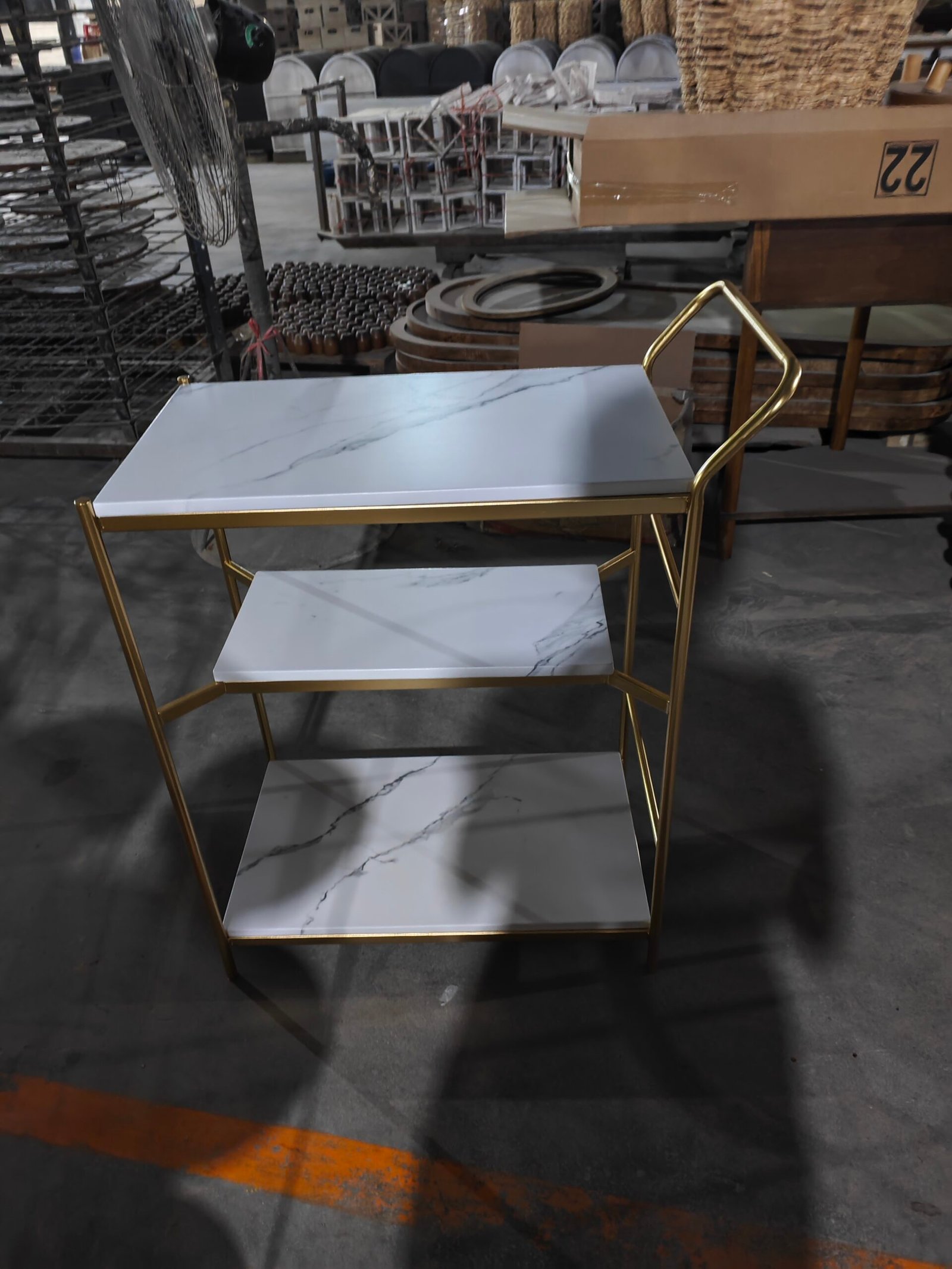
Why Materials and Finishes Decide Whether a Product Is Project-Ready
There is a sentence every German buyer and interior designer has heard too many times:
“Can we just change the finish?”
It sounds small.
A brushed metal mirror frame, but slightly warmer.
A ceramic vase, but in softer beige.
A textured upholstery ottoman, but with a quieter fabric.
A storage piece, but with a more project-friendly tone.
Very reasonable. Very normal. Very dangerous if nobody checks the supply chain.
Home decor materials and finishes are not only about what looks nice in a sample room. They decide whether a product can be made, packed, shipped, installed, reordered, and explained to the client without turning the project into a long email novel.
For German buyers, a good finish is not the one that looks exciting once.
A good finish is the one that can be repeated, controlled, delivered, and sold.
Less romantic. More useful.
What Are Home Decor Materials and Finishes?
Home decor materials and finishes refer to the physical materials and visible surface treatments used in home décor products.
They include:
Ceramic glaze finishes
Tonal ceramic finishes
Matte ceramic surfaces
Mirror frame materials
Brushed metal mirror frame finishes
Ottoman upholstery fabrics
Textured upholstery
Wood tones
Resin surfaces
Woven materials
Painted finishes
Stone-look textures
Decorative storage finishes
Materials decide what the product is made from.
Finishes decide how the product looks, feels, sells, and behaves in a real buying situation.
A ceramic vase is not only ceramic. Its glaze decides whether it feels calm, handmade, cheap, modern, rustic, or accidentally from a hotel breakfast corner.
An ottoman is not only fabric. The upholstery texture decides whether it looks warm and useful or like someone upholstered a square in sadness.
A mirror is not only reflective glass. The frame finish decides whether it belongs in a German apartment project, a design store, a hotel corridor, or nowhere near a buyer’s shortlist.
Why German Buyers Should Treat Finishes as Business Decisions
German buyers are not being difficult when they ask about material control.
They are being practical.
A finish affects:
Retail price
Project suitability
Customer trust
Assortment consistency
Packaging risk
Damage claims
Lead time
Reorder stability
Supplier reliability
Client explanation
The real question is not:
“Does this finish look good?”
The better question is:
“Can this finish support the business behind the product?”
A product may look perfect in a sample photo. But if the bulk order comes in three different tones, the surface scratches too easily, or the material cannot be reordered, then the beautiful sample has done what many beautiful samples do best:
It has lied politely.
Tonal Ceramic Finishes: Quiet Colours, Loud Requirements
Tonal ceramic finishes are very useful for German home décor buyers.
Soft beige.
Warm white.
Clay.
Stone grey.
Muted green.
Sand.
Cream.
Light brown.
Off-white with a slight speckle.
These tones are easy to place in living rooms, bedrooms, shelves, table settings, hotel spaces, and small apartment schemes. They support calm interiors without shouting at the customer.
Good. We like calm.
But tonal ceramic finishes need control.
Quiet colours show small problems quickly.
A beige glaze that shifts too yellow can look cheap.
A warm white that turns grey may feel cold.
A matte sand finish with rubbing marks looks tired.
A speckled glaze with too much variation can look like a different product.
German buyers should ask:
Can the tone be repeated?
What colour variation is acceptable?
Does the finish change between batches?
Does the glaze show rubbing after packing?
Does the colour work with other home decor materials and finishes?
Can replacement items match the first order?
Tonal ceramic finishes are beautiful because they are subtle.
But subtle products punish sloppy control.
Ceramic Glaze Finishes: “Handmade Variation” Is Not a Free Pass
Ceramic glaze finishes can add real value to home décor.
A simple shape becomes more interesting.
A shelf item becomes more premium.
A decorative set becomes easier to sell.
A neutral assortment gets depth without becoming loud.
But ceramic glaze is not always predictable.
It can be affected by:
Clay body
Glaze formula
Glaze thickness
Firing temperature
Kiln position
Batch size
Humidity
Hand application
Cooling process
Some variation is normal, especially for handmade-looking ceramic décor.
But there is a very important difference between controlled variation and random results.
Controlled variation says:
“This finish may vary slightly within this approved colour range.”
Random results say:
“We opened the kiln and learned something new.”
Interesting for the factory. Less exciting for the buyer.
A German buyer should never approve ceramic glaze finishes only by mood. The supplier should define tolerance, repeatability, and inspection standards before production.
Otherwise, every reorder becomes a small adventure. And not the pleasant kind with wine and mountains.
Brushed Metal Mirror Frame: Elegant, Until It Scratches
A brushed metal mirror frame can be excellent for German retail and interior projects.
It feels more refined than plain black.
It is softer than shiny gold.
It works with warm ceramics, neutral ottomans, stone-look trays, and modern storage pieces.
It can make a mirror feel more design-led without becoming too decorative.
But brushed metal finishes need attention.
Common risks include:
Scratches
Corner dents
Uneven brushing direction
Colour mismatch
Fingerprint visibility
Coating inconsistency
Rubbing during packaging
Finish damage at joints
A brushed finish is attractive because it catches light softly. That also means damage can catch light beautifully too, which is not what anyone ordered.
For buyers, the key questions are:
Is the brushed finish consistent?
Does the frame scratch easily?
Does the colour match the approved sample?
Are corners protected?
Can the finish be repeated in bulk?
Can the same frame finish be reordered later?
A mirror frame is a visual anchor. If the finish is wrong, the whole product looks wrong.
The glass may reflect the room. The frame reflects the supplier’s quality control.
Textured Upholstery Ottoman: Fabric Is Not Just “Soft Stuff”
A textured upholstery ottoman can be a strong product for German buyers and designers.
It can work as:
Extra seating
A footrest
A bedroom accent
A living room styling piece
A small-space solution
A soft contrast beside ceramic and metal finishes
A project-friendly item for apartments, hotels, and staged interiors
But upholstery texture is not only about style.
It affects:
Touch
Perceived value
Cleaning perception
Retail price
Packing requirements
Compression risk
Dust visibility
Colour stability
Reorder consistency
A textured upholstery ottoman in cream, taupe, ivory, beige, or soft grey may look very safe. But neutral fabric can show everything.
Dust.
Rubbing.
Compression.
Colour shifts.
Warehouse sadness.
German buyers should ask:
Can this fabric be sourced again?
Will the texture flatten during shipping?
Does the fabric rub at corners?
Will light colours stay clean in packaging?
Does the texture suit the target price?
Can the supplier maintain the same fabric in reorder?
A textured ottoman should look relaxed in the room, not exhausted by the time it leaves the carton.
How to Customize a Product Without Slowing Down the Project
Customisation is useful when it solves a real problem.
It is dangerous when it is done because someone in the meeting got emotionally attached to “a slightly warmer tone”.
To customize a product without slowing down the project, buyers should keep the process disciplined.
First, define why the customisation is needed.
Second, check whether the material or finish is stable.
Third, confirm whether the change affects packaging.
Fourth, check MOQ and lead time.
Fifth, approve a realistic production tolerance.
Sixth, keep records for reorder.
Very simple. Often ignored.
A custom finish should earn its complexity.
If the standard finish already works, use it.
If the custom finish improves project value, test it properly.
If the custom finish only makes the product more difficult, expensive, and slow, perhaps let it remain a beautiful thought.
Not every idea deserves a production order.
Customisation Comparison: Good Idea or Project Delay?
| Custom Request | When It Makes Sense | When It Becomes Trouble |
|---|---|---|
| Custom mirror frame finish | It matches a project palette or retail range | It scratches easily or cannot be repeated |
| Custom ceramic glaze | It supports the whole assortment story | It varies too much in production |
| Custom tonal ceramic finish | It improves shelf coordination | The colour tolerance is unclear |
| Custom ottoman upholstery | It fits the project and target customer | Fabric source is unstable or lead time is long |
| Custom product size | It solves a real space or project problem | It changes packaging, freight, and damage risk without enough benefit |
| Custom mixed material detail | It increases perceived value | It adds too many quality risks |
The best customisation is not the most creative one.
It is the one that improves the product without slowing down the project.
Very unromantic. Very profitable.
Project Potential for Interior Designers: Materials Must Help the Work, Not Complicate It
Project potential for interior designers is not only about whether a product looks nice.
A product has project potential when it is:
Easy to specify
Easy to explain
Easy to coordinate
Easy to pack
Easy to install
Easy to replace
Easy to reorder
Easy to use across several rooms or schemes
This is why home decor materials and finishes matter so much.
A brushed metal mirror frame may have strong project potential if the finish works across several room types and can be delivered consistently.
A tonal ceramic collection may have project potential if the colours are controlled and easy to mix.
A textured upholstery ottoman may have project potential if the fabric is durable, neutral, clean, and repeatable.
A product that looks great once but cannot be repeated is not project-friendly. It is a sample with attitude.
Designers do not need more attitude from products. Clients already provide enough.
Teruier’s Value Translation: From Design Wish to Supply Chain Reality
At Teruier, we use the idea of value translation.
That means we help turn design language into product, material, finish, packaging, and delivery decisions.
A designer may say:
“We want the room to feel warmer.”
The factory may hear:
“Change the colour.”
But the real buying requirement may include:
A warmer mirror frame finish
A softer ceramic glaze
A neutral upholstery texture
A coordinated material palette
A finish that can be repeated
Packaging that protects the surface
A lead time that does not slow the project
A reorder record for future batches
That is value translation.
It connects the designer’s intention with the supplier’s production reality.
Without this step, customisation becomes guessing. With it, customisation becomes a controlled buying decision.
Home Decor Materials and Finishes Comparison Table
| Product Element | Why Buyers Like It | Main Risk | What to Check |
|---|---|---|---|
| Tonal ceramic finishes | Calm, easy to coordinate, retail-friendly | Colour drift, rubbing, uneven glaze | Approved tone range and batch control |
| Ceramic glaze finishes | Adds character and perceived value | Variation, chipping, surface defects | Glaze tolerance and inspection points |
| Brushed metal mirror frame | Refined, modern, project-ready | Scratches, dents, colour mismatch | Surface protection and finish consistency |
| Textured upholstery ottoman | Soft, useful, easy to place | Dust, compression, fabric variation | Fabric source, packing, and reorder stability |
| Custom size | Solves space or project needs | Packaging and shipping changes | Carton size, freight, damage risk |
| Custom finish | Improves visual fit | Production instability | Repeatability and cost impact |
A German buyer’s job is not to kill creativity.
It is to make sure creativity survives production.
Standard Finish vs Custom Finish
| Finish Type | Best For | Advantage | Risk |
|---|---|---|---|
| Standard finish | Fast orders, stable programmes, lower risk | Shorter lead time, better repeatability | Less differentiation |
| Custom finish | Projects, designer schemes, special retail collections | Stronger fit and clearer identity | Higher cost, longer lead time, more control needed |
| Seasonal finish | Trend-led ranges and limited collections | Freshness and shelf interest | Shorter selling window |
| Project finish | Hotel, apartment, commercial or designer work | Better room coordination | Must match delivery timeline |
| Experimental finish | New product development | Future opportunity | Not suitable for urgent orders |
The practical rule:
Use standard finishes when speed and stability matter most.
Use custom finishes when the project value justifies the risk.
Use experimental finishes when you can afford testing time.
Please do not use experimental finishes on urgent projects unless you enjoy stress as a lifestyle.
What German Buyers Should Ask Before Approving Materials and Finishes
Before approving home decor materials and finishes, buyers should ask:
Can this finish be repeated in bulk?
What is the acceptable colour variation?
Does the material suit the sales channel?
Does the finish scratch, rub, or mark easily?
Does the custom request affect lead time?
Does it affect MOQ?
Does it affect packaging and shipping?
Can the supplier provide material records for reorder?
Can the finish work with other products in the assortment?
Can the product be explained easily to the customer or client?
Does the customisation improve the project enough to justify the extra work?
These questions are not overthinking.
They are how buyers avoid turning a finish decision into a delivery delay.
FQA: Home Decor Materials and Finishes for German Buyers
What are home decor materials and finishes?
Home decor materials and finishes are the materials and surface treatments used in home décor products, including ceramic glaze, metal finishes, upholstery fabrics, wood tones, resin surfaces, woven materials, paint, coating, and texture.
Why do tonal ceramic finishes matter?
Tonal ceramic finishes help buyers build calm, coordinated assortments. They are useful for modern interiors, but they need colour control and clear production tolerance.
What is important about ceramic glaze finishes?
Ceramic glaze finishes affect colour, surface feel, perceived value, and product identity. Buyers should check repeatability, acceptable variation, chipping risk, and surface marks.
Why is a brushed metal mirror frame risky?
A brushed metal mirror frame can scratch, dent, or show colour inconsistency. The finish must be protected during production, packing, and shipping.
What should buyers check for a textured upholstery ottoman?
Buyers should check fabric source, texture stability, dust risk, compression marks, colour tolerance, packaging protection, and reorder availability.
How can buyers customize a product without slowing down the project?
They should define the reason for customisation, confirm material availability, check lead time and MOQ, test finish stability, review packaging impact, and approve realistic production tolerance early.
What gives a product project potential for interior designers?
A product has project potential when it is easy to specify, explain, coordinate, deliver, install, replace, and reorder. Materials and finishes must support this process.
Should buyers always choose custom finishes?
No. Custom finishes are useful when they improve project value or assortment identity. If they only add cost, delay, or production risk, a standard finish may be the smarter choice.
Final Thought: A Good Finish Should Not Slow the Business Down
Home décor materials and finishes are where good buying becomes serious.
A tonal ceramic finish can make a shelf story work.
A brushed metal mirror frame can make a room feel sharper.
A textured upholstery ottoman can make a small space feel warmer.
A ceramic glaze finish can turn a simple object into a product with value.
But only if the supplier can control it.
The finish must be repeatable.
The material must be available.
The packaging must protect the surface.
The lead time must fit the project.
The buyer must know what changes when customisation enters the conversation.
At Teruier, we believe customisation should help the project move forward, not trap everyone in another round of sample revisions.
Because a finish that delays the project is not a design upgrade.
It is a very attractive bottleneck.



