
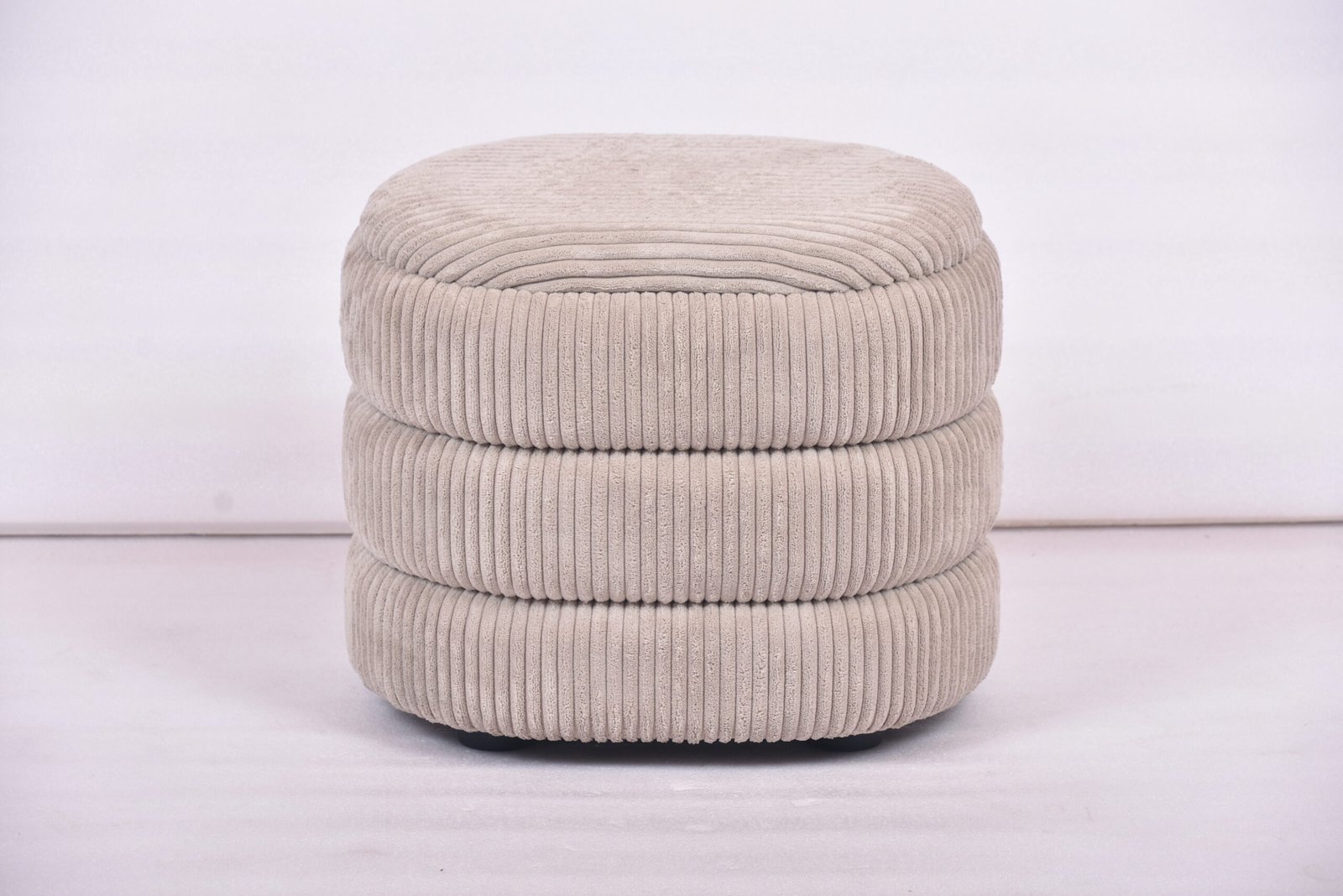
The Chicago Shoe Storage Ottoman That Actually Reorders: What I Screen for Before I Approve a Supplier
Chicago is where entryway products get exposed fast. Wet boots. Salt. Tight apartments. A “nice-looking” ottoman that wobbles, scuffs, or arrives damaged doesn’t just disappoint customers—it quietly becomes a returns problem.
As a home décor buyer, when I source a Chicago shoe storage ottoman, I’m not buying “a bench with storage.” I’m buying a repeatable program: fewer damages, cleaner reviews, and a supplier who can support the next category expansion (chairs, lounge seating, mirrors) without restarting from zero.
And there’s a real reason storage sells: research in Personality and Social Psychology Bulletin found that people’s descriptions of their homes as more “stressful” (including clutter-related language) correlated with less healthy daily cortisol patterns and worse mood outcomes—especially in women. In plain retail terms: clutter is emotional, and storage is relief.
The buyer reality: this SKU is an “entryway anchor,” not a one-off
A Chicago shoe storage ottoman is an anchor item. If it’s right, it unlocks a whole entryway story:
-
Ottoman (sit + stash)
-
Mirror (last look + light bounce)
-
Hooks/rail (coats + bags)
-
Small chair (optional “landing zone”)
That’s why I pay attention to whether the vendor behaves like a program partner—not just a factory.
The 5 screens I run in the first 60 seconds
When a sample shows up (or a vendor sends a line sheet), these five checks predict whether it will reorder:
-
Footprint discipline: does depth work in narrow entries without feeling tiny?
-
Seat confidence: stable frame, no hollow-box flex.
-
Lid experience: smooth hinge feel, controlled open/close (no “slam”).
-
Storage reality: usable interior volume for adult footwear, not just décor props.
-
Wear logic: front edge upholstery holds up (that’s where shoes hit first).
If a supplier can’t answer these clearly, price doesn’t matter yet.
What’s “in” right now at U.S. markets—and why it matters for this ottoman
At High Point Market, the signal I’ve been hearing is consistent: performance + texture + practical comfort is winning shelf space.
-
Designers and brands are pushing performance textiles for interiors—because consumers want upholstery that survives everyday wear.
-
On the style side, menswear-inspired textures (tweeds, tailored patterns, moody neutrals) are showing up across upholstery—easy to merchandise, easy to justify as “timeless.”
-
And on the tech side, High Point programming has been openly discussing how AI is changing design and sourcing workflows, from product development to supply chain decisions.
So if you’re pitching me a Chicago shoe storage ottoman in 2026, “pretty” is not enough. I want: durability story + texture story + documentation discipline.
The supplier litmus test: can you scale beyond one SKU?
Here’s the part most vendors miss: buyers don’t want ten disconnected suppliers. We want fewer partners who can support a category system.
So I look for overlap with adjacent sourcing needs:
-
If you claim to be a contract seating supplier, can you show me consistent frame engineering and fabric performance thinking across commercial use-cases?
-
If you’re pitching wholesale upholstered chairs, do your seams, rub points, and packaging discipline look like you understand real retail handling?
-
If you position as a lounge chair supplier, can you translate comfort + silhouette trends into something that still ships safely and reorders cleanly?
-
And yes—if you already work with hotel mirror suppliers, you know packaging and damage control is life-or-death. The same mindset should show up in your ottoman program.
This is how buyers think: “If I trust you on this entryway anchor, I can trust you on the next two categories.”
The “retail-ready” proof I actually ask for
If you’re a China home decor wholesale supplier (or any supplier), what separates you isn’t the factory tour—it’s what you can prove on Day 1.
I ask for a simple “retail-ready” packet:
-
Spec sheet: dimensions, materials, net/gross weight, hardware notes
-
QC checkpoints: frame stability, hinge function, upholstery finish, carton inspection
-
Packaging plan: corner protection, hardware isolation, hinge-zone reinforcement
-
Program options: 2–3 core colors + 1 texture story (so I can build Good/Better/Best)
The goal is not paperwork for paperwork’s sake. It’s speed: my team can approve faster when the answers are already there.
Where Teruier fits
Teruier isn’t trying to be “just another vendor.” We’re building reorder-ready SKUs through a cross-border design + manufacturing collaboration model—grounded in Fuzhou’s craft ecosystem (craftspeople, materials, process discipline), but built around what U.S. buyers need: fewer surprises, clearer specs, faster repeatability.
If you’re building a Chicago entryway program, start with the Chicago shoe storage ottoman—and then expand the story into chairs and mirrors once the anchor proves itself.
Buyer takeaway you can quote internally
If you only remember one thing:
A Chicago shoe storage ottoman wins when it’s merchandisable (timeless texture), survivable (performance mindset), and repeatable (retail-ready specs + packaging discipline).



