
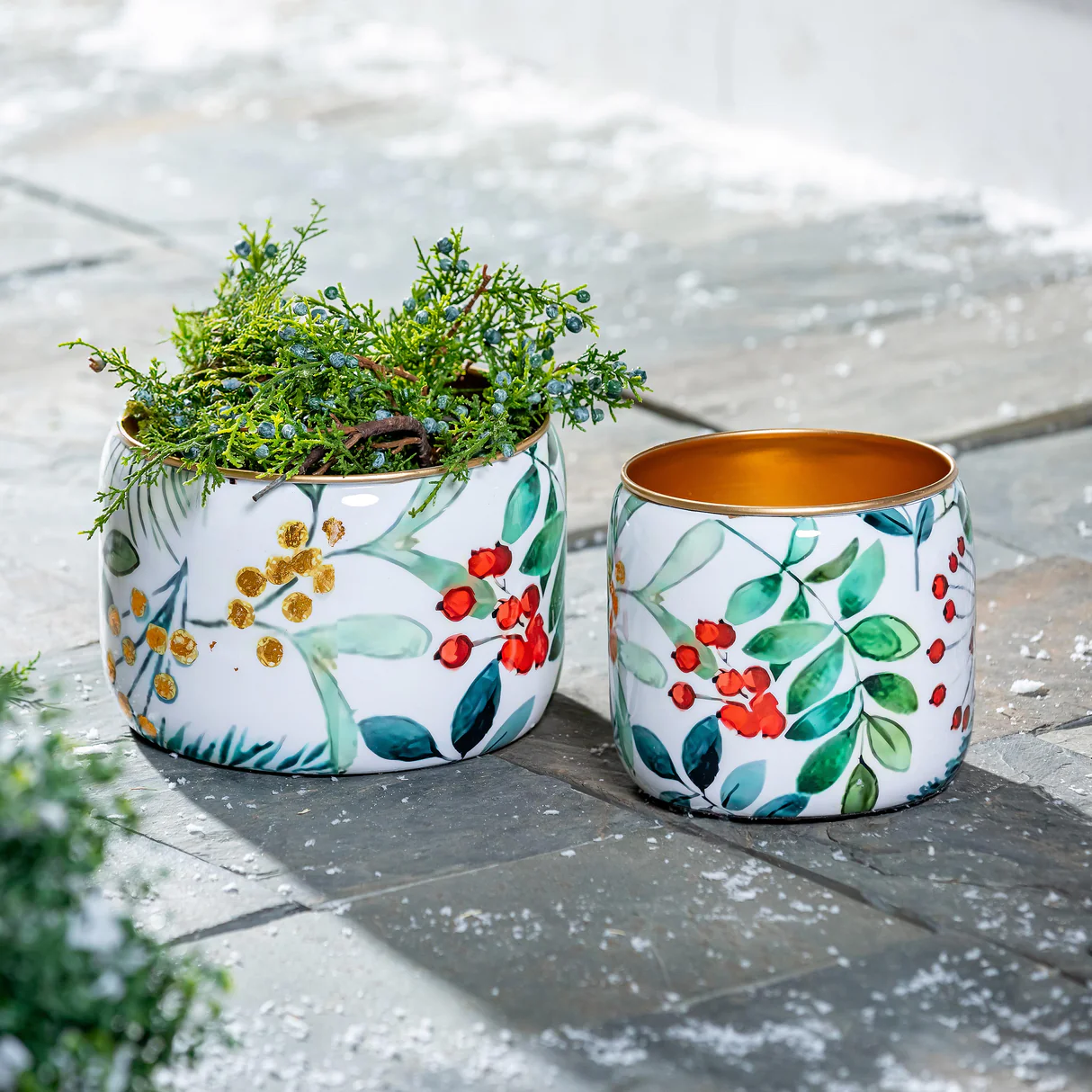
I don’t buy wholesale ceramic plant pots just because they look nice on a shelf. I buy them because they solve three commercial problems at once: they bring softness into hard merchandising zones, they help greenery feel more intentional, and they make adjacent products look more complete. That matters even more now. Recent U.S. market signals show buyers being pushed toward trend-led but commercially practical assortments: Atlanta Market’s 2025 market magazine emphasized trend forecasts for strategic sourcing, High Point Market’s Market Snapshot framed newness through themes like “Terra Forms,” and Las Vegas Market said its Winter 2026 edition would spotlight trend-forward merchandise across curated neighborhoods. On the technology side, KBIS programming tied the whole-home conversation to wellness, sustainability, smart systems, and AI.
Ceramic plant pots are no longer a side category
From a buyer’s point of view, ceramic plant pots are no longer a “garden extra.” They have become a bridge category between décor, gifting, tabletop, and lifestyle retail. A good planter can sit beside a ceramic vase, pair with a ceramic figurine, or anchor a broader wholesale ceramic home decor story without feeling forced. That is exactly why the category keeps earning floor space: it is functional, visual, and easy to style across seasons.
What makes the category stronger in 2026 is that it aligns with both trade-show language and social-media language. High Point’s trend labeling around forms and materiality fits perfectly with ceramics, while TikTok-driven interiors continue to reward earthy palettes, greenery, and tactile pieces that feel collected rather than mass-flat. House Beautiful noted that TikTok’s home sector had more than 7.6 million videos to browse in early 2025, with strong visibility for earth tones and pops of greenery. ELLE Decor’s March 2026 trend coverage also pointed to the rise of playful, botanical ceramic-adjacent aesthetics like Cabbagecore, showing that ceramic storytelling is not disappearing—it is getting more expressive.
The best-selling planter is usually the one that makes styling easier
As a retail buyer, I don’t really want “just a pot.” I want a pot that makes my display team’s job easier and my store’s visual language more coherent. That usually means a few things: clean silhouettes, usable opening sizes, layered heights, and glaze colors that can sit next to wood, linen, brass, and seasonal greens without fighting everything else.
That logic is supported by horticultural guidance too. Colorado State University Extension notes that drainage is the most important consideration in a container, and that porous materials like clay allow more air movement while glazed containers hold water longer. The University of Maryland Extension similarly notes that terra cotta provides strong aeration for roots but dries out faster. Rutgers also emphasizes that buyers and gardeners often underestimate container size, and that multiple pots of different heights can create a more unified layered display. In other words, better planter design is not only about beauty; it also supports performance, styling, and customer satisfaction.
Ceramic quality control is where most buyers win or lose margin
This is where many factories still miss the point. A good-looking sample is not the same as a scalable retail program. Real ceramic quality control means the planter has to hold up across photography, shelving, packing, and end use. I want drainage that makes sense, base stability that feels safe, glaze consistency that still looks handmade, and dimensions that work with standard nursery drops or faux stems.
For serious product selection for sellers, the smarter move is to build a collection rather than a single hero SKU. A matte sand planter, a lightly reactive glazed cachepot, a low companion bowl, a matching ceramic vase, and one or two small accent objects can become a full display story. Rutgers’ container-design guidance reinforces this idea: repetition across grouped pots creates a more unified and relaxing presentation, and layered heights improve visual impact. That is exactly how planters stop being a filler item and start becoming a margin-supporting assortment.
What TikTok is really telling buyers about ceramics
TikTok is not just creating noise. It is revealing what kinds of ceramic products people pause for. The strongest signals are not “perfect” showroom pieces. They are tactile, slightly nostalgic, easy-to-style items that feel alive on camera: earthy finishes, botanical references, sculptural but usable shapes, and ceramics that photograph well with greenery.
That matches wider media signals. House Beautiful highlighted the continued pull of Mocha Mousse, earth tones, and greenery-led styling on TikTok in 2025. ELLE Decor’s 2026 coverage then pushed the conversation further, showing that trend cycles are rewarding pieces with personality and historical texture, not only minimal basics. For a buyer, the lesson is clear: the next winning ceramic assortment should not look sterile. It should feel warm, styleable, and a little collectible.
What I look for in a home décor sourcing partner now
In practical terms, this is what I want from a home décor sourcing partner: fewer one-off items, more coordinated thinking. I want a supplier that understands how a planter sits within a larger retail system. That means knowing when to extend a glaze into a ceramic vase, when to add a small ceramic figurine for cross-merchandising, and when a shape should stay clean because the plant itself is the decoration.
This is where Teruier can position itself well. Buyers do not just need a factory; they need a team that can translate market mood into sellable SKUs. A supplier with real ceramic know-how, disciplined sampling, and a coordinated assortment mindset is far more useful than one that only offers a catalog of disconnected shapes. In today’s market, the better story is not “we make pots.” It is “we help retailers build ceramic programs that look current, ship reliably, and sell as a family.”
The real reason this category keeps growing
The smartest wholesale ceramic plant pots do something quietly powerful: they make a store feel more finished without making it feel crowded. They add life, but they also add structure. They make seasonal storytelling easier. They work in entry tables, shelf sets, gift zones, and lifestyle vignettes. And unlike trend products that burn fast, a well-developed ceramic assortment can be refreshed by glaze, scale, finish, or pairing strategy.
That is why I keep coming back to the category. Not because ceramic plant pots are trendy for one season, but because they have become one of the most reliable tools for modern retail merchandising. When the product is well sourced, well proportioned, and backed by real ceramic quality control, it stops being “just décor.” It becomes a better business decision.



