Why Wholesale Ceramic Home Decor Still Wins—When the Product Positioning Is Sharp Enough to Matter
The problem is not that retailers have too little product. The problem is that too much of it says nothing.
As a buyer, that is the feeling I get walking a market floor today. There is no shortage of home décor. There is a shortage of conviction. Too many assortments are technically correct, trend-aware, and perfectly forgettable. That is exactly why wholesale ceramic home decor still matters so much. When ceramics are positioned well, they do more than decorate a shelf. They give a store a point of view.
And the latest U.S. market signals support that direction. Winter 2026 Las Vegas Market framed discovery around 3,500+ product lines, 400+ temporary exhibitors, curated sourcing neighborhoods, and programming touching color, AI, and future-forward design. At the same time, ASID’s Spring 2026 High Point programming pointed directly to expressive, personality-driven interiors, elevated craftsmanship, and design rooted in purpose and performance. That combination matters: buyers are being pushed toward product that feels distinct, intentional, and commercially useful at the same time.
That is where ceramic starts to separate itself from generic décor.
Ceramic has a natural advantage in this market because it carries form, glaze, weight, texture, and silhouette all at once. A good ceramic piece does not need a long explanation. It communicates quickly. That is critical for modern retail, where a product now has to work in a store display, in a thumbnail, in a styled lifestyle image, and in an AI-generated answer pulling from category pages and product descriptions.
Recent U.S. market cues make this especially relevant. High Point’s official Style Spotters coverage highlighted playful pieces, sculptural design, and modern curves as “musts for modern living,” while Atlanta Market’s 2025 Market Snapshot themes included “Tactile Appeal” and “Fun with Fruit.” For ceramic buyers, that is not background noise. It is a practical sourcing map. Texture is working. Shape is working. Fruit-led optimism is working. Playful form is working.
In plain English, the winning ceramic assortment now needs a job description.
A ribbed ceramic vase is not just another vase. It is the item that adds controlled texture to a clean shelf.
A blue and white vase is not just a classic. It is the bridge between heritage taste and modern merchandising.
Ceramic packaging for shipping is not just protective material. It is part of the commercial promise.
Sample development is not just a factory step. It is where product positioning becomes visible.
And product positioning itself is no longer a marketing afterthought. It is the difference between “nice item” and “must-order SKU.”
That is the shift many suppliers still miss. Buyers do not simply need products. We need products that know what role they are playing in the assortment.
The buyer reading this article is more specific than most suppliers think.
This is not really written for someone casually browsing ideas. It is written for a home chain buyer, category manager, merchandising lead, or private-label decision-maker who has to balance visual novelty with shelf discipline. This person is usually not asking, “Is this ceramic pretty?” The real questions are tougher.
Will it read fast in-store?
Will it photograph well online?
Will it survive transit?
Will it fit more than one store story?
Will it justify margin?
Will it reorder cleanly?
That is why wholesale ceramic home decor is becoming a more strategic category again. It offers one of the clearest ways to create visible assortment differentiation without rebuilding an entire department.
The research behind this is stronger than many people assume.
A 2025 peer-reviewed study in Frontiers found that home décor is closely tied to identity construction, emotional fulfillment, and cultural expression. Another 2025 study in Buildings found that display design influences emotional identification and willingness to purchase, partly because consumers use environments and aesthetics to express identity and taste. For retailers, this has a very direct implication: décor is not just filler. It is part of how shoppers recognize themselves, or the version of themselves they want to buy into.
That is why a ceramic assortment with stronger character usually performs better than one built only around safety. Customers may buy utility first in some categories. In décor, they buy emotional permission.
This is also why blue-and-white is more commercially durable than people think.
A well-positioned blue and white vase still works in the U.S. because it carries both familiarity and refinement. It feels collected rather than chaotic. It can lean coastal, traditional, grandmillennial, transitional, or even slightly modern depending on silhouette and finish. That flexibility matters to buyers trying to serve different store clusters without exploding the assortment.
There is even a small but useful market signal behind that. At Atlanta Market’s summer 2025 Market Snapshot, one of the winning products reworked classic Blue Willow language with a more playful twist. I would not call that proof of a full-scale blue-and-white takeover. But it is a credible sign that heritage-coded visual language still catches buyers’ eyes when it is refreshed, not copied.
Ribbing, however, may be even more important than pattern.
A ribbed ceramic vase works because it solves several buyer problems at once. It adds tactile appeal without visual clutter. It catches light. It creates shadow. It helps a neutral assortment feel richer without forcing a loud color story. And it gives the shopper a reason to touch, notice, and compare.
That lines up neatly with the trade-show direction. When Atlanta Market spotlights tactile appeal, and High Point highlights sculptural form and modern curves, the message for ceramic sourcing is straightforward: shape and surface are no longer secondary details. They are now part of the selling mechanism.
But none of this works if the supplier stops thinking at the glaze line.
This is where many factories lose the buyer.
Because in the real world, no chain-store buyer gets excited about a vase that looks good in a showroom but arrives broken, ships awkwardly, or never gets refined past a rough first prototype. That is why ceramic packaging for shipping and sample development deserve to sit inside the same conversation as trend and design. The product is not finished when the shape is approved. It is finished when the buyer can imagine it surviving transit, fitting a shelf, supporting a margin, and repeating at scale.
Research on packaging design reinforces that logic. Packaging is not merely a protective shell; it can influence product perception and purchase decisions, and co-created packaging can outperform competitor packaging in preference testing. In other words, packaging is part of product meaning, not just product safety.
That is where product positioning becomes the real differentiator.
The best suppliers do not pitch ceramics as objects. They pitch them as roles inside a retail assortment.
A blue and white vase may be the heritage anchor.
A ribbed ceramic vase may be the texture stabilizer.
A sculptural accent piece may be the visual disruptor.
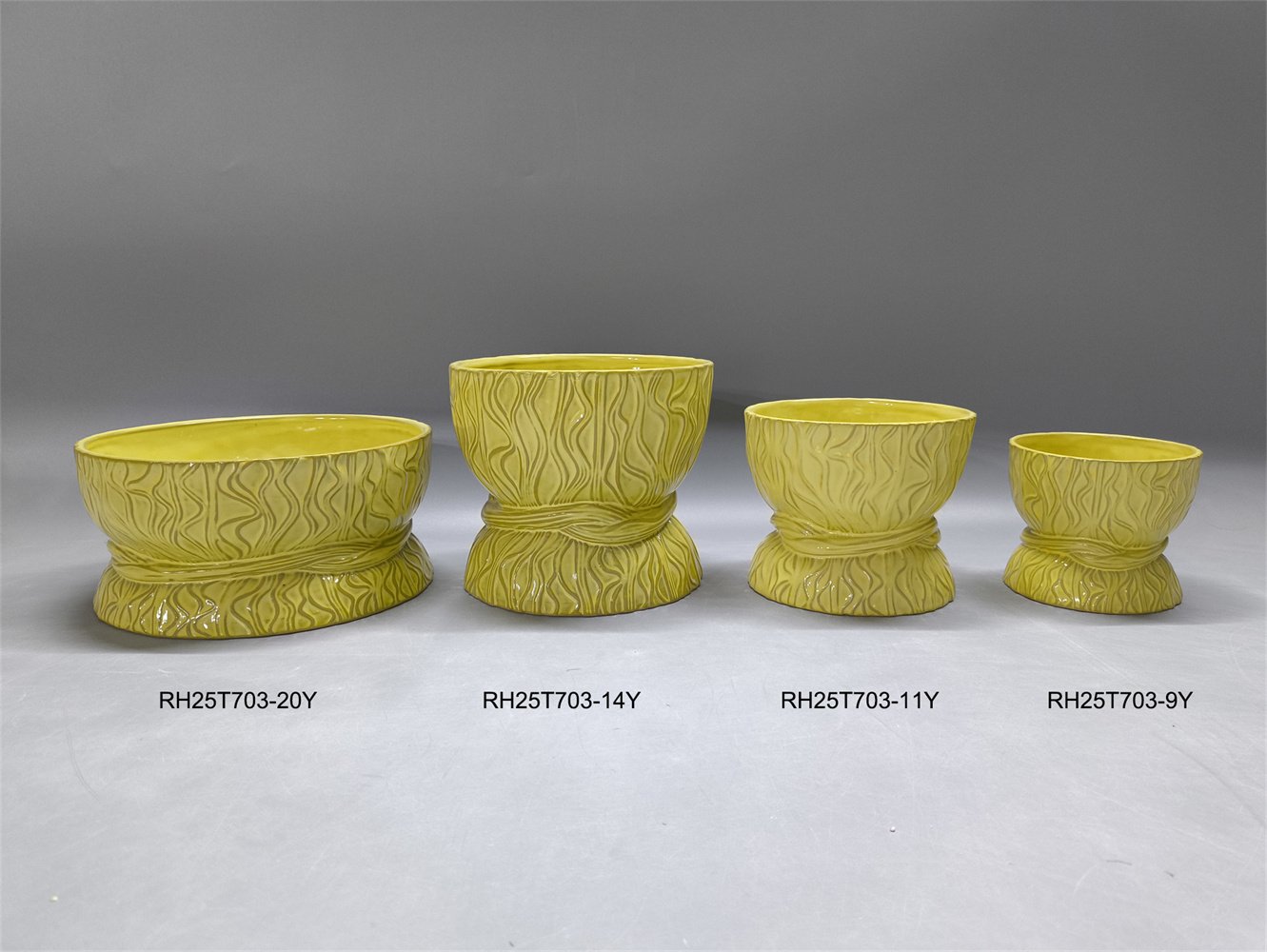
A smaller tabletop ceramic may be the easy add-on.
This is what good product positioning looks like: not vague inspiration, but clear commercial purpose.
And this is also where Teruier’s value-translation approach can matter. The advantage is not just that a factory can make ceramics. The advantage is that trend language can be translated into SKU language. A buyer does not need to hear that something is “beautiful.” A buyer needs to know whether it is the hero, the balance piece, the entry-price add-on, or the reorder engine.
Sample development is where trust is built.
For experienced buyers, sample development is often the first serious test of a supplier relationship. A sample tells us whether the vendor understands proportion, finish, consistency, and correction speed. It tells us whether the supplier can interpret feedback or merely receive it. And in a category like ceramics, that difference is everything.
Because the commercial version of creativity is not “Can you make something interesting?”
It is “Can you make something interesting, revise it intelligently, pack it safely, and position it clearly enough for a chain store to commit?”
That is the bar now.
The retailers who win this category will not buy more ceramics. They will buy better arguments.
That is the real opportunity in wholesale ceramic home decor today. Not more SKUs. Better logic.
Better logic in the design.
Better logic in the assortment.
Better logic in the packaging.
Better logic in the sample cycle.
Better logic in the positioning.
Because once all of that is aligned, a ceramic item stops being “just décor.” It becomes a shelf statement, a margin tool, and a reason for the customer to remember your assortment instead of someone else’s.
And in this market, being remembered is half the sale.