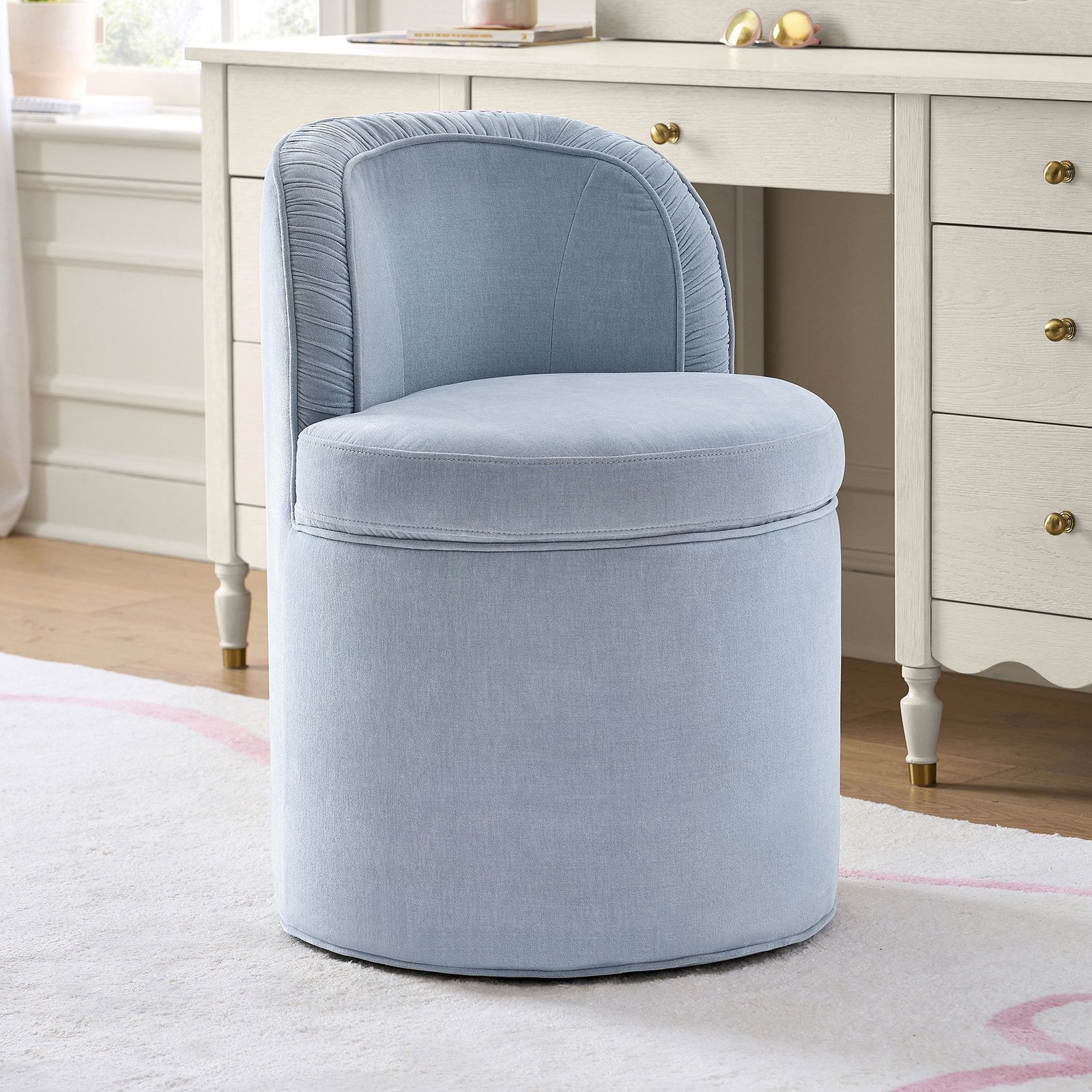
Why a Flip Top Storage Bench Can Outsell Two Separate SKUs
There is still one mistake many furniture buyers make. They buy seating as one SKU, and storage as another. Then they wonder why the roomset feels crowded, why the carton count rises, and why the margin becomes thinner than expected.
A well-developed flip top storage bench solves three problems at once: it gives seating, hidden storage, and visual order. For the customer, this feels simple. For the buyer, this is not simple at all. It is good business.
From a European retail point of view, this matters more in 2026 than before. At imm cologne 2026, the fair positioned itself very clearly as a B2B sourcing platform for the consumer-oriented interiors market, with emphasis on market-ready products, efficient sourcing, and reliable partnerships. At Maison&Objet January 2026, the official message was equally telling: the fair returned to craftsmanship and excellence under “Past Reveals Future,” responding to overconsumption and homogenisation with more meaningful, lived-in design. For buyers, these two signals point in the same direction: products must be commercially ready, but they must also carry material character and emotional credibility.
That is exactly why the flip top storage bench deserves a more serious look. It is not only a bench. It is a retail answer to three market pressures at once: smaller living spaces, higher consumer sensitivity to clutter, and stronger demand for furniture that works harder per square metre.
The buyer who reads this article is not buying fantasy
Let us be precise about the user profile.
The reader here is typically a buyer for a home chain, a furniture group, or a multi-store décor retailer in Europe. This person does not need an object that looks clever only on a fair stand. He needs a product that survives the full commercial path: showroom selection, margin calculation, vendor negotiation, packaging test, store presentation, customer handling, and repeat order.
This is also why the latest European fair signals matter. imm cologne is openly prioritising assortment decisions, price levels, supplier comparison, and products ready for serial production. Maison&Objet, meanwhile, is reframing the retail mood around craftsmanship, meaning, and hybrid design languages instead of anonymous volume alone. The modern chain-store buyer is therefore not split between “commercial” and “beautiful.” He is looking for both in one SKU.
A flip top storage bench fits this mindset well because it is easy to understand on shelf, easy to demonstrate in store, and easy to explain online. In buyer language: low education cost, wide room applicability, and good story density.
Why the category is stronger now
In small-space living, furniture is no longer judged only by shape. It is judged by how much friction it removes from daily life.
A design study from the Norwegian University of Science and Technology argues that living in smaller homes increases the need for smart, space-saving furniture, and it stresses that multifunctional furniture should be simple, intuitive, and not a daily hassle for the user. The same study also notes that cluttered and cramped interiors can negatively affect wellbeing, and that furniture should help create the feeling of more room, not less. Stanford Magazine, citing a Stanford psychiatry professor, similarly notes that cleaning and organizing can reduce anxiety and stress and help people focus. In other words, hidden storage is not a decorative extra. It is part of how a room becomes mentally usable.
This gives the storage bench category a stronger commercial argument than before. You are not only selling upholstery. You are selling a calmer room, faster tidying, and better use of footprint.
That is why in merchandising terms, one strong flip top storage bench can often outperform two weaker products that each solve only half the problem.
What the ottoman sourcing intelligence would say
Our ottoman selection intelligence would make one point very clear:
Do not select a flip top storage bench from the hero photo alone.
A bench may look elegant in a styled image and still fail in retail. The sourcing logic has to go deeper. A good model is usually strong in the following areas:
the lid opens smoothly and safely, without feeling heavy or unstable
the interior volume is useful, not symbolic
the seat comfort is credible enough for everyday use
the fabric recovers well after repeated sitting
the proportions work in entryway, bedroom, and living room equally
the carton is efficient enough to protect margin
the visual language is broad enough for volume sales, but not generic
This is where many suppliers fail. They design for image first, usage second. But for a chain buyer, daily usability is the real aesthetic. If the opening mechanism feels cheap, if the seat foam collapses too quickly, or if the storage compartment is too shallow, customer trust disappears very fast.
So the intelligent question is not, “Is this bench nice?”
The correct question is, “Can this bench open, store, seat, ship, and repeat?”
The strongest retail position is not bench alone, but bench plus story
A flip top storage bench becomes stronger when it is not presented as an isolated piece, but as part of a coordinated retail language.
For example, when paired with a boucle swivel chair, the bench can soften the room visually while keeping the assortment functional. The swivel chair gives movement and softness; the bench gives grounding and hidden utility. Together, they create a roomset that feels warmer, more layered, and more intentional.
The same is true when building broader upholstery programs. Buyers working with wholesale upholstered chairs should not treat the bench as a side item. It can become the practical anchor of the group. Chairs bring silhouette and emotion; the bench brings function and conversion logic.
This matters in stores because customers do not shop categories in the same way buyers build them. Customers shop scenes. A bench that closes clutter, adds seating, and visually stabilises a room can improve not only its own sell-through, but the readability of the full furniture wall.
What German and European buyers usually check first
From a German buying perspective, the product must survive rational examination.
Before style, there is discipline. Before storytelling, there is structure.
A serious buyer often checks five things first:
1. Function credibility
Does the flip top mechanism feel mature enough for repeated home use?
2. Fabric-to-price balance
Is the upholstery handfeel good enough to justify the ticket, but standardised enough for scale?
3. Size efficiency
Can the product fit urban European homes without looking mean or underfilled?
4. Range compatibility
Can it live next to oak, black metal, bouclé, warm neutrals, or soft contract looks?
5. Supply reliability
Can the supplier maintain the same stitching, fill, frame quality, and carton discipline over repeat orders?
This last point is often underestimated. A buyer may love the first sample, then lose confidence after the second container. That is why the conversation must include the materials supply chain, not only the moodboard.
A bench is not truly retail-ready when only the design is right. It is retail-ready when the materials, structure, foam, upholstery, and packaging all behave consistently under scale.
Where Teruier’s value translation becomes relevant
This is exactly where Teruier’s cross-border design-manufacturing collaboration model becomes commercially useful.
A buyer does not really need another supplier who only says, “We can make this style.”
He needs a partner who can translate a European retail signal into the right supplier-side decisions.
That translation includes questions such as:
Should the bench read more soft-modern, heritage-soft, or quiet contemporary?
Should the fabric direction follow bouclé texture, linen-look plain weave, or performance blend?
Should the lid open with a lighter action for family retail, or a more controlled action for a semi-contract furniture supplier program?
Should the bench be developed as a hero SKU, or as part of a coordinated room capsule for a seasonal retail sourcing trip?
This is where many sourcing conversations remain too shallow. They stop at appearance. But margin is not produced by appearance alone. Margin is produced when design, functionality, packaging, supplier control, and merchandising logic all move in one direction.
That is the real meaning of value translation.
What a winning flip top storage bench usually looks like in 2026
If we connect the latest European fair mood with actual retail logic, the most promising direction is not overly decorative and not overly minimal.
The likely winner is:
clean but warm in outline
tactile in fabric, but easy to commercialise
compact enough for urban homes, but substantial enough to feel trustworthy
simple in mechanism
versatile across entryway, bedroom, and living room
easy to pair with accent chairs, especially a boucle swivel chair or quiet upholstered lounge form
strong enough in finish consistency to support repeat programs
This is also why bench development should avoid unnecessary design noise. The customer already understands the category quickly. The job is not to complicate it. The job is to improve trust, touch, and usefulness.
A strong flip top storage bench should say, at first sight:
“I make the room easier to live in.”
Final buyer conclusion
For a retail buyer, the flip top storage bench is not a filler SKU. It is a compact profit tool.
It answers the present European mood well: more meaning, more utility, less waste, better room discipline. It supports the practical needs of smaller homes, fits the commercial logic of market-ready sourcing, and gives enough material presence to avoid looking anonymous.
And this is why I would say it in a very direct German way:
Do not buy the bench because it is fashionable.
Buy it because it removes friction from the customer’s life, and because that kind of product is usually the one that reorders.