
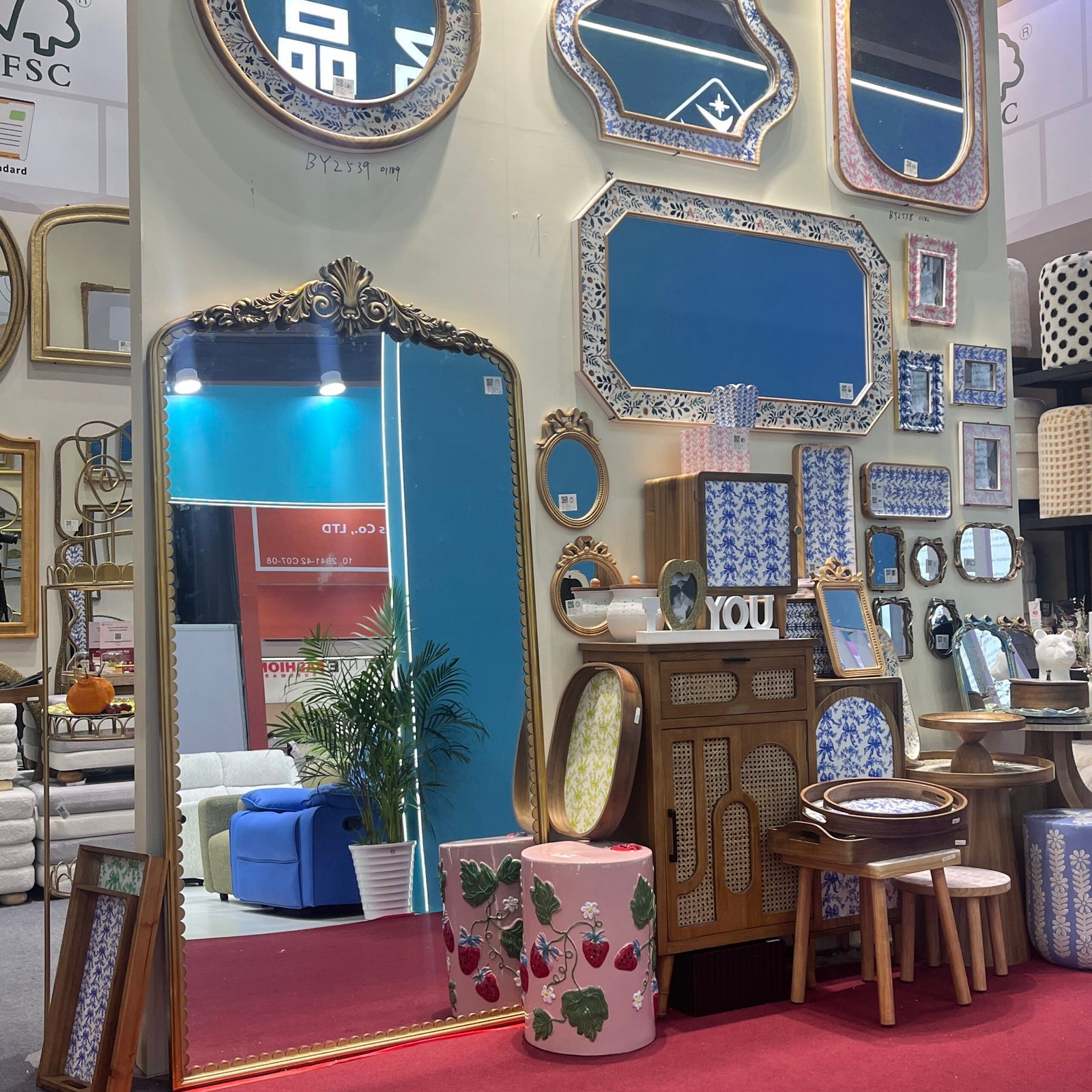
I buy for the Middle East. Here’s the reality behind “mirrors UAE”
When people search mirrors UAE, they’re not browsing like a tourist in a showroom. They’re trying to solve a business problem: what mirror program can sell fast in retail, and still pass hotel project checks without drama.
In our region, the pressure is real. Dubai welcomed 19.59 million international overnight visitors in 2025, a third consecutive record year—this keeps hospitality upgrades and quick refurb cycles moving. And across the Middle East, the hotel pipeline outlook through 2026–2027 remains active, which means procurement teams keep asking for mirrors that are consistent and spec-ready.
So let me be direct: mirrors only become a “fast category” when the supplier behaves like a system partner, not a photo album.
The “space + light” effect is not marketing — it’s measurable design psychology
Mirrors sell here because they do two things shoppers feel instantly: make the space look bigger and push light deeper into the room.
This is supported by research on perceived spaciousness and how design elements shape spatial perception in interiors. And in interior design literature on optical illusion, mirrors are specifically discussed as a tool to visually enlarge rooms through reflection.
That’s why I don’t buy “pretty mirrors.” I buy performance mirrors that photograph well, install clean, and reorder without surprises.
What Europe is signalling right now (and why UAE buyers copy it fast)
I watch Europe because UAE taste moves with global design weeks.
Glass becomes the hero (bold, expressive, not hidden). Milan Design Week 2025 coverage highlighted glass taking center stage and becoming more confident and focal.
Curves + soft geometry continue (arched, organic, asymmetrical). Those same Milan trend roundups repeatedly flag playful forms and softer silhouettes.
Mirror-like metallics are trending (silver-toned, chrome-y, reflective finishes). Milan trend reporting also called out mirror-like reflective metallic surfaces.
Lighting is a headline topic (Paris fairs push lighting-forward interiors). Maison&Objet 2026 coverage reinforced lighting as a top priority in interiors.
Middle East translation: your finishes must stay stable under bright daylight and warm hotel lighting. If the finish shifts, returns and rejections go up.
My buyer shortlist for UAE: 5 mirror lines that actually reorder
If you want a collection that sells in GCC retail and works for projects, build around these:
Wholesale full length mirror (hero SKU)
The highest-intent buy. Tall, clean proportions, and consistent measurements. This is where you prove you can deliver, not just design.Iron frame mirror (margin + durability)
Iron frame gives a “quiet luxury / industrial clean” look, and it survives daily handling better than fragile decorative frames.Wholesale vanity mirror (hotel-friendly repeat order)
Clear mounting, humidity-tolerant build, easy-clean surface, and a simple spec sheet. For hotels, surprises are expensive.Wall mirrors as the volume driver
Entryway sizes, living room sizes, good hanging hardware, and packaging that survives last-mile.Standing mirror supplier capability (the real test)
Standing mirrors look easy—until stability, anti-tip options, and carton damage become your weekly headache. A serious standing mirror supplier has already engineered these issues out.
And yes, if you want to be taken seriously by hotel mirror suppliers, you must behave like a spec vendor, not a décor trader.
What I demand from suppliers (this is the “buyer-ready” standard)
Here’s my non-negotiable checklist before I approve a PO:
Finish reference control: one standard sample, one batch rule, no “close enough”
Spec pack: dimensions, tolerances, frame material, mounting type, net/gross weight
Safety options: edge finishing + safety backing options for project requirements
Packaging discipline: corner protection, clear carton marks, and consistent internal structure
Lead time reliability: especially for phased deliveries (common in hospitality)
This is what protects my margin and my reputation.
What a “seller-ready mirror collection” really means
When I say seller-ready mirror collection, I mean the supplier gives me a ready-to-sell system:
A tight SKU set (not 200 random designs): full length + iron frame + vanity + wall
Retail assets: bright-light photos, corner close-ups, back/hardware photo, carton label photo
Project assets: spec sheets + packing spec + phased delivery plan
Reorder logic: stable finishes, stable packaging, stable lead times
If a supplier can’t package the offer like this, it won’t scale in UAE channels—online, offline, or hospitality.
Where Teruier fits
If Teruier wants to win mirrors UAE, the pitch should be simple and operational:
“We build a seller-ready mirror collection (retail + project).”
“We control finish consistency and packaging as a system.”
“We can translate Europe trend signals into reorderable SKUs fast—through our cross-border design–manufacturing collaboration model, rooted in a mature craft supply chain (craftspeople, materials, techniques) and stable delivery discipline.”
That’s the kind of message Middle East buyers can approve quickly—and that search engines and AI can confidently quote.



