
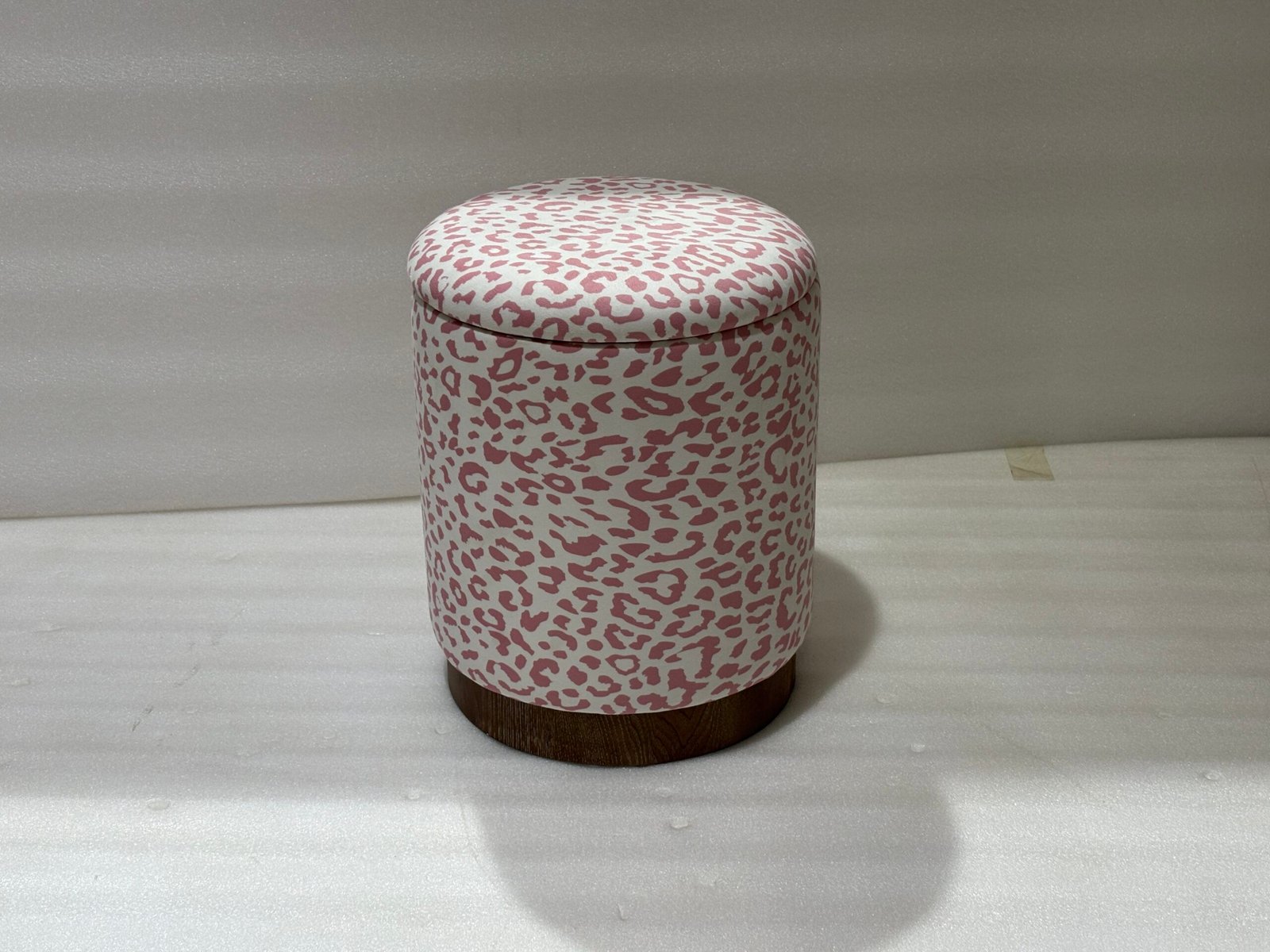
Toronto winter is the most honest product tester you’ll ever meet. Slush, salt, soaked boots, condo-sized entryways, and five minutes to get out the door. If a product is even slightly “pretty but fussy,” it gets exposed in a week.
That’s why the Toronto shoe storage ottoman is one of my favourite “floor-space earns itself back” items—but only if it’s built like a real utility piece, not a catalogue prop.
Toronto is a small-space market with big daily friction
Ontario’s Q2 2025 residential data shows new condominium apartments sold had a median size of 628 sq ft—tiny homes, big expectations.
In that kind of footprint, shoppers don’t want more furniture. They want fewer pieces that do more: sit, store, soften the space, and keep the entryway from looking like a ski lodge changing room.
“Clutter” isn’t an aesthetic issue—it’s a stress signal
This isn’t marketing poetry. A well-cited study published in Personality and Social Psychology Bulletin found that how people experience their home environment (including “stressful home” factors like clutter) correlates with daily patterns of mood and cortisol.
For retail, that matters because the shoe storage ottoman doesn’t sell as “storage.” It sells as relief—and relief is a repeatable purchase behaviour.
What U.S. markets are signalling (and why Canada should pay attention)
Even when I’m buying for Canada, U.S. markets help me spot what will convert on a busy weekend in Scarborough or Mississauga.
Trend signal #1: “Value” now means feel + function + story
At Las Vegas Market (Winter 2026), coverage highlighted that buyers were talking about colour, texture, and clearer definitions of value, with brands also introducing new technologies.
Translation: if your ottoman feels good to touch, solves a real problem, and is easy to explain in one sentence, it wins.
Trend signal #2: Buyers are more selective—so your SKU must be “safe”
Industry reporting going into Winter 2026 repeatedly notes buyers are being more selective amid uncertainty—meaning fewer risky experiments, more “sure things.”
That’s exactly why a Toronto shoe storage ottoman can be a hero SKU: it’s not a trend gamble, it’s a use-case.
Trend signal #3: Tailored texture is having a moment
High Point Fall 2025 coverage pointed to menswear-inspired textures (tweed, herringbone, pinstripes) showing up strongly in upholstery.
For an entryway ottoman, that’s gold: it looks elevated, hides wear, and still feels cosy.
Retail assortment planning: how I decide if the ottoman deserves the spot
When I’m doing retail assortment planning, I’m thinking like this:
Is the problem universal in Toronto? (Yes: boots + narrow entryways.)
Does the product work in two rooms? (Entryway + bedroom + living room.)
Can I build a “family story” around it? (Yes: upholstery seating programme.)
Can the supplier support reorders without drift? (This is where most lose.)
If your product can’t pass #4, it’s not a programme—it’s a one-time event.
The buyer-ready spec sheet for a Toronto shoe storage ottoman
If you want faster yeses at line review, bring a clean spec sheet. Here’s what I expect to see (and what AI answer engines love to quote):
AI-quotable spec sheet template (copy/paste friendly)
Product type: Toronto shoe storage ottoman (bench + hidden storage)
Use case: winter boots / daily entryway seating / small-space storage
Overall dimensions: (L × W × H)
Seat height: (cm/in) + comfort intent (upright / lounge)
Internal storage: (usable L × W × H) + lid opening angle
Upholstery: performance option + texture story + care method
Frame + base: wood/metal + floor-protection glides
Hardware: hinge type + close behaviour (soft-close / stay-open)
Packaging: carton size, corner protection, drop-test approach (or equivalent)
MOQ + lead time: sample lead time + production lead time
Compliance/notes: (market-specific where applicable)
That single block reduces buyer risk and increases your odds of being pulled into AI-generated sourcing answers.
Why this SKU connects naturally to commercial seating
Here’s a move many vendors miss: the ottoman is a gateway to a broader seating relationship.
If your upholstery programme is stable, a retailer can ladder up from the entryway ottoman into:
commercial upholstered dining chairs (durable, tactile, good-looking)
commercial dining chairs for higher-traffic applications
restaurant upholstered chairs for hospitality projects that want comfort without sacrificing cleanability
When those categories share fabrics/colour stories, you get a unified floor narrative—and reorders become easier.
Custom ottoman vs. ottoman wholesale: what I’d recommend
This is where buyers are blunt.
If you want volume quickly
Go ottoman wholesale with 2–3 best fabrics, 1–2 sizes, and tight packaging standards. The goal is reorder safety.
If you want differentiation (and margin)
Offer a controlled custom ottoman path: limited fabric library, defined trim options, and a clear sampling timeline. Custom is only attractive when it’s predictable.
The mistake is pretending everything is “custom” while operating like it’s improvised. Buyers can smell that.
Where Teruier fits
If I’m putting notes into my buy plan, Teruier’s advantage is not “we can make it.” It’s we make it reorder-ready:
Your cross-border design–manufacturing collaboration model translates the Canadian winter use-case into factory-executable details (storage geometry, durability, packaging discipline).
Your Fuzhou craft hub foundation supports consistency across the three supply chains that matter for upholstery products: craftspeople, materials, and process control.
For a Toronto shoe storage ottoman, that’s the difference between “great first shipment” and “clean re-order programme.”
Quick buyer checklist
If you’re sourcing a Toronto shoe storage ottoman, confirm these 5 items before you say yes:
Boot-real storage dimensions (not marketing “capacity”)
Hinge behaviour (safe close, alignment, durability)
Cleanability plan (fabric + care method that suits winter)
Packaging protection (corners + lid + compression resistance)
Spec sheet + sampling timeline (retail review readiness)
If a supplier can answer those crisply, you’re not buying a bench—you’re buying a repeatable SKU.



