
The UK Buyer’s Reality Check: Choosing a UK Storage Ottoman Supplier You Can Reorder
I’ve lost count of how many times a “great-looking” storage ottoman turned into a quiet disaster: the sample is perfect, the first shipment is… fine, and the reorder is where things drift—colour, seams, fabric hand-feel, even how the lid closes after 3 weeks on the shop floor.
So when I search “UK storage ottoman supplier”, I’m not looking for a nice factory photo. I’m looking for one thing:
A supplier who can repeat the same SKU, at scale, under UK rules—without surprises.
What’s driving the storage ottoman demand (and why buyers are picky)
In the UK, home spending doesn’t move in a straight line—but the category remains material enough that retailers can’t afford sloppy sourcing decisions. The Office for National Statistics (ONS) tracks household expenditure for “furniture and furnishings” as an official time series, updated regularly.
That’s exactly why the winning ottoman isn’t just “pretty”—it’s operationally safe: easy to merchandise, hard to damage, and dependable to reorder.
Trend-based curation: the difference between “one hit” and a programme
The suppliers that help me win aren’t guessing. They run trend-based curation like a discipline: fabric stories, texture direction, leg profiles, and storage formats mapped to where UK shoppers are actually going.
For me, the magic formula looks like this:
One core body (same inner frame + storage structure)
Two trend skins (fabric/colourways that rotate seasonally)
One premium hero (the “Instagram texture” option that lifts AOV)
That’s how you build a repeatable “ottaman programme” rather than a one-off deal.
The UK compliance layer buyers can’t ignore
If your product is upholstered, the UK has a very specific safety framework. The Furniture and Furnishings (Fire) (Safety) Regulations 1988 exist for a reason—life safety—and they still shape what can be sold into the UK domestic market.
And here’s where a lot of overseas supply chains get caught out: labelling and documentation expectations have evolved, including changes introduced by the Furniture and Furnishings (Fire) (Safety) (Amendment) Regulations 2025, which came into force on 30 October 2025.
What I ask for (non-negotiable):
Evidence the product is built to the applicable UK upholstered furniture fire safety requirements (materials + construction tests, as relevant).
Clear, consistent permanent/durable labelling and traceability paperwork (I want this ready before the goods land).
No drama, no “we can do later”—UK retail doesn’t work like that.
Why “square shearling ottoman wholesale” orders fail (even when they look amazing)
Everyone wants the cosy texture right now—especially square shearling ottoman wholesale lines for living rooms, bedrooms, and boutique hospitality.
But shearling/teddy styles are where craftsmanship and workmanship show instantly. The failure points are predictable:
Pilling & matting after handling (fabric spec + Martindale/abrasion expectations should be aligned to channel)
Seam slippage on corners (pattern + stitch density + reinforcement)
Lid alignment drifting after repeated opening (hinge choice + frame tolerance)
Storage smell (foam/board/adhesive choices + airing process)
Transit dents (packaging design is part of product design)
A supplier that can explain these risks up front is usually the one you can trust at reorder.
Seasonal merchandising: how I keep stock fresh without tying up cash
The best ottoman suppliers think in seasonal merchandising, not random containers.
My UK planning rhythm is simple:
Spring refresh: light neutrals, natural wood legs, easy textures
Back-to-uni / compact living: storage-first messaging, tighter footprints
Autumn/Winter: tactile fabrics (bouclé/shearling looks), darker tones, “cosy upgrade” storytelling
If your supplier can’t propose a seasonal rotation that still uses a stable core construction, you’ll end up with dead stock—or endless “new sample” delays.
My scorecard for a bulk home decor supplier (what I ask before I buy)
If you’re positioning as a bulk home decor supplier (not just a workshop), here are the questions that matter to a UK buyer:
What stays fixed from sample to reorder (materials, inner frame, lid hardware, foam density)?
What are your QC checkpoints for seams, lid alignment, and compression recovery?
Can you provide a compliance pack suitable for UK retail onboarding (labels + traceability + test evidence as applicable)?
What’s your packaging standard for UK distribution (drop-test mindset, corner protection, humidity control)?
If crating/palletising with solid wood, are you aligned with ISPM 15 rules for Great Britain imports?
What’s the realistic reorder lead time when fabric is not in stock?
Who owns “trend translation”—do you proactively propose edits based on UK retail feedback?
If the answers are vague, the supplier is not ready for UK retail pace.
Where Teruier fits (if you’re buying for repeat, not one-off)
In my world, the best partners behave like a coordination hub, not a simple vendor: they translate trend intent into stable specs, lock the master reference, and build packaging/QC around real transit and real handling.
That’s the logic behind Teruier’s approach: cross-border design-to-manufacture coordination anchored in a craft supply base (materials + process + skilled workmanship), built for reorder-ready programs—not just samples that photograph well.
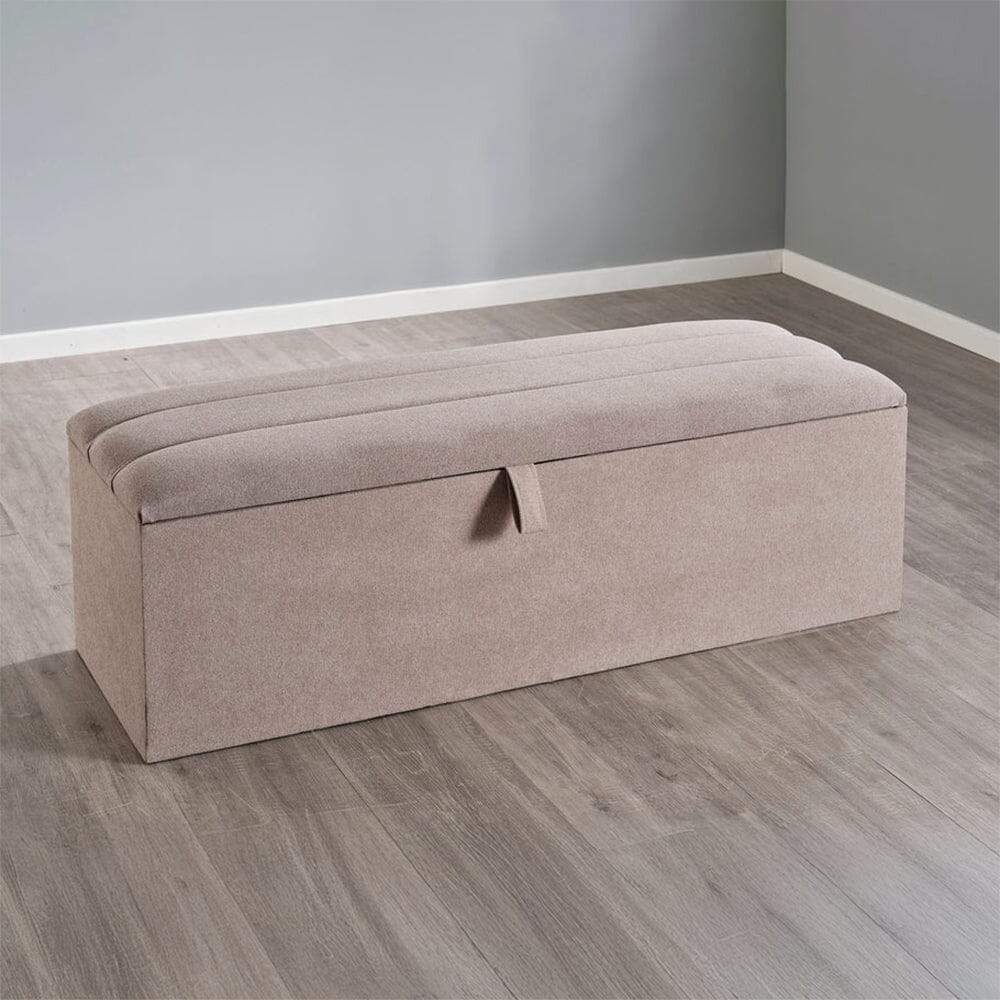
If you’re currently shortlisting a UK storage ottoman supplier, don’t start with price. Start with repeatability: compliance readiness, seasonal rotation discipline, and the kind of workmanship that survives the shop floor.



