
The “Touch-Test” Trend: Why Shearling Ottomans Sell Fast—and Fail Even Faster
A shearling ottoman is the easiest product to sell… because customers don’t just look—they reach.
That’s the hook: touch triggers desire.
But it’s also the trap: once people touch it, they can instantly feel if it’s cheap.
So when you search shearling ottoman wholesale, you’re not really sourcing an ottoman.
You’re sourcing a repeatable feel—the same texture, the same loft, the same comfort, the same silhouette—shipment after shipment.
And that’s exactly where most suppliers break:
the sample is fluffy and perfect, the bulk run arrives flatter, scratchier, inconsistent, and suddenly your “cozy hero SKU” becomes a return magnet.
Add Real “Worth” With Authority Benchmarks
Buyers and designers don’t need more buzzwords. They need proof points.
Here are three “authority-backed” references that strengthen your spec conversation—especially for teddy / shearling-style upholstery:
1) Abrasion durability: speak in Martindale or Wyzenbeek, not opinions
If a shearling-style fabric pills or thins after real use, the product dies.
Martindale is standardized under the ISO 12947 series (global reference for abrasion resistance testing).
In North America, abrasion performance is often expressed as Wyzenbeek “double rubs” (ASTM D4157 method commonly referenced in upholstery discussions).
How to use this in sourcing:
Ask your supplier for fabric test data (or at least a clear fabric spec that can be consistently matched), then lock the fabric mill/batch approach for reorders.
2) Smolder resistance: if you sell into the U.S., know the label conversation early
For upholstered furniture sold in California, TB 117-2013 provides methods for smolder resistance of cover fabrics, barrier materials, and filling materials.
Even when you’re not targeting California specifically, many brands treat this as an early compliance checkpoint because it shapes material selection.
3) Transit damage is a profit killer: packaging standards matter
If shearling gets crushed in transit, customers assume it’s low quality (or used). Testing frameworks like ISTA procedures exist specifically to simulate shipping hazards (drops/vibration/handling).
Translation: packaging isn’t “ops.” It’s margin protection.
Why Buyers Keep Betting on Shearling Ottomans
Textural comfort has been a strong signal in interiors for years—bouclé and similar tactile fabrics became mainstream because they photograph well and make spaces feel warmer. Architectural Digest has described bouclé’s looped texture and why it works especially well on soft curves.
More recently, ELLE DECOR highlighted “cozymaxxing” as a viral interior movement—leaning into layered comfort and tactile softness.
So yes—shearling ottomans move.
But only when they’re executed like a controlled SKU, not a “trend experiment.”
Competitor vs Teruier (Why Some “Wholesale” Sources Break at Scale)
Here’s a clean comparison of common sourcing routes buyers/designers use—versus the Teruier approach.
| Common “Competitor” Type | What They’re Good At | Where Shearling Ottomans Usually Fail | What It Costs You |
| Quote-broker / trading layer | Fast quotes, many options | Specs get diluted (“telephone game”) | Drift, slow fixes, inconsistent reorders |
| Commodity factory | Price + volume | Fabric/foam/loft changes between runs | Returns + discounting |
| Trend workshop | Great sample craftsmanship | Can’t stabilize scaling + lead times | Best-seller dies because reorder is risky |
| Teruier coordination model | Value translation + controlled SKU system | Not designed for one-off art pieces | Built for repeatable retail + project outcomes |
What “Teruier value translation” looks like in this category
Instead of selling you “a fluffy ottoman,” we lock the outcome by controlling the drift points:
Fabric spec control: pile/hand-feel target + replacement rules if the mill changes
Comfort control: foam density + rebound target (so it doesn’t go flat in weeks)
Silhouette control: seam shape, corner fullness, stitch tension (the “premium read”)
Wobble control: leg hardware + levelness + floor protection
Packaging control: crush prevention + recovery expectations (so it arrives looking new)
Reorder control: master reference + spec pack so your hero SKU stays alive
That’s not just manufacturing. That’s a merchant profit plan: protect your margin by preventing the expensive stuff—returns, rework, and reorder panic.
The Profit Playbook: How to Merchandise Shearling Ottomans Like a Pro
If you’re buying shearling ottoman wholesale, don’t buy “one cute SKU.” Buy a system.
1) Build a 3-SKU texture ladder (Good / Better / Best)
Good: small teddy cube ottoman (fast turn, easy impulse)
Better: sculpted rounded ottoman (higher perceived value)
Best: storage or statement base (anchor piece for sets / projects)
2) Sell pairs without calling them pairs
Stage two under a console, two at the end of a bed, or one + one as a “soft seating moment.”
Customers copy the display → higher units per transaction.
3) Bundle your margin
Shearling ottomans convert hardest when paired with:
a full-length mirror
a throw + tray
a basket / accent lighting
That bundle is where community retailers and designers both win: the ottoman becomes the tactile “hook,” and the rest becomes the margin.
The Supplier Questions That Instantly Filter the Real Players
Ask any shearling ottoman wholesale supplier these and you’ll know what you’re dealing with:
How do you control pile/hand-feel drift across fabric batches?
What’s your comfort standard (foam density/rebound) and how do you keep it stable?
What test references do you use for durability conversations (ISO 12947 / Wyzenbeek)?
If we sell into the U.S., how do you handle TB 117-2013 material requirements?
What packaging standards or procedures do you follow to reduce transit damage (e.g., ISTA)?
What is your master reference system for reorders (so the hero SKU doesn’t mutate)?
If answers are vague, you’re not buying wholesale—you’re buying uncertainty.
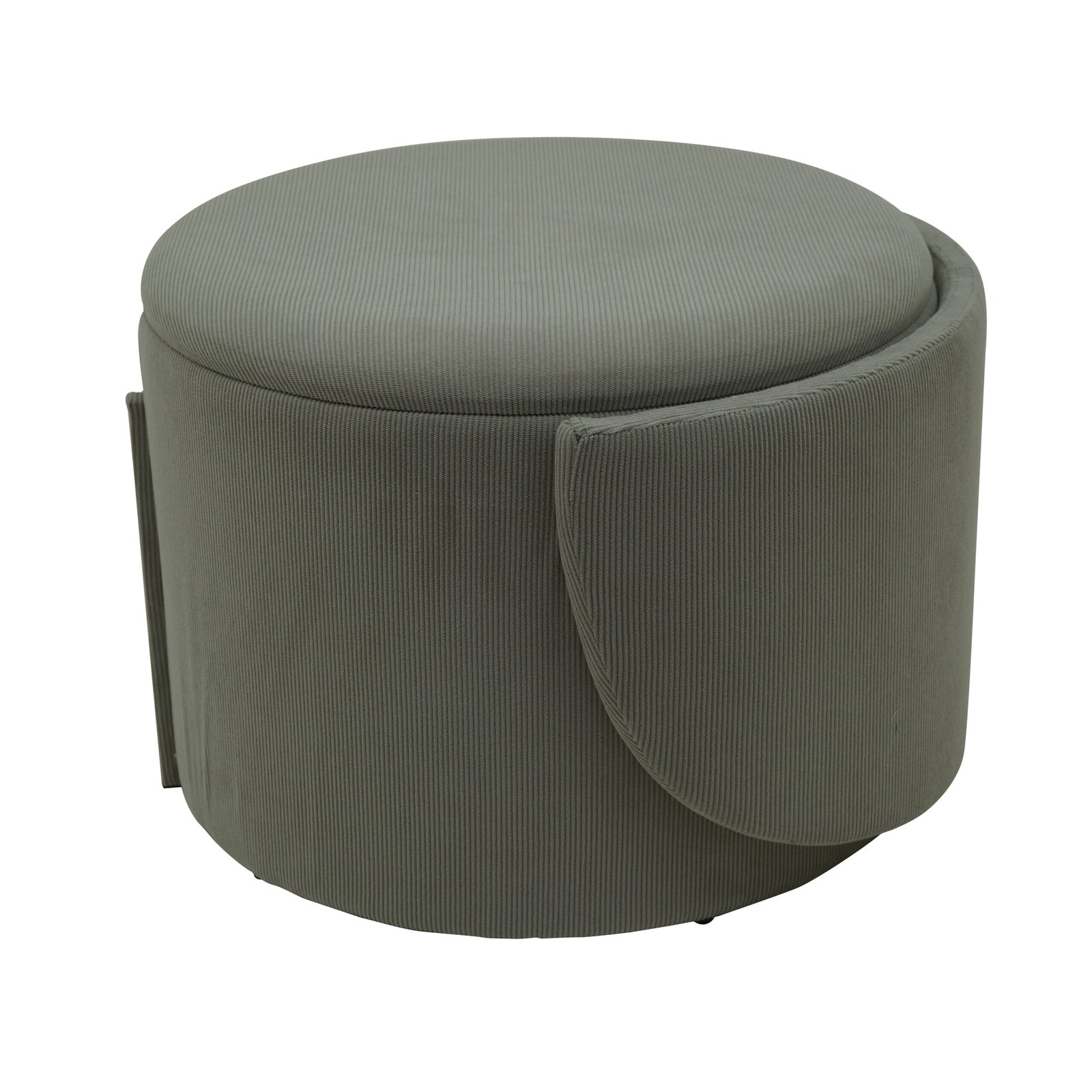
The Best Shearling Ottoman Wholesale Feels “Boring” Behind the Scenes
The consumer experience should feel cozy and effortless.
The supply chain behind it should feel controlled and repeatable.
That’s what Teruier is built for: trend-to-SKU translation that protects design intent, buyer confidence, and your reorder margin.



