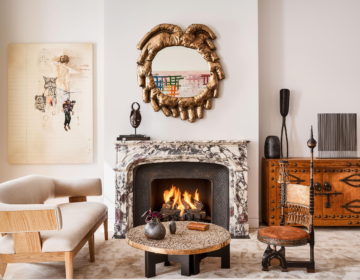
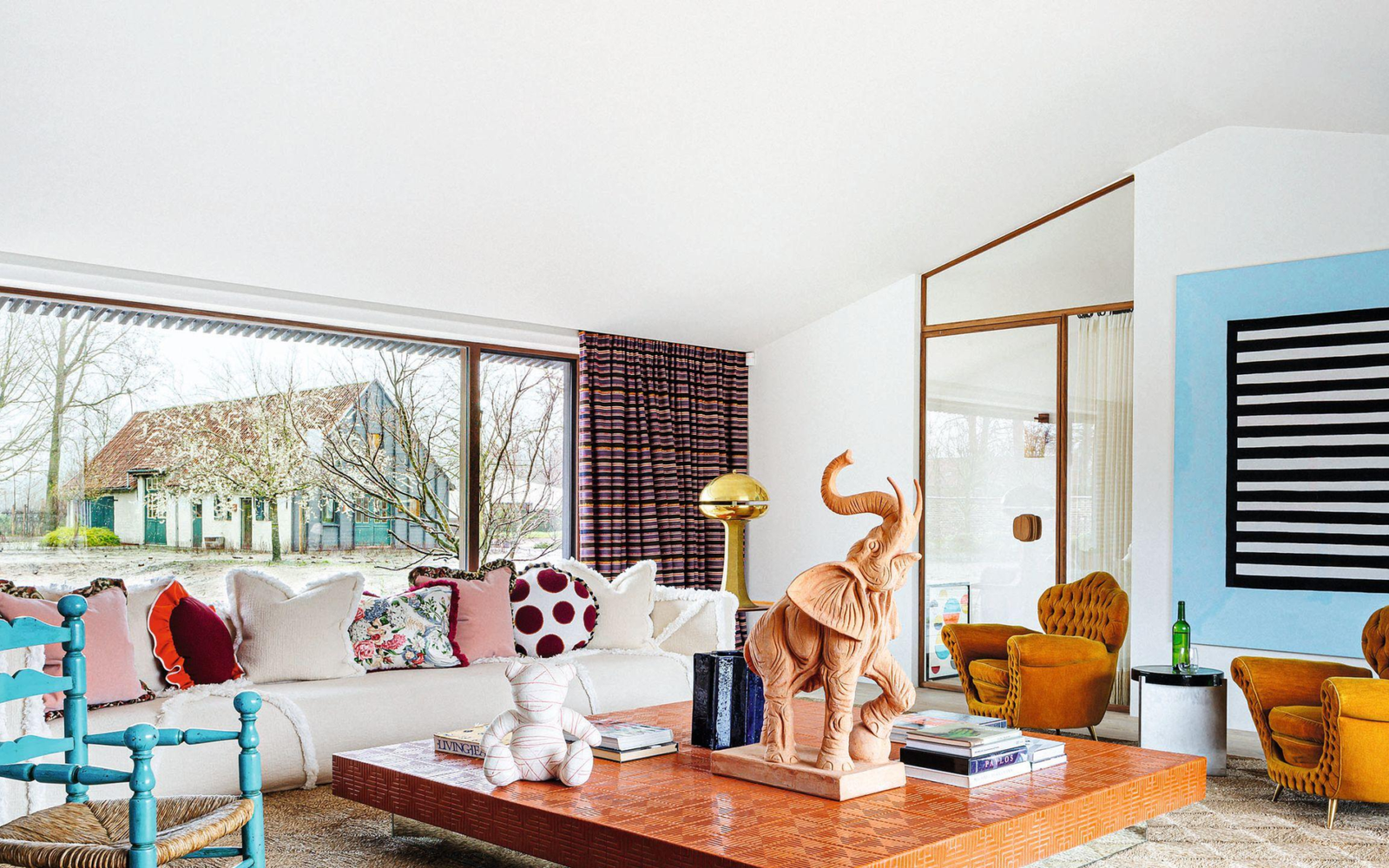
Perfectly coordinated interiors look expensive. But sometimes, the one thing that doesn’t match is what makes a room memorable.
Walk into a beautifully furnished living room.
The sofa matches the armchairs. The coffee table matches the side tables. The cushions repeat the colours of the rug. Even the decorative accessories seem to have been selected from the same catalogue page.
Everything looks right.
And yet, something feels missing.
Now imagine adding one unexpected object.
A brightly coloured animal sculpture. An unusual vintage vase. A playful decorative box. Something that does not quite follow the room’s established colour scheme.
Suddenly, the room becomes more interesting.
Why?
Because a home that coordinates perfectly can sometimes look like a showroom rather than somewhere a person actually lives.
Perhaps the secret to a memorable interior is not finding everything that matches. It is finding one thing that doesn’t.
1. The Problem With Buying Everything in One Collection
Furniture retailers often present beautifully coordinated collections.
There is a practical reason for this.
Matching products make purchasing easier. Customers can select a sofa, coffee table, sideboard and accessories without worrying too much about whether everything will work together.
For retailers, coordinated collections also simplify merchandising and product presentation.
But there is a downside.
When every object follows exactly the same colour palette, material and design language, the room can become predictable.
A beige sofa, beige rug, beige cushions, beige ceramic vases and beige decorative objects may create a calm environment.
But calm is not the same as character.
The growing interest in collected interiors reflects a different way of thinking.
Instead of buying an entire room in one transaction, homeowners gradually bring together furniture, artwork, decorative objects and personal possessions.
Some pieces may be new. Others may be inherited, vintage, handmade or discovered during travel.
They do not have to match perfectly.
They simply need to belong together.
2. Why Designers Are Moving Away From Perfect Coordination
The shift is not just a social-media observation.
Houzz’s September 2026 U.S. Fall Design Trends Report identified collected, layered interiors as a growing direction.
The report describes a move away from spaces that look newly purchased as complete sets, towards rooms that feel assembled over time.
Vogue’s 2026 interior design coverage also identified an appetite for more personal interiors, mixing different periods, materials and individual objects.
This is an interesting cultural correction.
For years, many homeowners looked to social media for a recognizable style.
They wanted the same curved sofa, the same neutral palette, the same sculptural vase and the same carefully arranged coffee table.
The result was an increasingly familiar visual language.
Now, a different question is emerging:
Does a beautiful home need to look like everyone else’s?
The answer is becoming less obvious.
3. The One Odd Object Rule
Think of this as a styling principle rather than a strict design formula.
Start with a room that has a reasonably consistent foundation.
The furniture, main colours and larger surfaces establish the overall atmosphere.
Then introduce one object that creates a little tension.
It could be:
An unexpected colour
A vivid blue decorative object in a warm neutral living room.
An unusual shape
An animal sculpture on a traditional console.
A different historical reference
An Art Deco-inspired bookend beside contemporary furniture.
A playful personality
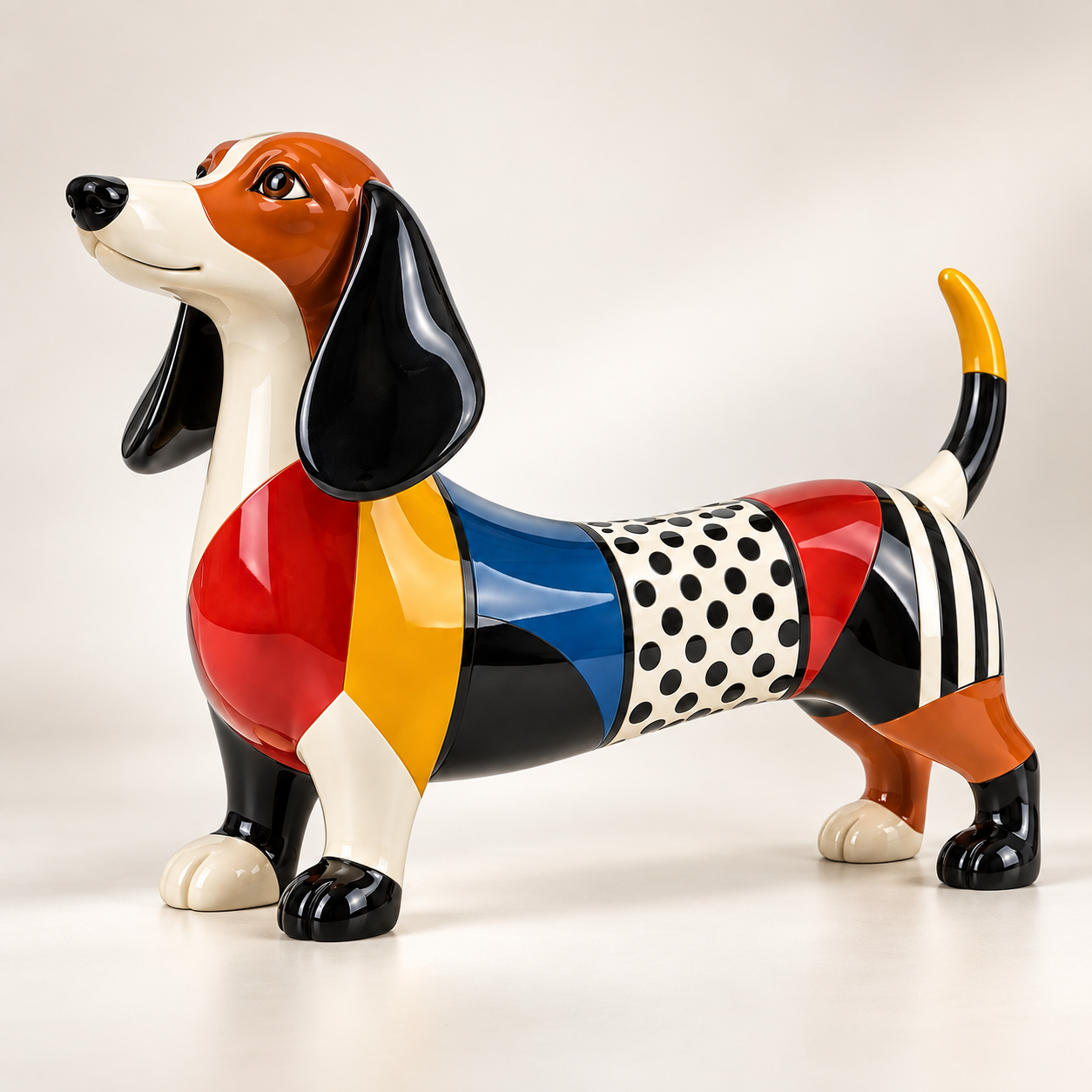
A colourful dachshund sculpture in an otherwise restrained interior.
An unexpected material
A metallic decorative object among natural wood, linen and stone.
The point is not to make the room chaotic.
It is to introduce something that makes the eye stop for a moment.
A successful accent does not need to dominate the room.
It simply needs to give the room a little personality.
4. Why a Strange Object Can Be More Memorable Than an Expensive One
There is a difference between visual impact and monetary value.
An expensive decorative object may look impressive because of its material, craftsmanship or brand.
But a relatively small object can create a stronger emotional response if it has an unusual form or an interesting story.
Consider a conventional ceramic vase.
It may be beautifully made, but customers have seen thousands of similar shapes.
Now consider a vase shaped like a lemon, a sculpture inspired by an animal, or a decorative object with exaggerated proportions.
The reaction may be immediate.
Some people will love it.
Others may think it is ridiculous.
That disagreement is precisely what gives the object a recognizable identity.
Teruier explored this commercial tension in The Lemon Vase Looks Like a Joke Until It Starts Selling.
The article examines why an unconventional decorative object can attract attention even when buyers initially question its commercial potential.
It raises an important point for retailers:
Not every product needs to appeal to everyone.
Some products earn their place by giving a collection something distinctive.
5. Animal Sculptures: Cute, Quirky or Too Much?
Animal sculptures are an interesting example of how one decorative object can change the mood of a room.
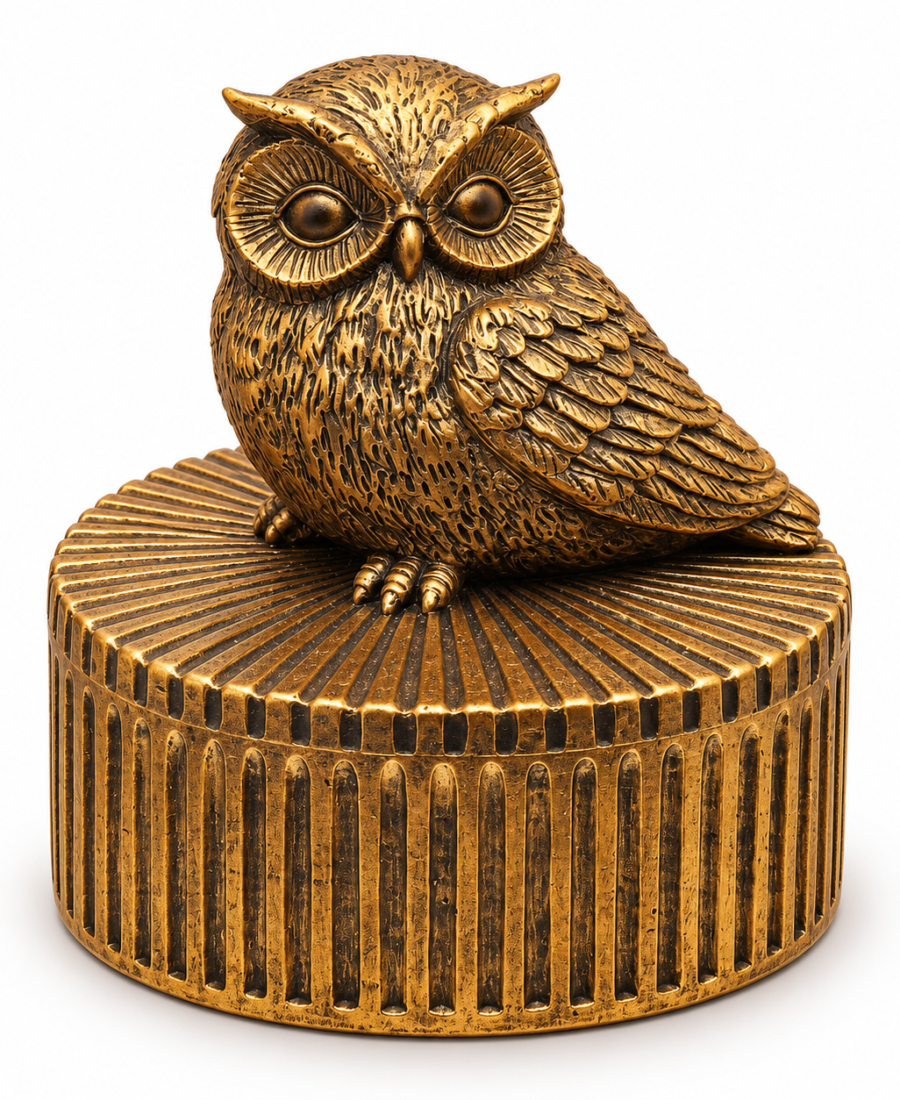
A traditional owl sculpture may introduce a classic, scholarly atmosphere.
A pair of deer sculptures can create a softer nature-inspired display.
A brightly coloured dog sculpture can bring humour and energy into a contemporary interior.
These are very different expressions of the same broad product category.
Consider three approaches.
The Classic Collector
An antique gold owl or a traditional animal figure can work with dark wood, books, traditional furniture and warm metallic finishes.
The Nature-Inspired Home
Deer sculptures and other animal forms can complement natural materials, warm neutrals and seasonal decorations.
The Playful Interior
A colourful animal sculpture can become a conversation piece in a modern living room, creative workspace or eclectic home.
The mistake would be to treat all animal sculptures as one retail style.
Their commercial value depends on the intended customer and the wider collection.
For retailers, a small number of clearly differentiated designs may create a more useful assortment than dozens of similar figurines.
6. How to Mix Different Objects Without Making a Mess
There is a reason some collected interiors feel sophisticated while others simply look cluttered.
Mixing different styles does not mean abandoning visual control.
A few principles help.
Keep One Common Thread
Objects can have different shapes and historical references while sharing a colour, material or visual rhythm.
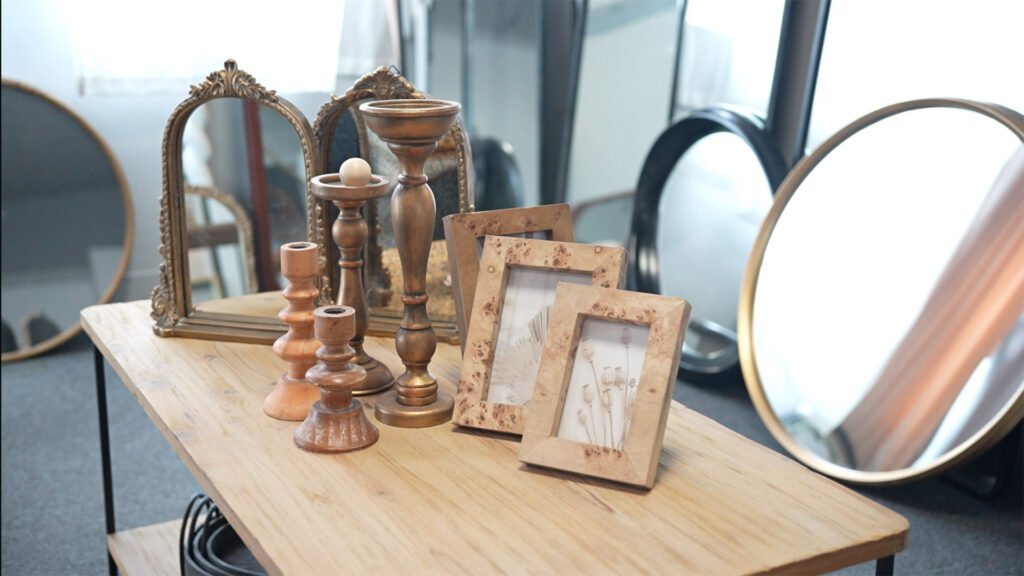
For example, an antique gold sculpture, a brass candleholder and a warm metallic picture frame can work together without being identical.
Vary the Scale
A room becomes visually flat when every object is roughly the same size.
Combine a larger focal object with smaller accessories and different heights.
Leave Negative Space
Do not fill every shelf or tabletop.
An unusual decorative object becomes more effective when it has enough space around it.
Mix Materials Carefully
Wood, ceramic, glass, metal and textiles can create interesting contrasts.
But too many unrelated finishes can make a display feel accidental.
Let One Object Lead
If a colourful sculpture is the focal point, the surrounding objects can be quieter.
Not everything needs to compete for attention.
The goal is a room that feels collected, not overcrowded.
7. A Real Product Example: Three Different Personalities
Teruier’s existing decorative object references demonstrate how different products can create different visual stories.
The Classic Statement: Antique Gold Owl on Fluted Base Statue
The antique gold finish and architectural fluted pedestal give the owl a more traditional decorative character.
It can work on a bookshelf, console or sideboard, particularly alongside dark wood, books and warm metallic accessories.
The Playful Statement: Pop Art Dachshund Sculpture
This design takes a completely different approach.
Its elongated dog silhouette, strong colours and graphic patterns make it a much more expressive decorative object.
It is designed to stand out rather than blend into a neutral arrangement.
The Seasonal but Flexible Accent: Gilded Antler Deer Sculpture Set
The ivory body and champagne-gold antlers offer a softer interpretation of animal décor.
The pair can work in holiday displays, but its neutral finish also gives it potential for year-round decorative merchandising.
These three examples illustrate an important principle.
A decorative object should have its own identity.
The objective is not to make every sculpture look like part of the same family. It is to give retailers different styling directions for different customers.
8. What This Means for Home Décor Buyers
For buyers sourcing wholesale decorative objects, the opportunity is to build an assortment with more than one personality.
A collection containing only safe, neutral products may be easy to merchandise.
But it can also become visually interchangeable with competing retailers.
A more balanced assortment can include:
Core Decorative Objects
Neutral ceramics, understated sculptures and versatile accessories that work across multiple interiors.
Character Pieces
Animal sculptures, unusual shapes and distinctive finishes that create visual interest.
Conversation Pieces
More expressive products with strong colours, playful forms or unexpected details.
Coordinating Accessories
Bookends, trays, tabletop objects and decorative storage that help complete the display.
This approach gives buyers a way to introduce personality without making the entire collection difficult to sell.
It also creates opportunities for different price points and retail settings.
A colourful statement sculpture may attract attention online, while a more understated ceramic object may suit a wider range of customers.
Neither has to replace the other.
9. Why Retailers Should Not Be Afraid of a Little Personality
The commercial temptation is always to choose products that feel safe.
A neutral colour is easy to coordinate.
A familiar shape is easy to explain.
A conventional product may seem less risky.
But if every retailer makes exactly the same decisions, the market becomes crowded with products that are difficult to distinguish.
A distinctive decorative object can help a retailer create a recognizable visual identity.
It can also support gifting, seasonal merchandising, social-media content and styled room presentations.
That does not mean every unusual product will sell.
A quirky object still needs an appropriate price, acceptable quality, suitable packaging and a customer who understands its appeal.
For a useful buyer perspective on this challenge, see Teruier’s 2027 Home Décor Trends: Why Copying Them Is a Retail Risk.
The article examines why following the same trends as every competing retailer can weaken product differentiation.
For a broader look at how different categories can work together, explore Home Décor Category Guide: How German Buyers Build Cohesive, Retail-Ready Collections.
The key is to coordinate the collection without making every product look identical.
Frequently Asked Questions
What are collected interiors?
Collected interiors are spaces built from a mixture of furniture, accessories, artwork and personal possessions acquired over time. They often combine contemporary products with vintage, inherited or distinctive decorative objects.
How can I make a room look more personal?
Start with a comfortable foundation, then introduce objects with different shapes, materials, colours or personal meaning. Avoid making every item match exactly.
Are whimsical home décor products suitable for mainstream retailers?
They can be, particularly when selected as part of a balanced assortment. The product should have a clear visual identity, appropriate price positioning and a defined customer.
What is the difference between playful home décor and novelty décor?
Playful home décor uses humour, unexpected forms or expressive colours while still fitting into a considered interior. Novelty décor often relies more heavily on a temporary joke, theme or occasion.
How should retailers select wholesale decorative objects?
Buyers should consider visual differentiation, material quality, finish consistency, dimensions, packaging, retail price and how the products work together in a display.
Do decorative objects need to match the furniture?
No. They should relate to the room through proportion, colour, material or visual balance, but they do not need to come from the same collection or design period.
Final Thought: Your Home Should Tell a Story, Not Follow a Catalogue
A beautiful room does not have to be perfectly coordinated.
It can contain a modern sofa, an old wooden cabinet, a colourful sculpture, a ceramic vase and a book that has been sitting on the same shelf for ten years.
The combination may not be obvious.
But it can be personal.
And that is something a perfectly matched furniture set cannot automatically provide.
For retailers, the opportunity is equally interesting.
Consumers may appreciate coordinated collections, but they also want products that help their homes feel individual.
The best decorative object is not always the one that matches everything. Sometimes, it is the one that makes everything else more interesting.
Teruier works with international retailers, importers, home décor brands and project buyers on decorative objects, sculptural accessories, tabletop décor and coordinated product development.
Explore our Decorative Objects & Sculptures collection or contact Teruier to discuss wholesale sourcing, product development and private-label opportunities.