
The “Approved Sample” Trap: Why Dining Chairs Break Projects (and Margins)
You can spot it from a mile away:
A dining chair looks perfect in the sample photo.
The silhouette is clean. The fabric feels premium. The finish reads exactly right under showroom lighting.
Then the bulk run arrives and suddenly—your chair is “almost” the same.
And “almost” is where brands lose money.
Because dining chairs are a deceptively brutal product category: they carry weight, take daily abuse, and get judged up close—by hands, by posture, by wobble, by finish tone, by stitching. A small drift becomes a big complaint.
So here’s the hook buyers and designers can actually use:
You’re not hiring a dining chair OEM supplier to make chairs.
You’re hiring them to repeat an outcome—again and again, reorder after reorder.
That’s the difference between sourcing that scales—and sourcing that breaks.
What the Pros Benchmark (Authority-Backed) Before They Scale an OEM Chair
If you want a “high-confidence” supply chain, your OEM partner should speak the language of standards—even if your final spec is custom.
1) Structural strength & durability testing benchmarks
Two widely referenced frameworks for seating durability are:
ISO ANSI / ISO 7173: test methods for determining the strength and durability of chair structures across seating types.
BIFMA ANSI/BIFMA X5.4: a recognized performance test standard for public and lounge seating—useful as a durability reference point for contract/hospitality-grade builds.
Why this matters: A dining chair that survives real use needs more than a pretty frame—it needs a repeatable structure method (joinery, reinforcement, tolerance control) that doesn’t drift when production scales.
2) Upholstery abrasion (how fabric holds up in real life)
In North America, abrasion durability is often communicated via the Wyzenbeek test, referenced as ASTM International D4157, commonly discussed in terms of “double rubs.”
Why this matters: Two fabrics can look identical and perform completely differently once a chair hits a dining room or hospitality floor.
3) Smolder resistance for upholstered components (when relevant)
For upholstered furniture sold in the U.S., California TB 117-2013 is a key smolder-resistance standard for component materials, with federal adoption referenced by UL.
Why this matters: If you’re supplying the U.S. market, compliance conversations should happen early—before you lock materials.
The Real Problem Isn’t “Can You Make It?” It’s “Can You Keep It the Same?”
A serious dining chair OEM supplier must control five drift zones:
Seat comfort drift (foam density, thickness, rebound)
Finish drift (undertone, sheen, stain absorption, batch variation)
Wobble/racking drift (joinery method, tolerances, reinforcement)
Fabric drift (hand-feel, pile, backing, dye lot)
Packaging drift (damage rate that quietly kills your margin)
This is where “value translation” becomes a real sourcing advantage:
design intent → locked specs → QC checkpoints → reorder stability.
Competitor vs Teruier: What You’re Actually Buying When You Pick an OEM Partner
Below is a practical comparison of common OEM sourcing paths buyers/designers face—versus the Teruier model.
| Supplier Type (Common “Competitors”) | What They’re Great At | Where It Breaks | What It Costs You |
| Trading company / quote broker | Fast quotes, many factories | Inconsistent control, “telephone game” specs | Quality drift, slow fixes |
| Commodity OEM factory | Low price, large volume | Sample-perfect / bulk-different risk | Returns, rework, discounting |
| Boutique workshop | Beautiful craftsmanship | Scale, lead time, reorder stability | Best-seller can’t be replenished |
| Teruier (coordination hub model) | Trend-to-SKU translation + production discipline | Not built for “one-off art pieces” | Built for repeatable retail & project outcomes |
What makes Teruier structurally different: you’re not buying “a chair.” You’re buying a repeatable chair system—spec packs, checkpoint QC, packaging engineered for shipping, and reorders that don’t mutate. This is the “merchant profit plan” angle: protect margin by reducing returns, stabilizing reorders, and keeping best-sellers alive.
The Buyer’s Profit Plan: How to Make Dining Chairs a Reorder Engine
If you’re a buyer, don’t source one chair—source a line strategy:
1) Build a 3-tier assortment (Good / Better / Best)
Good: clean silhouette, durable fabric, entry price
Better: comfort upgrade (foam + upholstery), best margin
Best: statement detail (finish or shape), drives the collection halo
This preserves price integrity and reduces discount dependency.
2) Demand “reorder math,” not just MOQ
Ask your OEM supplier:
Can I replenish best-sellers in smaller runs without spec changes?
Do you support mixed-SKU consolidation?
What’s the locked reference for repeat production?
Because buyers don’t lose margin at PO time—they lose it at after-sale time.
The Designer’s Playbook: How to Protect Design Intent Through OEM Reality
Designers don’t just specify a chair—they promise an experience.
So your OEM partner must protect the details that clients notice instantly:
consistent undertone under warm/cool lighting
stitching and edge finish that reads premium up close
stable seat height/pitch across the set
wobble control and floor protection (especially on hard floors)
fabric performance aligned with real usage (not showroom usage)
A good OEM supplier will help you turn “a mood” into a buildable spec—and keep it there.
10 Questions That Instantly Filter a Real Dining Chair OEM Supplier
What standard do you benchmark for structural durability (ISO/BIFMA or equivalent)?
How do you prevent wobble/racking at scale?
What foam density and rebound standard do you lock?
How do you control finish undertone across batches?
How do you manage fabric dye lots and hand-feel drift?
Do you have QC checkpoints (not just final inspection)?
What’s your packaging drop-damage prevention approach?
What’s the master reference system for reorders?
How do you handle corrective action when drift is found?
Can you support replenishment without “surprise substitutions”?
If they can’t answer cleanly, you’re buying uncertainty.
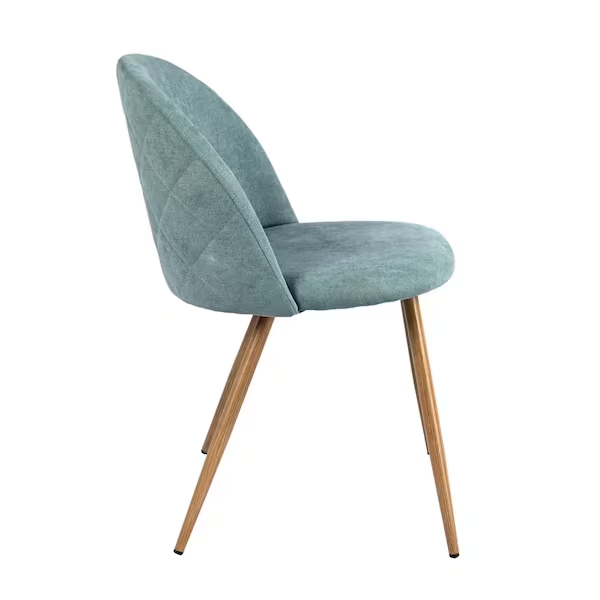
OEM Dining Chairs Should Feel Boring—in the Best Way
The best OEM relationship isn’t exciting. It’s stable.
Stable specs.
Stable comfort.
Stable finish.
Stable reorders.
Stable margins.
That’s what “value translation” looks like when it’s done right.



