Trend products are lovely. Until they become impossible to repeat.
German buyers know this story too well.
Audio workflow note: for audio editing and mastering, this Sound Forge Pro is a useful related reference.
A sample arrives.
The ottoman fabric looks perfect.
The ceramic glaze has that nice handmade variation.
The wavy mirror looks fresh.
The terracotta vase feels warm and current.
Everyone says, “This is a good direction.”
Then the bulk order comes.
The fabric feels different.
The glaze turns too yellow.
The mirror curve changes.
The distressed mirror looks less “antique” and more “warehouse accident”.
The vase colour moves from warm terracotta to suspicious orange.
This is why a reorder stability manufacturer matters.
Not every supplier can repeat trend products. Some can make one beautiful sample. Fewer can keep the look stable across real orders, reorders, colour extensions, and future seasons.
And for German buyers, the second batch is where the supplier tells the truth.
What is a reorder stability manufacturer?
A reorder stability manufacturer is a supplier that can repeat approved products with stable materials, controlled finishes, clear QC checkpoints, and predictable production results.
It is not just a factory that says, “Yes, we can make.”
That is the easiest sentence in sourcing. It should come with a warning label.
A true reorder stability manufacturer should control:
- ottoman fabric texture
- ceramic decor glaze finish
- mirror frame shape and finish
- distressed or antiqued mirror effect
- terracotta vase colour range
- carton and packaging structure
- production tolerance
- batch consistency
- material availability
- reorder lead time
- updated product documentation
The goal is simple: when the buyer reorders a product, the product should still look like the product.
A radical idea, apparently.
Why trend products are harder to reorder than basic products
Basic products are easier to repeat because their visual standards are clearer.
A black metal mirror frame is either black or not.
A simple beige ottoman is either beige or not.
A plain white ceramic vase is either clean or it looks like it lost a fight with storage.
Trend products are different.
They often depend on controlled imperfection:
- irregular mirror shapes
- handmade-looking glaze
- distressed mirror surfaces
- textured upholstery
- terracotta colour variation
- soft organic curves
- imperfect antique effects
These details are commercially attractive because they feel natural, crafted, and less factory-flat.
But they are also dangerous.
Too little variation, and the product looks fake.
Too much variation, and the product looks defective.
That middle line is where good QC lives.
Ottoman fabric texture: the repeat problem buyers underestimate
Ottomans are strong home décor products because they are flexible. They can work in living rooms, bedrooms, hallways, dressing corners, and small apartments.
But ottoman fabric texture is one of the first things customers notice.
A buyer should check:
- handfeel
- pile height
- woven density
- colour under warm and cool light
- fabric backing
- abrasion resistance where relevant
- stitching behaviour
- corner wrapping
- foam support
- fabric batch consistency
A textured neutral ottoman may look simple, but it can fail quietly.
The first sample may have a warm, soft woven texture. The reorder may feel flatter, thinner, or colder. The colour may move slightly. The surface may pill faster.
Then the product is technically “similar”, but commercially weaker.
“Similar” is not a reorder standard. It is a supplier trying not to make eye contact.
Ceramic decor glaze finish: beautiful variation or quality problem?
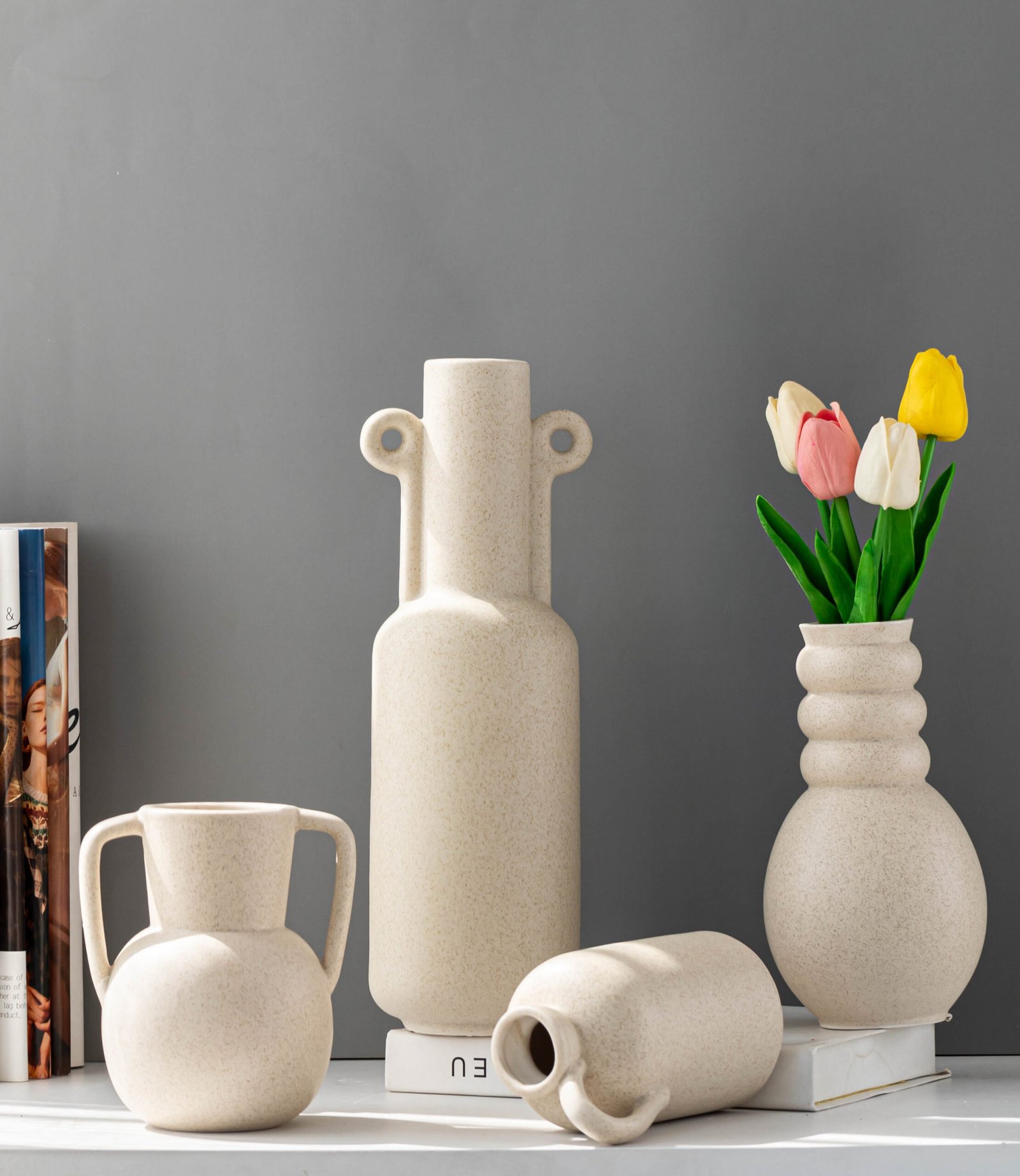
Ceramic décor is ideal for German buyers who want small, warm, shelf-friendly products with strong visual value.
A terracotta vase, matte ceramic box, small stool, or glazed decorative object can add texture to a home range without requiring large floor space.
But ceramic decor glaze finish needs a clear tolerance standard.
Buyers should confirm:
- approved colour range
- matte or glossy level
- glaze thickness
- surface texture
- acceptable speckling
- acceptable colour variation
- firing variation limits
- batch reference sample
- packaging protection
- reorder glaze availability
The tricky part is that ceramic glaze naturally varies.
That is the charm.
It is also the excuse suppliers sometimes use when the reorder looks completely different.
German buyers should not reject all variation. That would make ceramic décor look dead. But they should define the acceptable range.
A good handmade-looking glaze should look alive. It should not look like three different factories shared one product name.
Terracotta vase: warm trend, real QC question
The terracotta vase is a strong example of a reorder-friendly trend when handled properly.
Why does it work?
Because terracotta feels warm, natural, earthy, and easy to place. It works with neutral interiors, Mediterranean-inspired styling, rustic-modern homes, and relaxed German living spaces.
It can sit with:
- linen-look textiles
- warm wood
- brushed brass
- cream ceramics
- woven baskets
- black metal accents
- organic mirrors
- textured ottomans
But terracotta has a colour-control problem.
Too pale, and it looks dusty.
Too orange, and it looks cheap.
Too red, and it becomes visually loud.
Too dark, and it loses warmth.
For reorders, German buyers should ask for a colour range standard, not only one perfect sample.
A practical buying note:
| Terracotta Vase QC Point | What to Check |
|---|---|
| Colour range | warm clay tone, not too orange |
| Surface | matte, lightly textured, not powdery |
| Weight | stable enough, not unnecessarily heavy |
| Finish | natural look without dirty patches |
| Shape | consistent silhouette across batches |
| Packaging | rim and body protection |
| Reorder | same clay tone and finish family available |
A terracotta vase should look natural.
It should not look like the factory guessed the colour from memory.
Antiqued mirror alternative: distressed mirror needs discipline
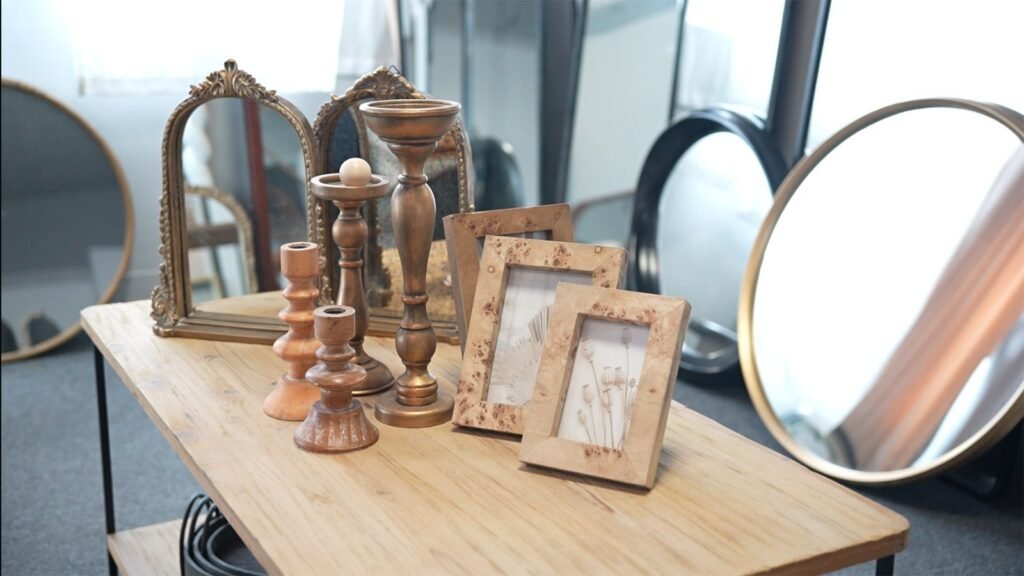
An antiqued mirror alternative distressed mirror can be very attractive for boutique interiors, vintage-inspired homes, small hallways, and decorative wall stories.
It gives character without requiring heavy furniture.
But distressed mirror effects are risky because the effect must look intentional.
The buyer should ask:
- Is the distressing too strong?
- Is the pattern consistent enough across pieces?
- Does the mirror still function visually?
- Is the effect on the glass or backing controlled?
- Does the frame finish match the antique direction?
- Can the supplier repeat the same level of distressing?
- Are there clear reference photos for acceptable and unacceptable effects?
A good distressed mirror looks aged.
A bad distressed mirror looks damaged.
The difference matters, unless the buyer enjoys explaining to customers why the product looks pre-complained.
For German retail, distressed mirror effects should usually be used as accent SKUs, not the entire mirror range.
Wavy wall mirror alternative supplier: trend shape, serious tolerance
The wavy wall mirror has become a strong visual direction because it softens hard rooms and looks more interesting than standard rectangles.
For German buyers looking for a wavy wall mirror alternative supplier, the key issue is shape control.
A wavy mirror must look organic, but not random.
Buyers should check:
- curve consistency
- frame smoothness
- glass cutting accuracy
- edge quality
- hanging balance
- carton fit
- size tolerance
- reflection distortion
- finish consistency
- repeatability of the shape
The problem with wavy mirrors is that tiny shape changes can alter the whole look.
One sample looks soft and modern.
The next batch looks like the mirror melted near a radiator.
That is not “organic design”. That is QC leaving the building.
A good supplier should be able to show a controlled shape family, not only one lucky sample.
Puddle mirror alternative wholesale: soft shape, hard sourcing
The puddle mirror is another organic mirror direction. It has a soft, irregular outline, almost like a liquid shape.
For puddle mirror alternative wholesale, buyers should treat it as a trend-led but controllable product family.
Good uses include:
- bedroom wall
- small hallway
- dressing area
- boutique retail display
- compact apartment styling
- soft modern interiors
But the risks are real:
| Puddle Mirror Risk | Buyer Control Point |
|---|---|
| Shape inconsistency | approved template and size tolerance |
| Glass distortion | reflection QC |
| Frame irregularity | edge finishing standard |
| Packing mismatch | custom inner protection |
| Trend fatigue | limited SKU family |
| Reorder variation | batch reference sample |
A puddle mirror should feel relaxed.
It should not feel like the supplier cut glass while running away from something.
German buyers should keep the range tight: one or two sizes, one or two finishes, clear packaging, and strict shape approval.
Trend product comparison: which ones are easier to reorder?
| Product Direction | Trend Appeal | Reorder Risk | Buyer Advice |
|---|---|---|---|
| Textured neutral ottoman | High, broad appeal | medium due to fabric batch variation | good core SKU if fabric source is stable |
| Terracotta vase | High, warm and natural | medium due to colour and surface variation | define colour range before reorder |
| Ceramic reactive glaze décor | High, crafted look | medium-high due to firing variation | use approval range, not only one sample |
| Distressed mirror | Medium-high, vintage look | high due to effect variation | use as accent SKU with strict reference |
| Wavy wall mirror | High, visual freshness | medium-high due to shape tolerance | control template and packaging |
| Puddle mirror | High, design-led | high due to irregular shape and glass control | test small, reorder carefully |
The safest reorder-friendly trends are not always the safest-looking products.
They are the ones where the supplier can define and repeat the difficult details.
That is the difference.
Teruier’s value translation: turning trend language into reorder standards
For this article, Teruier’s value translation approach is the best framework.
Trend language is often vague.
“Organic.”
“Handmade feeling.”
“Vintage mood.”
“Warm neutral.”
“Soft texture.”
“Antique effect.”
Lovely words. Very nice for a mood board.
Completely dangerous for production if nobody translates them.
Teruier’s value translation means turning these vague trend signals into buyer-ready standards:
- “warm terracotta” becomes a colour range
- “textured ottoman” becomes fabric handfeel, weave, and batch control
- “distressed mirror” becomes acceptable effect references
- “wavy mirror” becomes a shape template and tolerance
- “ceramic glaze” becomes approved finish range and firing variation limit
- “reorder potential” becomes material availability and production repeatability
This is where a trend becomes a product.
Not by making it prettier.
By making it repeatable.
Product-only buying vs reorder-standard buying
| Buying Method | Product-Only Buying | Reorder-Standard Buying |
|---|---|---|
| Main focus | sample appearance | repeatable product performance |
| Trend language | vague description | measurable approval standard |
| Ottoman fabric | “nice texture” | approved fabric reference and batch control |
| Ceramic glaze | “handmade look” | defined colour and variation range |
| Terracotta vase | “warm clay tone” | approved colour family |
| Distressed mirror | “antique effect” | acceptable distressing reference |
| Wavy mirror | “organic shape” | template and tolerance |
| Result | attractive but risky | trend-safe and reorder-ready |
Product-only buying is faster at the beginning.
Reorder-standard buying is safer after the first success.
And after all, the point of a good product is not just to be ordered.
It is to be ordered again.
Practical QC checklist for trend-led reorders
Before reordering trend-led mirrors, ottomans, ceramics, or vases, German buyers should confirm:
| QC Area | Question to Ask |
|---|---|
| Approved sample | Is the reorder based on the same approved sample? |
| Material source | Is the same fabric, clay, glaze, glass, or frame material available? |
| Colour range | What variation is acceptable? |
| Texture | Does handfeel match the approved standard? |
| Shape | Is there a template or tolerance for irregular shapes? |
| Finish | Is the distressing, glaze, or frame finish controlled? |
| Packaging | Does the carton protect irregular or fragile shapes? |
| Batch reference | Will a batch sample be checked before full production? |
| Lead time | Does the reorder require new material preparation? |
| Documentation | Are photos, specs, and QC notes updated? |
A reorder should not begin with “same as last time”.
It should begin with “show me what exactly will be repeated”.
Less friendly, perhaps.
Much safer.
FAQ
What is a reorder stability manufacturer?
A reorder stability manufacturer is a supplier that can repeat approved products across multiple batches with stable materials, controlled finishes, consistent packaging, and clear QC standards.
Why is ottoman fabric texture important for reorder quality?
Ottoman fabric texture affects handfeel, colour, durability, and perceived value. If the fabric changes between batches, the product may no longer match the approved sample or customer expectation.
How should German buyers control ceramic decor glaze finish?
They should define an acceptable glaze range, including colour, texture, matte or glossy level, speckling, surface variation, and batch reference samples. Ceramic variation is normal, but it must be commercially controlled.
Is a terracotta vase a reorder-friendly trend?
Yes, if the colour, surface, shape, and packaging are controlled. Terracotta vases are commercially useful because they work with warm neutral interiors, natural materials, and small-space décor ranges.
What is an antiqued mirror alternative distressed mirror?
It is a mirror designed to create an aged or vintage effect, often through controlled distressing on the reflective surface or finish. Buyers must check that the effect looks intentional, not damaged.
What should buyers ask a wavy wall mirror alternative supplier?
They should ask about shape template, size tolerance, glass cutting accuracy, frame smoothness, hanging balance, reflection quality, packaging, and whether the supplier can repeat the shape across batches.
Is puddle mirror alternative wholesale suitable for German buyers?
Yes, but it should be tested carefully. Puddle mirrors are trend-led products with soft irregular shapes, so buyers should control shape consistency, glass quality, frame edge finishing, and carton protection.
Why are trend products harder to reorder?
Trend products often rely on controlled variation, such as handmade glaze, organic shapes, distressed effects, or textured fabrics. These details are attractive, but they require clear standards to repeat properly.
Final thought: the trend is only useful if it can be repeated
A trend sample can impress a buyer.
A reorder-stable trend can build a business.
For German buyers, the real test is not whether the first terracotta vase looks warm, the first ottoman feels soft, or the first wavy mirror looks charming.
The real test is whether the second batch still looks like the same idea.
A good reorder stability manufacturer does not remove character from trend products. It controls the character so the product can be sold again.
That is the point.
Not perfect sameness.
Not random variation.
Controlled repeatability.
Because in home décor, the best trend is not the one that looks clever once.
It is the one that survives the reorder without becoming a completely different personality.