
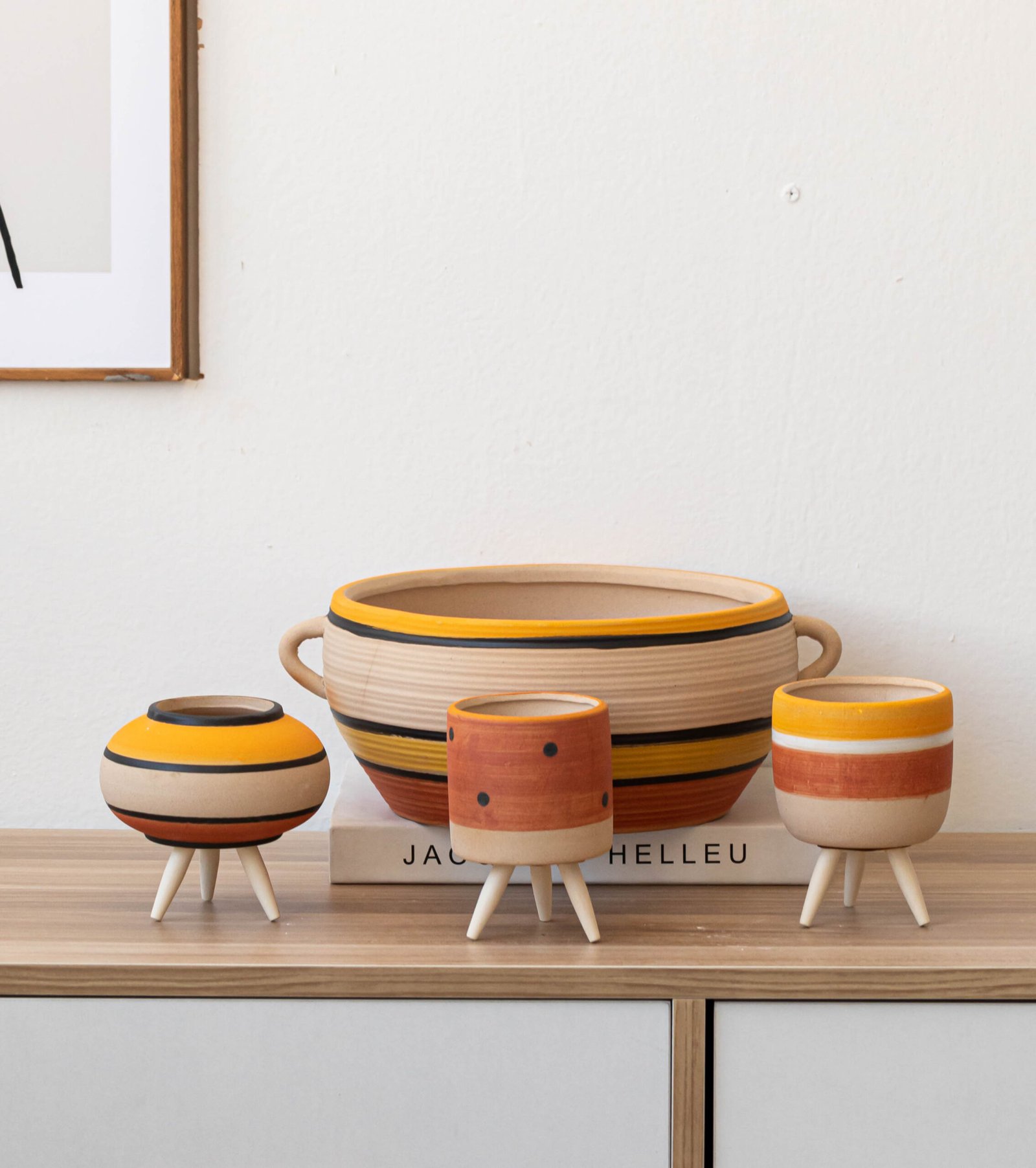
Decorative ceramics look small. Project problems do not.
A ceramic vase looks innocent.
A tomato vase.
A tulipiere-style piece.
A flower frog vase.
A majolica ceramic bowl.
Lovely little objects. Very charming. Very good at looking harmless.
Then the project starts.
The glaze changes.
The carton is weak.
The colour does not match the mirror frame story.
The packing list is unclear.
The documents arrive late.
The buyer discovers that “handmade feeling” apparently means “every batch has a new personality”.
This is why project sourcing and delivery matters, even for small home décor.
For German buyers, importers, interior designers and home décor merchants, decorative accessories are not just “final styling pieces”. In a project, they must be specified, packed, shipped, documented and delivered with the same discipline as mirrors, ottomans or small furniture.
Less glamorous than the mood board. Much more useful.
What is project sourcing and delivery?
Project sourcing and delivery means managing the full buying process for a defined interior, retail, hotel, apartment or fit-out project.
It includes:
- product selection
- material and finish confirmation
- sample approval
- packaging planning
- compliance documents for importers
- export schedule
- carton information
- phased delivery
- replacement planning
- reorder support
In plain buyer language:
It is how you stop a nice product idea from becoming a delivery problem with ceramic fragments.
A project-ready supplier should not only say, “Yes, we can make.”
That sentence is cheap. Sometimes dangerously cheap.
A project-ready supplier should explain size, finish, MOQ, carton, lead time, documents and delivery risk before the order becomes real.
Compliance documents for importers: boring, but not optional
Nobody gets excited about compliance documents for importers.
No buyer opens a bottle of Riesling because a product declaration arrived on time.
Still, documents matter.
For home décor projects, German importers may need:
- product specification sheets
- material information
- packaging details
- carton size and gross weight
- supplier declarations
- care instructions
- usage notes
- food-contact clarification where relevant
- finish and coating information
- test reports where required
This is especially important for ceramic décor.
A majolica ceramic decor plate may be decorative only.
A flower frog vase may hold water.
A tomato vase may be purely decorative.
A serving bowl may trigger food-contact questions.
The product must be clear.
If the buyer thinks it is functional and the supplier thinks it is decorative, congratulations — the project has already developed a small legal personality.
Export operations team home decor: the hidden part of project success
A strong export operations team home decor capability is not a luxury.
It is the part of the order that keeps the project from becoming a polite mess.
For ceramics, mirrors and small furniture, export operations should manage:
- packing list accuracy
- carton labels
- product codes
- fragile markings
- carton size
- gross weight
- inner packaging
- shipment timing
- document matching
- replacement planning
This matters because project buyers usually deal with multiple product groups.
A mirror may ship with ceramics.
A ceramic vase may ship with trays.
An ottoman may ship with wall décor.
A project may need phased delivery.
If cartons are badly labelled, the project site becomes a treasure hunt.
And nobody hires a procurement team to play “find the tomato vase”.
Cohesive home decor materials and finishes
Project sourcing is not only about getting products to arrive.
It is also about getting them to look like they belong together.
That is where cohesive home decor materials and finishes become important.
A project range may include:
- brass frame mirrors
- neutral ottomans
- matte ceramic décor
- majolica ceramic decor
- tomato vase accents
- tulipiere or flower frog vase shapes
- trays, boxes and small wall décor
These items need a shared material logic.
| Product Type | Finish Direction | Buyer Logic |
|---|---|---|
| Mirror | brushed brass, black, champagne | anchors the room finish |
| Ottoman | taupe, cream, woven neutral | softens the space |
| Tomato vase | warm red, terracotta, glossy ceramic | adds playful accent |
| Majolica ceramic decor | blue, green, hand-painted effect | adds craft and pattern |
| Flower frog vase | matte neutral or glazed tone | practical floral styling |
| Tray / box | wood, metal, ceramic | connects the shelf story |
The goal is not to make everything match perfectly.
That would look stiff.
The goal is to make the project feel intentional, not like the buyer ordered five trends and hoped they would become friends.
Tomato vase: playful, but still needs control
The tomato vase is a good example of a product that looks fun but still needs proper sourcing logic.
It can work for:
- kitchen décor
- restaurant styling
- summer home collections
- Mediterranean-inspired displays
- community home stores
- boutique retail
- table and shelf styling
But German buyers should check:
- tomato shape consistency
- glaze colour
- surface finish
- base stability
- ceramic thickness
- packaging protection
- whether it is decorative or functional
- reorder colour control
A tomato vase should look charming.
It should not look like the factory remembered tomatoes vaguely from childhood.
Tulipiere vase alternative flower frog vase wholesale
A tulipiere vase alternative flower frog vase wholesale direction can be very useful for project buyers and interior designers.
Why?
Because it gives floral styling structure.
A tulipiere-style vase or flower frog vase helps arrange stems, branches or decorative flowers more deliberately. It works in hotel lobbies, restaurants, retail displays, apartment styling and seasonal home décor.
But it needs specification.
Buyers should check:
| QC Point | Why It Matters |
|---|---|
| Hole size | affects flower placement |
| Water-holding function | must be clear if functional |
| Ceramic thickness | affects breakage risk |
| Glaze finish | must match project palette |
| Base stability | prevents tipping |
| Packaging | holes and rims need protection |
| Use note | decorative or functional must be clear |
A flower frog vase that cannot hold stems properly is not charming.
It is a ceramic object with unmet ambitions.
Majolica ceramic decor: beautiful, but do not let it run wild
Majolica ceramic decor brings colour, pattern and craft character into a project.
It can be very useful for:
- Mediterranean styling
- boutique hospitality
- seasonal retail displays
- table décor
- wall and shelf stories
- warm home collections
But majolica-inspired pieces require boundaries.
German buyers should define:
- approved colour range
- pattern tolerance
- glaze brightness
- surface smoothness
- decorative vs functional use
- packaging method
- acceptable handmade variation
Too little variation, and the product looks flat.
Too much variation, and the project looks like the ceramics had a committee meeting without the buyer.
Majolica should feel lively.
Not chaotic.
Project supplier vs ordinary product supplier
| Buyer Need | Ordinary Supplier | Project-Ready Supplier |
|---|---|---|
| Product offer | catalogue items | specified project products |
| Documents | sent later, maybe | prepared before shipment |
| Ceramics | nice sample | glaze, use, packaging and QC defined |
| Export operation | basic shipment | carton, label, packing list and timing controlled |
| Finish coordination | product by product | range-level material story |
| Delivery | one-time order | phased or project-based delivery |
| Buyer result | possible product order | smoother project sourcing and delivery |
German buyers do not need suppliers who only show nice products.
They need suppliers who can help those products arrive correctly, with documents, labels and cartons that do not behave like an afterthought.
Teruier’s value translation: from décor idea to project-ready supply
For this article, Teruier’s value translation approach fits well.
A designer says:
“We need playful ceramic accents.”
“The project needs Mediterranean warmth.”
“The mirror and ceramics should feel connected.”
“We need final styling pieces, but not random accessories.”
A factory asks:
“What shape?”
“What glaze?”
“What carton?”
“What MOQ?”
“What use?”
“What documents?”
Teruier’s value translation connects these two worlds.
It turns design language into project sourcing decisions:
- “playful accent” becomes tomato vase with controlled glaze
- “floral styling” becomes tulipiere or flower frog vase with clear hole size and use note
- “craft feeling” becomes majolica ceramic decor with pattern tolerance
- “cohesive room” becomes mirror, ottoman and ceramic finish coordination
- “project ready” becomes documents, carton labels and export operations
That is how small decorative products become project supply assets.
Not just pretty objects on a shelf.
FAQ
What is project sourcing and delivery?
Project sourcing and delivery means managing product selection, specifications, production, documents, packaging, export shipment and delivery timing for a defined interior, hotel, retail or fit-out project.
Why do compliance documents for importers matter?
They help German importers understand product materials, usage, packaging, care, supplier declarations and any required safety or test information. Without documents, the project can slow down.
What does an export operations team home decor do?
An export operations team manages packing lists, carton labels, shipment timing, fragile markings, documentation, replacement planning and communication between supplier and buyer.
Why are cohesive home decor materials and finishes important?
They make the project look intentional. Mirrors, ottomans, ceramics, trays and decorative items should share a clear material and finish logic.
Is a tomato vase suitable for project sourcing?
Yes, if the shape, glaze, base stability, packaging and use note are controlled. It works well as a playful accent in kitchen, restaurant, retail and Mediterranean-inspired displays.
What is a tulipiere vase alternative flower frog vase wholesale product?
It is a vase or ceramic piece designed to help arrange flowers or stems through holes or structured openings. Buyers should check hole size, water function, stability and packaging.
Is majolica ceramic decor easy to use in projects?
Yes, but buyers should control colour, pattern variation, glaze finish, decorative or functional use and packaging. Majolica is attractive, but it needs clear limits.
Final thought: small décor still needs project discipline
For German buyers, project sourcing and delivery is not only for large furniture.
Small decorative products can also delay, confuse or damage a project if they are not controlled.
A tomato vase needs glaze and packaging control.
A flower frog vase needs clear function.
Majolica ceramic decor needs pattern tolerance.
Mirrors and ottomans need finish coordination.
Import documents and export operations must be ready before shipment.
A good project supplier does not just send products.
It helps the whole project arrive in one piece — visually, commercially and literally.



