Small products can still create very large project problems
A ceramic vase looks small.
An ottoman looks soft.
A decorative piece looks harmless.
Very charming.
Then the project starts.
The majolica glaze changes.
The wiggle vase arrives with broken edges.
The burnt orange velvet ottoman looks darker than the approved sample.
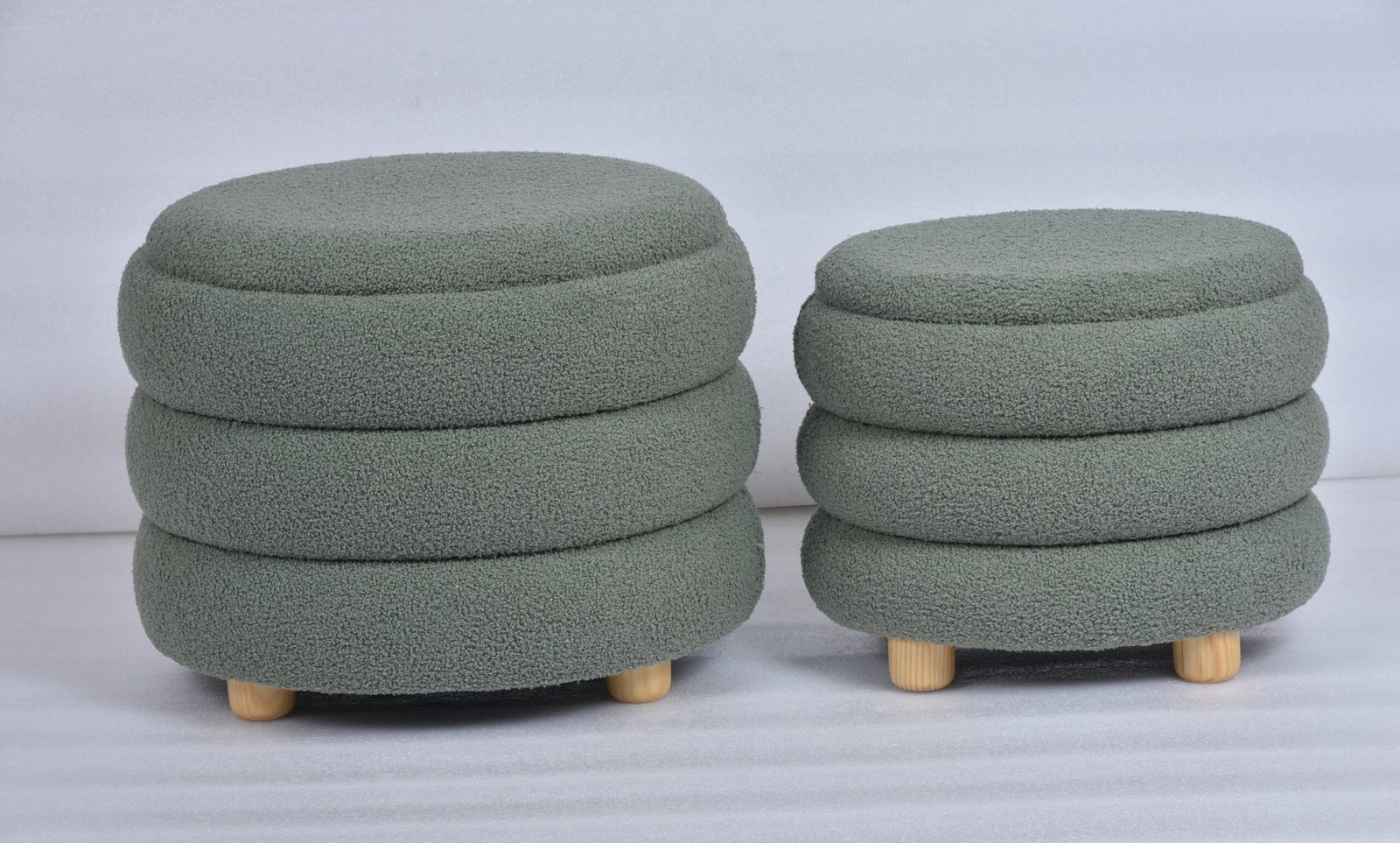
The channel tufted ottoman has uneven seams.
The carton protection is “almost enough”, which in export language often means “please prepare for a complaint”.
This is why project sourcing and delivery matters.
For German buyers, home décor merchants and interior designers, project procurement is not only about choosing attractive products. It is about making sure those products can be specified, packed, shipped, delivered and repeated without exhausting everyone involved.
A nice sample is good.
A nice sample that survives production and delivery is better.
What is project sourcing and delivery?
Project sourcing and delivery means managing the full path from product selection to final delivery for a specific hotel, retail, apartment, showroom or interior design project.
It includes:
- product selection
- sample approval
- material and finish confirmation
- packaging planning
- carton information
- lead time control
- phased delivery
- export documents
- replacement planning
- reorder support
In simple buyer language:
It is how you stop beautiful products from becoming beautiful problems.
For ceramics and ottomans, this is especially important because both categories depend on detail. A small colour shift, weak carton, poor seam or broken rim can quickly damage the whole project impression.
Majolica ceramic decor: beautiful, but it needs boundaries
Majolica ceramic decor is attractive because it brings pattern, colour and craft feeling into a project.
It can work well for:
- boutique hotel styling
- Mediterranean-inspired interiors
- restaurant décor
- retail table displays
- seasonal home collections
- wall and shelf stories
But German buyers should not let majolica run wild.
Pattern variation is normal. Glaze movement is normal. Small handmade differences can be charming.
But “charming variation” should not become “every piece looks like it came from a different holiday market”.
Buyers should confirm:
- approved colour range
- pattern tolerance
- glaze brightness
- surface smoothness
- decorative or functional use
- packaging method
- replacement standard
- reorder consistency
Majolica ceramic decor should look lively.
It should not look unsupervised.
Ceramic packaging to reduce breakage
Ceramic products are wonderful until they arrive in pieces.
That is why ceramic packaging to reduce breakage should be discussed before the order, not after the warehouse opens the cartons and everyone becomes quiet.
For ceramic vases, bowls, trays and decorative objects, buyers should check:
| Packaging Point | Why It Matters |
|---|---|
| Inner protection | prevents movement inside carton |
| Rim protection | protects fragile openings and edges |
| Individual wrapping | reduces surface scratches and chipping |
| Carton strength | supports export handling |
| Product spacing | prevents items hitting each other |
| Fragile marking | helps warehouse handling |
| Drop-risk points | identifies weak areas before shipment |
| Replacement plan | protects project schedule |
A ceramic item is not “delicate” if it breaks too easily.
It is expensive.
Wiggle vase: playful shape, serious QC
The wiggle vase is a fun product direction. It adds movement, softness and a little personality to shelves, sideboards and project styling.
But playful does not mean uncontrolled.
German buyers should check:
- base stability
- shape consistency
- ceramic thickness
- glaze quality
- opening size
- whether it is functional or decorative
- packaging support for irregular shape
- reorder repeatability
A wiggle vase should look intentionally soft.
It should not look like it failed to stand up straight.
There is a difference between playful design and ceramic anxiety.
Channel tufted ottoman: good project piece, but seams matter
A channel tufted ottoman can work beautifully in bedrooms, dressing areas, hotel rooms, lobby corners and compact living spaces.
It gives texture without needing a loud print. It also pairs well with mirrors, trays and small ceramic décor.
But the buyer must check the details:
- channel spacing
- seam straightness
- fabric tension
- foam density
- leg stability
- fabric colour
- carton compression
- whether the same upholstery can be repeated
A channel tufted ottoman looks premium when the lines are clean.
If the channels are uneven, it starts looking like the product had a stressful production week.
German customers notice that.
Burnt orange velvet ottoman: strong accent, higher control
A burnt orange velvet ottoman can be a strong accent product for hotel projects, autumn collections, boutique interiors and warm neutral rooms.
It works well with:
- brass mirrors
- smoked glass
- terracotta ceramics
- walnut wood
- majolica accents
- warm beige walls
- dark bronze details
But velvet and strong colour require control.
Buyers should confirm:
| QC Point | Why It Matters |
|---|---|
| Velvet pile direction | affects colour appearance |
| Colour under lighting | burnt orange may shift under warm or cool light |
| Fabric batch | protects reorder consistency |
| Seam quality | visible on upholstered products |
| Foam support | affects comfort and shape |
| Packaging | prevents crushing and fabric marks |
Burnt orange is a great colour when controlled.
Uncontrolled, it can move from “warm accent” to “slightly angry pumpkin”.
Not ideal.
Custom size vs custom finish: choose carefully
In project sourcing, customisation is tempting.
A different ottoman height.
A new velvet colour.
A larger ceramic vase.
A different majolica pattern.
A custom mirror finish.
But German buyers should separate custom size vs custom finish.
| Decision | Custom Size | Custom Finish |
|---|---|---|
| What changes? | dimensions, mould, structure, carton | fabric, colour, glaze, frame finish |
| Best for | room-specific fit, hotel layouts, built-in planning | design coordination and project palette |
| Main risk | new packaging, longer development, higher tolerance risk | colour variation, material availability |
| Easier to reorder? | usually harder | usually easier if documented |
| Best example | custom ottoman size for hotel room | burnt orange velvet on existing ottoman structure |
For most project orders, custom finish is safer than custom size.
Changing a finish can improve the design story while keeping the product structure stable. Changing size may affect packaging, lead time, carton data, MOQ and installation logic.
In project procurement, small changes often bring long emails.
Teruier’s value translation: from design idea to project-ready product
For this article, Teruier’s value translation approach fits well.
Designers often say:
“We need warmer accent pieces.”
“The room needs a playful ceramic object.”
“The ottoman should feel more premium.”
“The project needs craft feeling, but not chaos.”
Factories ask:
“What glaze?”
“What fabric?”
“What size?”
“What carton?”
“What tolerance?”
“What lead time?”
Teruier’s value translation connects these two languages.
It turns design ideas into project-ready decisions:
- “craft feeling” becomes majolica ceramic decor with clear pattern tolerance
- “playful accent” becomes wiggle vase with stable base and packaging
- “premium softness” becomes channel tufted ottoman with seam control
- “warm accent colour” becomes burnt orange velvet ottoman with fabric batch approval
- “project ready” becomes carton specs, QC notes and delivery planning
That is how decorative products become useful project supply items.
Not just pretty objects waiting to break.
Project supplier vs catalogue supplier
| Buyer Need | Catalogue Supplier | Project-Ready Supplier |
|---|---|---|
| Product offer | nice product photos | product specs and project logic |
| Ceramics | sample-based | glaze, packaging and breakage control |
| Ottomans | style-based | fabric, seam, foam and carton control |
| Customisation | says yes quickly | explains risk and timing |
| Delivery | basic shipment | project sourcing and delivery support |
| Buyer result | possible order | lower project risk |
German buyers should not only ask whether the supplier can make the product.
They should ask whether the supplier can make it, pack it, ship it and repeat it without creating a new problem.
FAQ
What is project sourcing and delivery?
Project sourcing and delivery means managing product selection, sample approval, specifications, packaging, shipment, delivery timing and replacement planning for a specific project.
Why is majolica ceramic decor risky in project sourcing?
Majolica ceramic decor often has colour, pattern and glaze variation. Buyers need clear tolerance standards so the product looks crafted, not inconsistent.
How can ceramic packaging reduce breakage?
Good ceramic packaging uses inner protection, rim support, individual wrapping, carton strength, proper spacing, fragile marking and clear replacement planning.
What should buyers check in a wiggle vase?
Buyers should check base stability, shape consistency, ceramic thickness, glaze quality, opening size, packaging and whether the product is decorative or functional.
Is a channel tufted ottoman suitable for projects?
Yes. It works well in hotels, bedrooms, dressing areas and small interiors. Buyers should check seam alignment, fabric tension, foam density, leg stability and carton compression.
Is a burnt orange velvet ottoman hard to control?
It can be. Buyers should check velvet pile direction, colour under lighting, fabric batch consistency, seam quality and packaging to prevent fabric marks.
Which is safer for project procurement: custom size or custom finish?
Custom finish is often safer because it changes the visual result while keeping the structure and packaging stable. Custom size is useful only when the room or project requires it.
Final thought: project sourcing is where small details become big costs
For German buyers, project sourcing and delivery is not just about getting attractive ceramics or ottomans.
It is about controlling the details that decide whether the project runs smoothly.
Majolica ceramic decor needs pattern tolerance.
A wiggle vase needs stable packaging.
A channel tufted ottoman needs clean seams.
A burnt orange velvet ottoman needs fabric control.
Customisation needs discipline.
A good project supplier does not only send products.
It helps the buyer avoid damage, delay and the kind of “small issue” that somehow becomes everyone’s problem.