
What “Retail-Friendly Finishes” Actually Means
A lot of products look good in a sample room.
Far fewer look good in a carton, on a shelf, under store lighting, in a customer photo, and then again in a reorder six months later.
That gap matters more than most people admit.
Because in home decor, a finish is not successful just because it photographs well once. A finish becomes commercially useful when it can survive the full retail journey.
That is what retail-friendly finishes really means.
It means the finish can do more than create first impression.
It can also support:
- styling flexibility
- perceived value
- handling tolerance
- visual consistency
- reorder confidence
In other words, a retail-friendly finish is not just pretty.
It is cooperative.
And that is why buyers keep coming back to the same question: not “What is newest?” but “What will still work after the first order?”
Why Some Beautiful Finishes Struggle in Real Retail
The problem is rarely that the finish is ugly.
Usually, the problem is that the finish asks too much from the retail environment.
Maybe it is too reflective and shows fingerprints immediately.
Maybe it is too trend-specific and only works in one narrow story.
Maybe it looks premium in isolation but becomes hard to coordinate once it sits next to other products.
Maybe it is so variation-heavy that every carton feels like a negotiation.
This is where products start to fail quietly.
Not at design review.
At execution.
The first order may still happen. The real question is whether the product survives the second order.
And that is usually where retail-friendly finishes separate themselves from sample-room finishes.
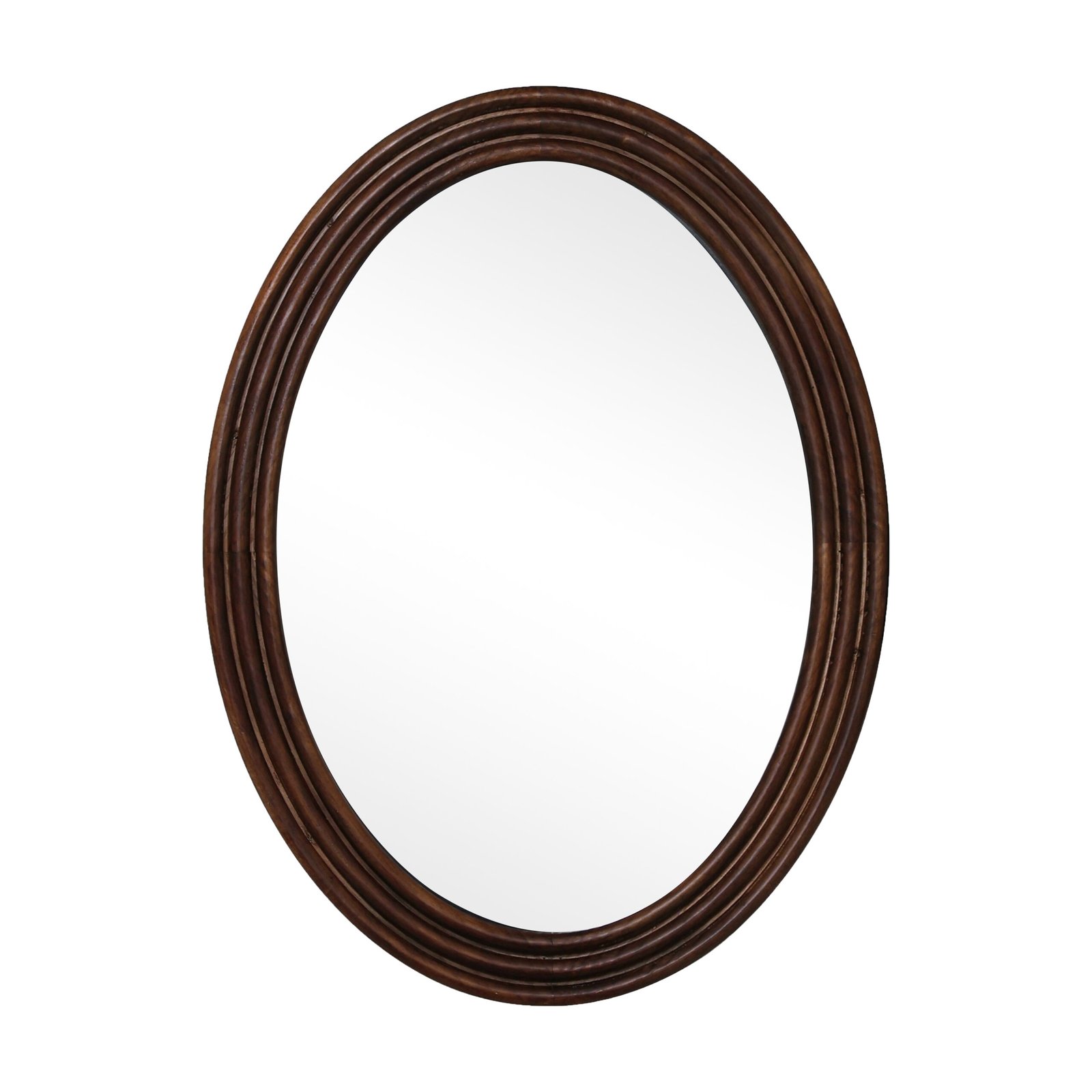
Mirrors: Retail-Friendly Usually Means Softer, More Forgiving, More Usable
With mirrors, finish choices change product perception very quickly.
A good silhouette can be pushed upscale, made more casual, or turned more architectural just by adjusting the frame finish.
But the finishes that hold up best in broad retail are often not the flashiest ones.
They are usually the ones that feel:
- visually refined
- easy to style
- less fragile in handling
- less likely to show wear immediately
- broad enough for different customer types
That is why brushed metal, warm black, dark wood, muted bronze, and low-gloss finishes often work better than overly polished, mirror-shiny, or aggressively decorative treatments.
A highly polished metallic frame may look strong in a showroom shot.
But once it goes through shipping, display, customer traffic, and mixed-assortment placement, the risk profile changes.
Retail-friendly mirror frame finishes tend to help the product feel elevated without becoming high-maintenance.
That is a very useful kind of beauty.
Ottomans: The Best Upholstery Finishes Make the Product Easier to Place
Ottomans are less about reflectivity and more about surface behavior.
Here, finish shows up through upholstery texture, fabric depth, weave character, pattern scale, and how the material sits inside a room story.
A retail-friendly ottoman finish usually does not try too hard.
It should make the product easier to place beside:
- wood tables
- metal accents
- mirrors
- ceramics
- neutral and seasonal goods
That is why broad retail so often leans toward:
- textured neutrals
- woven surfaces
- bouclé-inspired hand-feel
- restrained stripes
- quiet small-scale pattern
- fabrics with depth, not noise
A loud fabric may create a moment.
A useful fabric creates a category staple.
That difference is commercial.
The more versatile the finish, the easier the ottoman is to merchandise, bundle, and repeat. A finish that only works in one narrow look may still get attention. It just may not get reordered.
Ceramic Decor: Retail-Friendly Does Not Mean Boring, It Means Controlled
Ceramic decor creates a slightly different finish challenge.
Buyers do want character here. They want glaze depth, tonal shifts, surface interest, and some evidence of hand-feel. If the ceramic looks too flat or too synthetic, it often loses shelf energy immediately.
But control still matters.
That is why retail-friendly ceramic finishes tend to live in a sweet spot:
- enough variation to feel alive
- enough restraint to stay consistent
- enough texture to feel crafted
- enough stability to support reorder
This is where matte finishes, tonal glazes, reactive surfaces, brushed glaze effects, and earthy low-gloss treatments often perform well.
They create personality without making every unit feel unrelated.
The problem with ceramic finishes is usually not that they have character.
It is that sometimes the character is not managed.
A buyer can sell artisanal variation.
A buyer cannot easily sell avoidable inconsistency.
That is the line suppliers need to respect.
A Better Definition of “Easy to Repeat”
People often say they want products that are easy to repeat.
What they usually mean is not that the product is simple.
They mean the product behaves well in business.
An easy-to-repeat finish is one that:
- still looks good after handling
- works in multiple room settings
- does not scare the QC team
- does not collapse in reorder
- can be explained easily to the customer
- can live in more than one assortment mood
This is especially important in mirrors, ottomans, and ceramics because these categories often sit together in mixed-material retail collections.
If one finish becomes too demanding, the whole assortment starts working harder than it should.
And once the assortment needs too much explaining, the product is already becoming more expensive than it looks.
A Comparison Buyers Can Actually Use
| Category | What Makes the Finish Retail-Friendly | What Buyers Like About It | What Usually Hurts Repeatability |
|---|---|---|---|
| Mirrors | Brushed, muted, warm, low-maintenance frame finishes | Easy styling, better handling tolerance, broader customer appeal | High shine, harsh undertones, finishes that show wear too quickly |
| Ottomans | Textured but versatile upholstery surfaces | Room flexibility, layering ease, stronger assortment fit | Fabrics too niche, too flat, or too visually demanding |
| Ceramics | Controlled glaze variation with visible surface depth | Shelf interest, crafted feel, good story without chaos | Inconsistency disguised as “handmade,” unstable glaze behavior |
This is the kind of comparison that matters long before anyone says, “Can you give me a better price?”
Because if the finish is wrong, cheaper does not save it.
Why the Second Order Is the Real Test
At Teruier, we often think about finishes through the lens of the cross-border design and manufacturing collaboration model.
Why? Because the first order mostly tests taste.
The second order tests system quality.
The first order can happen because the product felt fresh.
The second order happens because the finish proved dependable.
That requires more than design instinct.
It requires alignment between:
- product concept
- material choice
- finish execution
- production understanding
- retail context
- reorder logic
A finish that is retail-friendly is usually one that was not chosen in isolation. It was chosen with the full commercial journey in mind.
That is where better collaboration matters.
Not just making something attractive, but making something repeatable without draining margin, confidence, or operational energy.
FAQ: Retail-Friendly Finishes for Buyers
What is a retail-friendly finish?
A retail-friendly finish is one that looks attractive, works across different retail settings, holds up through handling and display, and stays consistent enough to support reorder.
Are the most eye-catching finishes usually the best sellers?
Not always. Some attention-grabbing finishes work well for visual impact, but broader retail often rewards finishes that are easier to place, easier to style, and easier to repeat.
What makes a mirror finish more retail-friendly?
Usually a softer sheen, more forgiving surface behavior, broader styling compatibility, and better handling tolerance.
What kind of ottoman upholstery is easiest to repeat?
Textured neutrals and versatile woven fabrics often perform well because they fit more room stories and create fewer coordination problems.
How much variation is acceptable in ceramic glaze?
Enough to create personality, not so much that the product loses continuity. Variation should feel intentional, not uncontrolled.
Why do some products fail after the first order?
Because the finish looked exciting at launch but proved too fragile, too inconsistent, too hard to coordinate, or too difficult to reproduce.
What Buyers Should Ask Before Approving a Finish
Before saying yes, stronger questions include:
- Does this finish still look good after repeated handling?
- Will it work in more than one retail story?
- Is it broad enough for a second order, not just a first impression?
- Does it hide small marks, dust, or wear reasonably well?
- Can the supplier reproduce this with confidence?
- Does the finish help the assortment, or only help itself?
Those questions sound practical because they are.
Retail-friendly finishes are practical beauty.
And practical beauty tends to outperform decorative ego in wholesale.
Final Thought
In home decor, plenty of finishes are attractive.
Fewer are useful.
The useful ones are the finishes that help mirrors feel easier to live with, ottomans easier to place, and ceramics easier to trust. They make the product look better, yes, but they also make the business around the product run more smoothly.
That is why smart buyers keep coming back to the same quiet standard:
Not “Does this finish impress me today?”
But “Will this finish still make sense after the first order is gone?”
That is the question that turns taste into buying judgment.



