
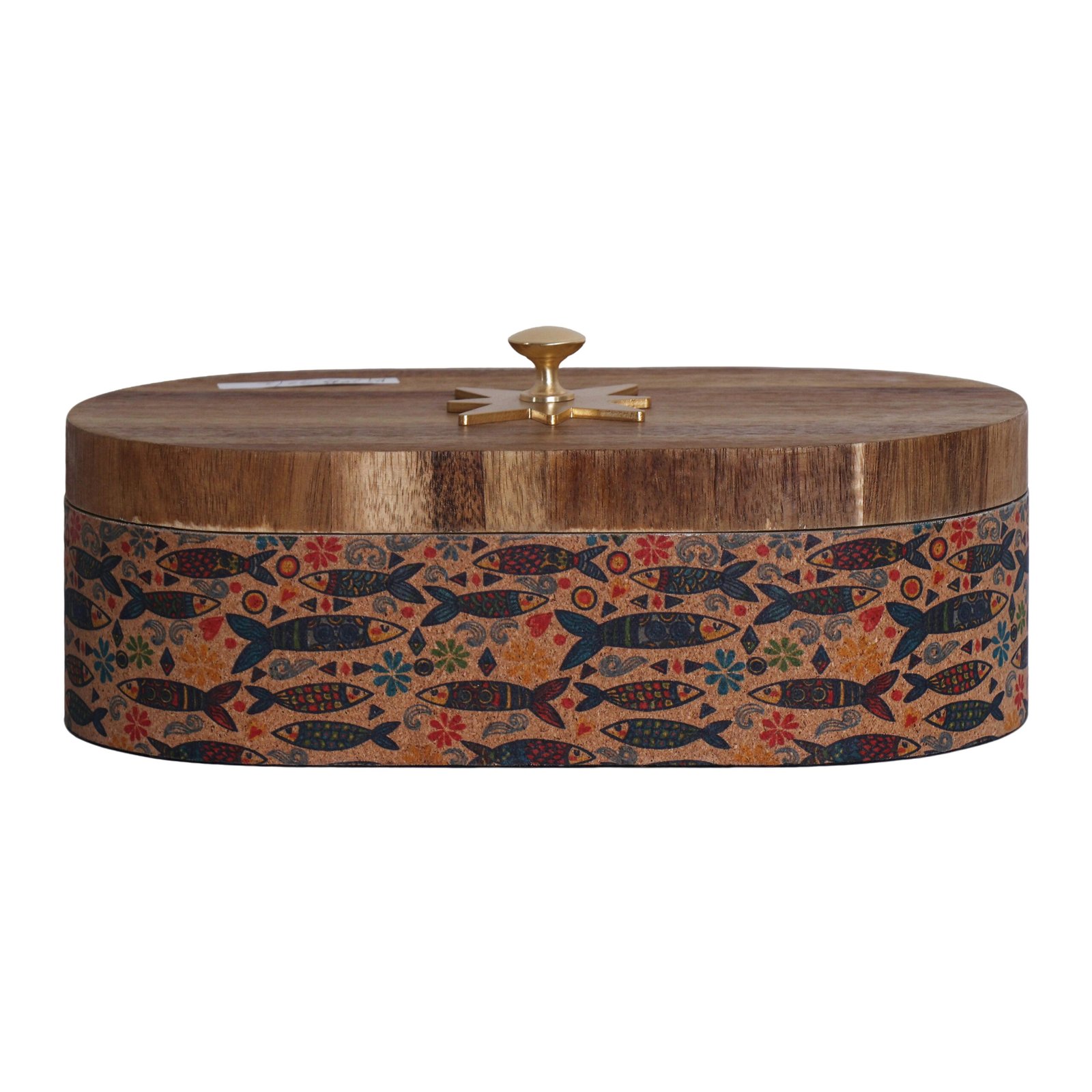
Why “Mixed Materials” Sounds Exciting — and Goes Wrong So Easily
Mixed materials home decor is one of those phrases that sounds good the moment you hear it.
It promises contrast.
It promises layering.
It promises that slightly richer, more designed look buyers and designers are always chasing.
And yes, when it works, it works beautifully.
A dark wood mirror with brushed metal detail.
A textured ottoman sitting near ceramic decor with a soft matte glaze.
A room where metal, fabric, glass, and clay all show up, but nobody is fighting for attention.
That is the dream.
The problem is that mixed materials is not automatically good design.
A lot of product groups end up looking “mixed” in the worst possible way: too many surfaces, too many finish temperatures, too many unrelated moods.
What buyers actually want is not more material contrast by itself.
They want controlled contrast.
That is the real skill.
What Mixed Materials Really Means in Commercial Buying
In theory, mixed materials means combining different surfaces and material types to create depth and interest.
In real buying, it means something more practical:
How do you combine different materials without making the collection harder to place, harder to merchandise, or harder to reorder?
That is the real question.
Because a supplier can keep adding ingredients forever:
- metal plus glass
- wood plus mirror
- fabric plus metal
- ceramic plus glaze plus embossing
- texture on top of pattern on top of shape
But if the finishes are not coordinated, the collection stops feeling layered and starts feeling messy.
This is why strong mixed-material collections are rarely built by throwing materials together.
They are built by deciding which finish tone leads, which texture supports, and which category adds rhythm.
The material mix gives the assortment depth.
The finish coordination gives it discipline.
Mirrors: The Hard Surface That Usually Sets the Rules
When mirrors enter a mixed-material assortment, they usually become one of the most powerful visual signals in the room.
That is because mirrors are reflective, architectural, and often physically larger than surrounding decorative items.
A mirror finish can make the whole assortment feel:
- warmer
- cooler
- more formal
- more casual
- more modern
- more decorative
That is why mirror finish coordination matters so much in mixed-material home decor.
A brushed metal mirror frame often plays well with ceramics and upholstery because it has enough refinement to feel elevated, but enough softness to avoid becoming harsh.
A highly polished finish can look strong in a photo or showroom.
But once it sits beside woven fabric, matte ceramics, and wood accents, it can start pulling the entire assortment into a colder and more rigid direction.
Mirror finishes work best in mixed-material collections when they do not dominate the conversation too early.
They should anchor.
Not hijack.
Ottomans: The Material That Softens the Whole Collection
If the mirror often sets the tone, the ottoman often softens it.
That is the role upholstery materials play in a mixed-material assortment.
Ottomans bring visual warmth, tactile comfort, and room-level livability.
They help hard surfaces feel less severe.
They help a collection look less like a showroom display and more like a space people actually want to live in.
But the upholstery finish matters enormously.
A textured neutral ottoman can connect beautifully with:
- muted mirror frames
- ceramic pieces with tonal glaze
- wood-based accent pieces
- bronze or soft black hardware
But if the fabric is too loud, too trend-chasing, or too sweet, it can break the coordination instantly.
That is why broad retail usually responds better to upholstery finishes that feel:
- tactile
- grounded
- easy to layer
- visible in texture, not noisy in pattern
Bouclé-inspired finishes, woven textures, subtle stripe effects, and quiet neutral fabrics often do this well.
They add body without adding chaos.
And that is exactly what mixed materials need.
Ceramics: The Small Surface That Adds Depth Without Needing Size
Ceramic decor usually does not carry the largest physical presence in the room.
But it often carries a disproportionate amount of finish influence.
Why? Because glaze reads emotionally.
It can make a collection feel handcrafted, earthy, polished, playful, rustic, sculptural, or refined.
In mixed-material assortments, ceramics often work best when their finish adds depth without introducing a whole new design language.
That is why buyers keep leaning toward ceramic finishes like:
- matte glaze
- tonal reactive glaze
- soft hand-finished surfaces
- chalky or brushed textures
- glazes with depth but controlled variation
Ceramics can absolutely bring personality.
But in a well-built assortment, that personality should still feel related to the mirror and upholstery story nearby.
A ceramic piece should not look like it wandered in from another brand meeting.
In mixed materials, the job of ceramics is often not to steal the spotlight.
It is to make the whole collection feel more complete.
The Best Mixed-Material Assortments Usually Follow One Simple Rule
Not every category needs to be expressive in the same way.
This is where many assortments go wrong.
They try to make:
- the mirror dramatic
- the ottoman textured and patterned
- the ceramic artisanal and colorful
- the table decorative
- the hardware statement-making
At that point, the materials may be mixed, but the judgment is missing.
The better formula is usually this:
- let one category lead
- let one category soften
- let one category add detail
For example:
- Mirror: brushed bronze or warm black frame
- Ottoman: textured neutral upholstery
- Ceramic decor: tonal matte or reactive glaze
That mix works because each finish is doing a different job, but all three are still speaking the same language.
That is how contrast becomes commercial.
A Comparison Buyers Can Actually Use
| Category | What It Adds to Mixed Materials | What Finish Works Best | Common Mistake |
|---|---|---|---|
| Mirrors | Structure, tone, visual authority | Brushed, muted, warm, low-gloss finishes | Overly shiny or cold finishes that overpower softer categories |
| Ottomans | Softness, texture, livability | Neutral tactile fabrics with visible surface depth | Pattern or fabric choices that become too specific or too loud |
| Ceramics | Rhythm, shelf depth, crafted detail | Tonal glaze, matte finishes, controlled reactive surfaces | Introducing glaze variation that feels random or disconnected |
This is the comparison that matters more than “What is trending?”
Because trends do not save assortments that cannot live together.
Why This Is Also a Profit Question, Not Just a Style Question
At Teruier, we often think about materials and finishes through the lens of a 商家利润方案, not just a styling exercise.
Because mixed materials can either help a buyer make money or quietly make the range harder to sell.
A coordinated finish story usually helps with:
- stronger perceived value
- easier room styling
- smoother assortment presentation
- better cross-category placement
- lower explanation cost during selling
That last one matters more than people admit.
When the finishes are coordinated, customers understand the collection faster.
Stores display it more easily.
Sales teams explain less.
Buyers reorder with more confidence.
That is a profit advantage.
Not because one material is inherently better than another.
But because the combination feels easier to turn into sales.
A lot of people still treat finish coordination like decoration.
In retail, it is closer to operational design.
FAQ: Mixed Materials and Finish Coordination
What does mixed materials home decor mean?
It means combining more than one material type, such as metal, wood, fabric, glass, or ceramic, within a product line or assortment to create depth and interest.
Why do mixed-material collections sometimes look messy?
Because the materials are combined without coordinating finish tone, texture, or surface behavior. The issue is usually not the material mix itself. It is the lack of finish discipline.
Do all finishes need to match exactly?
No. They need to relate, not match perfectly. Cohesion matters more than sameness.
What role do mirrors play in mixed-material assortments?
Mirrors often act as anchors. Their finishes help set the tone and temperature of the surrounding collection.
What kind of ottoman finish works best in broad retail?
Usually tactile, neutral, easy-to-layer upholstery finishes that soften hard surfaces without becoming visually noisy.
How should ceramic finishes behave in a mixed-material assortment?
They should add rhythm and depth while staying within the same visual family as the surrounding pieces.
What Buyers and Designers Should Ask Before Approving a Mixed-Material Range
Before moving forward, better questions include:
- Which finish tone leads this assortment?
- Is the mirror setting a useful visual anchor?
- Is the upholstery connecting or distracting?
- Are the ceramic finishes adding depth or adding confusion?
- Does this collection look easier to style together than to style apart?
- Would a store or designer know immediately how to place these pieces?
Those are better questions than simply asking whether each product looks nice on its own.
Because mixed materials rarely fail at the individual product level.
They fail at the relationship level.
Final Thought
Mixed materials can absolutely make a collection feel richer.
But richness is not created by adding more surfaces.
It is created by getting the relationships right.
The mirror should bring structure.
The ottoman should bring softness.
The ceramic should bring depth.
And the finishes should make those roles feel intentional.
That is why the best mixed-material assortments do not look busy.
They look resolved.
And in real retail, “resolved” usually sells a lot better than “interesting.”



