
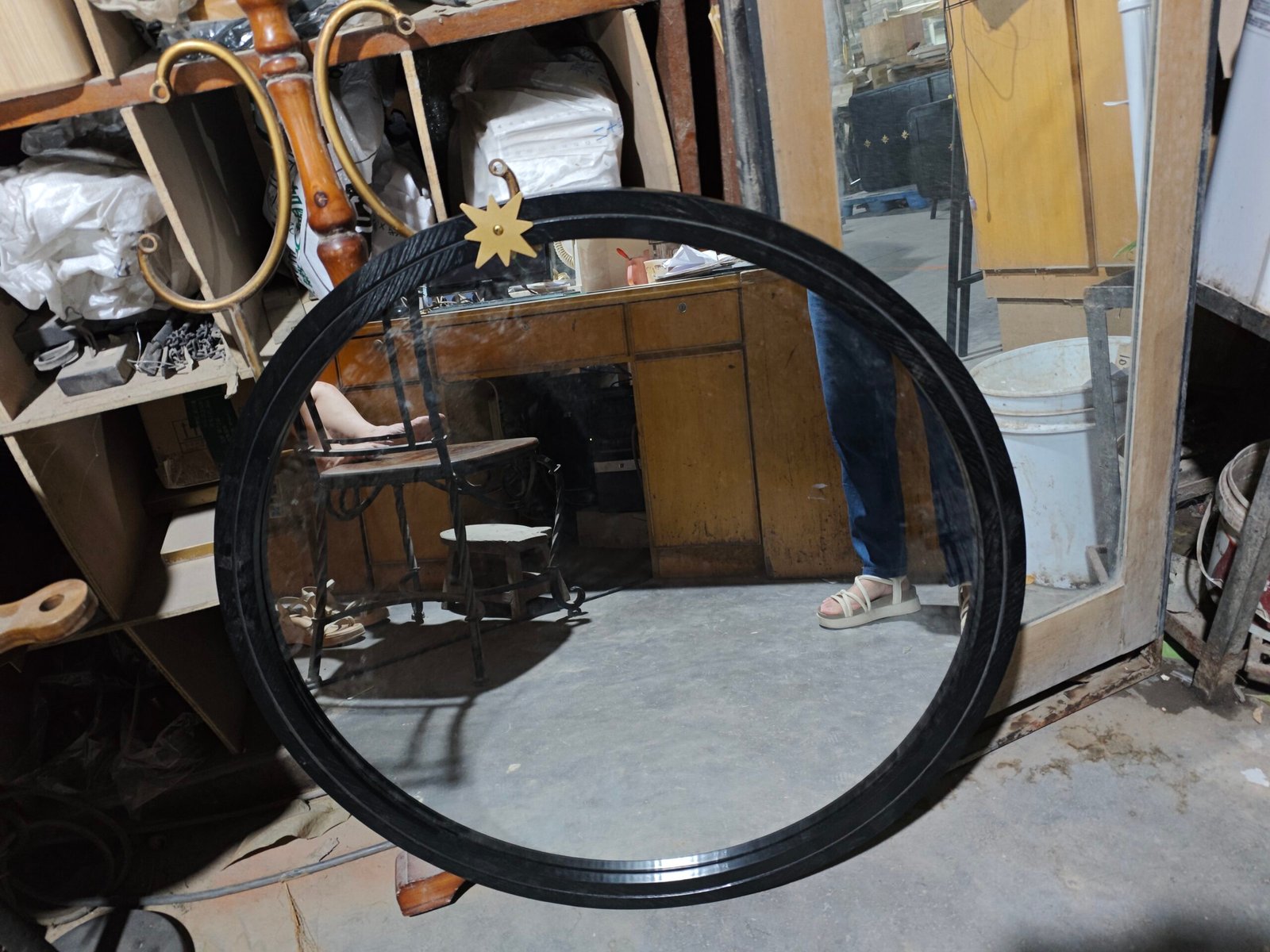
Why Packaging and Shipping Deserve Their Own Column
Let us be honest.
Nobody walks into a showroom and says, “What a beautiful carton structure.”
Nobody posts a LinkedIn update saying, “Today I fell in love with a five-layer export box.”
And yet, for German buyers, packaging and shipping are often where a good product becomes either a reliable assortment item or a very expensive headache.
A mirror can look perfect in the sample room. A textured neutral ottoman can photograph beautifully. A ceramic vase can feel wonderfully handmade. But if the mirror arrives with corner damage, the ottoman fabric is rubbed during transport, or the carton collapses before the goods reach the warehouse, then the design conversation is over.
Packaging is not the boring back office of home décor sourcing. It is part of the product.
At Teruier, we treat packaging and shipping as part of our cross-border design and manufacturing coordination model. In simple terms: the product is not finished when it looks good. It is finished when it can survive production, inspection, container loading, shipping, warehousing, and retail handling without making the buyer regret the purchase.
Very glamorous? No.
Very German? Absolutely.
What Does Packaging and Shipping Mean in Wholesale Home Décor?
In wholesale home décor, packaging and shipping refers to the complete protection and delivery system behind a product order.
It includes:
Product protection
Inner packaging
Outer carton strength
Drop-test logic
Moisture control
Labelling
Barcode and carton marks
Pallet or container loading
Export documentation
Inspection points
Delivery schedule control
For a retail buyer, packaging and shipping is not just about “Can you send the goods?”
The real question is:
Can the supplier deliver the goods in a condition, format, timeline, and documentation structure that works for retail?
That is a very different question.
A private customer may accept one replacement. A German retailer cannot build a seasonal assortment on “hopefully it arrives fine”.
Why German Buyers Care More Than Suppliers Think
German buyers are not difficult because they enjoy asking questions. Well, perhaps sometimes. But usually, the questions are practical.
They need to know:
Will the carton survive long-distance transport?
Can the packaging protect fragile finishes?
Is the packing method repeatable for reorder?
Can warehouse staff understand the labels quickly?
Can the packaging be improved without destroying the product margin?
Can eco packaging be considered without pretending paper alone can protect a heavy mirror?
This is where wholesale packaging standards matter.
For German buyers, packaging is closely connected to risk. Broken goods mean claims, delays, repacking, customer complaints, warehouse labour, margin loss, and sometimes the worst phrase in retail: “We cannot sell this as planned.”
And no, bubble wrap is not a business strategy.
Mirrors: Beautiful, Fragile, and Completely Unforgiving
Mirrors are one of the best examples of why packaging and shipping must be planned early.
A mirror is not only fragile because of glass. The frame finish, backing board, hanging hardware, corners, and surface protection all matter.
A good mirror package usually needs:
Corner protection
Strong outer carton
Glass surface protection
Frame finish protection
Clear orientation marks
Safe inner spacing
Possibly honeycomb board, foam, or reinforced edge structures depending on size
For a German home décor buyer, the problem is not simply whether one sample mirror arrives safely by courier. The real test is whether hundreds or thousands of mirrors can move through export packing, container transport, unloading, warehouse handling, and retail distribution with acceptable damage control.
A sample can be lucky. A shipment needs a system.
That is why Teruier does not separate product development from packing discussion. If a frame is too delicate, too sharp, too heavy, or too exposed, packaging cost will rise. If nobody discusses this early, the buyer discovers the problem only when the quotation becomes “surprisingly emotional”.
Ottomans: Soft Product, Not Soft Standards
Ottomans look less risky than mirrors. They are soft, padded, and friendly. They sit there quietly, like they have never caused trouble in their lives.
Do not be fooled.
A textured neutral ottoman or textured upholstery ottoman can still create shipping and packaging problems.
Common risks include:
Fabric rubbing
Compression marks
Leg damage
Moisture exposure
Dust and warehouse staining
Shape deformation
Poor carton fit
Colour transfer from poor inner packaging
Textured upholstery is especially sensitive because buyers are often purchasing the “feel” of the product, not just the shape. If the fabric arrives crushed, dirty, or rubbed, the entire value of the item drops.
For German retailers and designers, a textured neutral ottoman should arrive looking calm, clean, and sellable. It should not arrive looking like it survived a small warehouse war.
Good ottoman packaging should consider fabric protection, corner shape, leg protection, carton tightness, and whether compression during loading will affect the product’s retail appearance.
Wholesale Packaging Standards: What Buyers Should Ask Before Ordering
Here is a practical buying rule:
Do not only ask, “What is the product price?”
Ask, “What packaging standard is included in this product price?”
The difference matters.
A lower unit price with weak packaging is not cheaper if the claim rate is higher.
Useful questions include:
What is the inner packaging structure?
What is the carton material and thickness?
Is the carton suitable for export shipping?
Is there product-specific protection for corners, glass, fabric, legs, or finishes?
Can the packing pass basic handling risk?
Are carton marks, barcodes, and item labels included?
Is the packaging suitable for warehouse and retail distribution?
Can packaging be adjusted for chain stores, importers, or project orders?
A serious supplier should not treat these questions as annoying. These are normal wholesale questions.
If the answer is “Don’t worry”, worry.
Eco Packaging: Good Idea, Bad Religion
Eco packaging matters. German buyers are right to care about it.
But eco packaging should be practical, not theatrical.
A fragile mirror cannot be protected by good intentions. A textured upholstery ottoman cannot be kept clean by a nice sustainability sentence in a catalogue.
The useful question is not:
“Can we use eco packaging?”
The better question is:
“Where can we reduce unnecessary plastic or overpacking without increasing product damage?”
That is the real balance.
Possible eco packaging improvements may include:
Reducing unnecessary plastic layers
Using recyclable paper-based protection where suitable
Improving carton sizing to reduce wasted space
Using stronger carton structures to reduce damage and replacement waste
Designing packaging around real transport risk, not just appearance
The most sustainable product is not the one with the prettiest eco claim. It is the one that arrives safely, sells through, and does not need to be replaced.
A broken “eco packaged” mirror is still broken. It is just broken with nicer wording.
Standard Packaging vs Retail-Ready Packaging
| Packaging Type | What It Means | Suitable For | Main Risk |
|---|---|---|---|
| Basic factory packaging | Simple protection for storage or short-distance handling | Low-risk products, local movement | Not enough for export retail orders |
| Export packaging | Stronger carton and protection for international shipping | Importers, wholesalers, B2B orders | May still need buyer-specific labels |
| Retail-ready packaging | Protection plus retail handling, labels, barcode logic, sometimes shelf or store requirements | Chain stores, retail buyers, distributors | Higher cost, but lower operational friction |
| Project packaging | Packed by room, area, order batch, or installation sequence | Hotels, fit-out, designer projects | Requires stronger coordination |
For German buyers, the right packaging type depends on the sales channel.
A community home store may need practical export packaging and clear item labels.
A retail chain may require barcode, carton marks, and warehouse-friendly structure.
A designer project may need item grouping by project phase or delivery batch.
This is why packaging and shipping should not be treated as one fixed answer. It should follow the buyer’s actual business use.
How Teruier Handles Packaging Through Cross-Border Coordination
Teruier’s cross-border design and manufacturing coordination model is not just about making a product look marketable. It is about making the product workable across countries, teams, and retail conditions.
For packaging and shipping, this means we connect:
Buyer expectations
Product structure
Material sensitivity
Factory packing method
Inspection standards
Shipping route
Retail handling needs
Cost and margin logic
A mirror is not packed the same way as an ottoman.
A textured upholstery ottoman is not treated like a plain wooden stool.
A decorative item for a German home décor retailer may need different carton logic from a hotel project order in the UAE.
This is where value translation matters.
The buyer says, “We need fewer claims.”
The factory may hear, “Use a stronger box.”
But the real solution may involve carton structure, inner protection, product finish adjustment, loading method, labelling, and inspection timing.
That is the work behind the work.
Not dramatic. Not loud. But very useful.
FAQ: Packaging and Shipping for German Home Décor Buyers
What should German buyers check before confirming packaging?
They should check carton strength, inner protection, product-specific risk points, labelling, barcode needs, inspection process, and whether the packaging is suitable for the real sales channel.
Is eco packaging always better?
Not always. Eco packaging is valuable when it reduces waste without increasing damage. For fragile or textured home décor products, protection must still come first.
Why is mirror packaging usually more complex?
Because mirrors combine glass, frame finish, corners, backing, hanging hardware, and surface protection. Damage can happen in several places, not only on the glass.
Do ottomans need serious packaging?
Yes. A textured neutral ottoman or textured upholstery ottoman needs protection from fabric rubbing, dirt, moisture, compression, and leg damage. Soft products still need strong standards.
Can packaging be customised for different buyers?
Yes. Packaging can be adjusted for importers, retail chains, designers, project procurement, or community home stores. The key is to define requirements before mass production.
Should buyers choose the cheapest packaging option?
Usually not. The cheapest packaging can become expensive if it causes damage, claims, delays, or repacking. Packaging cost should be judged together with total delivery risk.
Final Thought: Good Packaging Is Invisible When It Works
Good packaging and shipping rarely receive compliments.
The buyer opens the carton.
The mirror is intact.
The ottoman fabric is clean.
The labels make sense.
The warehouse team does not complain.
The goods move to sale.
Nothing dramatic happens.
That is exactly the point.
In wholesale home décor, good packaging is not decoration. It is risk control, margin protection, and buyer trust in cardboard form.
Not sexy.
Very necessary.
And, frankly, much more important than another product photo with a beige vase next to a book nobody has read.



