Why German Buyers Should Care Before the Sample Looks Beautiful
Every home décor buyer knows this moment.
A product looks good.
The finish feels right.
The designer says, “Can we just make it a little larger?”
The supplier says, “Yes, of course.”
Everyone smiles.
Then packaging and shipping enter the room and quietly ruin the party.
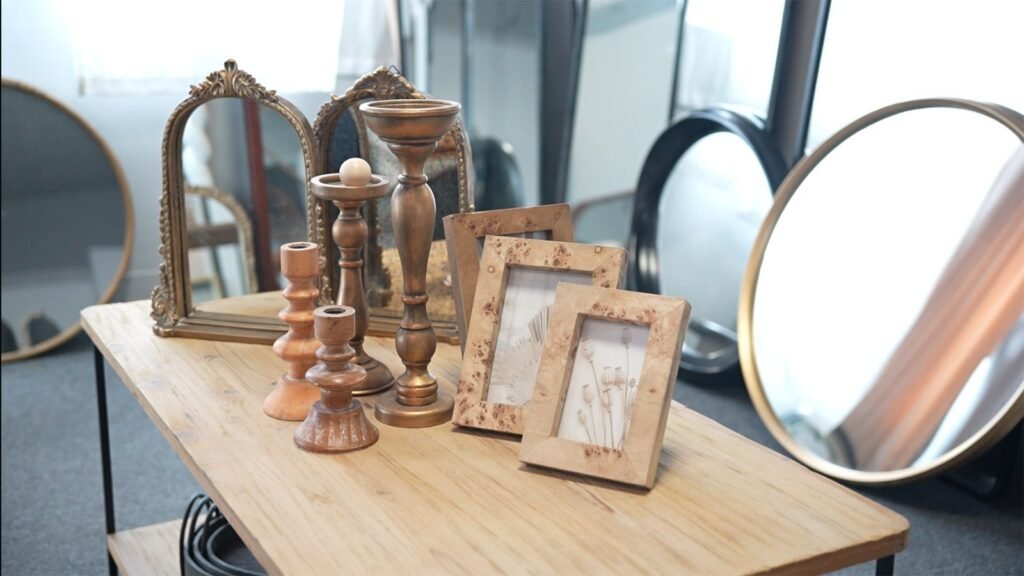
For German buyers, especially those working with mirrors, ceramic décor, ottomans, and mixed-material home accessories, customisation is never just a design question. It is also a packaging question, a shipping question, a warehouse question, and, unfortunately, sometimes a claim question.
A custom size mirror may look better on the wall. But can it still fit into a practical carton?
A custom ceramic glaze finish may look more premium. But does it rub, scratch, or mark during transport?
An ottoman with upgraded fabric may feel more retail-ready. But does the packaging protect the texture from dust and compression?
This is why packaging and shipping must be discussed before customisation becomes production.
Not after.
After is when people become creative with excuses.
What Does Packaging and Shipping Mean in Custom Home Décor?
In custom home décor, packaging and shipping means the complete delivery logic behind a product that has been adjusted for a buyer, designer, retailer, or project.
It includes:
Product protection
Carton size adjustment
Inner packaging structure
Surface protection
Finish protection
Barcode and label requirements
Export carton strength
Pallet or container loading
Project delivery sequence
Inspection before shipment
Damage risk control
Documentation for importers and retailers
For German buyers, packaging and shipping should answer one very practical question:
Can this customised product arrive in a sellable and usable condition, without creating extra work for the buyer?
That is the point.
A supplier who can produce a custom product but cannot pack it properly has only solved half the problem. And half a problem in wholesale usually becomes a full invoice later.
Custom Size vs Custom Finish: Not the Same Risk
Let us clear up one common misunderstanding.
Custom size and custom finish are not the same kind of customisation.
They may both look simple in an email. They are not simple in production or delivery.
| Customisation Type | What Changes | Main Packaging Risk | Buyer Concern |
|---|---|---|---|
| Custom size | Product dimensions, carton size, loading logic | Oversized cartons, higher breakage risk, inefficient container loading | Will the product still ship safely and cost-effectively? |
| Custom finish | Surface colour, glaze, coating, fabric, metal finish | Rubbing, scratching, colour variation, finish sensitivity | Will the finish arrive clean and consistent? |
| Custom material | Wood, metal, ceramic, fabric, resin, glass | Different materials need different protection | Which part is most vulnerable? |
| Custom project order | Product grouping, delivery sequence, labelling | Wrong item grouping, warehouse confusion, delayed installation | Can the goods arrive in the right order and format? |
A custom size mirror is often a structural and shipping issue.
A custom ceramic glaze finish is often a surface and consistency issue.
A custom ottoman fabric is often a texture and cleanliness issue.
German buyers should not simply ask, “Can you customise it?”
The better question is:
“What changes in packaging, cost, lead time, and shipping risk when we customise it?”
Much less romantic. Much more useful.
Mirrors: Custom Size Sounds Easy Until the Carton Gets Involved
Custom mirrors are a classic example.
A designer wants a larger mirror for an entryway.
A retailer wants a slimmer size for small-space apartments.
A project buyer wants multiple sizes for hotel rooms or commercial interiors.
All reasonable.
But every mirror size change affects packaging.
A larger mirror may need:
Stronger corner protection
Thicker outer carton
More glass protection
Reinforced backing support
Different loading direction
More careful container planning
Possible palletisation
Updated carton marks and item codes
A custom size mirror does not only become “a little bigger”. It becomes a different logistics object.
This is where careless suppliers get into trouble. They adjust the product size but keep the packaging logic almost the same.
That is not customisation. That is optimism with cardboard.
For German buyers, a custom mirror order should include packing confirmation, carton dimensions, weight, loading quantity, and damage-risk discussion before bulk production.
Ceramic Glaze Finishes: Beautiful, Sensitive, and Not Always Forgiving
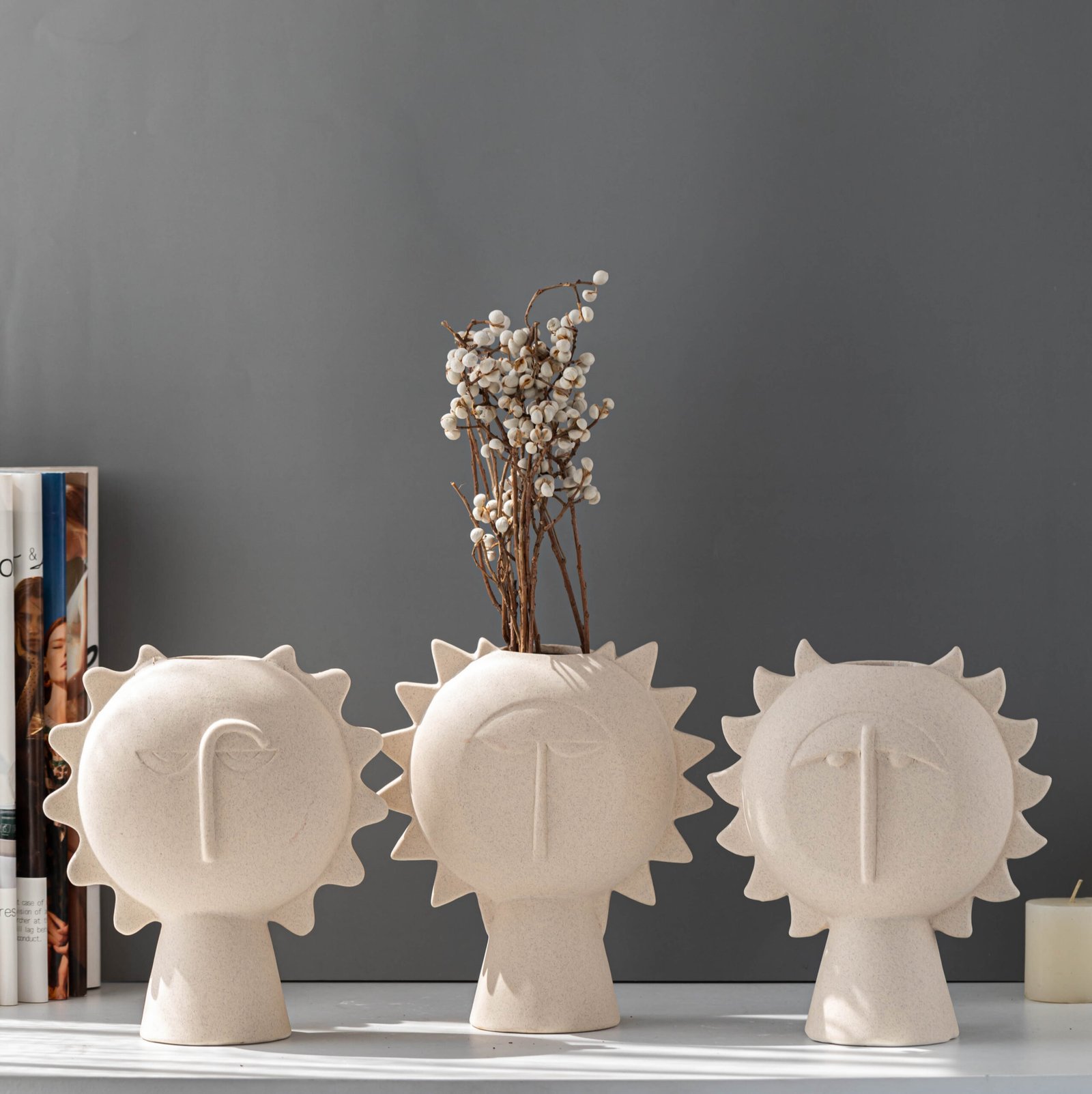
Ceramic glaze finishes are one of the easiest ways to make a home décor collection feel more considered.
Matte white.
Soft speckled beige.
Reactive glaze.
Warm grey.
Sage green.
Earthy brown.
Subtle stone-look texture.
Very nice. Very sellable. Also very capable of creating packaging problems if nobody tests the surface.
Different ceramic glaze finishes react differently to wrapping, friction, pressure, and contact with other materials.
A matte glaze may show rubbing.
A reactive glaze may highlight colour variation.
A glossy glaze may scratch.
A textured glaze may catch dust or fibres.
A dark glaze may show chips more clearly.
So when buyers request custom ceramic glaze finishes, the packaging should be checked again.
Not because the product is fragile only in the “breaks into pieces” sense. Ceramic can also fail commercially by arriving with surface defects.
A vase that is not broken but looks scratched is still not good stock. It is just a quieter disappointment.
Ottomans and Upholstered Items: Fabric Is a Finish Too
Many people treat upholstered ottomans as safer than mirrors or ceramics.
In some ways, yes. They do not shatter. That is nice of them.
But an ottoman has its own packaging risks.
Fabric can rub.
Texture can flatten.
Light colours can stain.
Legs can scratch.
Corners can deform.
Moisture can affect the product.
Compression can ruin the silhouette.
For designers and German home décor buyers, ottoman fabric is not just upholstery. It is part of the product value.
If the buyer chooses a textured fabric, bouclé-style surface, woven neutral, or soft performance fabric, packaging must protect the look and feel.
A custom ottoman with a beautiful fabric but poor dust protection is like wearing a linen suit into a construction site. Technically possible. Not advisable.
Wholesale Home Decor Materials Need Packaging Logic
Wholesale home decor materials are not only about what the buyer sees in the showroom.
They are also about how the product behaves during shipping.
Glass behaves differently from ceramic.
Ceramic behaves differently from fabric.
Fabric behaves differently from metal.
Metal behaves differently from resin.
Wood behaves differently from rattan.
So if a buyer is developing a coordinated home décor collection, packaging should follow the material logic.
A mixed assortment may include:
Mirrors with metal frames
Ceramic vases with custom glaze finishes
Decorative trays with wood and metal
Ottomans with textured fabric
Storage boxes with woven or fabric surfaces
Small accent furniture with hardware
Each material has a different risk point. The supplier must know which part needs the most protection.
This is where Teruier’s cross-border design and manufacturing coordination model becomes useful.
The job is not just to make the product. The job is to connect design, material, factory method, packaging, shipping, and buyer expectations into one workable system.
In plain German buyer language: fewer surprises, fewer claims, fewer silly emails.
Project Sourcing and Delivery: When Packaging Must Follow the Site
Project sourcing and delivery is different from ordinary wholesale delivery.
A retail order may be organised by SKU.
A project order may need to be organised by room, floor, installation phase, or design package.
For example:
Hotel mirrors by room type
Ottomans grouped by lobby, suite, or lounge area
Ceramic décor packed by display zone
Decorative items labelled by project phase
Replacement pieces separated clearly
Cartons marked for site handling
In project sourcing and delivery, packaging becomes part of project management.
If cartons arrive without clear labels, the buyer does not just have a packaging problem. They have site confusion.
And site confusion is expensive.
People open the wrong cartons.
Goods move twice.
Installers wait.
Designers ask questions.
Someone says, “Who approved this?”
Nobody enjoys this sentence.
For German project buyers and interior designers, supplier packaging should support the installation flow, not create a small treasure hunt.
Comparison: Standard Wholesale Order vs Project Delivery Order
| Item | Standard Wholesale Order | Project Delivery Order |
|---|---|---|
| Main goal | Stock arrival and resale | Correct delivery for project use |
| Packing logic | By SKU and quantity | By room, phase, area, or installation need |
| Labelling | Item code, quantity, carton mark | Item code plus project location or sequence |
| Risk | Damage, wrong quantity, unclear cartons | Delayed installation, wrong site placement, missing items |
| Buyer need | Warehouse-friendly packing | Site-friendly packing |
| Best supplier behaviour | Stable export packaging | Coordination between product, packing, and delivery sequence |
This is why project buyers should not accept vague packaging promises.
For a project, “packed safely” is not enough.
The goods must also be packed logically.
Customisation and Design Support for Interior Designers
Interior designers often need flexibility.
They may want:
Custom mirror sizes
Specific ceramic glaze finishes
Fabric changes for ottomans
Material coordination across a collection
Special delivery timing
Project-based labelling
Small-batch sample development
Finish boards or product notes
This is where customisation and design support for interior designers must connect with packaging reality.
A good supplier should be able to say:
This custom size works.
This custom size is risky.
This finish needs surface testing.
This fabric needs better protection.
This item should not be over-customised for the target price.
This project needs clearer carton labels.
This packing method will increase cost but reduce damage risk.
That is useful design support.
Saying “Yes” to everything is not support. It is customer service theatre.
Good design support protects the designer from problems they have not yet seen.
Where German Buyers Should Be Firm
German buyers do not need to be aggressive. But they should be precise.
Before confirming a custom home décor order, buyers should ask:
What changes in packaging if the size changes?
Will the carton dimensions change?
Will the loading quantity change?
Will the shipping cost change?
Does the finish need extra surface protection?
Has the ceramic glaze been tested after packing?
Can the ottoman fabric be protected from rubbing and dust?
Can cartons be marked for our warehouse or project site?
Can packing photos be provided before shipment?
Can eco packaging be used without increasing damage risk?
Is the packaging included in the quoted price?
What is the claim process if packaging fails?
These questions are not annoying.
They are the difference between a professional buying process and a decorative gamble.
FAQ: Packaging and Shipping for Custom Home Décor
What does packaging and shipping mean for custom home décor?
It means the full protection, labelling, carton, loading, and delivery system designed around customised products. For custom orders, packaging must be adjusted when size, finish, material, or project delivery requirements change.
Is custom size more difficult than custom finish?
Often, yes. Custom size can affect carton dimensions, loading quantity, shipping cost, and damage risk. Custom finish usually affects surface protection, colour consistency, and handling requirements. Both need planning, but the risks are different.
Why should ceramic glaze finishes be tested with packaging?
Because some ceramic glaze finishes can show rubbing, scratching, pressure marks, or colour variation after packing. A finish that looks good on the sample table must still look good after transport.
Do interior designers need different packaging support?
Yes. Interior designers often need project-friendly packaging, clearer labels, room-based grouping, finish coordination, and smaller custom batches. Packaging should support the project workflow.
How does project sourcing and delivery change packaging?
Project sourcing and delivery may require cartons to be grouped by room, phase, area, or installation sequence. The goal is not only safe arrival, but also easy site handling.
Can eco packaging work for custom home décor?
Yes, but it must be tested by product type. Eco packaging should reduce waste without increasing damage, rubbing, or finish problems.
Should packaging be discussed before product approval?
Yes. Packaging should be discussed during sample development, especially for custom size, custom finish, fragile materials, or project delivery orders.
Final Thought: Customisation Is Not Finished Until It Can Ship
Customisation is easy to admire in a showroom.
A custom mirror size looks intentional.
A ceramic glaze finish looks refined.
A textured ottoman fabric looks cosy and commercial.
A coordinated home décor collection looks like someone finally had a plan.
Excellent.
But the plan is not complete until the goods can be packed, shipped, received, unpacked, and used without drama.
At Teruier, this is why packaging and shipping are part of the product conversation, not an afterthought at the end.
Because in real wholesale business, the product does not end at the sample.
It ends when the buyer can sell it, install it, reorder it, and not secretly curse the packaging.
That, in our view, is a rather beautiful form of design.