
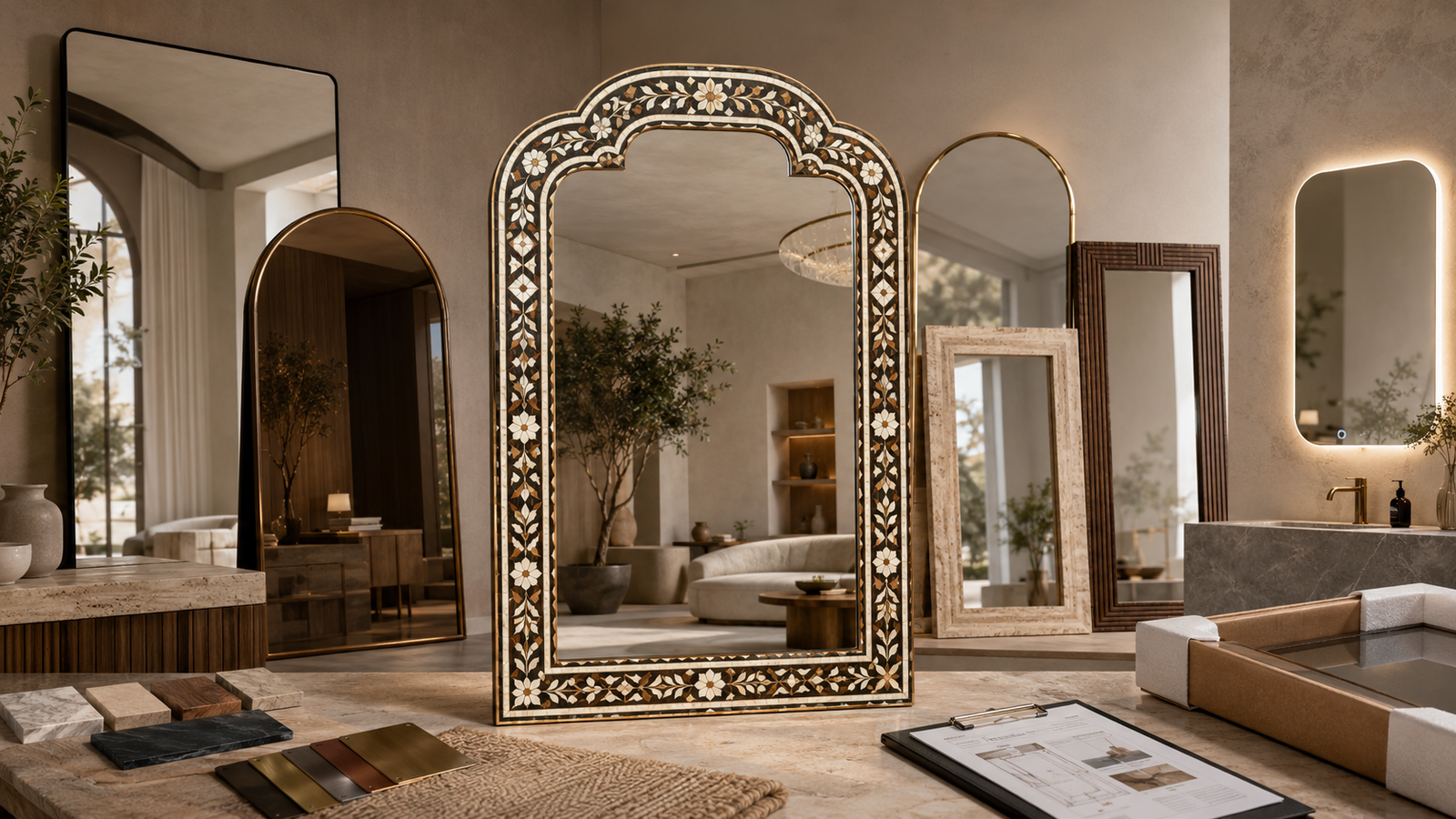
The Buyer Story: When a Mirror Became the Focal Point of the Room
A U.S. home décor buyer was reviewing a new collection for the upcoming season.
The original plan was simple: add several decorative mirrors as supporting accessories.
But during showroom testing, one product changed the entire collection.
It was an oversized wall mirror.
The mirror was not just filling empty wall space. It changed how customers viewed the entire room. It made small spaces feel larger, created a premium visual statement, and became the product customers noticed first.
The buyer quickly realized that mirrors were no longer only functional home accessories.
They were design anchors.
This changed the sourcing strategy. Instead of looking for a basic mirror supplier, the buyer needed a partner who understood materials, finishes, manufacturing details, packaging, and retail trends.
For U.S. buyers, the modern mirror category is no longer about selling reflection.
It is about selling atmosphere.
Why Oversized Wall Mirrors Are Becoming a Strong B2B Category
Large mirrors have always had functional value, but current home design trends are pushing mirrors into a stronger decorative role.
An oversized wall mirror can serve multiple markets:
- Furniture retailers
- Home décor stores
- Interior designers
- Hospitality projects
- Apartment developers
- Online furniture marketplaces
The product also supports multiple room applications:
- Living rooms
- Entryways
- Bedrooms
- Dining areas
- Bathrooms
- Hospitality spaces
For retailers, oversized mirrors provide strong merchandising value because they create immediate visual impact in showroom environments.
A customer may not walk into a store looking specifically for a mirror, but a well-designed oversized mirror can become the centerpiece that defines an entire room display.
U.S. Trade Show Analysis: Why Statement Mirrors Are Gaining Attention
U.S. furniture and décor markets continue to show demand for products that combine craftsmanship, material storytelling, and strong visual identity.
At High Point Market, recent trend discussions highlighted sculptural forms, layered materials, artisanal details, and products that create emotional connections within interiors. These directions support decorative categories such as statement mirrors, specialty frames, and architectural wall décor.
Las Vegas Market continues to connect buyers across furniture, home décor, and gift categories, creating opportunities for retailers to discover products that can expand beyond traditional furniture categories.
For mirror buyers, the message is clear:
A successful mirror collection needs more than different sizes.
It needs different stories.
Current Mirror Design Directions Buyers Should Watch
- Oversized architectural mirrors
- Warm metal finishes
- Natural stone-inspired frames
- Textured wood details
- Integrated lighting
- Handmade decorative techniques
Brass Frame Mirror: The Return of Warm Luxury
The brass frame mirror remains one of the strongest directions for premium home décor.
Compared with traditional chrome or silver finishes, brass creates a warmer and more residential feeling. It works well with:
- Transitional interiors
- Modern classic homes
- Boutique hotels
- Luxury apartments
- Designer furniture collections
For U.S. buyers, brass frame mirrors offer a strong value proposition because the material communicates quality without requiring extremely complex construction.
However, buyers should carefully review finish consistency.
Brass Frame Mirror Supplier Questions
Buyers should ask:
Is the brass finish real metal, plated metal, or painted finish?
How is oxidation controlled?
Does the supplier offer brushed, antique, polished, or matte brass options?
Can the same finish be reproduced for repeat orders?
Is the frame resistant to scratches during shipping?
For retail buyers, the biggest risk is not the first sample.
It is whether the tenth production batch still matches the original showroom sample.
Bronze Tinted Mirror: Creating a Premium Interior Feeling
A bronze tinted mirror provides a different design direction.
Instead of creating a bright reflective surface, bronze tint adds warmth, depth, and a more sophisticated atmosphere.
It is often used in:
- Luxury residential projects
- Hotel interiors
- Dressing rooms
- High-end furniture collections
For buyers, bronze tinted mirrors can help differentiate a collection from standard clear mirrors.
Buyer Considerations for Bronze Tinted Mirrors
Color consistency is critical.
The supplier should control:
- Glass tint variation
- Reflection tone
- Lighting environment testing
- Frame compatibility
- Batch consistency
A bronze tinted mirror that looks beautiful under factory lighting may appear different under retail showroom lighting.
Professional suppliers should provide photos and samples under different lighting conditions.
Travertine Frame Mirror: Natural Material Meets Modern Design
The travertine frame mirror represents the growing demand for natural materials and organic luxury.
Stone-inspired products have become popular because consumers want interiors that feel authentic, calm, and connected to natural materials.
Travertine frame mirrors work especially well with:
- Organic modern interiors
- Mediterranean styles
- Luxury bathrooms
- High-end hospitality projects
For buyers, the challenge is balancing beauty and practicality.
Natural stone materials require attention to:
- Weight
- Structural support
- Frame strength
- Surface protection
- Shipping safety
Questions Buyers Should Ask
Is the frame real travertine or a stone-look material?
How is the stone attached to the mirror structure?
What packaging method protects corners?
Can the supplier maintain color consistency?
What is the maximum practical shipping size?
For oversized mirrors, material selection and logistics must be considered together.
Reeded Wood Frame Mirror: Texture as a Selling Point
The reeded wood frame mirror reflects another major design movement: consumers are looking for texture.
Smooth surfaces are increasingly being replaced by:
- Fluted wood
- Reeded panels
- Ribbed details
- Handcrafted patterns
A reeded wood frame mirror works because it combines function with craftsmanship.
For retailers, it provides a strong visual story.
Customers can immediately understand the value because the texture creates depth even before they notice the mirror itself.
Retail Positioning Ideas
A reeded wood frame mirror can be marketed as:
- Natural modern décor
- Handmade-inspired furniture accent
- Architectural wall statement
- Warm minimalist design
Inlaid Mirror: The Craftsmanship Category
An Inlaid Mirror represents the more decorative side of the mirror market.
These mirrors often include:
- Metal inlay
- Wood inlay
- Stone details
- Patterned borders
- Decorative craftsmanship
For U.S. buyers, inlaid mirrors are attractive because they can move beyond basic home accessories and become collectible décor pieces.
However, buyers need stronger supplier evaluation.
The more decorative the product, the more important production consistency becomes.
Inlaid Mirror Supplier Checklist
Check:
- Pattern accuracy
- Border alignment
- Material attachment
- Surface protection
- Hand-finishing consistency
- Packaging protection
A premium mirror collection depends on details that customers may not consciously notice, but immediately feel.
Backlit Bathroom Mirror: The Functional Growth Segment
The backlit bathroom mirror combines décor, technology, and everyday function.
It has become increasingly important in:
- Bathroom renovation
- Hospitality
- Apartment projects
- Modern residential design
Unlike a traditional mirror, a backlit bathroom mirror requires additional technical considerations:
- LED quality
- Electrical components
- Installation method
- Moisture protection
- Lighting color temperature
- Safety documentation
What U.S. Buyers Should Confirm
Before ordering backlit bathroom mirrors, buyers should review:
LED lifespan
Light output
Color temperature options
Switch type
Anti-fog function
Electrical compatibility
Packaging protection
Installation instructions
A supplier that understands only mirror production may not be enough.
Buyers need a supplier that understands both furniture décor and electrical product requirements.
How U.S. Buyers Should Evaluate a Mirror Supplier
The biggest mistake buyers make is selecting a supplier based only on catalog images.
A professional mirror sourcing process should evaluate five areas.
1. Design Capability
Can the supplier develop new frame styles?
Can they adjust finishes?
Can they support seasonal collections?
2. Manufacturing Capability
Does the supplier control:
- Glass processing
- Frame production
- Assembly
- Surface finishing
- Quality inspection
3. Packaging Capability
Large mirrors create shipping challenges.
Buyers should ask about:
- Corner protection
- Foam structure
- Carton strength
- Drop-test experience
- Container loading methods
4. Quality Control
Important checkpoints include:
- Mirror surface defects
- Frame alignment
- Finish consistency
- Hardware strength
- Size accuracy
5. Retail Support
A strong B2B supplier should provide:
- Product specifications
- High-quality images
- Packaging information
- Dimensions
- Installation guides
- Repeat-order consistency
Building a Mirror Collection Instead of Buying Single Products
The strongest retailers do not buy one mirror.
They build a collection.
A balanced mirror assortment may include:
Premium Statement Collection
Products:
- Oversized wall mirror
- Brass frame mirror
- Travertine frame mirror
Customer:
Luxury residential and designer-focused buyers.
Natural Texture Collection
Products:
- Reeded wood frame mirror
- Inlaid Mirror
- Bronze tinted mirror
Customer:
Organic modern and boutique décor channels.
Functional Bathroom Collection
Products:
- Backlit bathroom mirror
- LED bathroom mirror
- Anti-fog bathroom mirror
Customer:
Renovation, hospitality, and apartment markets.
Structured Buyer Summary
An oversized wall mirror is a large decorative mirror designed to create visual impact and enhance interior spaces. Brass frame mirrors add warm luxury, bronze tinted mirrors create depth and atmosphere, travertine frame mirrors introduce natural material appeal, reeded wood frame mirrors emphasize texture, inlaid mirrors highlight craftsmanship, and backlit bathroom mirrors combine design with functional lighting.
For U.S. buyers, successful mirror sourcing requires evaluating design trends, manufacturing capability, packaging protection, finish consistency, and supplier reliability.
The best mirror supplier is not simply the one with the largest catalog.
It is the supplier that can transform design concepts into consistent retail products.
Final Buyer Takeaway
The mirror category has evolved from a functional home accessory into a major design opportunity.
For U.S. retailers, oversized wall mirrors, brass frame mirrors, bronze tinted mirrors, travertine frame mirrors, reeded wood frame mirrors, inlaid mirrors, and backlit bathroom mirrors all represent different customer motivations.
Some customers want luxury.
Some want natural materials.
Some want technology.
Some want a statement piece.
A successful supplier partnership allows buyers to build collections that respond to all these needs.
The future of mirrors is not just about reflection.
It is about creating spaces customers remember.
FAQ
What is an oversized wall mirror?
An oversized wall mirror is a large decorative mirror designed to become a major visual element in a room. It is commonly used in living rooms, entryways, bedrooms, dining spaces, and hospitality interiors.
Why are brass frame mirrors popular with U.S. buyers?
Brass frame mirrors provide a warm luxury appearance and work well with modern classic, transitional, and premium residential interiors.
What should buyers check when sourcing a travertine frame mirror?
Buyers should review material authenticity, weight, structural support, frame attachment, surface protection, and shipping safety.
Are backlit bathroom mirrors suitable for retail?
Yes. Backlit bathroom mirrors are suitable for bathroom renovation, hospitality, apartment projects, and modern home décor retail when electrical and installation requirements are properly controlled.
How should buyers choose a mirror supplier?
Buyers should evaluate design ability, manufacturing process, quality control, packaging capability, documentation, and repeat production consistency.



