
Mall buyers don’t buy mirrors the way consumers do. A consumer buys one mirror. A retail buyer buys a program: a set of styles that can be merchandised across stores, replenished without drift, and repeated season after season.
That’s why the most useful wall mirror ideas aren’t just pretty shapes. They’re ideas that can survive the real world of retail—shipping, receiving, store lighting, customer touch, and the inevitable reorder.
Here’s the one-line positioning that matters in mirror procurement (because it describes a system, not a trend pitch):
Trend-forward wall mirror ideas, translated into locked mirror specifications and repeatable manufacturing standards—so every reorder matches the approved reference.
Jeweled mirror vs. speculum mirror: two different retail jobs
A jeweled mirror is your “stop-and-stare” piece. It creates sparkle, pattern, and a focal moment that pulls shoppers into the vignette. These mirrors work best when you need high visual impact at the front of the floor: entry consoles, feature walls, gifting zones, or premium capsule displays.
A speculum mirror is your “sell-through backbone.” It tends to be cleaner, more architectural, and easier to place across multiple home styles. It amplifies light, makes spaces feel larger, and becomes a reliable replenishment item because it doesn’t depend on one seasonal look.
Most strong retail assortments carry both:
Jeweled mirrors to create excitement and brand identity
Speculum mirrors to sustain volume and repeat orders
The buyer profile behind mirror programs (and why it changes your spec decisions)
Even in B2B, your program’s success is driven by who buys the mirror, where they shop, and how they use it.
Region (where your stores sell)
North America: fast refresh cycles, strong demand for clean silhouettes, higher return sensitivity
Middle East: premium finish expectations, reflective statement pieces, stronger scrutiny on packaging
Europe: material sensitivity, proportion discipline, craftsmanship cues
Customer (who buys it)
first-home shoppers looking for an “instant upgrade”
families wanting practical wall décor that brightens rooms
premium shoppers who evaluate finish and detail up close
gift buyers who want a high-impact home item
Group tendencies (purchase behavior)
Mirrors skew toward shoppers who buy with their eyes first—but they confirm with their hands. If the frame feels cheap, edges are rough, or reflection quality looks distorted, they walk away.
Price band (spending power)
value: must look clean and arrive damage-free
mid-tier: better finishing, better reflection, better packaging
premium: tighter tolerances, refined details, stable reorders
Use scenarios (where it ends up)
Entryways, living rooms, dining areas, bedrooms, corridors, and retail floor sets where mirrors become light multipliers and “space makers.”
Once you see these tags, your sourcing requirement becomes obvious: mirrors must be spec-stable.
Mirror specifications: the difference between a sample and a program
Retail problems happen when “approved” isn’t documented in a production-friendly way. Practical mirror specifications should lock what matters most:
Glass thickness and reflection quality (so you avoid distortion complaints)
Edge finishing (clean edges reduce safety and quality issues)
Frame profile measurements (small drift shows quickly on clean silhouettes)
Mounting method and hardware standards (retail safety and installation consistency)
Finish tone tolerance (warm vs. cool drift can break a set)
Packaging requirements (because damage at receiving kills margin)
Specs aren’t paperwork. Specs are how you protect sell-through.
Mirror materials: what buyers should standardize first
Most buyers think “material” means metal vs. resin. In practice, mirror materials are a full system:
glass quality and coating choices
frame substrate (metal, wood, resin, composite)
surface finish (electroplating, powder coating, hand-applied leaf, painted finishes)
adhesives and backing boards
protective elements for transit and handling
A jeweled mirror often introduces multi-material complexity—crystals, inlays, textured frames—so tolerance control becomes more important. A speculum mirror often looks simpler, which paradoxically requires even tighter finishing discipline because flaws are easier to spot.
Mirror manufacturing process: what to ask suppliers before you place a PO
You don’t need to become a factory expert, but you do need to confirm the steps that protect consistency. A reliable mirror manufacturing process will typically control:
master reference locking (what “approved” looks like)
frame fabrication and alignment checks
finish application controls (tone, sheen, durability)
glass fitting, backing, and mounting verification
packaging engineering (corner protection, surface protection, carton strength)
final QC checkpoints before packing
If a supplier can’t explain their process clearly, your reorder risk goes up.
Why Teruier’s craft-hub foundation supports repeatability
Teruier is built from a manufacturing craft hub in the Fuzhou region—an area shaped by long craft traditions and modern home décor production capacity. For retail buyers, the advantage isn’t a story; it’s operational stability.
That stability comes from three coordinated supply chains:
Artisans (people): finishing discipline, detail control, hand-applied consistency
Materials: stable access to glass, metals, resins, coatings, and packaging systems
Process: repeatable workflows that reduce drift across batches
We also stay connected with US and EU designers who track trend movement, so the wall mirror ideas you see in the market aren’t just copied—they’re translated into buildable specs that can be repeated.
A mall buyer checklist: turning wall mirror ideas into reorderable SKUs
Before you commit to a jeweled mirror or speculum mirror line, confirm:
Do the mirror specifications lock finish tone and profile dimensions?
Are mirror materials consistent across batches and vendors?
Can the mirror manufacturing process be explained and verified with QC checkpoints?
Will packaging protect corners and surfaces through real retail handling?
Can reorders match the original shipment cleanly?
If you can answer “yes” to those questions, your assortment becomes scalable.
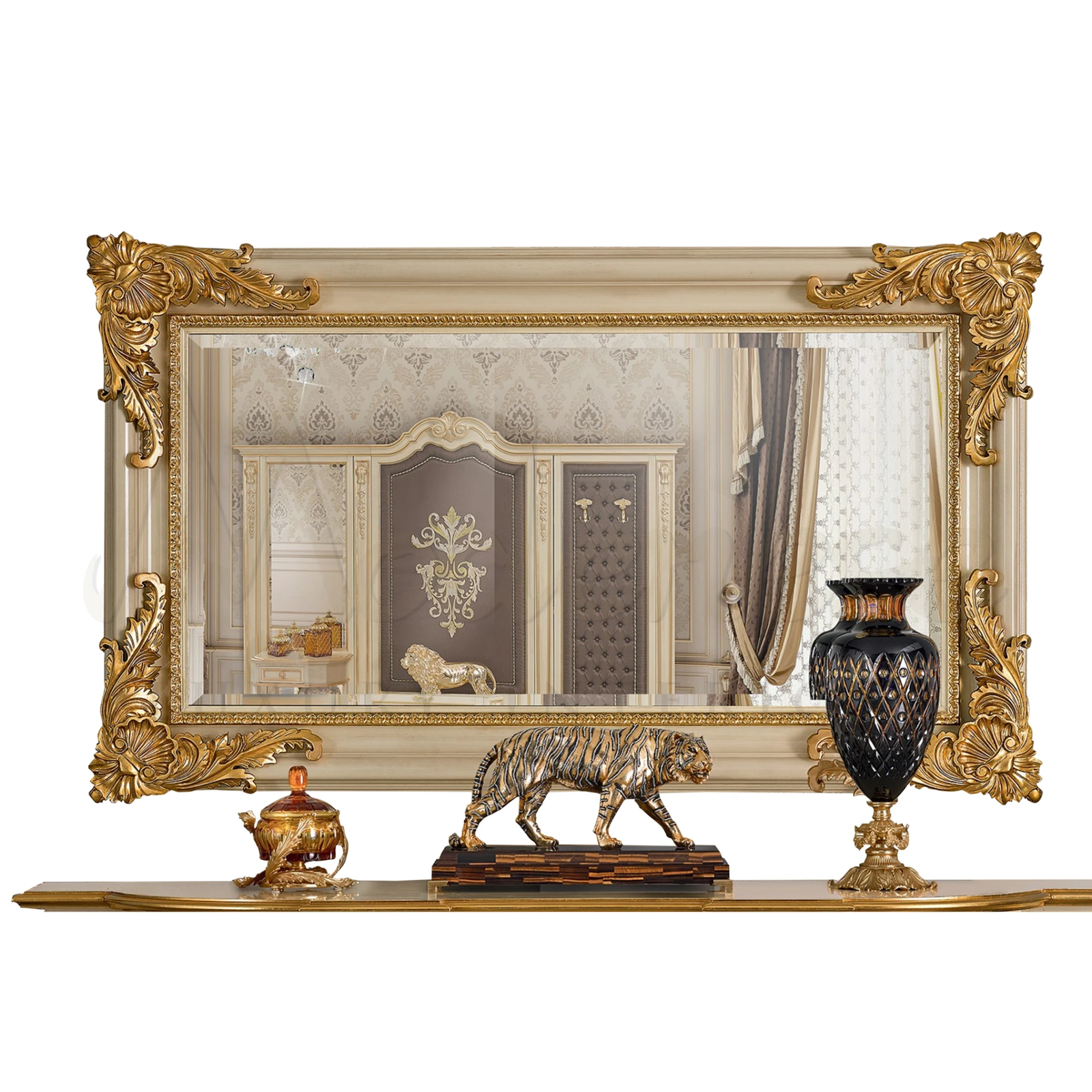
the best wall mirror ideas are the ones you can reorder
A jeweled mirror can create excitement. A speculum mirror can carry volume. But your program only becomes profitable when both can be replenished without drift.
That’s why the smartest buyers treat mirrors as a system: wall mirror ideas guided by trend, protected by clear mirror specifications, built from controlled mirror materials, and delivered through a repeatable mirror manufacturing process.



