
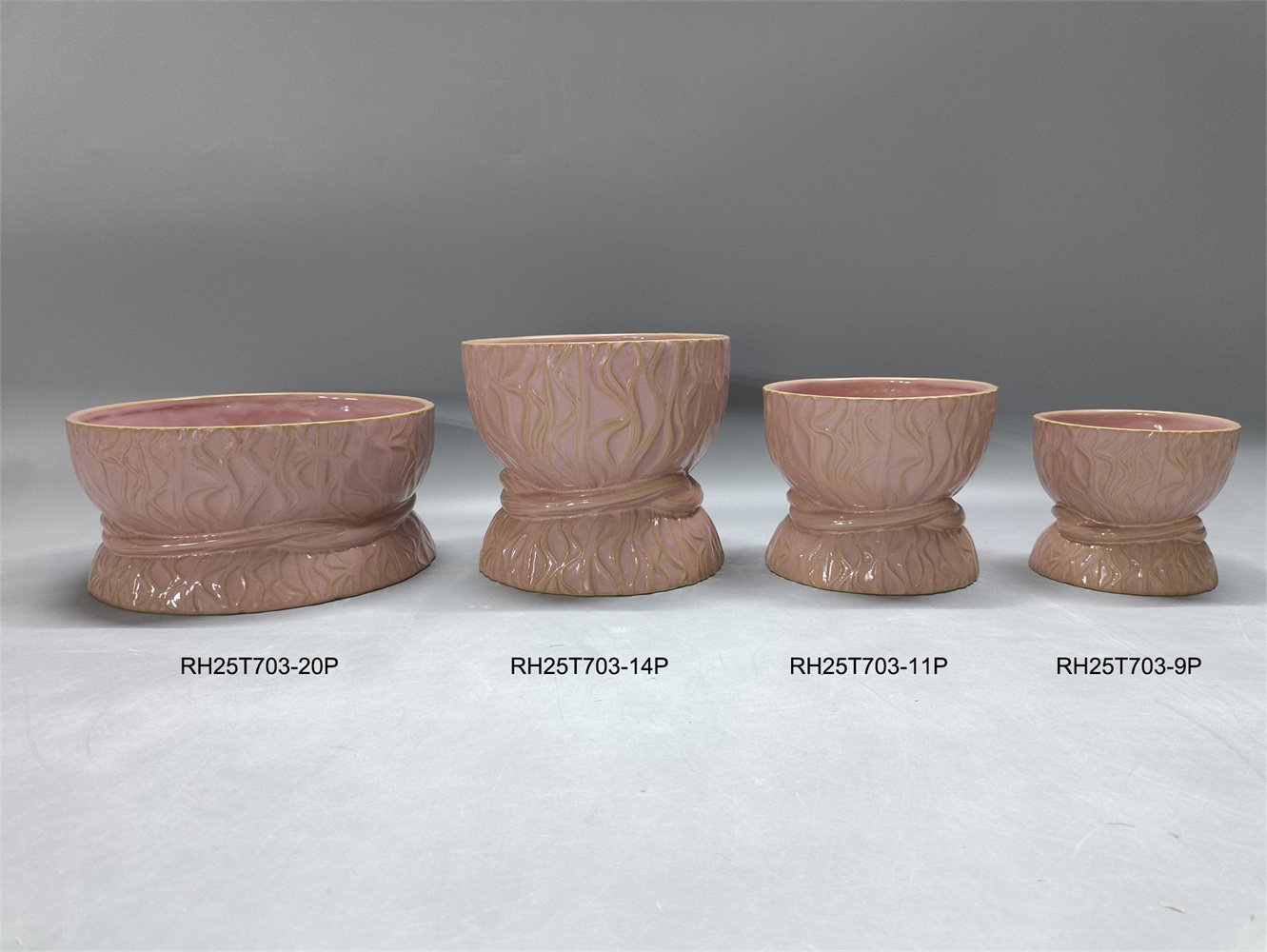
Let us begin with a sentence that should make every home décor buyer sit up a little straighter:
If your sample is charming and your bulk order is “approximately similar,” you do not have handmade appeal. You have a claim waiting to happen.
This is the real reason glaze consistency QC matters.
Not because buyers are anti-craft. Quite the opposite. Buyers love craft. They love the soft pooling of a wabi sabi ceramic vase, the painterly feeling of majolica ceramic decor, the playful personality of a fish motif ceramic platter, the seasonal theatre of oyster plate decor, the wit of artichoke ceramic decor, and the unapologetic exuberance of a cabbage leaf serving bowl.
What they do not love is this:
the approved sample is one shade,
the replenishment is another,
and then the display wall looks like three factories had an argument.
That is not artisanal. That is operationally rude.
What this product program actually is
Teruier’s ceramic offer should not be understood as “a few nice ceramic pieces.”
The real product is a ceramic assortment system with glaze consistency QC built in.
That means the offer is not only the object:
- not only the pear ceramic vase
- not only the platter
- not only the serving bowl
The real offer is the control behind the object:
- glaze reference approval
- controlled variation windows
- kiln and batch tracking
- surface defect screening
- form-to-glaze matching
- food-use performance checks where relevant
- packing and replenishment logic for chain retail
That is what chain buyers are actually buying.
Because in ceramics, the SKU is visible.
But the risk sits inside the firing.
Why this matters more now, not less
The 2026 European design conversation is, frankly, making this more important.
Maison&Objet’s January 2026 theme, Past Reveals Future, positioned the market around objects that feel lived-in, meaningful, and rooted in memory and craft. Its In Materia curation pushed wood, glass, earth and stone into the center of design storytelling again. The fair’s Neo-Folklore direction also celebrated character, craft, storytelling, authentic textures, and local motifs reworked for current retail. In other words: more buyers want ceramics that feel expressive, tactile, and not machine-flat.
That sounds lovely. And it is lovely.
But it also creates a trap.
The more the market wants expressive surfaces, reactive finishes, hand-touched decoration, botanical motifs, shell references, and heritage-style serving pieces, the more buyers need a supplier who understands the difference between:
- intentional variation
- and uncontrolled inconsistency
Those are not the same thing.
Many suppliers behave as if they are. That is convenient for them. Less so for the buyer.
What glaze consistency QC really means
A good ceramic QC system does not try to remove all variation.
That would kill half the charm.
A good system does something more intelligent:
It defines what is allowed to vary,
how much it may vary,
and what must stay stable.
For example:
A wabi sabi ceramic vase may allow soft clouding, slight tone movement, and edge pooling.
A pear ceramic vase sold as a clean shelf item in a lifestyle chain may need much tighter color control.
A fish motif ceramic platter may tolerate hand-painted variation in motif detail, but the base white, blue, or green glaze still needs consistency from piece to piece.
A cabbage leaf serving bowl may celebrate sculpted irregularity, but rim finish, glaze coverage, and foot stability cannot become optional poetry.
That is the real work.
What the science says buyers should care about
This is not guesswork. The ceramic side of the problem is well understood.
A peer-reviewed review on glazed ceramics notes that production conditions have major influence on glaze behavior, including the density of the glaze suspension during application, glaze viscosity during firing, kiln atmosphere, firing temperature profile, diffusion, sintering, and the interface between glaze and ceramic body. It also states that when stress limits are exceeded, defects such as crazing, cracking, or peeling occur, and that one of the first steps in defect identification is evaluating the consistency of the glaze and the ceramic body.
Older university work from the University of Arkansas also explicitly linked glaze consistency with dipping characteristics, fluidity, and pH value. That is not decorative language. That is process control language.
So when buyers ask for glaze consistency QC, they are not being difficult.
They are asking whether the supplier has understood ceramics as a production system, not as a lucky accident.
What the Teruier solution should look like
A better Teruier ceramic program should be presented in three layers.
1. Glaze master control
Each finish should have:
- an approved master sample or glaze tile
- a defined acceptable variation range
- notes on intended pooling, speckling, transparency, or brush effect
- separate approval logic for matte, glossy, reactive, and painted finishes
This matters because “reactive glaze” is too often used as a universal excuse.
It is not a quality policy.
2. Production-stage QC
The supplier should track:
- body consistency
- glaze slurry condition
- application thickness
- firing lot
- kiln placement sensitivity
- post-firing color grouping
- visible defects such as pinholes, crawling, bare spots, blistering, and edge under-coverage
This is where the difference appears between “beautiful first sample” and “reliable open stock program.”
3. Use-stage QC
For decorative items, the question is mainly visual consistency and handling safety.
For serving and tabletop items, performance matters too.
Research on porcelain tableware shows that metal marking is a cross-cutting problem in ceramic tableware, especially in intensive use environments such as hospitality. The paper notes that retailers and producers often have to develop their own routine tests because no fully unified international metal-marking standard exists, and it highlights the importance of representative batch testing rather than relying on too few specimens.
That is highly relevant for a fish motif ceramic platter, oyster plate decor that is also used for serving, or a cabbage leaf serving bowl that will actually meet cutlery, stacking, dishwashing, and retail returns.
What buyers should ask before approving the collection
If Teruier wants to sound like a supplier worth continuing with, the ceramic presentation should answer these questions clearly:
- Is this glaze controlled, reactive, hand-painted, or intentionally varied?
- What is the visual approval method: master sample, photo range, or tile reference?
- Which items are decorative only, and which are food-contact or serving use?
- How are mixed cartons sorted if piece-to-piece variation occurs?
- Are replenishment orders matched to the original approved glaze window?
- Which shapes are more sensitive to pooling or edge lightness?
- Which SKUs are safer for chain-store repeat business, and which are better for seasonal drops?
This is what buyers mean when they ask whether a supplier is “stable.”
They do not mean emotionally.
They mean batch to batch.
One illustrative Teruier selection-agent case
To make this practical, here is an illustrative buyer scenario.
A German home décor chain wanted a ceramic capsule with strong shelf personality, but without the usual post-sample disappointment. The first pool had 18 concepts across botanical, coastal, and rustic décor.
Teruier’s selection workflow narrowed the line to 7 sample candidates, then to 4 launch SKUs:
- one pear ceramic vase
- one wabi sabi ceramic vase
- one fish motif ceramic platter
- one cabbage leaf serving bowl
The key decision was not style. It was glaze behavior.
The buyer did not approve just the forms.
The buyer approved:
- one stable soft-cream glaze family
- one green family with controlled tonal movement
- one painted motif standard
- one rejection list for unacceptable pooling, pinholes, and rim inconsistency
Result of the sprint:
- 18 ideas → 7 samples → 4 launch SKUs
- decorative and serving-use pieces were separated early
- replenishment risk dropped because the glaze window was defined before bulk
- visual merchandising became more coherent because the green items matched as a family, not as cousins twice removed
- the buyer had a clearer internal story: not “these pieces look artisanal,” but “these pieces are artisanal within controlled commercial limits”
That is the difference between shopping and buying professionally.
Final judgment
If you are searching glaze consistency QC, you are probably not hunting for a romantic story about pottery.
You are trying to solve a very practical problem:
How do I buy ceramics that still feel alive, but do not become chaotic when scaled?
That is where Teruier should win.
Not by pretending all handmade variation is magical.
Not by flattening every piece into lifeless sameness.
But by doing the harder, more useful thing:
translating craft into controlled retail language.
That means:
- expressive surfaces, but with defined limits
- decorative storytelling, but with repeatable production
- tactile ceramics, but with disciplined batch logic
- beauty, but with QC
Because the ceramic buyer’s real nightmare is not that a piece has character.
It is that the character changes between PO number one and PO number two.
And that, to put it politely, is not a design direction.



