A show conversation that widened into a bigger question
Not every useful sourcing lesson stays inside one product category.
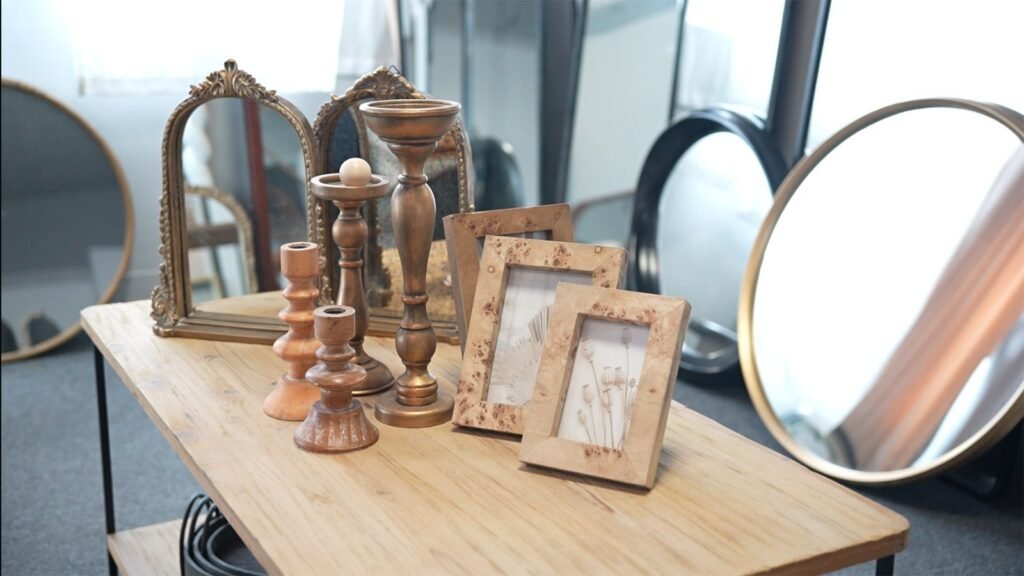
This week’s conversations were mostly about mirrors—but one follow-up topic kept surfacing because it affects every home décor program that ships bulky items:
How do we protect the product without relying on plastic packaging?
For us, this isn’t new. The earliest push came from an Australian customer who made the requirement clear:
no plastic-based protective packaging.
That single constraint forced a better packaging discipline—one that now applies beyond mirrors, including ottomans.
The 3 capabilities buyers are really testing with honeycomb packaging
Capability #1: Plastic-free doesn’t mean “less protection”
A common fear is that removing plastic will increase damage.
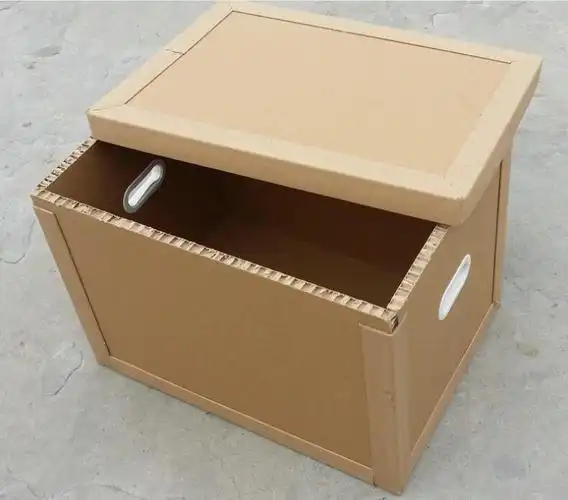
Honeycomb paper packaging works because it creates protection through structure, not foam:
it cushions impact through a cellular paper core
it wraps and stabilises surfaces against rubbing
it performs well when combined with corner guards and rigid outer cartons
The goal is not to look “eco.”
The goal is to be plastic-free and drop-resistant.
For ottomans, that matters even more, because the product is fabric-forward and scratch-sensitive.
Capability #2: Lower damage = lower total cost (and less waste)
Sustainability is a positive story in Australia and Europe—but it’s also commercial.
When packaging reduces:
scuffs and fabric abrasion
corner crushing
dents and compression marks
replacement shipments
…you reduce the hidden costs that kill program profitability.
That’s why eco honeycomb packaging often becomes a margin-protection tool, not a cost burden. Less breakage means fewer replacements, fewer returns, and less wasted inventory.
Capability #3: Packaging must be standardised to scale (samples are easy—reorders are hard)
Anyone can wrap one sample nicely.
The real capability is:
Can you keep the same protection standard across bulk shipments, different factories, and repeated reorders?
That means:
a written packaging standard (materials, thickness, wrap method, taping points)
repeatable assembly steps
clear “no-plastic” substitutions for common parts
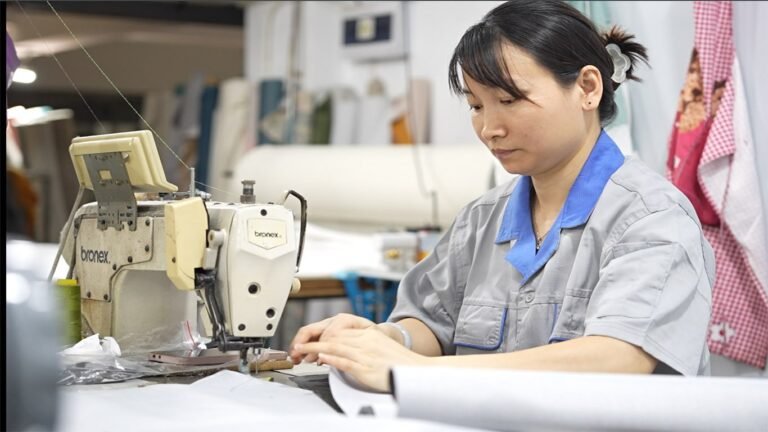
training and QC checks so packing quality doesn’t drift
This is what buyers mean by “easy to work with”: a system that doesn’t rely on one careful person.
Why ottomans are a perfect test case
Ottomans look simple, but they’re packaging-sensitive:
fabric can snag or scuff
pleats can deform
corners compress in transit
surface marks are highly visible and drive returns
Honeycomb paper gives you a plastic-free way to create:
surface protection
stability during handling
impact cushioning
better unboxing experience (which matters for online orders)
And it helps buyers maintain brand consistency: less plastic in packaging aligns with their sustainability messaging.
why we can execute plastic-free packaging without losing control
Teruier is rooted in a craft manufacturing hometown near Fuzhou, shaped by generations of decorative-making culture. People reference heritage crafts like bodiless lacquerware, oil-paper umbrellas, and horn combs—not because we sell them today, but because they reflect a mindset: detail discipline, finishing control, and respect for skilled work.
That mindset translates into repeatable packaging execution through three supply chains:
Artisan supply chain: careful handling that protects surface finishes and fabrics
Materials supply chain: stable access to compliant paper-based protection (including honeycomb)
Process supply chain: standardised packing steps that stay consistent from sample to bulk
Because for buyers, “eco packaging” only counts if it works at scale.
What we recommend: an “eco packaging ladder” for ottomans
A practical way to make decisions fast is to offer a packaging ladder:
Baseline eco: honeycomb wrap + rigid carton + paper corner guards
Reinforced eco: thicker honeycomb + extra edge protection + stronger carton grade
Premium eco: reinforced eco + presentation-focused inner structure for clean unboxing
This gives buyers choice based on budget, channel (store vs. online), and damage tolerance.
Wrap-up: honeycomb paper is becoming a new baseline
Eco honeycomb packaging is no longer a niche request. It’s a growing expectation—especially when buyers ask for plastic-free protection.
And it’s a powerful signal of supplier maturity:
you can meet sustainability standards
you can protect the product in real shipping
you can standardise the method for reorders
Next in the series: we’ll share our “bulk packaging checklist” for fragile and fabric-forward home décor—what we inspect before shipping to keep damage rates low (and reorders smooth) across international routes.