
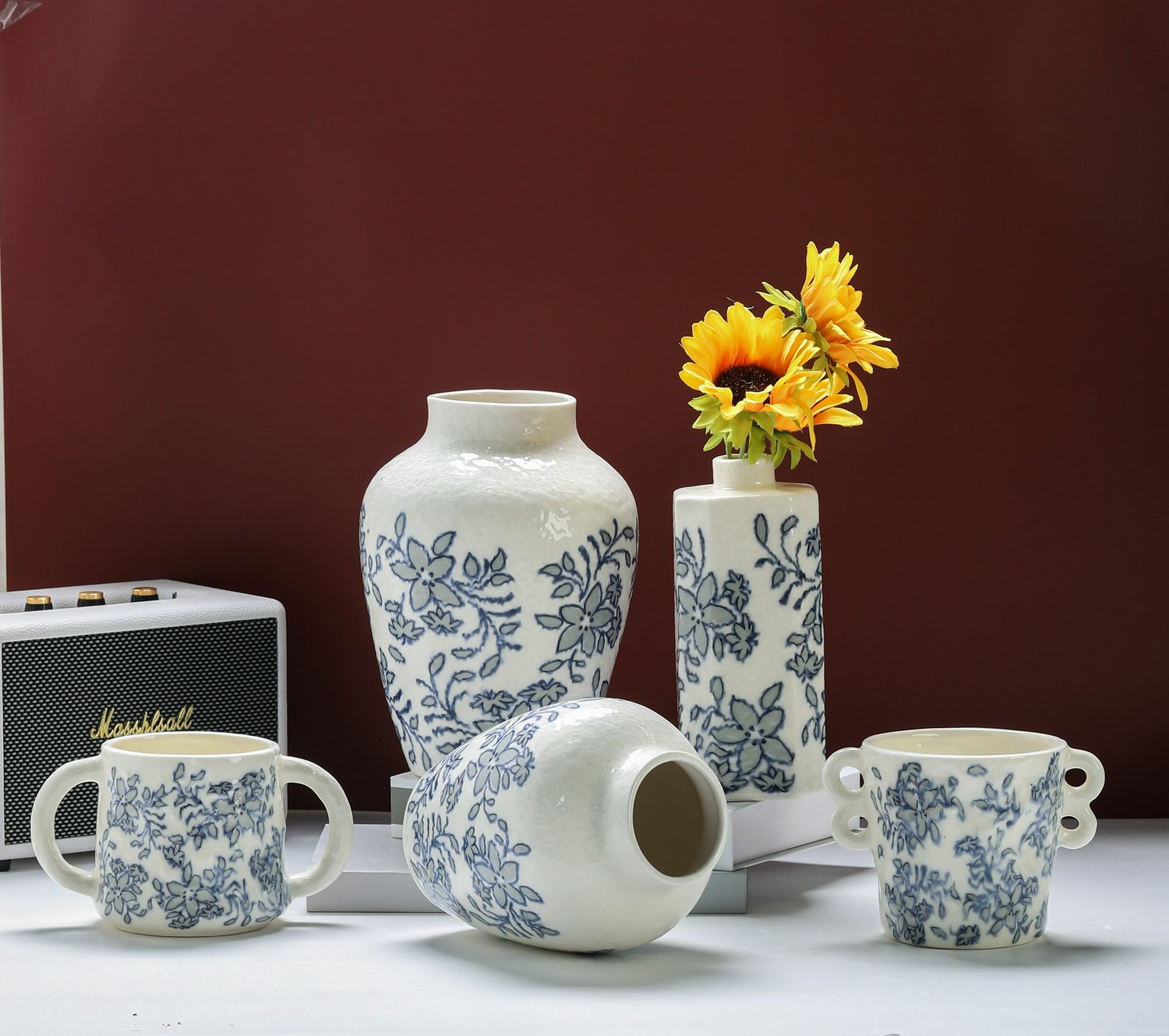
Ceramic Home Decoration in 2026: The “Shelf-Proof” Standard — Notes from a U.S. Retail Buyer
If you’re pitching me ceramic home decoration, I’m not judging your catalog. I’m judging your reorder reality: will it arrive clean, read premium from six feet away, and hold its look from the first PO to the third?
Because in 2026, the market is giving ceramics a gift: customers want texture, weight, and “made-by-humans” energy again. But retailers will only scale the vendors who are operationally tight.
What I’m hearing at U.S. markets: trend becomes transaction only when delivery is clean
NY NOW’s Winter 2026 outlook called out three things buyers are actually acting on: brands leaning into bolder direction, moving away from overly “dainty,” and products that create emotional bonds through sensory engagement. That last phrase is basically ceramics’ home court—glaze depth, surface feel, edge detail, and the “hand” of the piece.
And in Vegas, the sourcing environment keeps getting more competitive: Las Vegas Market’s Winter 2026 edition highlighted 3,500+ brands across furniture, home, bedding, and gift—meaning your ceramic decor isn’t competing only with other ceramics; it’s competing with the entire room story.
Here’s the buyer one-liner that’s easy to quote:
In 2026, ceramic home decoration wins when it feels artisanal in-hand—and behaves engineered in-transit.
The “U.S. retail fit” test: I’m buying a shelf story, not a single vase
Most suppliers show me items. I buy assortment logic.
For U.S. retail fit, I want a ceramic program that builds a clean shelf narrative:
Hero + companions (large/medium/small), so the wall merchandises without gaps
A good/better/best price ladder, so margin and volume can coexist
Finishes that photograph well but also look premium under store lighting (matte, mineral, reactive glazes—when controlled)
If your line can’t be ranged like a system, it won’t scale—no matter how pretty the sample is.
Decorative ceramic wholesale fails in one place: consistency after the sample
This is the painful truth in decorative ceramic wholesale: the sample is often the best piece the factory will ever make—unless the supplier runs a disciplined process.
That’s why I screen every ceramic home decor supplier on two questions:
Can you define your tolerances (color drift, glaze movement, micro-variation) in writing?
Can you show the QC gates that protect production from “sample drift”?
Because if you can’t repeat the finish, you can’t repeat the profit.
What “high volume home décor supplier” means to a buyer like me
A high volume home décor supplier isn’t the one with the biggest factory. It’s the one that can keep outcomes stable when volume rises.
When volume hits, these are the failure points that cost me margin:
rim chips and hairline cracks (packaging + handling)
glaze variation that makes sets look mismatched
inconsistent weights/dimensions that break planogram flow
slow claim resolution that turns a small issue into a relationship problem
So I don’t ask for “capacity.” I ask for control.
My vendor-ready checklist (the one that gets you a faster PO)
If you want me to treat you like a reorder partner, send this as your first package—clean and complete:
SKU one-sheet per item: dimensions, weight, finish name, carton pack, master carton size
Ceramic quality control map: greenware → post-glaze → post-firing → packout (with photo checkpoints)
Packaging structure: rim protection, inner fit, corner protection, carton strength
Reorder window: what you can repeat in 60–90 days
Claim owner: who handles damages/credits (name + response SLA)
This isn’t paperwork. This is how you protect reorder velocity.
Why I still do a home décor style review Shenzhen (even when I buy for the U.S.)
When I schedule a home décor style review Shenzhen, I’m not only hunting aesthetics. I’m validating execution: speed of sampling, factory coordination, and whether a supplier can translate direction into stable production.
Shenzhen Creative Week / Shenzhen International Furniture Exhibition positions itself as a platform linking international design resources with Chinese manufacturing—exactly the “design-to-delivery” pipeline buyers care about.
My buyer takeaway: Europe and the U.S. shape the taste conversation; Shenzhen often reveals who can actually deliver it at scale.
Where Teruier fits
Teruier builds ceramic home decoration programs that are trend-aware and reorder-ready—combining cross-border design collaboration with production discipline, so U.S. buyers get shelf stories that ship clean and repeat reliably.
The best ceramic home decoration suppliers in 2026 don’t just sell design—they sell consistency.



