Books are no longer the only reason people buy bookends. So what exactly are retailers selling: storage accessories, decorative sculptures, or a new kind of collectible?
Imagine walking into a beautifully styled living room.
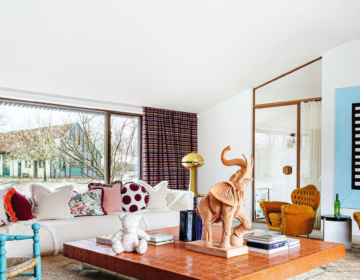
There are books on the shelves, a few carefully selected ceramics, an unusual sculpture and two decorative objects holding a small collection of hardcover books in place.
Now remove the books.
Would those two objects still look attractive?
If the answer is yes, you may be looking at something more than a traditional bookend.
For years, bookends were primarily functional products. They held books upright, organized shelves and prevented books from falling over.
But today’s decorative bookends can have a different role.
They can introduce a sculptural shape, add texture to a bookshelf, create visual contrast or become a small statement piece in a living room.
This raises an interesting question for home décor retailers:
Are consumers still buying bookends to organize books, or are they buying small decorative sculptures that happen to hold books?
The distinction may seem subtle, but it changes how the category should be designed, presented and merchandised.
1. The Bookshelf Is No Longer Just for Books
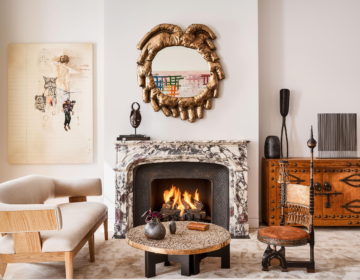
The modern bookshelf has become a display space.
Interior designers increasingly treat shelving as a place to combine books, artwork, ceramics, personal collections and objects gathered over time.
In March 2026, Homes & Gardens explored how designers were hanging artwork in front of bookshelves to make them feel more personal and visually layered.
ELLE Decor’s April 2026 bookshelf styling report also highlighted carefully curated displays, mixed materials and the importance of selecting objects that reflect the homeowner.
This is an important change in how decorative accessories are used.
A bookshelf is no longer necessarily organized by function alone.
It can tell a story about the person who lives there.
Books provide the structure. Decorative objects provide personality.
Bookends sit in an interesting position between these two roles.
They can organize the shelf while contributing to its visual identity.
2. The Decorative Bookend Has to Pass Two Tests
A traditional bookend only needs to perform one basic job: keep books upright.
A decorative bookend has a more complicated responsibility.
It needs to work as a functional object and look attractive as an independent piece of décor.
Consider two products.
Product A: The Practical Bookend
A simple metal or wooden support with enough weight and stability to hold books in place.
Its main selling points are durability, dimensions and functionality.
Product B: The Decorative Bookend
A sculptural animal, architectural form, abstract shape or natural-stone object.
It may still support books, but its appearance is an important part of its value.
A customer may choose it because it matches a room, complements a collection or makes a bookshelf more interesting.
Neither product is automatically better.
They serve different purchasing motivations.
For retailers, the mistake is treating both as exactly the same product category without considering their different display and pricing opportunities.
3. Why Would Someone Buy a Bookend Without Owning Many Books?
This is where the category becomes particularly interesting.
Some decorative bookends can work in places where there are very few books.
A sculptural pair can be displayed on a console table.
A stone bookend can hold a small stack of magazines on a coffee table.
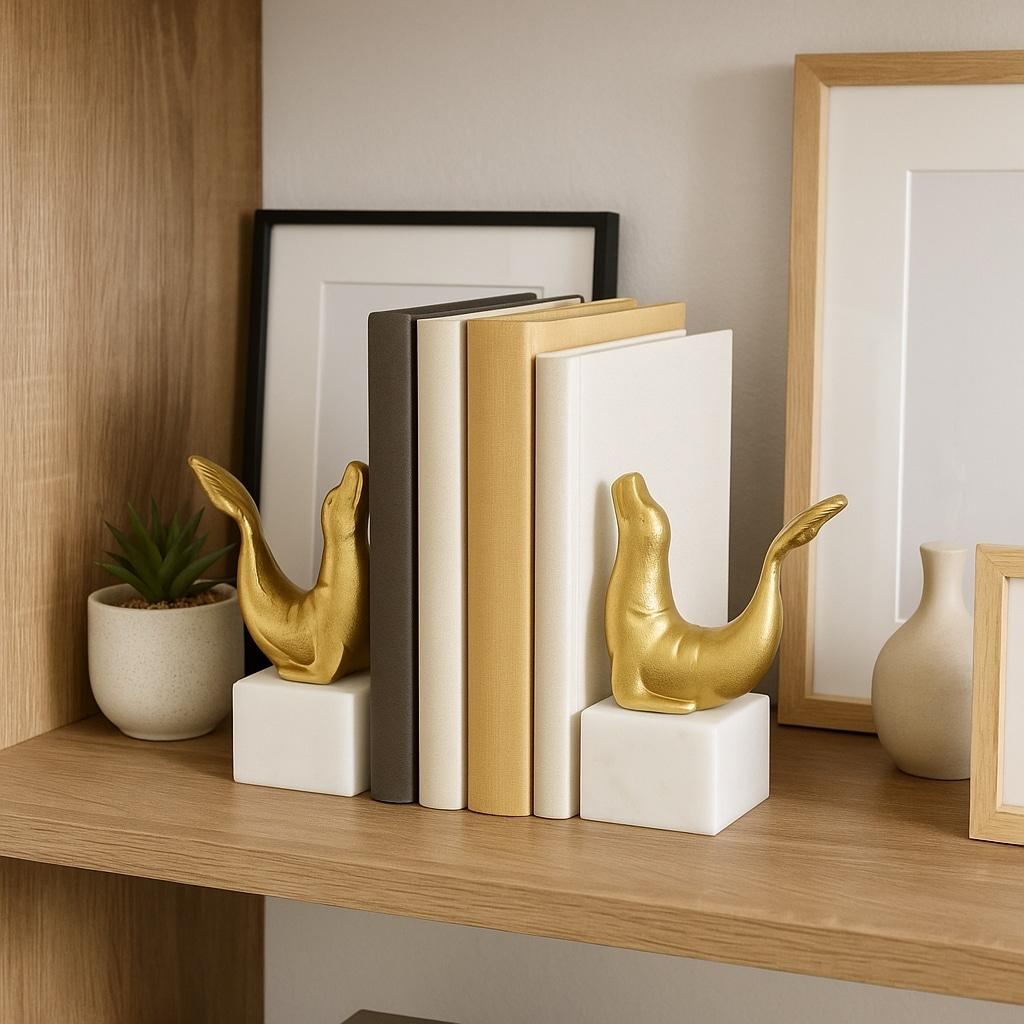
An animal-shaped design can sit on a sideboard as a decorative object.
A pair of architectural bookends can be used to frame a small arrangement of objects.
Of course, these alternative uses depend on the product’s shape, stability and construction.
A heavy stone bookend may work well on a tabletop but be unsuitable for a narrow floating shelf.
A delicate decorative object may look attractive but may not be appropriate for supporting a large collection of books.
The point is not that functionality no longer matters.
It is that the product can have more than one occasion for purchase.
For retailers, this means bookends can be merchandised alongside decorative sculptures, tabletop accessories and collected interiors rather than being restricted to office supplies or bookstore displays.
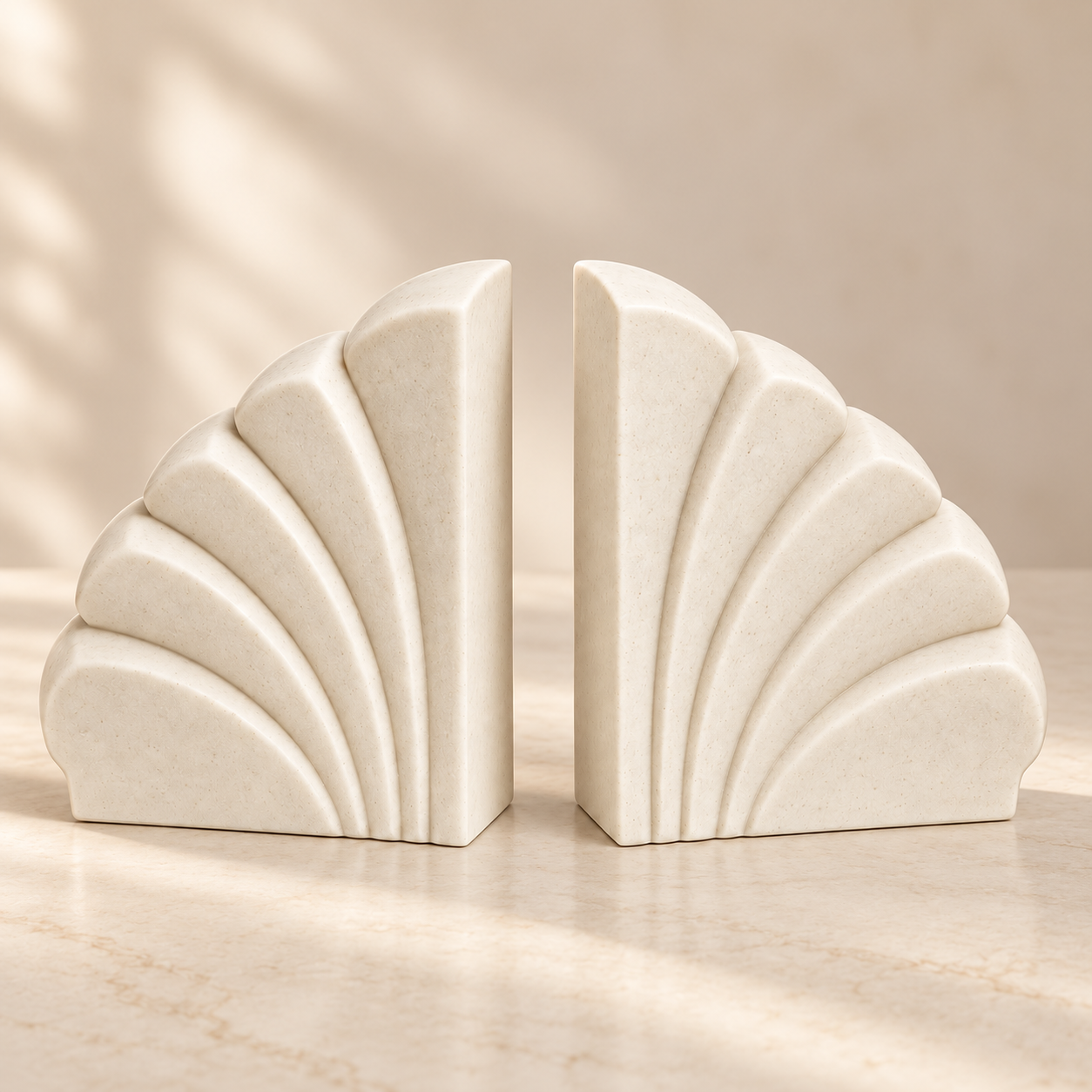
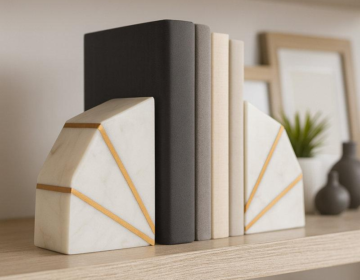
Teruier’s Deco Fan Bookend Set illustrates this approach. Its layered Art Deco-inspired fan silhouette and warm ivory finish are designed to combine practical book support with a stronger decorative presence.
The product is intended to contribute to a shelf arrangement rather than simply disappear behind a row of books.
4. Five Design Directions That Give Bookends More Personality
A useful decorative bookend collection should offer different visual identities rather than simply repeating the same shape in different colours.
1. Architectural Forms
Arches, columns, geometric blocks and abstract structural shapes can create a clean, contemporary appearance.
These designs are particularly suitable for minimalist and modern interiors.
2. Animal Sculptures
Birds, horses, dogs and other animal forms bring personality to a bookshelf.
They can also create gifting opportunities because customers may connect with a particular animal or its symbolism.
3. Natural Stone and Mineral Effects
Marble, travertine-inspired surfaces and stone-effect materials can create a sense of weight and permanence.
Natural variation can make individual pieces visually distinctive, although buyers should consider material consistency and actual product weight.
4. Human and Figurative Forms
Abstract human figures, classical-inspired sculptures and paired forms can introduce an artistic character.
These designs may work particularly well in collected interiors and more expressive bookshelf arrangements.
5. Mixed Materials
Wood, metal, ceramic, resin and stone can be combined to create more distinctive products.
For buyers, the challenge is to ensure that the combination looks intentional and that the finished product remains stable and suitable for its intended use.
The best assortment is not necessarily the one with the most unusual shapes.
It is the one with a useful balance between recognizable styles and distinctive statement pieces.
5. The Commercial Question: How Much Should a Retailer Pay for a Bookend?
A decorative bookend may look like a small product, but its retail positioning can vary considerably.
Faire’s August 24, 2026 wholesale bookend buying guide reported more than 300 brands and over 2,000 products in its marketplace category.
Its listed wholesale prices ranged from approximately US$10 to US$80, with a midpoint around US$34.
These are marketplace observations, not universal industry prices or a guaranteed retail margin.
They nevertheless illustrate that bookends are not a single-price commodity.
A simple functional design and a distinctive sculptural pair can occupy very different positions.
For retailers, the important question is not simply whether a bookend is expensive or inexpensive.
It is whether the design, material, perceived value and target customer justify its price.
A practical assortment might include:
| Position | Product direction | Main selling point |
|---|---|---|
| Accessible | Simple geometric bookends | Everyday functionality |
| Mid-range | Decorative ceramic or metal designs | Style and usability |
| Premium | Stone and mixed-material designs | Material character |
| Statement | Sculptural animal or figurative designs | Distinctive visual identity |
Retailers should also compare whether prices are quoted per piece or per pair, since this can significantly affect the apparent unit cost.
6. Why a Beautiful Bookend Can Still Be a Bad Product
Here is a detail that is sometimes overlooked in decorative product development.
A bookend can look excellent in a photograph and still perform poorly.
A tall, narrow sculpture may not have enough weight or base area to support books.
A polished surface may slide too easily on a shelf.
A pair may look symmetrical but have insufficient mass to support larger hardcovers.
A stone-effect resin object may look heavy but feel too light in actual use.
Buyers should therefore consider several technical factors.
Weight and Balance
The product needs enough mass and an appropriate centre of gravity for its intended use.
Base Design
The contact surface should be stable and should not easily slide or damage furniture surfaces.
Book Compatibility
The intended book sizes, number of books and typical load should be considered.
Surface Protection
Protective pads can help reduce scratches on wooden shelves and other furniture surfaces.
Pair Consistency
Where products are sold as pairs, the two pieces should have consistent finishes, proportions and visual balance.
Packaging
Heavy stone or ceramic products require appropriate internal protection. Metal products may need protection against scratching and finish damage.
A decorative product still needs engineering.
Visual appeal cannot compensate for poor functionality.
7. Collected Interiors Create a New Merchandising Opportunity
The popularity of more personal, layered interiors creates an opportunity to present bookends differently.
Instead of displaying them only beside rows of books, retailers can place them in styled arrangements.
For example:
The Modern Library
Architectural bookends, hardcover design books, a small ceramic vase and a restrained colour palette.
The Collected Living Room
Animal sculptures, vintage-inspired objects, mixed materials and books collected over time.
The Natural Material Shelf
Stone-effect bookends, wooden accessories, neutral ceramics and tactile surfaces.
The Artistic Display
Figurative bookends, art books and small sculptures arranged as a personal collection.
The products remain functional, but the presentation helps customers understand their decorative potential.
This also creates opportunities to cross-merchandise bookends with trays, sculptures, decorative boxes and tabletop accessories.
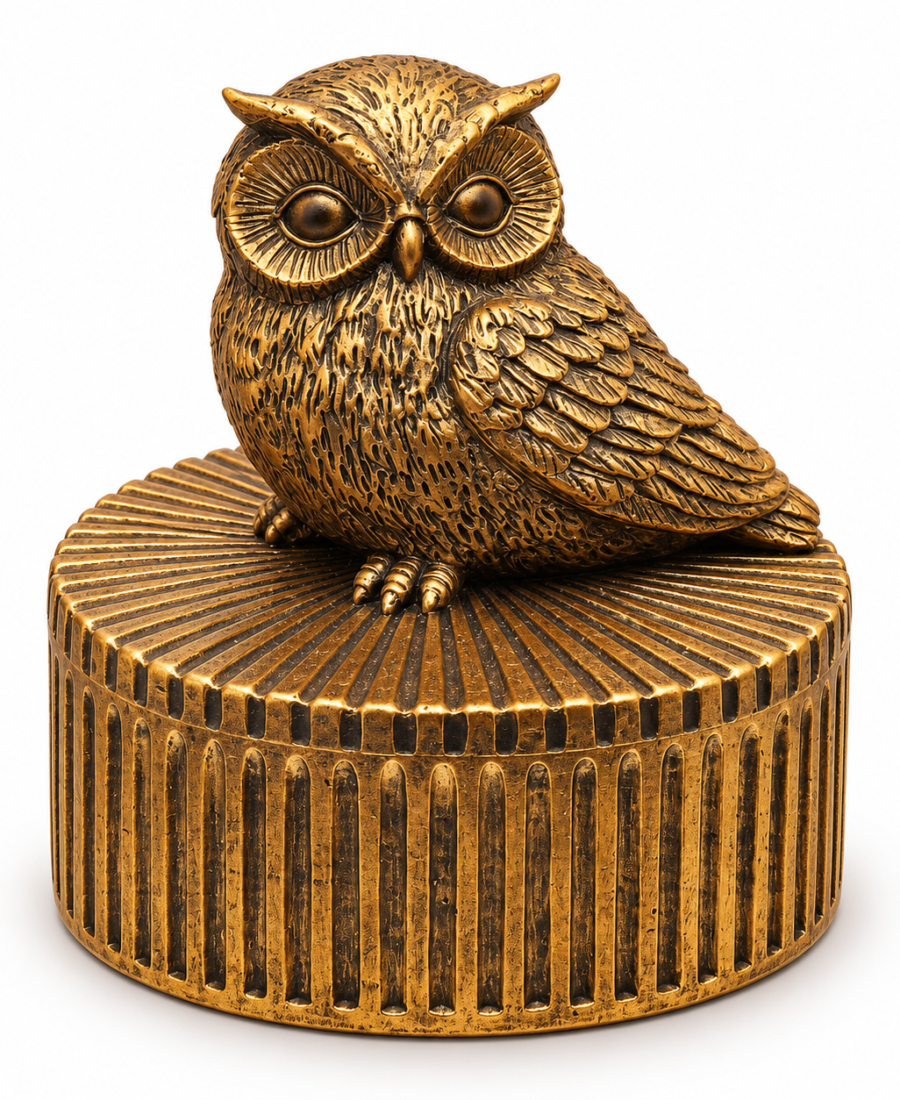
Teruier’s Antique Gold Owl on Fluted Base Statue offers another example of how a sculptural object can introduce character and architectural detail into a shelf or console display.
Explore the wider Home Décor Collection to see how bookends can sit alongside other decorative objects and tabletop accessories.
For more inspiration, explore Collected Interiors, where personal collections and carefully arranged decorative objects become part of the interior design.
8. What Wholesale Buyers Should Look for When Building a Bookend Collection
For home décor buyers, the category should be evaluated through both product performance and visual merchandising.
Before approving a new collection, consider:
Design differentiation
Does the product have a recognizable shape, material or finish that distinguishes it from conventional bookends?
Functional performance
Can it support the intended books without sliding, tipping or damaging the shelf?
Material credibility
Does the actual material match the product description and expected retail positioning?
Pair consistency
Are both pieces visually consistent, especially when the product is sold as a set?
Packaging efficiency
Can the product be shipped without excessive damage risk or unnecessary packaging volume?
Collection potential
Can the design direction be extended into complementary sculptures, trays, decorative boxes or tabletop objects?
Retail presentation
Can the product be displayed in more than one setting, such as bookshelves, coffee tables and console displays?
These considerations help buyers avoid creating a collection that looks attractive in a catalogue but lacks a clear commercial role.
For direct product discovery and wholesale sourcing, buyers can explore Teruier’s Decorative Bookends and Wholesale Bookends collections.
9. The Future of Bookends May Be About What They Add, Not What They Hold
There is no reason to believe that traditional functional bookends will disappear.
Libraries, offices, home studies and bookstores will continue to need practical products that organize books.
But the decorative segment has a different opportunity.
As shelves become more personal and interiors increasingly combine books with art and collected objects, decorative bookends can compete for attention alongside small sculptures and other tabletop accessories.
This does not mean every bookend needs to become an expensive work of art.
A good product may be simple, functional and visually appealing.
The opportunity is to offer a wider range of products that serve different customers and different styling purposes.
For a retailer, the question should not be whether decorative bookends can replace traditional bookends.
It should be whether the category can offer more reasons for customers to buy.
Frequently Asked Questions
Are decorative bookends still functional?
Yes. Decorative bookends should still perform their basic purpose when marketed as functional bookends. Their additional value comes from shape, materials, finish and visual appeal.
What materials are commonly used for decorative bookends?
Common options include metal, wood, ceramic, resin and natural stone. Each has different implications for weight, stability, surface finish, production and packaging.
Can bookends be used without books?
Some sculptural designs can be displayed independently or used to support magazines and other objects. Their suitability depends on their base design, stability and intended use.
Should wholesale bookends be sold as pairs?
Many traditional bookends are sold as pairs because they support books from both ends. Some decorative designs can also be sold individually, but the selling format should be clearly specified.
What should retailers consider when sourcing decorative bookends wholesale?
Buyers should assess design differentiation, material, actual weight, stability, surface protection, packaging, pricing and whether the product fits their wider home décor assortment.
Are sculptural bookends suitable for gift retail?
Yes. Animal, architectural and figurative designs can have gifting appeal, particularly when they have a recognizable theme or distinctive presentation. Retailers should still evaluate price, packaging and customer suitability.
Final Thought: A Good Bookend Should Hold More Than Books. It Should Hold Attention.
The decorative bookend category is interesting precisely because it sits between function and design.
It can organize a shelf, complete a bookshelf arrangement, introduce a sculptural element or become a small gift with a recognizable personality.
For retailers, this creates an opportunity to move beyond conventional office-style products and build a more distinctive home décor assortment.
But the fundamentals should not be forgotten.
The product still needs to stand securely, protect the furniture surface and perform its intended function.
The best decorative bookends do two things well: they keep books in place, and they give people a reason to look twice.
Teruier works with international home décor retailers, importers, brands and project buyers on decorative bookends, sculptural accessories, tabletop décor and coordinated product development.
Explore our Decorative Bookends, Wholesale Bookends and Home Décor Collection for product ideas and wholesale sourcing opportunities.