The global furniture dupe boom is creating a difficult question for manufacturers, retailers and designers: is copying a shortcut to success, or a trap that prevents original design?
A luxury sofa appears at an international design fair.
Its silhouette is unusual. Its proportions are distinctive. Designers discuss it, magazines photograph it, and buyers begin asking where they can find something similar.
A few weeks later, almost identical-looking versions start appearing in factory showrooms.
The price is lower. The delivery options may be more flexible. The customer can even request different fabrics or dimensions.
For a buyer, the attraction is obvious.
But there is another question.
If a factory can reproduce a successful design, what happens when every competing factory can do exactly the same thing?
And more importantly, who will create the next design that everyone wants to reproduce?
China’s furniture industry has become exceptionally capable at manufacturing. Its next competitive challenge is not simply making other people’s designs more cheaply. It is creating designs that other people want to buy for their own reasons.
1. The Furniture Dupe Business Is Bigger Than a Social Media Trend
The international furniture dupe market has become increasingly visible.
WIRED’s November 25, 2026 report on Foshan describes how international consumers are travelling to China to source furniture directly from factories.
Some are looking for affordable alternatives to expensive European designs. Others are commissioning made-to-order products through online channels and sourcing agents.
The report follows a London buyer who travelled to Foshan to furnish an apartment, spending approximately £7,000 on furniture before shipping it to the UK.
It also describes how some manufacturers study original luxury furniture in considerable detail, sometimes dismantling products to understand their internal construction.
This is more than copying a photograph.
It involves studying proportions, upholstery, materials, structural details and manufacturing methods.
Foshan’s furniture ecosystem has developed around manufacturing expertise, supplier networks and access to different materials and production processes.
For international buyers, this creates genuine opportunities.
But the same report identifies a limitation: as copycat competition increases, price pressure becomes more intense. Some manufacturers are beginning to consider original design as a way to move beyond an increasingly crowded market.
That is where the real story begins.
2. Copying a Successful Design Is Easier Than Building a Successful Design Business
There is a commercial reason manufacturers study successful products.
A proven design provides useful information.
It has already attracted attention. Its proportions have been tested in the market. Buyers understand its visual identity, and the factory can study how it is constructed.
This reduces some of the uncertainty involved in product development.
But there is a difference between manufacturing a successful design and building a business around original design.
Consider two manufacturers.
Manufacturer A: The Copy Specialist
It follows popular international products, identifies commercially successful shapes and develops visually similar alternatives.
Its main advantages are speed, cost and production flexibility.
But several competitors may offer nearly identical products.
The buyer can easily compare quotations.
The manufacturer’s competitive position may therefore depend heavily on price, delivery and small differences in specification.
Manufacturer B: The Original Product Developer
It identifies a market opportunity, develops a distinctive product direction, experiments with proportions and materials, creates prototypes and improves the design through testing.
This approach requires more time and development investment.
There is no guarantee that the product will succeed.
However, if the design solves a genuine customer problem or establishes a recognizable visual identity, the manufacturer has an opportunity to compete on more than price.
The difference is not that one manufacturer is automatically better than the other.
It is that they are building different kinds of businesses.
3. Original Design Does Not Mean Inventing Something Nobody Has Ever Seen
This is where the discussion becomes more interesting.
Furniture design rarely starts from nothing.
Designers work with existing materials, production techniques, historical references, architectural influences and familiar product functions.
A new dining chair may use a traditional frame construction.
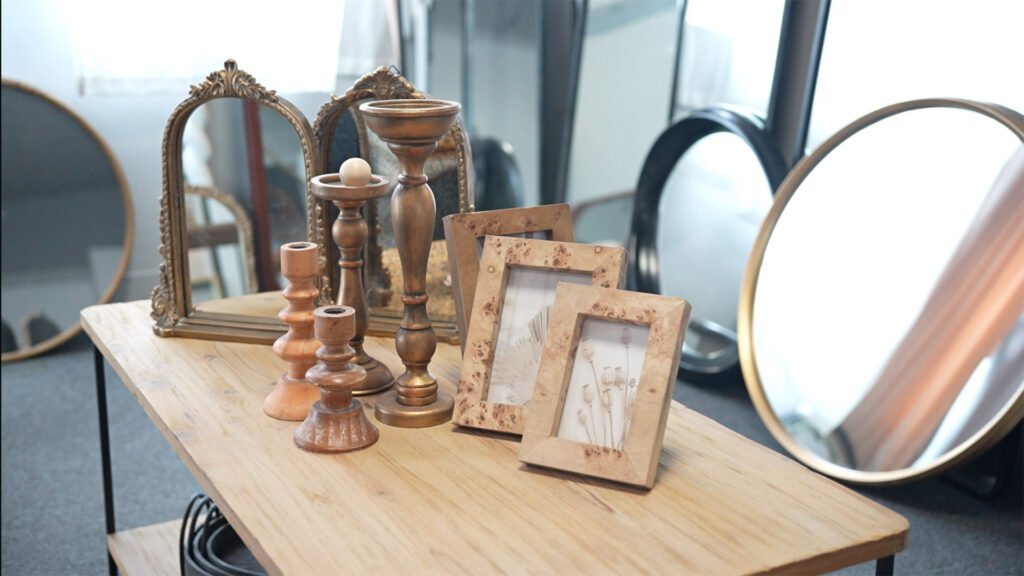
A mirror may reinterpret a classical arch.
A storage cabinet may combine familiar joinery with an unusual surface treatment.
A decorative object may take inspiration from natural forms.
These influences do not automatically make a design unoriginal.
The important question is what the designer contributes.
Is the product simply reproducing another identifiable design?
Or does it interpret a broader design direction through its own silhouette, proportions, materials, details and functional purpose?
A useful distinction is:
- Trend interpretation: Responding to a wider market direction.
- Design development: Creating a distinctive product from a design brief.
- Technical adaptation: Improving construction, materials or usability.
- Direct reproduction: Recreating a specific existing product with little meaningful differentiation.
These activities should not be confused.
A manufacturer can learn from international design without making imitation its entire business model.
4. The Most Valuable Part of Original Design May Be the Decisions Nobody Sees
Consumers usually see the finished product.
They see the shape of a chair, the texture of an upholstered stool or the finish of a decorative mirror.
They rarely see the decisions behind it.
Consider a new upholstered accent chair.
The first sketch may look impressive, but the initial sample reveals that the backrest is too wide.
A second version improves the proportions, but the frame becomes difficult to manufacture consistently.
A third version solves the structural problem, but the revised construction increases packaging dimensions.
The designer must decide which details are essential and which can be adjusted.
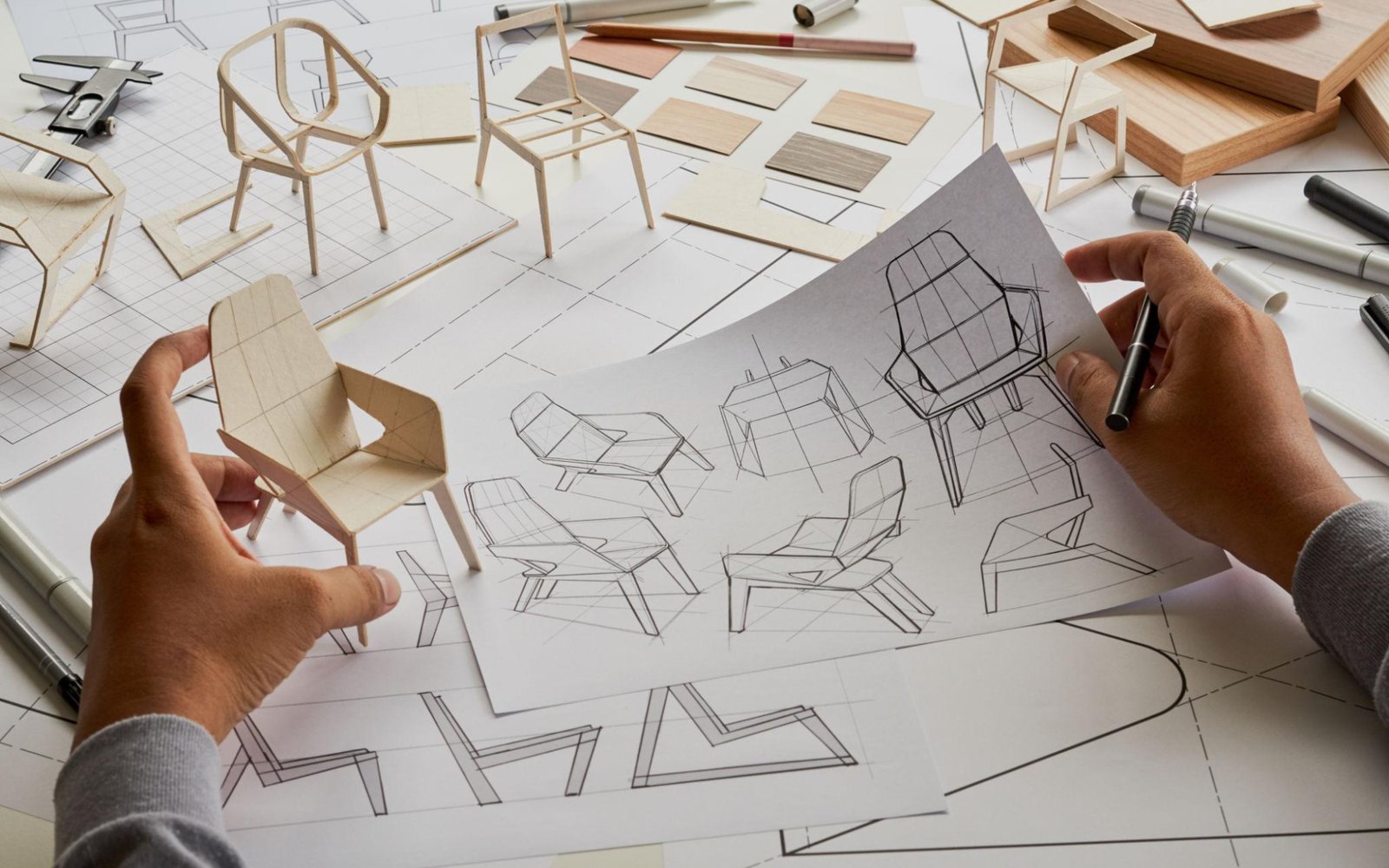
This is where original furniture design becomes a development process rather than a drawing exercise.
Teruier documented a similar process in From Trend Signal to Retail-Ready Ottoman: A Soft Furnishings Development Record.
The initial ottoman concept had an attractive appearance, but the first technical review identified issues with stitching consistency, support structure and packaging.
The design was revised rather than blindly protecting the original sketch.
That distinction matters.
Originality is not the refusal to change a design.
It is the ability to preserve its essential identity while improving the product.
5. A Beautiful Sketch Is Not Yet a Commercial Product
There is another uncomfortable truth about original design.
A product can be visually distinctive and still fail commercially.
A sculptural chair may look wonderful in a design presentation but be uncomfortable to sit on.
A decorative mirror may have an unusual frame but be too heavy for its intended installation.
A storage trunk may have a beautiful exterior but insufficient usable capacity.
A tabletop accessory may photograph well but be difficult to pack safely.
This is why design development needs several different forms of evaluation.
| Development stage | Main question |
|---|---|
| Design brief | Who is the intended customer? |
| Concept | What makes the product distinctive? |
| Proportion review | Does the product look and function correctly? |
| Material selection | Can the intended appearance be achieved consistently? |
| Prototype | Does the product work in physical form? |
| Production review | Can it be manufactured reliably? |
| Packaging review | Can it be transported safely? |
| Retail evaluation | Does it justify its commercial position? |
A successful original design must pass more than a visual test.
It must become a product that can be manufactured, sold, delivered and reordered.
For buyers, Prototype Cost Control: Buy Evidence, Not Just Samples explains why each sample should answer a specific development question instead of simply producing another version of the same idea.
6. Who Actually Owns the Original Design?
This is a question that manufacturers and buyers should address before development begins.
Imagine a retailer commissions a new decorative mirror.
The retailer provides reference images and a general design direction.
The manufacturer’s designer develops the frame profile, dimensions and construction details.
A workshop produces the prototype.
The buyer requests several changes.
After three rounds, the finished product looks substantially different from the original references.
Who owns the resulting design?
The answer cannot be assumed from the fact that one party paid for the sample or another party produced it.
Ownership and permitted use depend on the applicable agreements, intellectual property rights, jurisdiction and the actual contribution of each party.
A buyer should clarify:
- Who created the original design?
- Who owns the drawings and design files?
- Who paid for the development?
- Can the manufacturer sell the resulting product to other buyers?
- Is the design exclusive, or only a private-label version?
- Which changes are permitted?
- What happens if the commercial relationship ends?
These questions are particularly important when developing original furniture and retail home accessories.
Teruier discusses this in Private-Label Mirror Collection: Define Exclusivity Before You Order.
The article distinguishes between reserving a specific product configuration for a buyer and establishing broader design exclusivity.
For international projects involving several participants, International Design Collaboration: Who Makes the Final Call? also explains why design authority, technical recommendations and final commercial approval should be clearly separated.
7. The Retailer Has a Role in Creating Original Products Too
It is tempting to place all responsibility for originality on manufacturers.
But retailers also influence what gets developed.
If every buyer requests the same popular design at the lowest possible price, suppliers receive a clear commercial signal.
There is little incentive to invest in something different.
However, when retailers provide a defined customer profile, a distinctive assortment direction and useful feedback from their sales channels, manufacturers can develop products around a more specific opportunity.
For example:
A retailer may want an accent chair that works in smaller apartments, uses textured upholstery and has a distinctive but restrained silhouette.
This is more useful than simply asking for a copy of a popular designer chair.
The manufacturer can then explore different proportions, frame details, fabric combinations and price positions.
The resulting product may be inspired by a wider design trend, but its final identity comes from its own development decisions.
This is where a productive relationship between buyer and manufacturer begins.
8. What Should Buyers Look for in an Original Furniture Design Supplier?
A supplier claiming to offer original design should be able to explain how its products are developed.
Buyers can ask for evidence rather than relying on promotional language.
1. Design References
Can the supplier explain the original design direction and the customer problem it addresses?
2. Development Records
Can it show how the concept changed during prototype development?
3. Physical Samples
Can buyers evaluate the actual proportions, materials, surface finishes and construction?
4. Technical Specifications
Are the dimensions, materials, construction details and approved revisions documented?
5. Production Feasibility
Can the design be reproduced consistently at the intended commercial quantity?
6. Design Ownership and Exclusivity
Are the permitted uses, ownership arrangements and buyer-specific adaptations clearly agreed?
7. Product Range Potential
Can the design direction support complementary products without simply creating multiple copies of the same item?
For a wider comparison of sourcing models, see ODM vs OEM: The Key to Procuring and Sourcing Unique Home Décor.
It explains why buyers should understand whether they are purchasing an existing manufacturer design, commissioning production to their own specifications or developing a new product together.
9. The Next Competitive Advantage Is Not Another Copy
China’s furniture manufacturing industry has already demonstrated its ability to learn from international products, build complex supply chains and manufacture at scale.
That capability should not be underestimated.
But manufacturing excellence and design originality are not the same achievement.
A factory can become highly efficient at reproducing a popular sofa.
That does not automatically mean it understands why customers want that sofa, how its design could evolve or what the next generation of customers might prefer.
The opportunity is to connect manufacturing knowledge with original product thinking.
For Teruier, this means treating design development as a process connecting market research, design direction, material selection, prototype evaluation, manufacturing coordination and final product specifications.
The aim is not to promise that every new design will become an icon.
It is to create products with a clear identity and a realistic route to market.
Explore Teruier’s Home Décor Sourcing & ODM/OEM Manufacturing Hub to understand how product concepts can move from design discussion to sampling and manufacturing.
Frequently Asked Questions
What is original furniture design?
Original furniture design involves developing a product with its own identifiable design decisions, such as silhouette, proportions, materials, construction or functional features. It can be influenced by existing trends without directly reproducing another product.
Is it wrong for Chinese manufacturers to copy European furniture designs?
The question involves commercial ethics, intellectual property and manufacturing practices. Learning from general design trends and reproducing a specific protected design are not necessarily the same thing. Legal protection depends on the product, jurisdiction and applicable rights. Buyers should evaluate both legal and commercial risks.
What is the difference between ODM and OEM?
OEM generally means manufacturing according to a buyer’s specifications. ODM involves a manufacturer developing and producing a design that buyers may brand or adapt. Actual design ownership and usage rights should be established in the contract.
Can manufacturers help retailers create exclusive furniture designs?
Yes. Manufacturers can work with retailers on new silhouettes, materials, dimensions, finishes and construction details. Exclusivity should be defined in writing, including the exact product configuration and permitted variations.
How can buyers evaluate a manufacturer’s design capability?
Review design briefs, development records, prototypes, technical specifications, physical samples and evidence of production feasibility. A catalogue of attractive products alone is not sufficient.
Does original furniture design always cost more?
Not necessarily. Development involves time and resources, but the cost depends on complexity, materials, tooling, quantities and production requirements. A controlled prototype process can help buyers avoid unnecessary development expenses.
Final Thought: The World Does Not Need Another Thousand Copies of the Same Sofa
The furniture dupe market has demonstrated something important.
International buyers are willing to look beyond traditional retail channels. They are prepared to travel, communicate directly with manufacturers and explore new ways to source products.
That is an opportunity for China’s furniture industry.
But competing on the ability to copy a successful design has a natural limitation: eventually, someone else can offer the same product at a lower price.
Original design creates a different opportunity.
It allows manufacturers and retailers to build products around their own customers, their own visual identity and their own commercial strategy.
Not every original design will succeed. Not every familiar design needs to be reinvented.
But a manufacturing industry that can only reproduce yesterday’s bestsellers will struggle to define tomorrow’s market.
The real achievement is not making a cheaper version of the world’s best furniture. It is creating something the world will want to copy next.
Teruier works with international furniture retailers, home décor brands, importers and project buyers on original product development, decorative mirrors, accent furniture, tabletop accessories and coordinated wholesale sourcing.
Contact Teruier to discuss design references, product concepts, sample development and manufacturing feasibility.