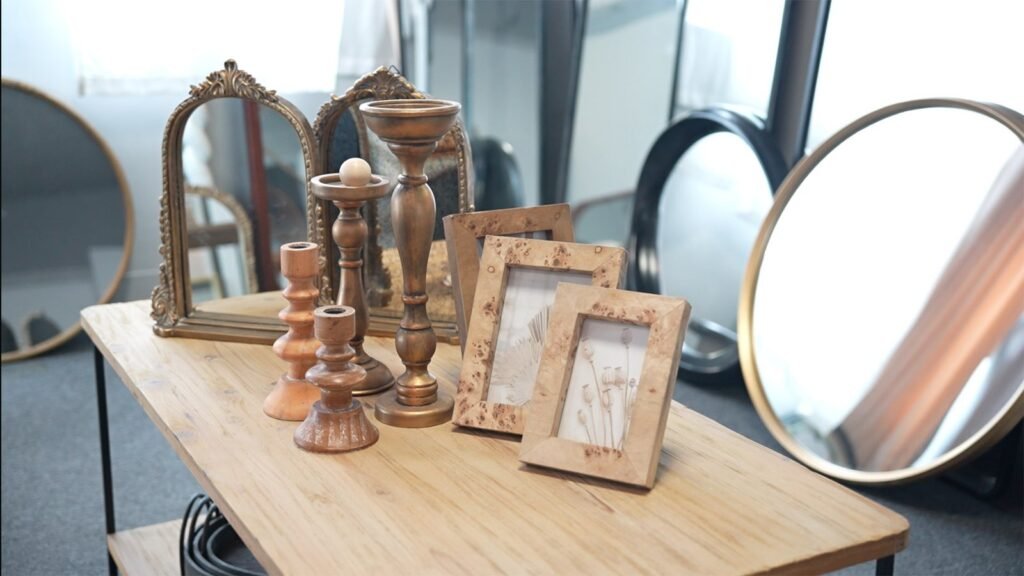
A buyer requests a new decorative mirror. The first sample arrives, but the frame looks too heavy. The supplier makes another version. This time, the proportions are better, but the gold finish is too bright. A third sample changes the finish, only to reveal that the revised frame requires different packaging.
Three samples have been made, yet the buyer still has not resolved every question.
This is a common challenge in home décor product development. The problem is not necessarily expensive manufacturing. It is that each sample is being used to discover several things at once.
Effective prototype cost control starts with a different question:
What is the cheapest reliable way to find out whether this design decision is correct?
A Full Sample Is Not Always the Best First Step
Buyers sometimes treat a prototype as a miniature version of the finished product. But a prototype does not always need to reproduce every material, finish, and functional detail.
Its purpose is to provide evidence about a specific design question.
For example, a buyer developing an ornate wall mirror may need to answer four separate questions:
- Does the overall frame proportion look right?
- Is the proposed gold finish suitable?
- Can the frame construction be manufactured consistently?
- Can the completed mirror be packed safely for international shipping?
These questions require different forms of evaluation.
Making a complete mirror every time one detail changes may create unnecessary sampling costs.
A better strategy is to separate the questions and choose the appropriate level of prototype for each.
Four Levels of Prototype Investment
A practical sampling strategy can be divided into four levels.
Level 1: Visual Concept Validation
Question: Does the design direction work?
At this stage, the buyer is mainly evaluating appearance, proportions, and overall design identity.
Possible methods include:
- 2D drawings and dimensioned sketches.
- 3D renderings.
- Scaled physical mock-ups.
- Simplified material representations.
For example, before developing a new decorative mirror, a buyer could compare three frame proportions through drawings or visual mock-ups.
There is little reason to manufacture three complete mirrors if the main uncertainty is simply the frame width.
However, a rendering cannot establish actual material texture, structural strength, or finish quality.
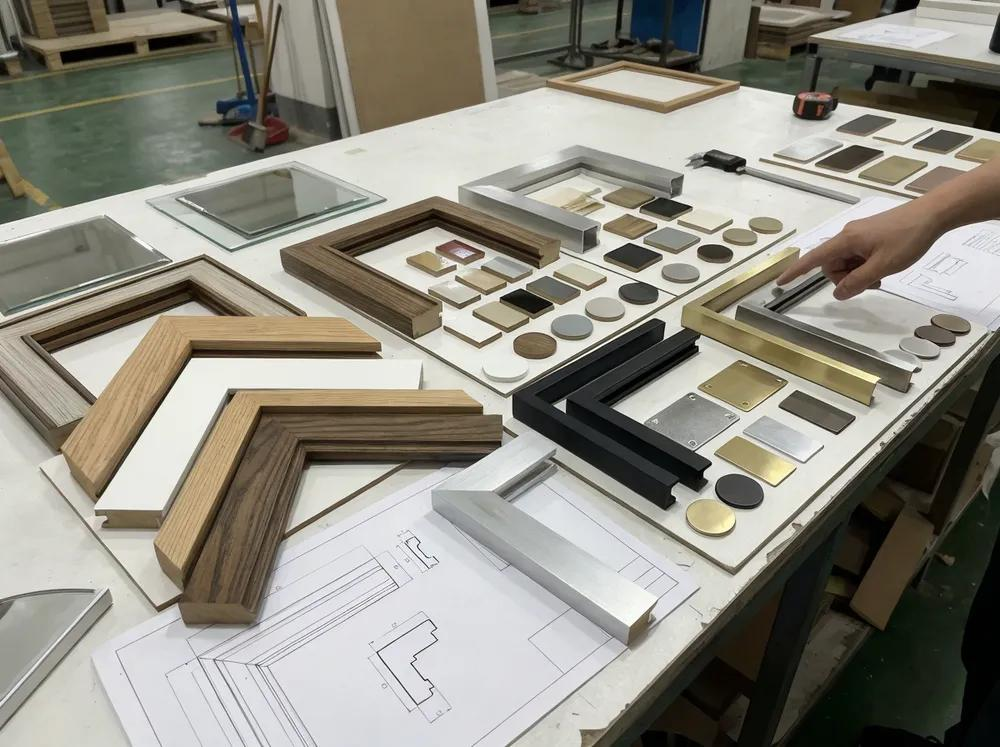
Level 2: Material and Finish Validation
Question: Do the selected materials look and feel right?
This stage focuses on individual material decisions.
Instead of manufacturing an entire product, the supplier may prepare:
- Small metal finish samples.
- Wood veneer samples.
- Upholstery fabric swatches.
- Ceramic glaze samples.
- Surface treatment panels.
Consider a gold decorative mirror.
The buyer may need to compare antique gold, champagne gold, and a darker bronze-like finish.
Small finish samples can help narrow the selection before the complete frame is manufactured.
The limitation is important: a small surface sample may not reproduce how a finish appears across a large curved or textured frame.
A final product sample may still be necessary to confirm the overall visual effect.
Level 3: Critical Component Validation
Question: Does the difficult part actually work?
This stage concentrates on the component most likely to create manufacturing or functional problems.
Examples include:
- A storage trunk hinge and lid-support mechanism.
- A metal connection between an upholstered stool and its legs.
- A mirror mounting bracket.
- A removable center structure for a serving stand.
Instead of rebuilding the entire product for every revision, the buyer and supplier can first examine the relevant component or assembly.
This can be particularly useful when the uncertainty concerns fit, movement, connection, or assembly.
However, component testing cannot automatically establish the performance of the complete product. Full-product validation remains necessary when overall stability, structural performance, or other integrated requirements are involved.
Level 4: Integrated Production-Intent Sample
Question: Can the complete product meet the approved requirements?
Only after the major design uncertainties have been resolved should the buyer move towards a more complete sample using the intended materials and manufacturing approach.
This is where the buyer evaluates the combined result:
- Overall appearance and dimensions.
- Material and finish consistency.
- Structural assembly.
- Functional requirements.
- Packaging configuration.
- Agreed inspection criteria.
The purpose is no longer to explore every possible design direction.
It is to confirm a sufficiently stable product definition for the next purchasing decision.
Match the Prototype to the Actual Risk
The following matrix helps buyers decide where to spend their sampling budget.
| Product Development Question | Appropriate First Evidence | When a Full Sample Is Needed |
|---|---|---|
| Mirror frame proportions | Drawings or visual mock-up | To confirm the complete appearance |
| Metallic finish selection | Physical finish panels | To review finish on the actual frame |
| Storage trunk hinge movement | Hinge and lid assembly | To validate the complete trunk |
| Upholstered stool fabric | Fabric swatches | To assess fabric on the finished product |
| Stool structural connection | Frame or leg-joint prototype | To evaluate the assembled stool |
| Export carton protection | Packaging mock-up and relevant tests | To verify the final packed configuration |
This is not a universal rule for every product.
The appropriate method depends on the design, materials, production process, and risk involved.
A 2017 research review published in Design Science at Cambridge University Press discusses how prototypes with deliberately reduced requirements can lower development time and cost during early-stage exploration. It also emphasizes that the prototype must still be designed carefully enough to produce useful information.
See Design Prototyping Methods: State of the Art in Strategies, Techniques, and Guidelines.
The practical lesson is simple: do not pay for a complete physical solution when a smaller test can reliably answer the current question.
One Prototype Round Should Have One Primary Decision
Another source of unnecessary sampling cost is changing too many things at once.
Imagine a storage trunk prototype with four proposed modifications:
- Different exterior fabric.
- Revised lid hinges.
- New metal clasps.
- A changed internal structure.
If all four changes are introduced together, a successful result may still leave the buyer uncertain about which changes caused the improvement.
If the result fails, identifying the source of the problem becomes even harder.
A better approach is to define the main variable being tested in each round.
For example:
Round 1: Confirm the exterior material and colour direction.
Round 2: Validate the lid mechanism and opening clearance.
Round 3: Combine the approved materials and structure into an integrated sample.
This does not mean every product needs three separate samples. Related changes can be tested together when their interactions are understood.
The objective is to avoid paying for repeated samples that generate no clear learning.
Calculate the Real Cost of Sampling
The quoted sample fee is only one part of the development cost.
For a buyer managing several new products, the complete cost may include:
| Cost Component | What It Covers |
|---|---|
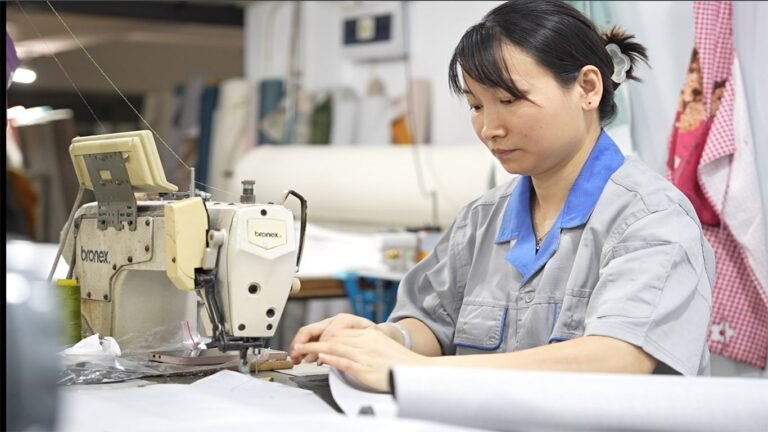
| Sample fabrication | Labour and manufacturing of the prototype |
| Materials and finishes | Special materials, small-batch finishing and material waste |
| Tooling and fixtures | Dedicated tools or temporary production arrangements, where applicable |
| Freight | Sample transportation and handling |
| Rework | Repeated production after design changes |
| Review delays | Additional coordination and approval time |
| Unused samples | Physical samples that become obsolete after revisions |
A simple calculation is:
Total Development Cost = Sample Fabrication + Materials + Tooling + Freight + Rework + Other Development Expenses
This is more useful than comparing suppliers solely on their first sample quotation.
A supplier offering a cheaper initial sample may still generate higher overall development costs if the product requirements are unclear or revisions are poorly managed.
Conversely, a more expensive technical prototype may be justified if it resolves a significant structural uncertainty.
Create a Sample Decision Card
One practical way to improve supplier evaluation is to prepare a short decision card before approving each sampling request.
| Field | Required Information |
|---|---|
| Product reference | Model or development number |
| Main question | What uncertainty must this sample resolve? |
| Prototype level | Visual, material, component, or integrated |
| Acceptance criteria | What result will be considered acceptable? |
| Exclusions | What does this sample not validate? |
| Cost and lead time | Agreed sample fee and expected completion |
| Next decision | Proceed, revise, or stop |
The most important field may be the exclusions.
For example, a finish panel can confirm the colour and surface appearance of a particular material. It cannot confirm the structural strength of the finished product.
When the buyer and supplier understand the limits of each sample, there is less room for misunderstanding.
When Should Buyers Stop Developing a Product?
Not every attractive idea deserves another sample.
A buyer should reconsider further investment when:
- The expected retail price cannot support the proposed manufacturing cost.
- The design requires too many expensive modifications.
- The supplier cannot establish a workable production method.
- The target market or intended customer remains unclear.
- Repeated revisions are not improving the product against agreed criteria.
This is an important part of prototype cost control.
Stopping an unsuitable project early can be a better commercial decision than continuing simply because money has already been spent.
What Buyers Should Expect From a Development Partner
A useful home décor product development discussion should begin before the sample is made.
Buyers should expect the supplier to help identify which details need physical validation, which can be reviewed through drawings or material samples, and which require a complete product prototype.
Teruier works with international buyers across decorative mirrors, upholstered furniture, storage products, and tabletop accessories.
Its product development discussions can cover design references, material selection, construction, sampling requirements, and manufacturing feasibility.
The specific prototype method, sampling charges, tooling requirements, and development schedule need to be agreed for each project.
The objective is not to reduce sample quality. It is to ensure that each development expense produces useful information for the next decision.
FAQ
Does prototype cost control mean making cheaper samples?
No. It means selecting the appropriate prototype method for the question being tested. Some early decisions can be evaluated through simple mock-ups, while structural or functional requirements may need more complete prototypes.
Can buyers approve a product using only 3D renderings?
Renderings are useful for visual exploration, but they cannot replace physical validation of material properties, construction, assembly, and other requirements that depend on the actual product.
Should every product go through four prototype stages?
No. The four levels are a decision framework, not a mandatory sequence. An existing catalog product may need only limited confirmation, while a completely new construction may require several stages.
How can buyers reduce unnecessary sample revisions?
Define the primary question, acceptance criteria, and scope of each sample before production. Record feedback clearly and avoid introducing unrelated changes without understanding their impact.
Make Every Sample Count With Teruier
Successful product development is not measured by how many samples a supplier can make.
It is measured by how efficiently the buyer and manufacturer turn uncertainty into reliable product decisions.
Teruier supports international buyers with product selection, material discussions, sampling, and manufacturing coordination across home décor categories.
Contact Teruier with your product concept, target cost, and development requirements to discuss an appropriate sampling approach and wholesale opportunities.