Why brass, chrome, bronze and silver don’t have to match — and why the fear of mixing finishes may be holding your home décor collection back.
For years, interior design seemed to follow one simple rule.
If your kitchen handles were brass, your light fittings should be brass. If your mirror had a gold frame, the decorative accessories should probably be gold too.
Everything had to match.
It was safe, predictable and easy to shop for.
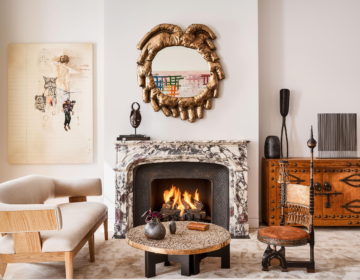
But look at some of the more interesting interiors appearing in design publications today. You may find a polished chrome table beside an antique brass lamp, a bronze sculpture on a marble console, or a silver decorative bowl sitting among warm wooden accessories.
And somehow, it works.
So here is an uncomfortable question:
Have we been confusing coordination with uniformity?
A room does not necessarily look more sophisticated because every metal finish is identical. Sometimes, making everything match removes precisely the contrast that gives a space character.
1. The Matching-Metal Rule Is Losing Its Authority
The preference for matching finishes has understandable origins.
A consistent metal finish makes purchasing easier. It simplifies bathroom fittings, kitchen hardware and coordinated furniture collections.
For retailers, selling matching products can also reduce the difficulty of presenting a complete range.
But design preferences are changing.
In its November 18, 2026 coverage, Veranda interviewed interior designers who support mixing different metals within the same space.
The argument is that contrasting finishes can make an interior feel more collected, rather than looking as though everything was purchased in one shopping trip.
House & Garden’s 2026 design review also highlighted the renewed interest in chrome and silver, alongside continued use of warmer brass and bronze.
This is not simply a replacement of gold by silver.
It is an expansion of the available design vocabulary.
The interesting interiors are increasingly those that combine finishes with intention.
2. Why Does Mixing Metals Sometimes Look Expensive — and Sometimes Look Terrible?
There is a difference between a deliberate contrast and an accidental mismatch.
Consider two examples.
Room A:
A brass mirror, gold coffee table, gold lamp, gold candleholders and gold decorative accessories.
Everything matches.
But the room may feel visually repetitive.
Room B:
A warm brass mirror, a brushed silver tabletop accessory, a dark bronze sculpture and natural wood furniture.
The finishes are different, but the materials create contrast and depth.
Room B may feel more personal because the objects appear to have been selected individually rather than purchased as a complete matching set.
However, simply combining every available metal is not a design strategy.
Too many competing finishes can create visual noise.
The objective is to establish a relationship between materials, not to eliminate every difference.
3. The Three-Finish Approach: A Useful Starting Point
There is no universal formula for mixing metals, but a practical approach is to select one dominant finish and introduce one or two supporting finishes.
For example:
| Role | Possible finish | Function |
|---|---|---|
| Dominant | Brushed brass | Establishes warmth |
| Supporting | Polished chrome | Introduces contrast |
| Accent | Dark bronze | Adds depth |
This is a styling framework, not a mandatory industry standard.
The dominant finish might appear on larger furniture details or architectural elements.
The supporting finish can appear on smaller decorative objects.
The accent finish can be reserved for a sculpture, tray or occasional accessory.
The important point is distribution.
If every metal finish is concentrated in one corner of the room, the arrangement can look accidental.
If the finishes appear in different areas with a consistent visual relationship, the room feels more intentional.
4. Silver Is Back, but It Doesn’t Have to Fight With Gold
One of the more interesting developments in 2026 is the renewed visibility of cooler metals.
For several years, warm brass, champagne gold and bronze dominated many home décor collections.
Now chrome, polished nickel, stainless steel and silver-toned accessories are receiving more attention.
Homes & Gardens’ February 2026 coverage of designer Shea McGee’s silver styling shows how cooler metallics can be introduced alongside natural wood, marble and warm neutral interiors.
This is important because silver does not have to make a room feel cold.
A chrome accessory on a warm wooden table can create a fresh contrast.
A silver decorative bowl beside a cream ceramic vase can introduce a more contemporary character.
A brushed nickel mirror frame can work with warmer furniture finishes without requiring every surrounding accessory to change.
The success comes from the relationship between the materials.
Not from forcing them into identical colours.
5. Mixed Materials Matter More Than Matching Colours
Metal finishes are only one part of the story.
A more interesting interior often combines several different materials.
Think about:
- Natural wood with brushed metal.
- Marble with polished chrome.
- Ceramic with antique brass.
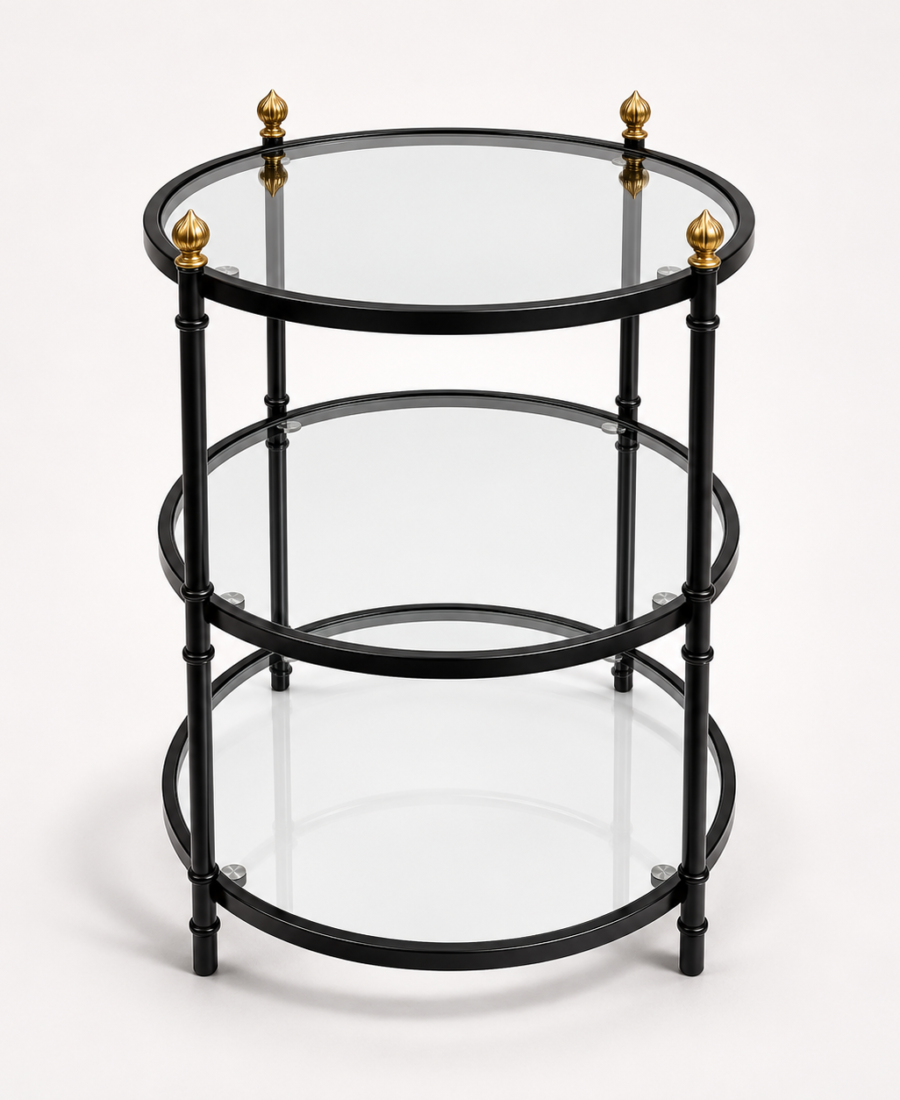
- Glass with dark bronze.
- Textured upholstery with metal furniture details.
Each material contributes a different visual and tactile quality.
Wood introduces warmth.
Stone adds natural variation and visual weight.
Metal introduces reflection and structure.
Ceramics provide colour, texture and sculptural form.
Glass creates transparency and lightness.
The combination can produce a richer interior than using the same material repeatedly.
This is one reason mixed material home decor has become an important consideration for product development.
The opportunity is not to combine materials simply because they are different.
It is to understand how their properties, colours and finishes complement one another.
6. The Coffee Table Is the Easiest Place to Experiment
You do not need to renovate a kitchen or replace every piece of furniture to experiment with mixed finishes.
Start with a tabletop.
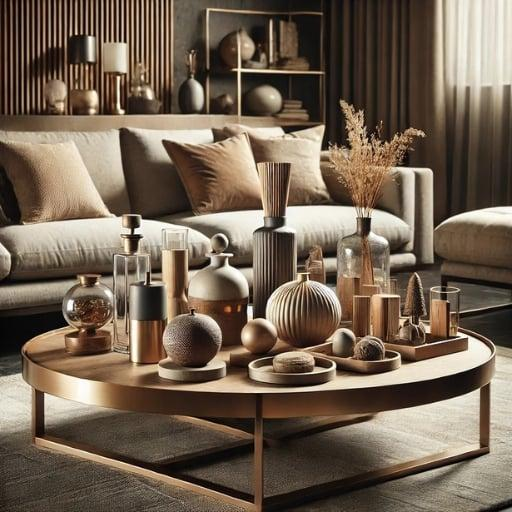
Imagine a coffee table with:
- A natural wood or marble surface.
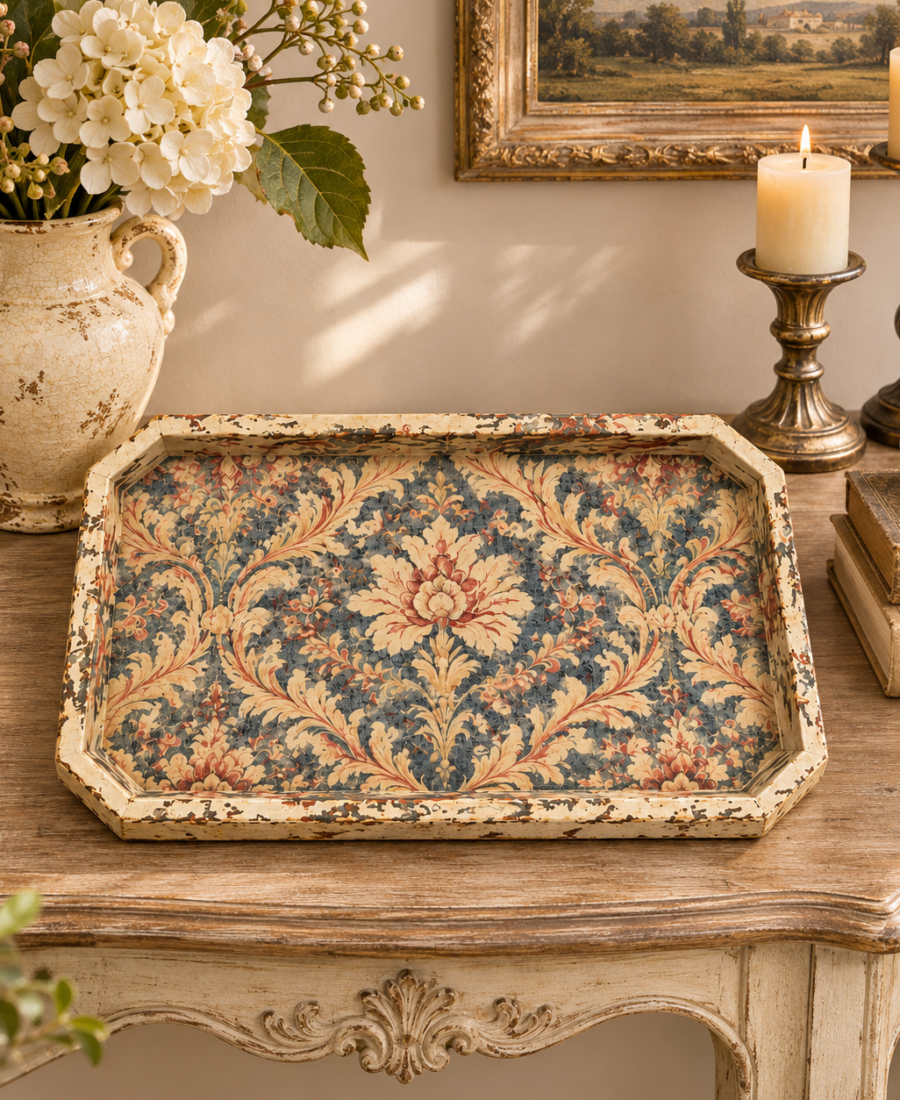
- A brushed brass decorative tray.
- A small silver-toned bowl.
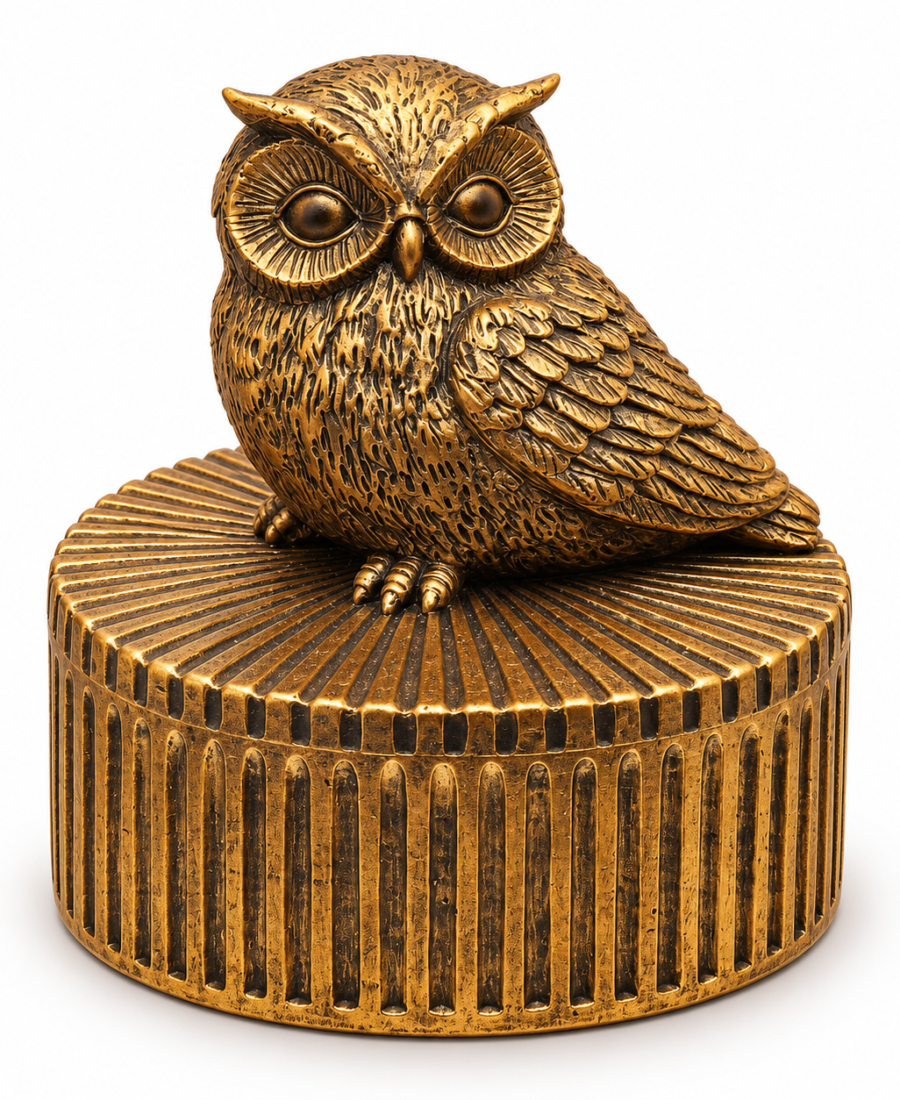
- A dark bronze sculpture.
- A ceramic vase with a warm matte glaze.
Each object has its own material identity.
Together, they create a layered arrangement.
The same idea can work on a console, dining table or bedside surface.
For retailers developing tabletop decor wholesale assortments, this creates an interesting opportunity.
Instead of selling a collection in which every product has the same metal finish, consider products that work together through a shared design direction.
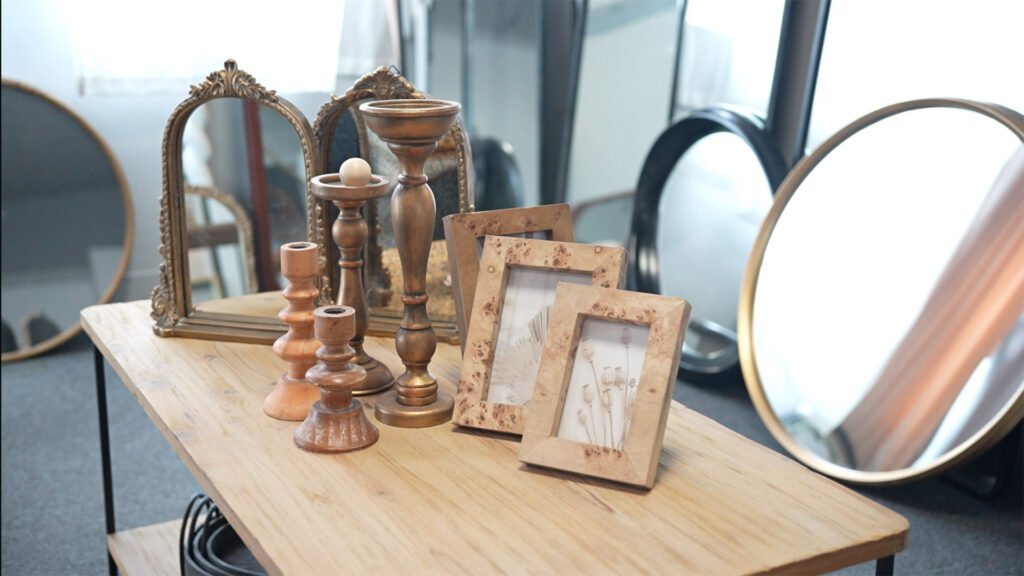
A tray does not need to match a candleholder exactly.
A decorative bowl does not need to use the same finish as the mirror frame.
They need to look appropriate together in the intended setting.
Teruier explores this approach in Tabletop Decor: How German Buyers Build a Coherent, Retail-Ready Category.
The article explains why a tray, vase, candleholder and decorative accent should have different functions while sharing a coherent material and styling language.
7. The Manufacturing Challenge: Similar Colours Don’t Always Mean Identical Finishes
There is an important distinction between interior styling and product manufacturing.
A designer may ask for a coordinated champagne-gold appearance across several products.
But those products may use completely different materials and manufacturing processes.
Consider three items:
A metal mirror frame
The finish may be produced through electroplating, coating or another metal-finishing process.
A decorative ceramic object
Its metallic appearance may come from a glaze or surface treatment.
A metal tray
Its finish may be brushed, polished, plated or powder-coated, depending on its construction.
Even if all three are described as champagne gold, their appearance will not necessarily be identical.
Reflectivity, substrate, texture and lighting all influence the final result.
This is why professional buyers should distinguish between two requirements:
- Exact finish matching.
- Coordinated finish compatibility.
The first requires a much tighter specification and may not be realistic across different materials.
The second allows products to share a visual direction while retaining the natural characteristics of their individual materials.
Teruier discusses this challenge in Global Home Décor Sourcing: One Supplier, Different Product Controls.
The article explains why a gold mirror frame, a metal furniture leg and a metallic ceramic glaze should not automatically be expected to look identical.
For buyers, this distinction can prevent unnecessary sample revisions and unrealistic production expectations.
8. How Retailers Can Build a More Interesting Mixed-Material Collection
A coordinated collection does not need to use one finish everywhere.
Consider a hypothetical tabletop assortment.
| Product | Material direction | Design role |
|---|---|---|
| Decorative tray | Brushed warm metal | Functional anchor |
| Ceramic vase | Matte mineral glaze | Soft visual contrast |
| Decorative bowl | Polished silver-tone metal | Reflective accent |
| Sculpture | Dark bronze-tone finish | Statement piece |
| Natural stone accessory | Marble | Material depth |
The collection has a consistent visual direction without making every product look the same.
This can be particularly useful for retailers who want to move beyond generic matching accessories.
The buyer can select a few products with different retail roles and create a more expressive display.
For a wider approach to collection building, see From One Mirror to a Coordinated Home Décor Collection.
It demonstrates how a lead product can establish the material and finish language for complementary products across mirrors, storage, accent furniture and tabletop accessories.
9. Five Questions Buyers Should Ask Before Approving Mixed-Material Products
A visually attractive combination still needs to work commercially.
Before approving a new mixed-material collection, consider five questions.
1. Are the materials genuinely compatible?
Check how different materials interact in terms of weight, structure, finish and intended use.
2. Is the finish direction clear?
Use approved physical references rather than relying only on descriptions such as gold, silver or bronze.
3. Does each product have its own purpose?
A collection should not contain several objects that perform the same decorative role without offering meaningful differences.
4. Can the products be reproduced consistently?
Different production processes require different quality-control criteria.
5. Can the collection be packaged and shipped safely?
Glass, ceramics, stone and metal have different protection requirements. Combined visual styling does not automatically mean combined packaging is practical.
These questions help transform a design trend into a workable wholesale assortment.
Frequently Asked Questions
Can you mix gold and silver in the same room?
Yes. Gold and silver can work together when their placement, proportions and surrounding materials create a coherent visual relationship. A dominant finish with smaller contrasting accents is a useful starting point.
Is mixing metals still fashionable in 2026?
Yes. Design coverage in 2026 has highlighted renewed interest in chrome, silver, brass and bronze combinations. The broader direction is toward more layered and individual interiors rather than strict finish uniformity.
How many metal finishes should a room have?
There is no fixed rule. For a starting point, use one dominant finish and one or two supporting finishes. Smaller spaces may benefit from a more restrained combination.
What materials work well with mixed-metal home décor?
Natural wood, marble, stone, ceramics, glass and textured upholstery can all work with metallic finishes. Their compatibility depends on colour, texture, proportion and the intended interior style.
What should wholesale buyers consider when sourcing mixed-material home décor?
Buyers should review material specifications, finish references, construction, sample consistency, product roles, packaging requirements and the commercial relationship between individual SKUs.
Final Thought: Coordination Is Good. Uniformity Is Optional.
There is nothing wrong with a matching collection.
A consistent finish can make a room feel calm, elegant and carefully planned.
But it should be a design choice, not a restriction.
The most interesting interiors often contain contrasts: old and new, warm and cool, smooth and textured, polished and matte.
The same principle applies to home décor products.
A tray does not have to match a mirror. A silver bowl does not have to match a brass sculpture. A natural stone accessory does not have to look like the furniture around it.
They simply need to belong in the same visual conversation.
The future of layered interiors is not about making everything match. It is about making different things work together.
Teruier works with international home décor retailers, importers, brands and project buyers on decorative mirrors, metal accessories, tabletop décor, mixed-material products and coordinated collection development.
Explore our collections or contact Teruier to discuss product development and wholesale sourcing opportunities.