Why the decorative tray is becoming a test of good taste — and why retailers should stop selling clutter disguised as styling.
Look at a beautifully styled coffee table on Instagram.
There is a decorative tray. Inside it, a candle, a small vase, a stack of books, a ceramic object and perhaps a tiny bowl.
Everything looks perfectly arranged.
Now imagine actually living with that table.
Where do you put your coffee? Your laptop? The remote control? The snacks when friends come over?
Suddenly, the beautiful arrangement becomes something you have to move before using your own furniture.
Here is an unpopular opinion:
Some coffee tables are no longer designed for living. They are designed for photographs.
And decorative trays are sometimes part of the problem.
But that does not mean trays are unnecessary. In fact, a well-designed tray can be one of the most useful accessories in a living room.
The difference lies in understanding what a tray should do.
1. The Styling Trend Has Gone Too Far
Interior designers have long used trays to organize decorative objects.
The principle is simple: objects scattered across a table can look disconnected, while objects grouped within a tray appear intentional.
Recent design coverage has given this approach a name: trayscaping.
House Beautiful’s 2026 coverage describes trays as a way to create small, carefully composed displays using objects with different heights, materials and shapes.
Apartment Therapy has also explored how a decorative tray can transform a coffee table or kitchen surface without requiring a complete room makeover.
The idea works.
The problem begins when people confuse a styling arrangement with a functional living space.
A coffee table is not a museum display.
It should have room for a drink, a book, a plate or simply an empty surface.
If the tray occupies almost the entire table and is filled with accessories, it may have defeated its original purpose.
Good styling should make everyday living easier, not create another obstacle.
2. A Good Tray Organizes. A Bad Tray Collects Clutter.
Consider two different coffee tables.
Table A
A large tray filled with candles, decorative beads, books, artificial flowers and several small ornaments.
It looks complete, but there is little room left for everyday use.
Table B
A well-proportioned tray holding a small decorative bowl and one sculptural object.
The rest of the table remains open.
Which arrangement would work better in a real home?
For many households, Table B is the more practical choice.
A tray should establish a visual boundary. It gives a group of objects a defined place, making the surrounding surface feel more organized.
It should not become another storage container for things that have nowhere else to go.
For home décor buyers, this distinction matters.
The product should be attractive when empty, useful when occupied and easy to incorporate into different interiors.
3. The Shape of the Tray Matters More Than You Think
Rectangular trays remain versatile, but buyers should not assume that every coffee table needs another rectangle.
Different shapes create different visual effects.
Round trays
They soften angular furniture and work particularly well with circular or oval coffee tables.
Oval trays
They provide a longer display surface without the harder corners of a rectangle.
Organic-shaped trays
They can introduce a more expressive, sculptural element into contemporary interiors.
Geometric trays
They offer a cleaner architectural appearance and may work well with modern furniture and structured displays.
The shape should relate to the furniture underneath it.
A large rectangular tray on a small round table may feel awkward. A tiny round tray on a large coffee table may disappear.
Proportion is often more important than decoration.
4. Material Is What Makes a Simple Tray Feel Special
A tray does not need complicated decoration to become a desirable product.
Its material can provide most of its visual identity.
| Material | Visual character | Buyer consideration |
|---|---|---|
| Natural wood | Warm and relaxed | Grain, finish and surface protection |
| Metal | Modern or classic, depending on finish | Coating, edges and handling |
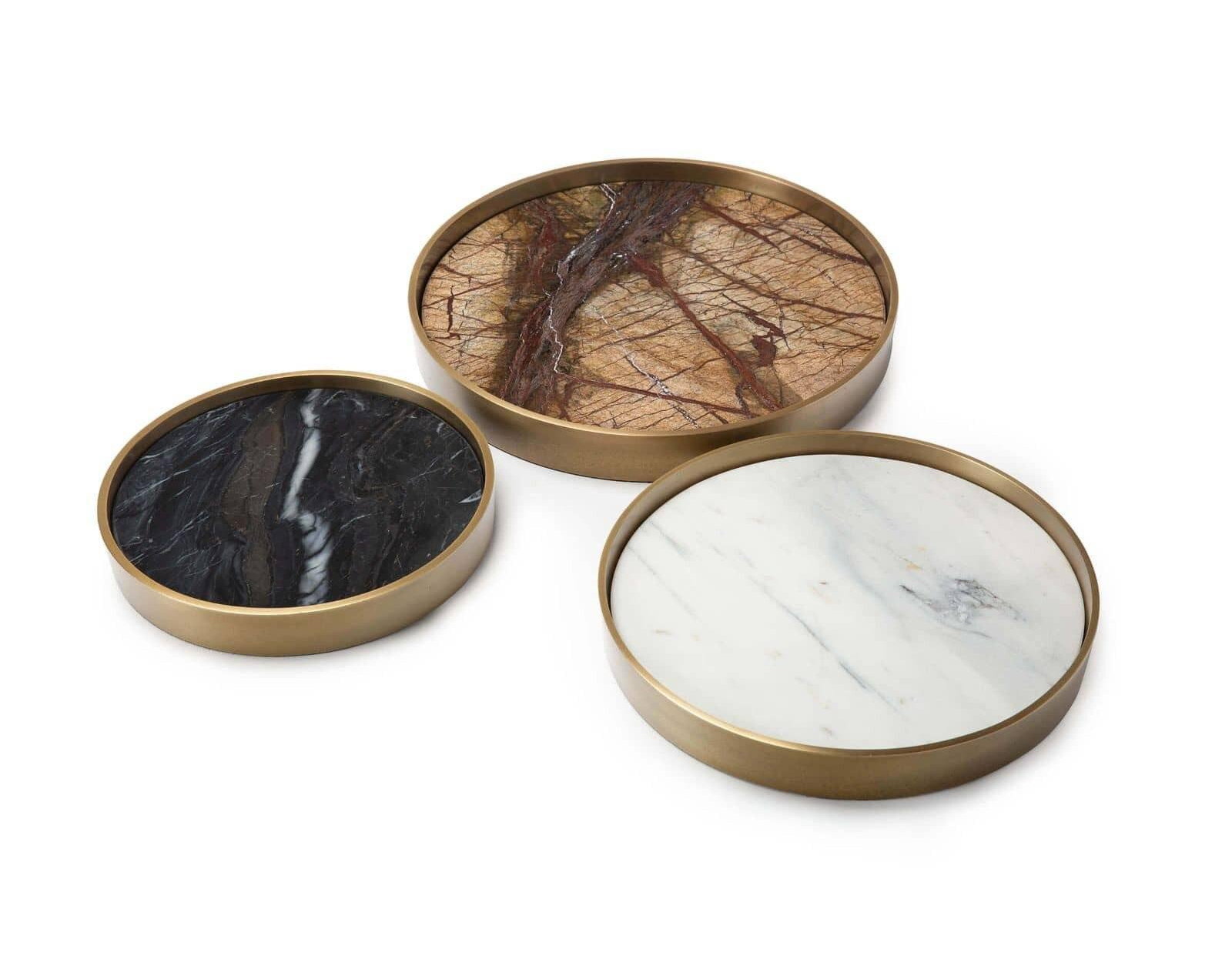
| Natural stone | Substantial and premium | Weight, variation and packaging |
| Resin | Flexible shapes and colours | Surface quality and consistency |
| Woven materials | Casual and tactile | Shape retention and cleaning |
| Mixed materials | More distinctive appearance | Joining details and production consistency |
The commercial opportunity is not simply to offer six materials.
It is to select materials that give each product a clear reason to exist.
A brushed metal tray may suit a contemporary console.
A natural wood tray may feel more comfortable in a relaxed living room.
A stone tray can introduce visual weight to a minimalist setting.
The material should support the product’s purpose rather than merely increase its price.
5. The Best Tray Is Not Necessarily the Most Decorative One
This is where buyers need to look beyond catalogue photography.
A tray may be beautiful but difficult to use.
Its handles may be too small. Its edges may be uncomfortable to grip. Its surface may show scratches easily. Its weight may make it inconvenient to move when fully loaded.
For a wholesale buyer, several practical details deserve attention.
Usable surface area
The exterior dimensions do not tell the whole story. Buyers should consider the actual space available for objects.
Edge design
A low edge creates a cleaner appearance, while a raised edge can help prevent objects from sliding off.
Handles
Integrated handles may improve usability, but their position and opening size need to be considered.
Weight
A heavier tray can feel substantial, but it may become inconvenient for everyday serving.
Surface maintenance
The finish should suit the intended use. A decorative display tray and a frequently used serving tray may have different requirements.
A product can serve both roles, but that should be an intentional design decision.
6. Why Retailers Should Sell the Setting, Not Just the Tray
A decorative tray rarely needs to be sold in isolation.
Its commercial value often becomes clearer when customers see how it works with other objects.
Consider three retail presentations.
The Everyday Coffee Table
A tray with a small bowl and a single decorative object.
The emphasis is on convenience and a clean, relaxed living space.
The Console Display
A larger tray paired with a vase, a candleholder and a small decorative sculpture.
The tray becomes the base of a more expressive arrangement.
The Entertaining Setting
A practical serving tray with enough space for glasses, snacks or small table accessories.
Here, functionality becomes the main selling point.
These are different consumer needs.
A retailer should not assume that one tray design can serve every purpose equally well.
For buyers planning a tabletop decor wholesale assortment, this creates an opportunity to select a small number of products with distinct roles rather than stocking many visually similar trays.
7. A Real Development Direction: When One Pattern Connects Different Products
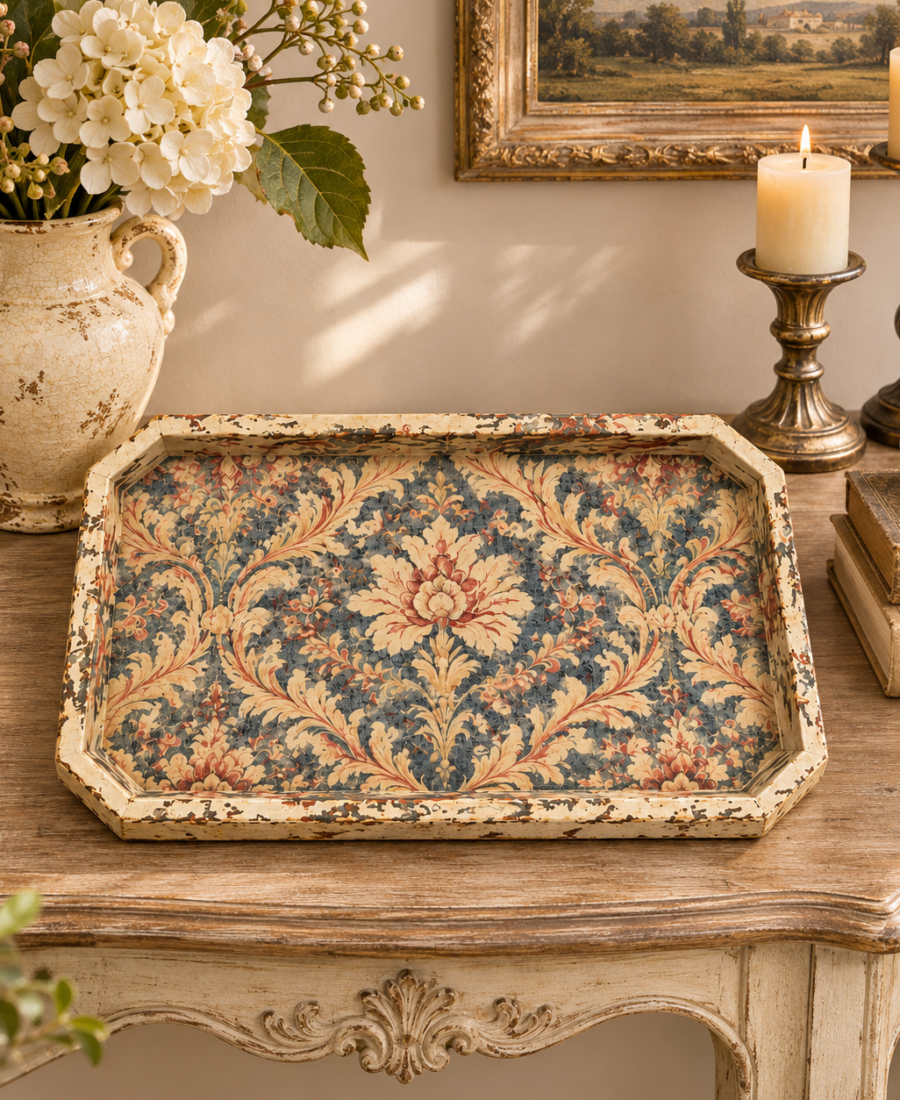
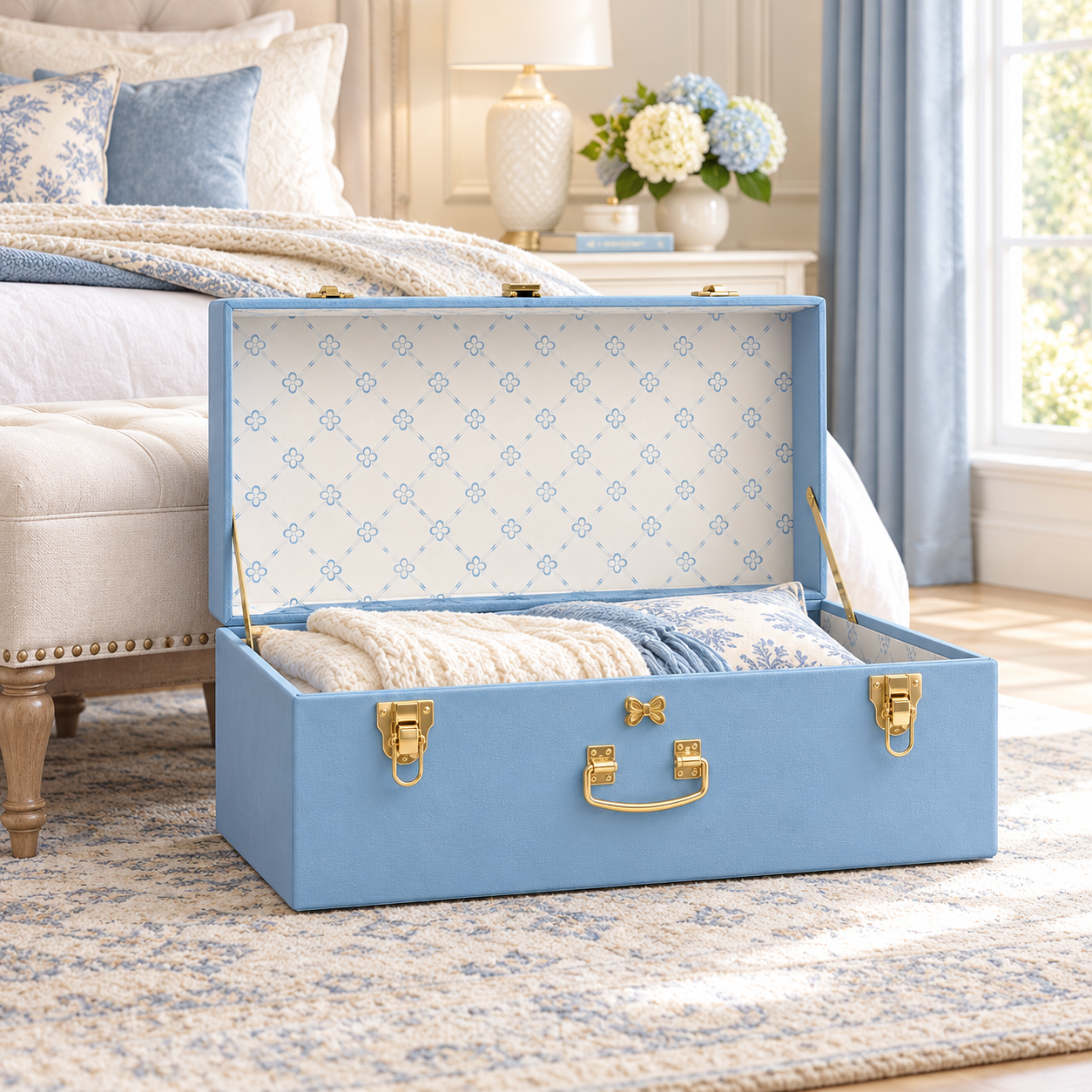
Teruier has been developing a striped home décor collection for 2027, exploring yellow, blue and red directions across trays, decorative storage and wall accessories.
The development process revealed an interesting challenge.
A pattern that looks attractive on a small storage box may become too dominant on a larger tray.
The team therefore reviewed stripe spacing, colour intensity and line variation to make the design more balanced across different product forms.
A later design review also replaced an earlier bowl concept with a more distinctive tray direction.
This is an important point for wholesale buyers.
A coordinated collection should not simply apply the same decoration to every product.
Each item has different proportions, functions and display requirements.
The visual language should connect the products, while the product design should remain appropriate for its own use.
You can read more about this development in Teruier’s 2027 Striped Storage and Wall Décor Collection.
8. What Should Buyers Look for in Decorative Trays Wholesale?
Before selecting a tray for a retail collection, buyers should ask five questions.
Does the shape suit the intended furniture?
A tray should be proportionate to the coffee table, console or countertop where it is likely to be used.
Is it designed for display, serving or both?
These uses have different requirements. Product descriptions should not promise serving suitability without confirming the material and construction are appropriate.
Does the material justify the retail positioning?
The finish, weight, texture and construction should support the intended price level.
Can it work with products already in the assortment?
A tray that coordinates with existing vases, candleholders and decorative objects may have more merchandising flexibility.
Can it be packed and shipped economically?
Large trays, delicate finishes, glass components and natural stone can introduce packaging and freight considerations.
The best product is not necessarily the most complicated.
It is the one whose design, function and retail position make sense together.
Frequently Asked Questions
What is a decorative tray used for?
Decorative trays can organize coffee tables, consoles, bedside tables and vanity surfaces. They can also be used for serving when their material and construction are suitable for that purpose.
What size decorative tray should retailers choose?
The size should correspond to the intended furniture and use. Buyers should consider usable interior dimensions rather than relying only on the outside measurements.
Are decorative trays still popular in 2026?
Recent design coverage continues to feature trays as both styling and organization tools. However, popularity varies by material, price point, retail channel and customer preferences.
Which materials are suitable for wholesale decorative trays?
Wood, metal, resin, natural stone and woven materials all offer different design and functional possibilities. The choice depends on the product’s intended use and retail positioning.
Can decorative trays be developed as part of a coordinated home décor collection?
Yes. Buyers can coordinate colours, patterns, materials and finishes across trays, decorative boxes, vases and other tabletop accessories. Each product should still retain a clear individual purpose.
Final Thought: Leave Some Space on the Table
A well-designed coffee table does not need to be full.
Neither does a decorative tray.
The best interiors understand that empty space is part of good design. It gives objects room to be appreciated and gives people room to live.
For retailers, this is an opportunity to move beyond selling trays as decorative containers.
Sell a useful surface. Sell a thoughtful material. Sell a product that helps people organize their homes without making them feel more crowded.
A tray should make a room feel more considered, not more complicated.
Teruier works with international home décor retailers, importers and brands on decorative trays, tabletop accessories and coordinated product development.
Contact Teruier to discuss wholesale decorative trays, product specifications and new collection development.