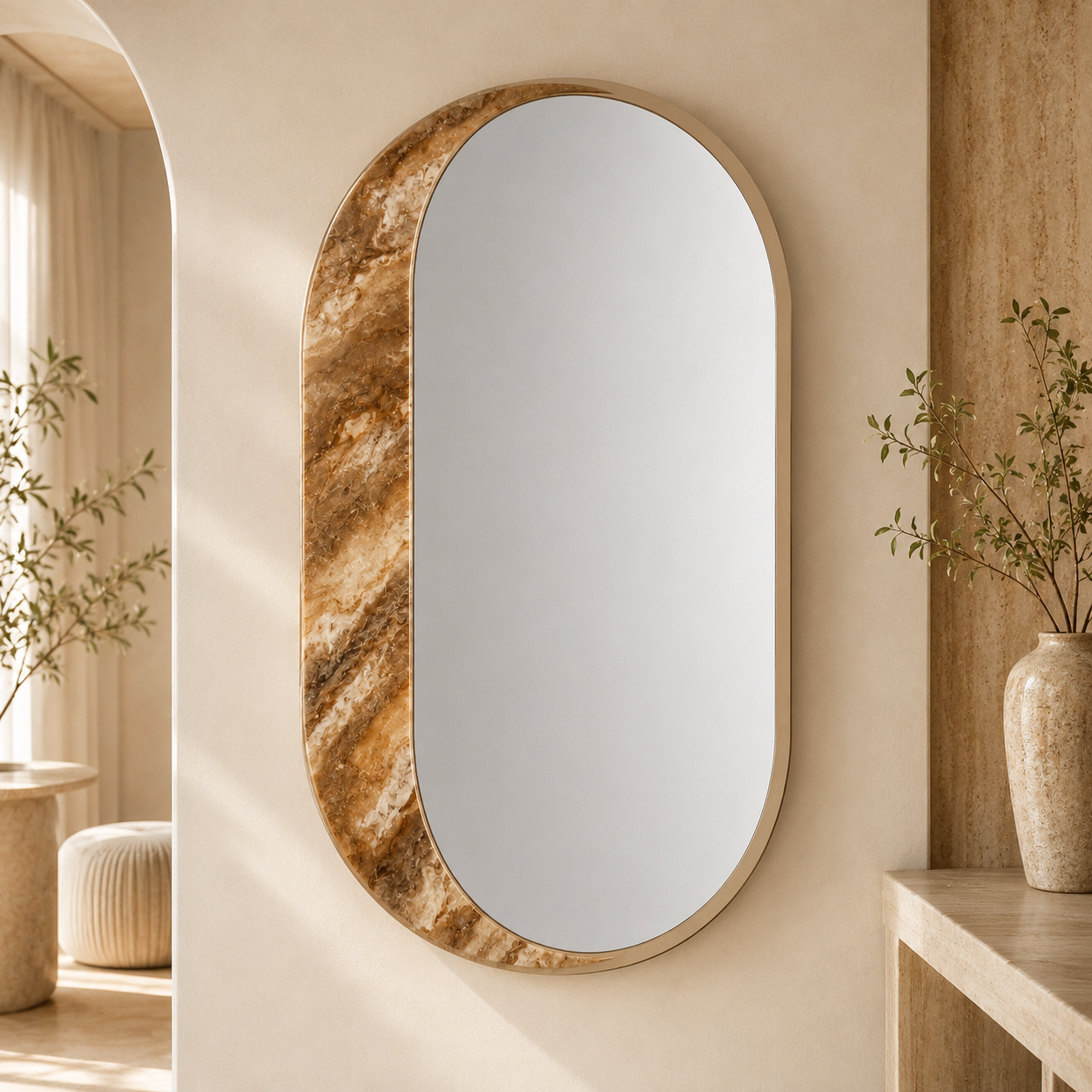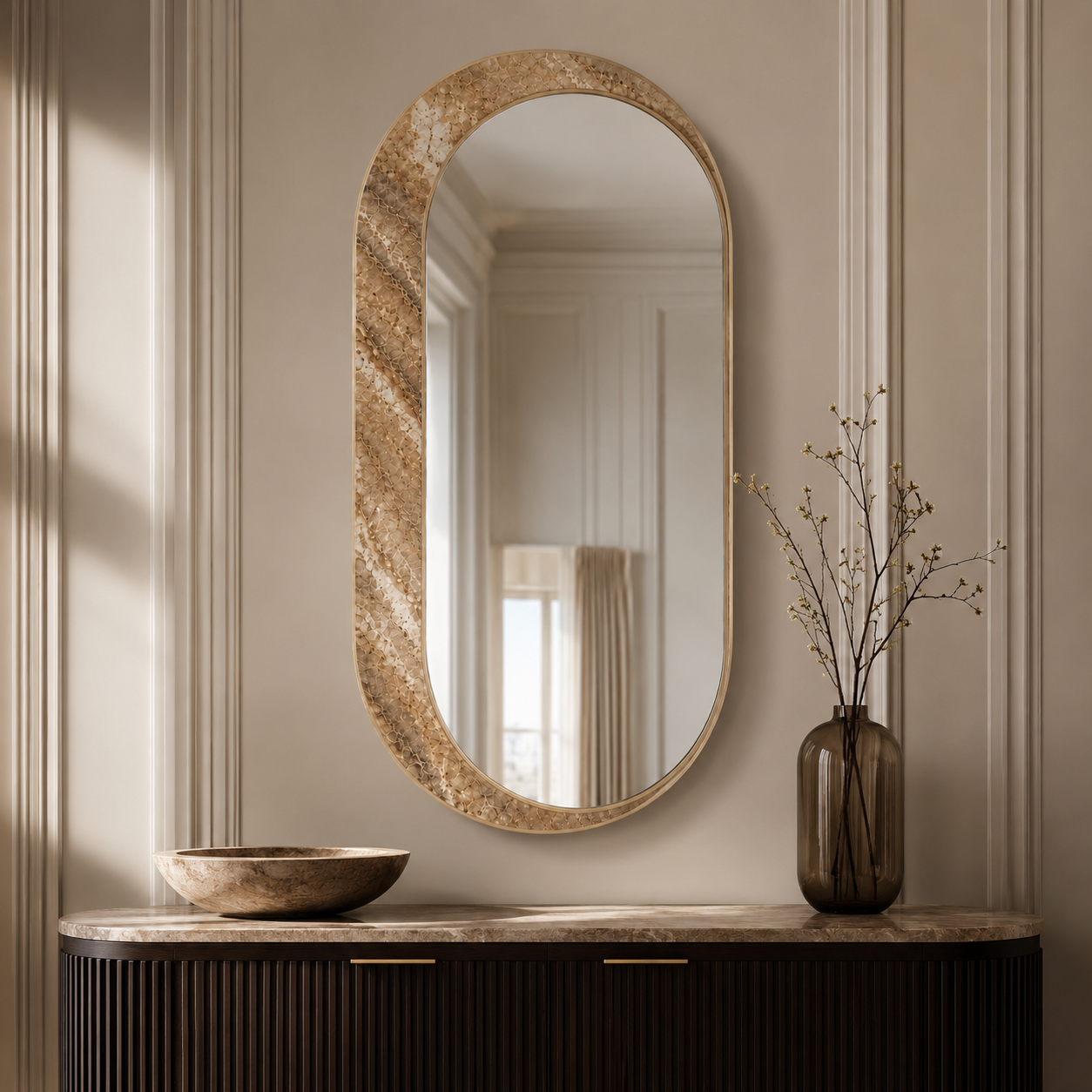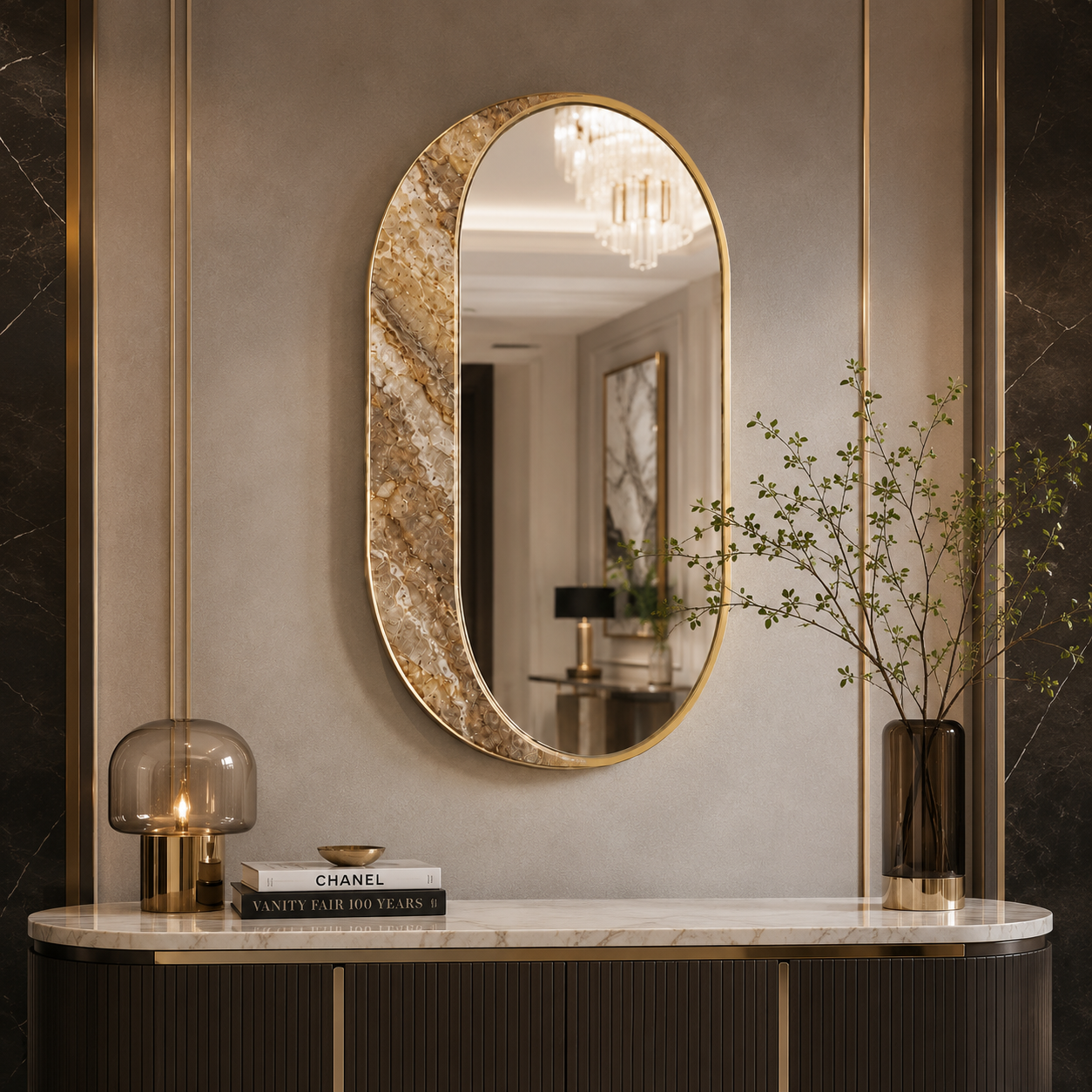
Two new Aurelia mirror designs explore a different approach to natural stone: using marble as an architectural feature rather than a conventional surrounding frame.
XIAMEN, CHINA — What if a natural marble mirror didn’t need a full marble frame to make an impression?
That question sits at the heart of Teruier’s latest work on its 2027 natural marble mirror collection.
Instead of surrounding the reflective surface with stone, two new designs in the Aurelia series place genuine marble only where it contributes most to the composition.
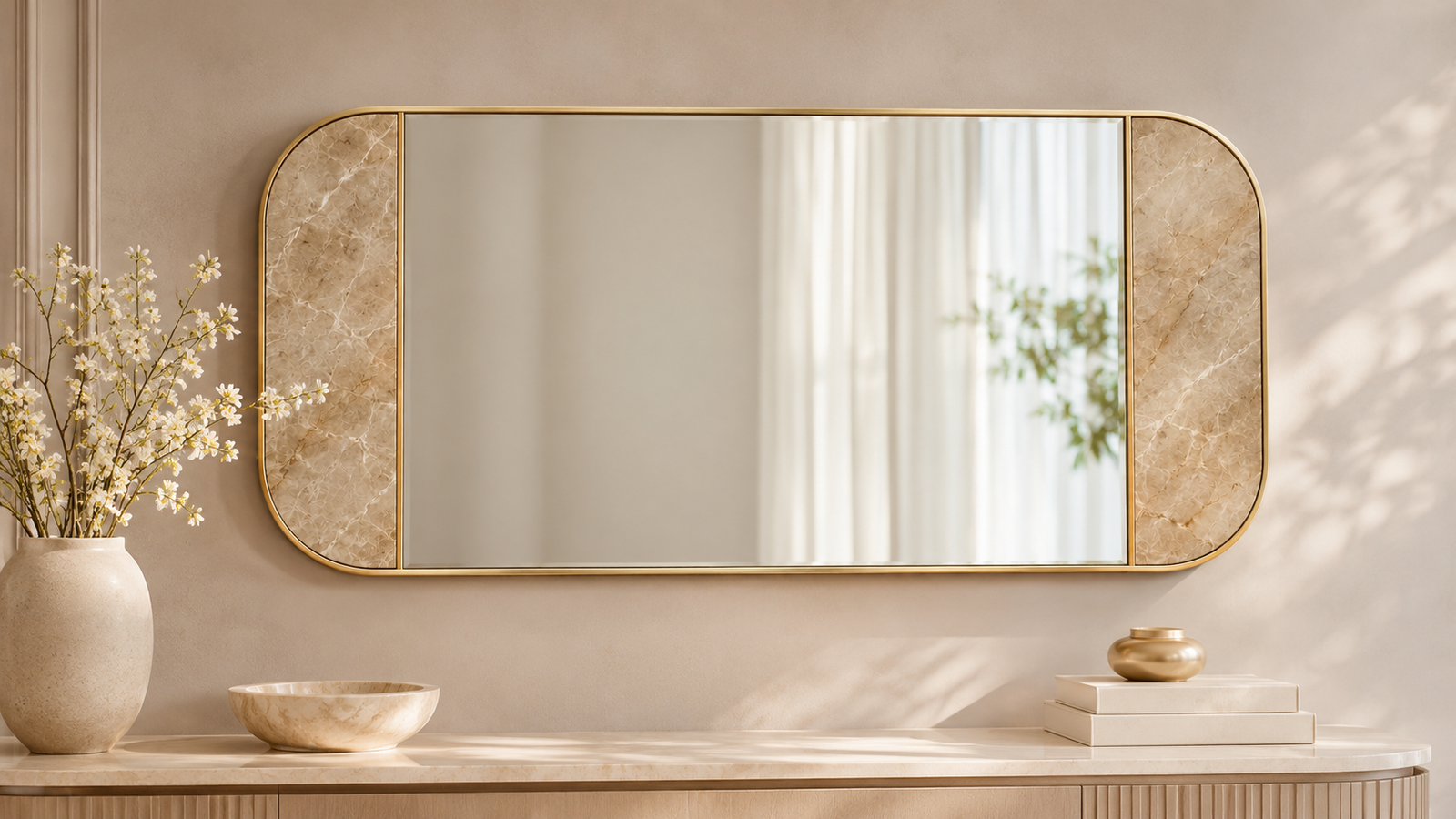
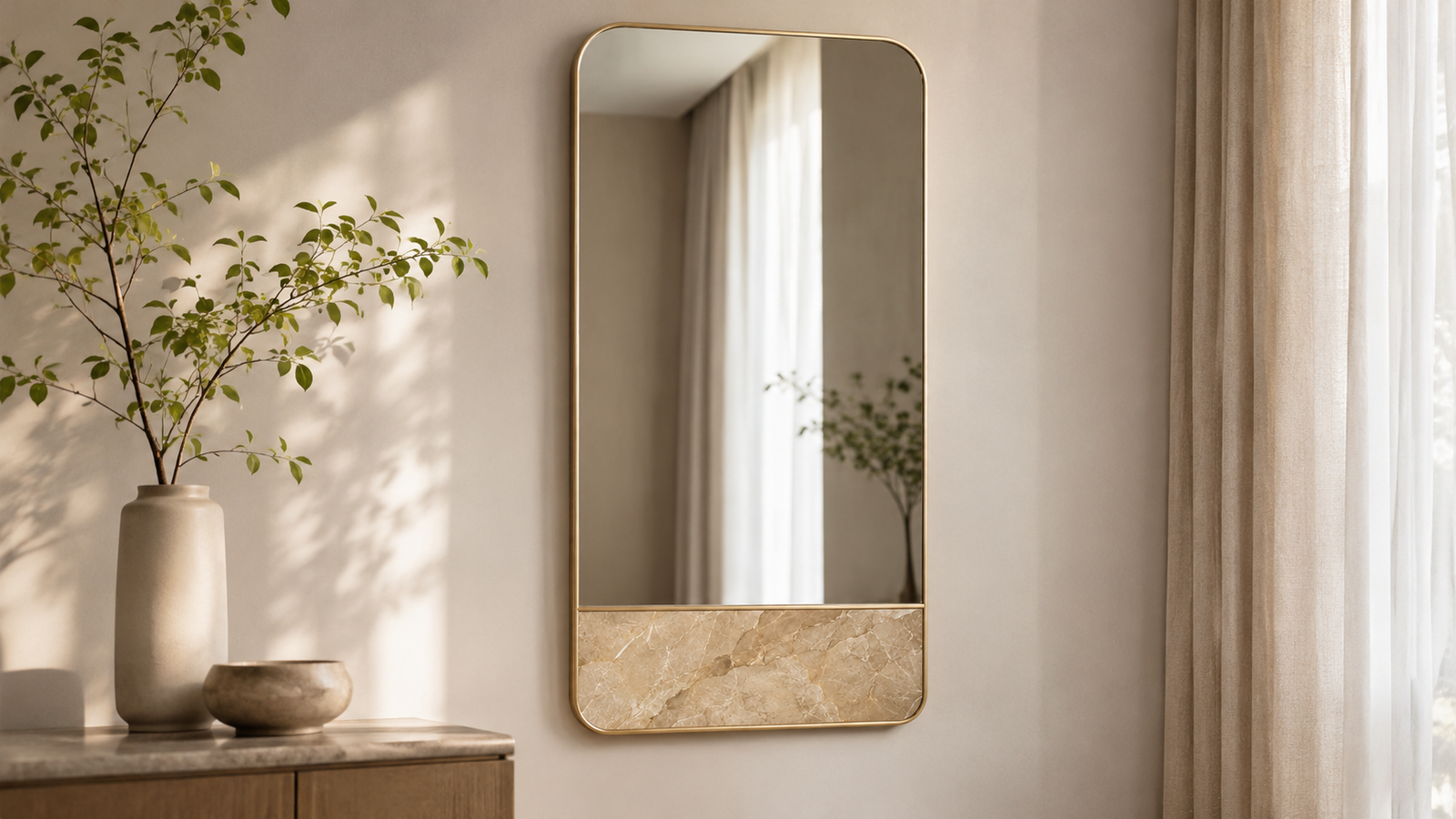
One uses marble at the opposite ends of a horizontal mirror. The other introduces a stone plinth beneath a vertical mirror.
The result is a different way of thinking about decorative mirrors — one that brings material character, visual balance and practical sourcing considerations into the same design conversation.
When the Material Becomes Part of the Architecture
Natural marble has long been associated with premium interiors. Its distinctive veining and mineral variation give each piece an individual character that manufactured finishes cannot reproduce exactly.
But using marble in a decorative mirror presents a design challenge.
A full stone surround can create a strong visual statement, yet it also increases material consumption, overall weight and packaging requirements.
Teruier explored another possibility: preserving the natural stone while changing its role.
In the Aurelia Horizon Natural Marble Console Mirror, identified as TMR27-NM06, two symmetrical marble modules sit at the left and right ends of a wide rectangular mirror.
The main size measures 1200 × 600 mm, creating a horizontal format suited to double vanities, entryway consoles and wider interior applications.
Rather than dominating the design, the marble elements frame the composition while leaving a generous central mirror surface.
A slim brushed champagne-gold profile provides a restrained transition between the materials.
A Different Solution for Vertical Spaces
The second design approaches the same material question from another direction.
The Aurelia Plinth Natural Marble Wall Mirror, TMR27-NM07, uses a vertical rounded-rectangle silhouette with natural marble positioned along the bottom.
With a principal size of 700 × 1100 mm, the mirror is intended for narrower wall areas, single vanities, bedrooms and dressing spaces.
The bottom marble module creates a visual connection to furniture surfaces and architectural finishes without surrounding the entire mirror in stone.
Together, the horizontal and vertical designs demonstrate how a shared material language can produce different products for different interior requirements.
What Buyers Should Look Beyond the Surface
For wholesale decorative mirror buyers, the amount of marble is only one part of the evaluation.
Natural stone brings practical considerations that do not apply in the same way to ordinary decorative frames.
Color and veining will vary between slabs. Stone edges require appropriate protection. Larger dimensions can affect weight, mounting requirements and export packaging.
That makes material placement a commercial decision as well as a design choice.
The two Aurelia designs use controlled marble sections, reinforced backing concepts, aluminum framing and concealed mounting arrangements.
These details are intended to support a more manageable product structure while retaining genuine natural stone as a defining material.
For importers and project buyers, the next steps include confirming acceptable stone variation, sample standards, required dimensions, packaging protection and the specifications needed for the intended market.
From a Mirror Design to a Coordinated Product Range
A retailer may need a horizontal mirror for a console furniture collection and a vertical version for a separate vanity program.
Using related marble treatments and metal finishes allows the two formats to share a recognizable design identity without becoming identical products.
This approach builds on Teruier’s earlier development of its 2027 decorative mirror collection, which explores coordinated proportions, warm materials and adaptable mirror formats for international retail channels.
It also extends the company’s previous work on natural marble mirror development, where the relationship between decorative stone, structural feasibility and export requirements formed a central part of the design discussion.
The introduction of NM06 and NM07 adds another direction to that work: using controlled material placement to create different silhouettes within a common product family.
A More Considered Approach to Natural Materials
The two designs illustrate a simple idea: premium materials do not always need to occupy the largest possible surface.
For Teruier, the development question is how material, proportion, structure and production requirements can work together.
For buyers, that means evaluating not only how a mirror looks in a room, but how it can be specified, customized and supplied as part of a broader assortment.
Teruier offers size, marble selection, metal finish and packaging customization options for the Aurelia designs, subject to the relevant technical and production review.
Explore the Aurelia natural marble mirror designs and discuss wholesale specifications, sampling requirements or custom development with Teruier.