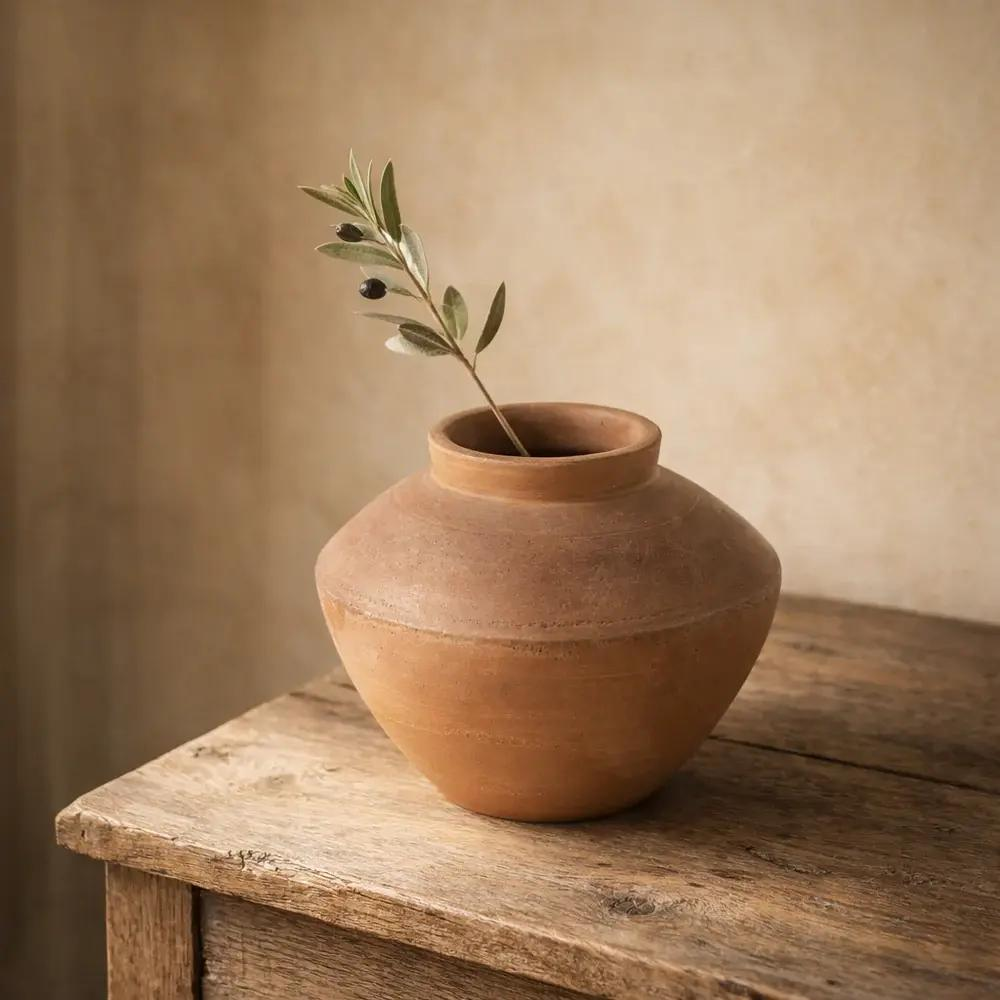
A terracotta vase looks beautiful on a wooden console. Its earthy colour, natural surface and slightly rustic character make it an attractive addition to a home décor collection.
But there is one question a buyer should ask before placing a wholesale order:
Can this vase actually hold water?
It sounds like a simple question. Yet a decorative vessel that absorbs moisture, develops water marks or leaks onto furniture can quickly become a customer complaint.
For buyers involved in terracotta vase sourcing, the distinction between a decorative object and a functional flower vase is more important than it first appears.
The product may look identical on a catalogue page. Its intended use, however, can require a very different specification.
A Vase Can Have Three Different Commercial Roles
Not every vase-shaped product is designed to perform the same function.
Before approving a new ceramic product, buyers should distinguish three common applications.
| Product Type | Intended Use | Main Requirement |
|---|---|---|
| Decorative vessel | Displayed with dried flowers or without flowers | Appearance, stability and surface quality |
| Functional flower vase | Holds fresh flowers and water | Water resistance and leak prevention |
| Planter or cachepot | Holds plants or an internal nursery pot | Drainage, moisture management and surface protection |
A decorative vessel does not automatically need to hold water.
A flower vase does.
A cachepot may use a separate internal container to protect the outer decorative body.
This distinction should appear in the product description, packaging information and purchasing specification.
It also helps retailers avoid selling a decorative object with expectations that its construction was never designed to meet.
Terracotta Is Not Automatically Waterproof
Terracotta is generally associated with fired clay, earthy red and brown tones, and an unglazed or naturally textured surface.
However, its water resistance depends on more than its appearance.
The University of Illinois Urbana-Champaign’s Preservation Self-Assessment Program explains that low-fired ceramics, including terracotta, can remain porous. Firing conditions influence porosity, while suitable vitrified glaze treatments can reduce the permeability of a ceramic body.
This means two products both described as terracotta may behave differently when exposed to water.
For buyers, four construction details deserve attention:
- Clay body: What ceramic body is being used?
- Firing: What firing process and material characteristics apply?
- Interior finish: Is the inside unglazed, glazed or otherwise treated?
- Construction: Are there cracks, joints or areas that could allow moisture to pass through?
The outside finish alone cannot answer these questions.
A beautiful matte exterior may hide an untreated interior surface.
For a useful introduction to the broader material considerations, see Teruier’s Materials Supply Chain: What German Buyers Should Check Before Saying “Let’s Customise It”.
The Inside of the Vase Matters More Than the Catalogue Photograph
Consider two terracotta-style vases with almost identical exterior appearances.
The first has an unglazed interior and is intended for dry decorative arrangements.
The second has a suitable interior glaze or protective lining and has been validated for holding water.
Visually, they may be difficult to distinguish.
Commercially, they are two different products.
Buyers should therefore ask suppliers to clarify the following options.
| Interior Construction | Potential Application | What to Verify |
|---|---|---|
| Unglazed interior | Dry decorative display | Whether water use is excluded |
| Glazed interior | Potential water-holding use | Glaze continuity and finished-product testing |
| Separate waterproof insert | Fresh flowers or protected display | Insert fit, stability and replacement |
| Fully treated ceramic body | Depending on material and construction | Water absorption and actual use performance |
A glaze is not an automatic guarantee.
Pinholes, cracks, crazing, incomplete coverage and damage around the base may still affect performance.
The actual finished product must be evaluated.
The Water Test: What Should Buyers Check?
A practical product approval process should include a defined water-use test when the product is intended to hold water.
This is a product-level screening process, not a substitute for a laboratory material test.
Step 1: Confirm the intended use
Decide whether the vase is designed for dry flowers, fresh flowers or use with an internal liner.
Do not leave this decision to the marketing team after production.
Step 2: Inspect the interior
Check the inner surface, bottom, rim and any visible joints.
Look for incomplete glazing, cracks, pinholes and other defects.
Step 3: Conduct a controlled water-holding test
Fill the approved sample to the agreed level.
Place it on a clean, dry inspection surface and observe it for the agreed test duration.
Check for:
- Water seepage through the body.
- Moisture around the base.
- Water marks on the supporting surface.
- Changes in the exterior finish.
- Moisture escaping through cracks or construction defects.
The test duration and acceptance criteria should be defined according to the intended application.
Step 4: Check the product after drying
Some moisture-related problems become more visible after the water has been removed.
Inspect for discolouration, surface marks, residue and changes in the finish.
Step 5: Record the approved result
Keep the approved sample, photographs, test conditions and product specification together.
The same requirements should be communicated to the production and inspection teams.
A successful test on one sample does not automatically guarantee that every production batch will behave identically.
Water Absorption and Leakage Are Two Different Tests
This distinction is important for professional ceramic decor wholesale buyers.
Water absorption testing evaluates how much water a ceramic material absorbs under specified test conditions.
A finished-vase water-holding test evaluates whether the complete product retains water without unwanted leakage or moisture transfer during its intended use.
They are related, but they do not answer exactly the same question.
ASTM C373-18(2023), for example, covers methods for determining water absorption and related properties of specified fired ceramic whiteware and ceramic tile products.
Its applicability to a particular decorative vase should be confirmed with the testing laboratory.
Buyers should not assume that a water absorption result alone proves that the complete vase is leakproof.
See the ASTM C373 standard.
The Base Can Create a Hidden Retail Problem
A vase may retain water successfully but still damage the surface underneath it.
Consider a terracotta-style vase placed on:
- A polished wooden console.
- A painted bedside table.
- A natural stone countertop.
- A lacquered retail display shelf.
If moisture transfers through the base or collects around the bottom, it may leave a ring or stain.
This is particularly relevant to unglazed ceramic surfaces.
Buyers should check:
- Whether the base is glazed or untreated.
- Whether the bottom surface is flat and stable.
- Whether a protective foot or pad is required.
- Whether the product needs an internal waterproof insert.
- Whether the care instructions explain its intended use.
The correct solution depends on the product.
A protective pad may help prevent surface scratches, but it should not be treated as a substitute for waterproof construction.
Terracotta, Glazed Earthenware and Stoneware: Which Should Buyers Choose?
There is no universally superior material. The right choice depends on the intended product position.
| Material Direction | Visual Character | Main Buyer Consideration |
|---|---|---|
| Natural terracotta | Earthy, warm and tactile | Porosity and moisture management |
| Glazed earthenware | Colour-rich and versatile | Glaze continuity and surface durability |
| Stoneware | Denser and more substantial | Actual water absorption and finish |
| Ceramic with internal liner | Flexible decorative exterior | Insert fit, stability and additional cost |
For a rustic home décor collection, natural terracotta may offer the strongest visual appeal.
For a retail range requiring more predictable water-holding performance, a suitably glazed ceramic body or separate liner may be worth considering.
The decision should be made according to the product’s intended function rather than its material name alone.
For more on finish selection and retail positioning, see Ceramic Decor for German Retailers: Building a Collection with Finish, Motif and Margin.
What Should Be Included in a Terracotta Vase Specification?
A professional product specification should not simply state:
“Terracotta vase, natural finish.”
That description is insufficient for a wholesale order.
A more useful specification includes:
| Specification | Information Required |
|---|---|
| Product function | Decorative, water-holding or planter/cachepot |
| Ceramic body | Material and relevant construction details |
| Exterior finish | Natural, matte, glazed or textured |
| Interior treatment | Unglazed, glazed or lined |
| Water performance | Tested, not tested or not intended for water |
| Base | Surface treatment and protective requirements |
| Dimensions | Height, opening, body width and base diameter |
| Care instructions | Appropriate cleaning and use guidance |
| Packaging | Internal protection and export carton configuration |
This is where a proper product document becomes commercially important.
Teruier’s Home Decor Spec Sheets: Where Pretty Products Go to Become Real Business explains why product specifications should connect materials, intended use, dimensions and packaging with actual buying decisions.
A clear specification helps prevent misunderstandings between the buyer, supplier, inspection team and retailer.
What Teruier’s Ceramic Range Can Teach Buyers
Teruier’s ceramic range includes different silhouettes, surface treatments and decorative directions.
For example, the Siena Ribbed Sand Ceramic Vase demonstrates how a textured surface and neutral colour direction can create a distinctive tabletop product.
The wider Teruier Decor Collection also gives buyers a reference for comparing different ceramic forms and decorative styles.
These product references should not be interpreted as confirmation of a terracotta body or water-holding performance.
For any selected model, buyers should confirm the actual material, interior construction and intended use against its approved product specification.
This is an important part of working with a handcrafted ceramic decor supplier: the product story should be supported by clear technical information.
A natural-looking surface creates visual appeal. A properly defined specification makes that appeal commercially usable.
FAQ
Can a terracotta vase hold fresh flowers?
Some can, but not all. Buyers should confirm the ceramic body’s water resistance, interior treatment and finished-product performance before approving fresh-flower use.
Does an interior glaze make a terracotta vase waterproof?
A suitable continuous glaze can significantly reduce water permeability. However, the complete product still needs inspection and appropriate water-holding validation.
Can an unglazed terracotta vase be sold for decorative use?
Yes. It can be positioned for dried flowers, artificial stems or standalone display, provided the product description clearly communicates its intended use and care requirements.
What is more important: water absorption or a leakage test?
They serve different purposes. Material absorption testing helps evaluate the ceramic body, while a finished-product test checks whether the actual vase retains water under the intended conditions.
Develop Ceramic Products With Clearer Specifications
A successful ceramic product needs more than an attractive shape and finish.
Its material, intended use, surface treatment and functional performance must work together.
Teruier works with international home décor buyers on ceramic product selection, material discussions, sample development, product specifications and manufacturing coordination.
Contact Teruier to discuss your preferred ceramic styles, intended product applications, material requirements and wholesale development plans.