Customisation Sounds Elegant. Supply Chain Reality Is Less Polite.
Every interior designer knows the sentence:
“Could we just change the size or finish?”
It sounds small. Almost harmless.
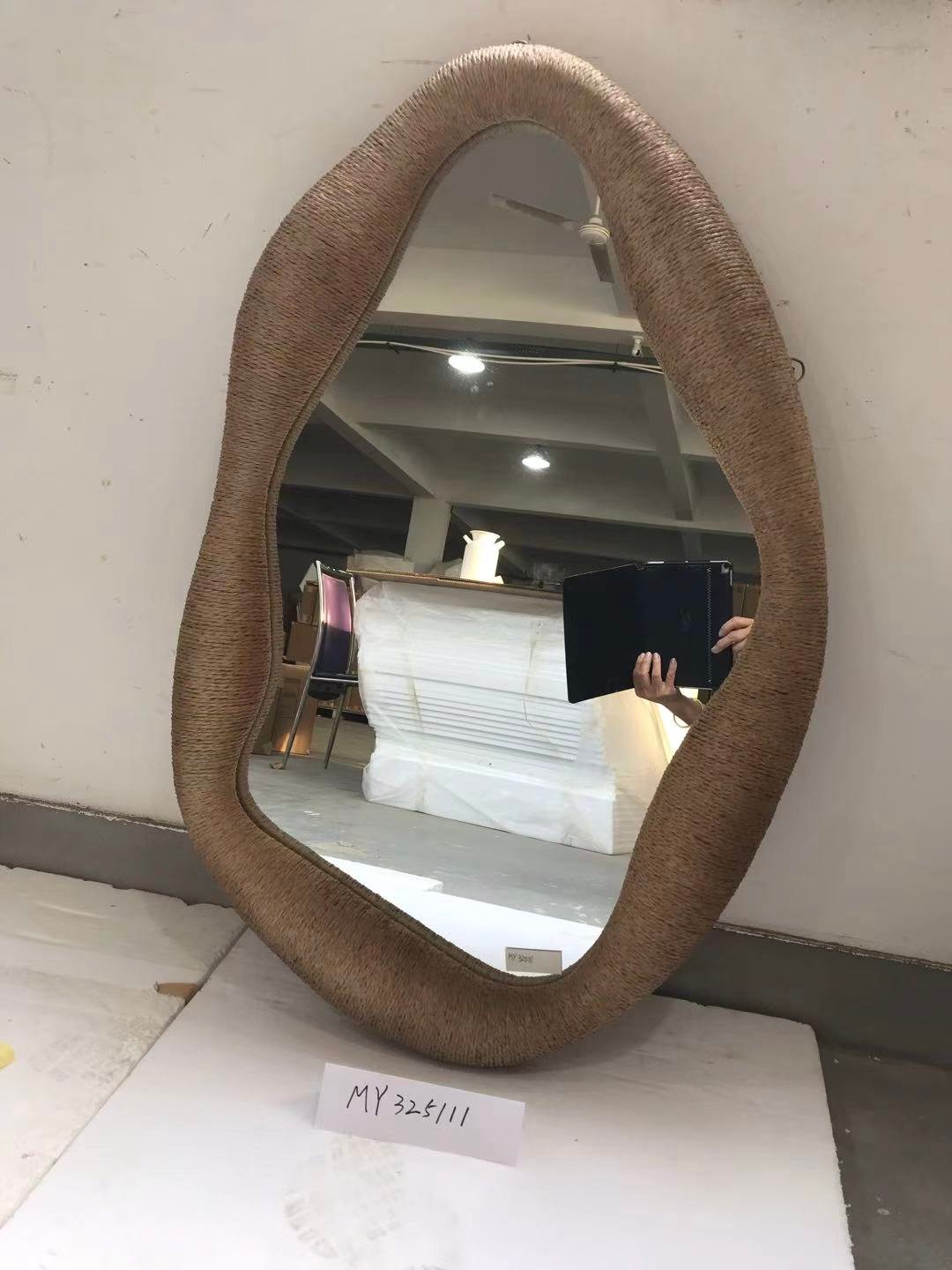
A mirror, but 10 cm wider.
An ottoman, but in a warmer neutral fabric.
A ceramic vase, but with a softer matte glaze.
A storage piece, but in a finish that matches the room scheme.
Lovely idea.
But in wholesale home décor, “just change it” is rarely just changing it. A custom size can change packaging. A custom finish can change production stability. A new fabric can change lead time. A matte ceramic decor surface can change how the product must be handled, packed, and inspected.
This is why the materials supply chain matters.
For German buyers, home décor merchants, and interior designers, customisation should not begin with “Can you do it?”
It should begin with:
Can this material, finish, size, and production process be repeated safely, commercially, and without creating six new problems?
Less romantic. Much wiser.
What Does Materials Supply Chain Mean?
In home décor, the materials supply chain is the system behind the materials and finishes used in a product.
It includes:
Raw material sourcing
Fabric selection
Ceramic body and glaze control
Metal finish control
Wood, resin, glass, and woven material sourcing
Colour matching
Texture consistency
Sample approval
Bulk production stability
Finish tolerance
Packaging compatibility
Reorder repeatability
For German buyers, the materials supply chain answers one practical question:
Can the approved sample become a reliable product order?
A beautiful sample is nice. But a buyer does not sell the sample. The buyer sells the shipment.
That is where many weak suppliers get exposed.
They can make one good-looking piece.
They cannot always repeat the same material, colour, texture, and finish across bulk production.
And no, calling every difference “handmade charm” does not automatically solve the problem. Sometimes charm is charm. Sometimes it is quality drift wearing a nicer name.
What Interior Designers Should Ask Before Requesting a Custom Size or Finish
Before requesting a custom size or finish, interior designers should ask a few boring but very profitable questions.
| Designer Request | Supply Chain Question | Why It Matters |
|---|---|---|
| Custom mirror size | Does the new size affect frame strength, carton size, and shipping risk? | Bigger or slimmer mirrors may need different protection |
| Custom ottoman fabric | Can the fabric be sourced consistently? | Fabric texture and colour may vary by batch |
| Custom ceramic glaze | Can the glaze be repeated in bulk? | Ceramic decor glaze finish can vary during firing |
| Matte ceramic decor finish | Does the surface show rubbing, dust, or scratches easily? | Matte finishes often need stricter handling |
| Custom colour tone | What is the acceptable colour tolerance? | “Warm beige” is not a technical standard |
| Custom project finish | Can the finish be reordered later? | Project buyers often need replacements or repeat orders |
The key question is not only whether customisation is possible.
Almost anything is possible if enough people are optimistic and nobody has calculated the risk.
The better question is:
Should this product be customised for this order, this price point, this channel, and this delivery timeline?
That is the German buyer question. Practical, slightly suspicious, and usually correct.
Custom Size vs Custom Finish: Different Problems, Different Risks
Many buyers treat custom size and custom finish as similar requests.
They are not.
| Customisation Type | What Usually Changes | Main Risk |
|---|---|---|
| Custom size | Dimensions, structure, packaging, loading quantity | Higher damage risk, higher freight cost, unstable proportion |
| Custom finish | Surface colour, texture, coating, glaze, fabric | Colour variation, rubbing, scratching, repeatability issues |
| Custom material | Fabric, metal, ceramic body, wood, resin, woven material | Lead time, cost change, performance uncertainty |
| Custom project package | Product grouping, finish coordination, delivery logic | More coordination work and higher error risk |
A custom mirror size is often a structural and logistics issue.
A custom ottoman fabric is often a sourcing and texture issue.
A custom ceramic decor glaze finish is often a production stability issue.
A matte ceramic decor adjustment is often a surface and packaging issue.
So when a supplier says, “Yes, customisation is easy,” German buyers should gently place one eyebrow into the air.
Easy for whom?
Easy for the sample?
Easy for bulk production?
Easy for shipping?
Easy for reorder?
These are not the same thing.
Textured Neutral Ottoman: Safe Looking, Not Automatically Safe to Produce
A textured neutral ottoman looks like a safe buying decision.
It works in living rooms, bedrooms, entryways, apartments, hospitality spaces, and retail displays. It is easy to combine with mirrors, ceramic accessories, trays, and storage baskets.
But the ottoman fabric texture must be controlled.
Neutral does not mean simple.
A cream fabric may show dirt.
A taupe fabric may shift warmer or cooler between batches.
A bouclé texture may flatten during packing.
A woven fabric may rub at the corners.
A linen-look fabric may crease.
A soft grey upholstery may look different under German retail lighting.
For a textured neutral ottoman, buyers should ask:
Can the same fabric be sourced again?
What is the colour tolerance?
Does the texture change after compression?
Does the fabric attract dust?
Does the packaging protect the surface?
Can the fabric be used for both sample and bulk?
Is this material suitable for the target retail price?
A textured neutral ottoman is commercially useful because it feels calm and flexible.
But if the fabric cannot be repeated, the calm disappears rather quickly.
Ottoman Fabric Texture Is a Buying Decision, Not a Decoration Detail
Ottoman fabric texture is not just about touch.
It affects:
Perceived value
Retail price level
Shipping risk
Cleaning perception
Colour stability
Photo performance
Project suitability
Reorder consistency
German buyers often like textured upholstery because it gives a simple product more visual value. A plain cube ottoman becomes more interesting. A small storage ottoman feels warmer. A bench becomes easier to style.
But texture must match the channel.
A high-pile fabric may look premium but collect dust.
A soft bouclé may photograph well but need careful packaging.
A woven neutral may feel safe but show batch differences.
A velvet-like surface may show pressure marks.
A cheap texture can make the entire item look slightly sad.
And nobody wants a sad ottoman. Especially not in beige.
For wholesale buying, the question is:
Does this fabric texture support the product’s commercial role?
If yes, it is worth developing.
If no, it is just an expensive surface decision.
Ceramic Decor Glaze Finish: The Small Detail That Controls the Whole Product
Ceramic décor often looks simple from far away.
A vase.
A bowl.
A decorative object.
A small tray.
A candle holder.
But the ceramic decor glaze finish can decide whether the product feels cheap, modern, handmade, refined, rustic, or completely confused.
Glaze finish affects:
Colour depth
Surface feel
Light reflection
Perceived quality
Batch variation
Scratch visibility
Packaging sensitivity
Assortment compatibility
For German buyers, ceramic glaze should not be approved only because one sample looks attractive.
They should ask:
Can this glaze be repeated?
What variation is acceptable?
Does the glaze show rubbing marks?
Does the finish chip visibly?
Does the colour match the rest of the assortment?
Does the glaze change depending on shape or firing batch?
Can the supplier define a production tolerance?
A supplier may say, “This is handmade, so each piece is different.”
That can be perfectly acceptable.
But there must still be a controlled range.
“Different” is fine.
“Random” is not a strategy.
Matte Ceramic Decor: Quiet Look, Loud Supply Chain Requirements
Matte ceramic decor is popular because it feels soft, modern, and easy to coordinate.
It works well with:
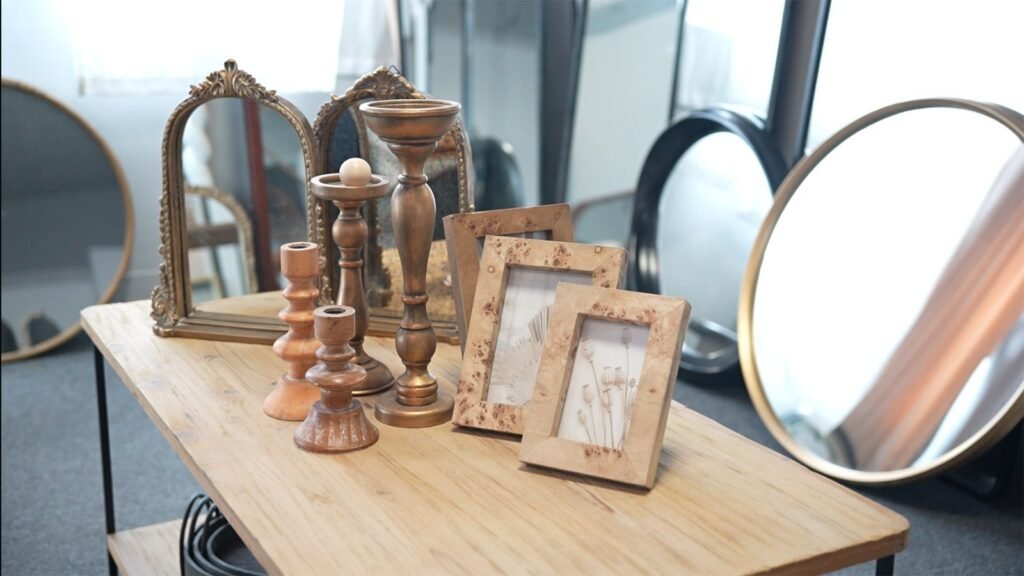
Warm wood mirrors
Textured neutral ottomans
Woven storage pieces
Stone-look trays
Soft metal finishes
Minimal shelf styling
Natural home décor palettes
But matte ceramic is not always easy.
Matte finishes can show:
Dust
Fingerprints
Rubbing marks
Pressure points
Small scratches
Colour transfer from packaging
Uneven surface contact
This means matte ceramic decor needs stronger control from the materials supply chain.
The finish should be tested not only in the sample room, but also after wrapping, packing, transport simulation, and unpacking.
A matte ceramic vase that looks perfect before packing but comes out with rubbing marks is not a finished product.
It is a product that has failed the carton test.
And the carton test is a real test, even if nobody posts it on Instagram.
Teruier’s Cross-Border Design Manufacturing Coordination Model
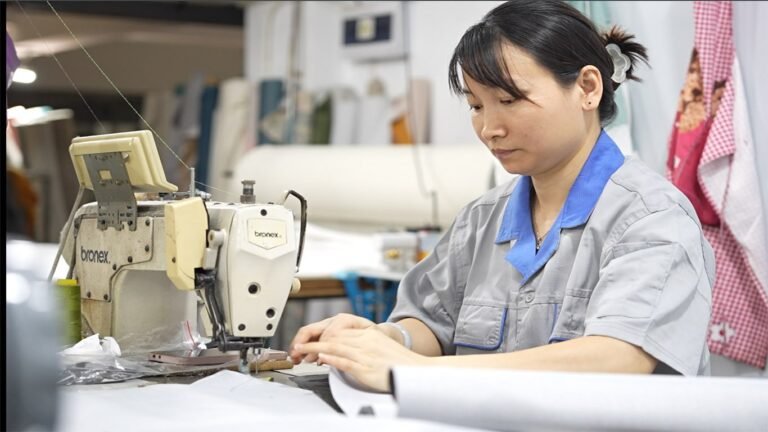
At Teruier, we use a cross-border design manufacturing coordination model.
That sounds formal, but the idea is simple:
A buyer’s design intention must be translated into material, finish, production, packaging, and delivery decisions.
For example, a German buyer may say:
“We need a warmer, softer collection for small living spaces.”
That may involve:
A textured neutral ottoman
A matte ceramic decor series
A mirror with a warm metal or wood-look frame
Decorative storage with soft-touch material
A coordinated finish palette
Packaging that protects fabric and ceramic surfaces
Reorder records for future batches
The factory cannot solve this properly if it only hears: “Make this colour.”
The supplier must understand the commercial use behind the finish.
That is where coordination matters.
Design language must become production language.
Production language must become packaging language.
Packaging language must become delivery reliability.
That is how a nice idea becomes a stable home décor programme.
Material and Finish Comparison for German Buyers
| Product Element | What Looks Good in Sample | What Must Be Checked Before Bulk Order |
|---|---|---|
| Textured neutral ottoman | Soft, warm, retail-friendly fabric | Fabric consistency, dust risk, compression marks, colour tolerance |
| Ottoman fabric texture | Richer touch and better visual value | Batch stability, packing protection, durability, price fit |
| Ceramic decor glaze finish | Attractive colour and surface effect | Glaze repeatability, chipping, rubbing, acceptable variation |
| Matte ceramic decor | Calm, modern, easy to coordinate | Surface marks, packaging compatibility, cleaning perception |
| Mirror frame finish | Strong visual anchor for the room | Scratch resistance, colour control, corner protection |
| Mixed material product | More layered and premium look | Weakest material risk, assembly stability, packaging method |
A buyer should not ask only:
Does it look good?
The better question is:
Can it keep looking good after production, packing, shipping, and reorder?
That is the part that separates a good sample from a good supplier.
Stable Materials Supply Chain vs Risky Materials Supply Chain
| Area | Stable Materials Supply Chain | Risky Materials Supply Chain |
|---|---|---|
| Sample approval | Clear approved standard | “Similar enough” sample logic |
| Colour control | Defined tolerance | Vague colour description |
| Fabric sourcing | Confirmed supplier and repeatability | Random fabric substitution |
| Ceramic glaze | Tested range and batch control | One nice sample, uncertain bulk |
| Matte finish | Surface tested after packing | Surface checked only before packing |
| Customisation | Risk reviewed before approval | Every request accepted too quickly |
| Reorder | Material records kept | Buyer starts discussion again each time |
A stable materials supply chain does not kill creativity.
It protects it from becoming chaos.
Designers can still request special finishes. Buyers can still develop new looks. Retailers can still build fresh assortments.
But the supplier must control what happens after the beautiful idea leaves the mood board.
When Customisation Is Worth It
Customisation is worth it when it improves one of these things:
Project fit
Retail differentiation
Assortment coherence
Material value
Customer understanding
Margin potential
Reorder strategy
For example:
A custom mirror size may be worth it if it fits a German apartment hallway better.
A custom ottoman fabric may be worth it if it gives the product a clear retail identity.
A custom ceramic glaze may be worth it if it ties a whole shelf story together.
A matte ceramic finish may be worth it if it supports a calm, modern assortment.
Customisation is not worth it when it only creates:
Longer lead time
Higher MOQ
Unstable finish
Difficult packaging
Higher damage risk
Unclear customer value
Weak reorder potential
A custom product should earn its complexity.
If it does not, keep the standard version and enjoy your simpler life.
What German Buyers Should Ask Before Approving Materials and Finishes
Before approving a material or finish, German buyers should ask:
Is this material available for bulk production?
Can the finish be repeated?
What variation is acceptable?
Does the finish change under different lighting?
Does the fabric texture compress or rub?
Does matte ceramic show marks after packing?
Is the ceramic glaze stable across batches?
Can this material be reordered later?
Does the packaging need to change?
Does the finish fit the target price?
Does the material suit the sales channel?
Can the supplier keep records for future reorders?
These questions may sound practical because they are.
A beautiful finish without control is not a product strategy.
It is a decoration experiment with an invoice.
FQA: Materials Supply Chain for German Home Décor Buyers
What is a materials supply chain in home décor?
A materials supply chain is the system behind sourcing, controlling, producing, and repeating the materials and finishes used in home décor products. It covers fabric, ceramic, metal, wood, glass, resin, woven material, glaze, coating, colour, texture, and finish stability.
What should interior designers ask before requesting a custom size or finish?
They should ask how the custom request affects production, material availability, finish repeatability, packaging, shipping cost, lead time, MOQ, and reorder stability.
Why is a textured neutral ottoman not automatically easy to produce?
Because neutral fabrics can show colour variation, dust, rubbing, compression marks, and texture changes. The fabric must be consistent and suitable for the target sales channel.
Why does ottoman fabric texture matter?
Ottoman fabric texture affects perceived value, comfort, retail appeal, shipping risk, and reorder consistency. It is not only a design detail; it is a commercial material decision.
What is important about ceramic decor glaze finish?
The glaze finish controls colour, surface feel, perceived quality, and assortment compatibility. Buyers should check repeatability, acceptable variation, rubbing risk, and chipping visibility.
Is matte ceramic decor harder to manage?
Often, yes. Matte ceramic decor can show dust, fingerprints, rubbing marks, and pressure points more easily than glossy ceramic. It should be tested with packaging before bulk shipment.
Should buyers always customise products?
No. Buyers should customise only when the change improves project fit, retail value, assortment coherence, or commercial potential. Customisation that only adds risk should be avoided.
How does Teruier help with materials and finishes?
Teruier connects design intention, material selection, finish control, production feasibility, packaging, and delivery logic through its cross-border design manufacturing coordination model.
Final Thought: A Custom Finish Is Only Good If It Can Be Controlled
German buyers do not need suppliers who only say, “Yes, we can customise.”
They need suppliers who can also say:
This finish is stable.
This fabric is risky.
This matte ceramic needs better packing.
This glaze can vary within this range.
This custom size will change the carton.
This material can be reordered.
This option looks good but will not support your price point.
That is real materials supply chain support.
Because home décor is not built from mood boards alone.
It is built from materials, finishes, production control, packaging logic, and reorder discipline.
A textured neutral ottoman, a ceramic decor glaze finish, a matte ceramic decor item, or a custom mirror size can all become strong products.
But only if the supplier can control what happens after the sample looks nice.
And that, frankly, is where the real buying work begins.