
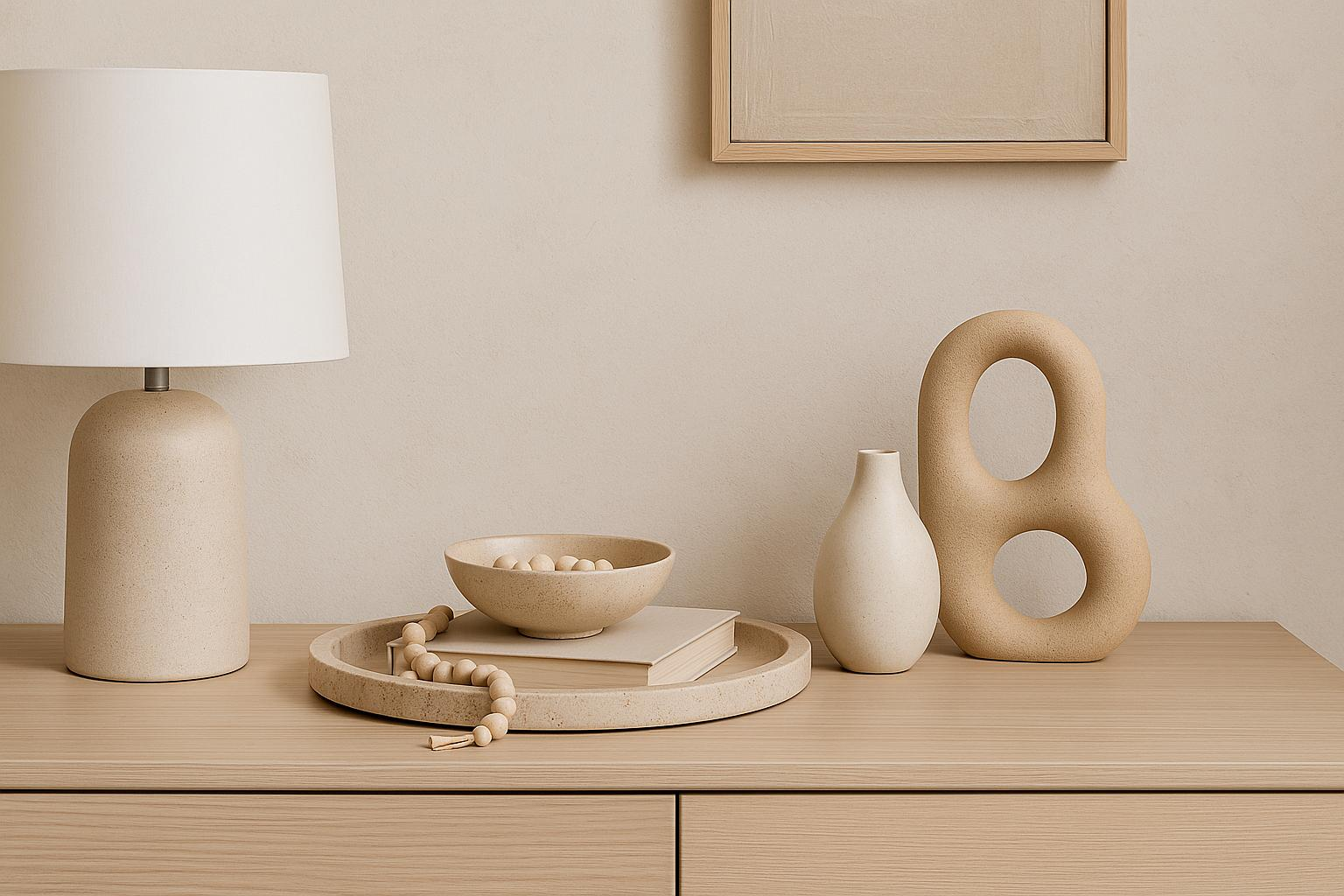
A home décor buyer has two successful products: a sculptural ceramic vase and a decorative tray.
Both sell well individually. The merchandising team suggests combining them into a gift set.
It sounds like an easy decision. Two popular products should create an even more attractive offer.
But after the first sales review, the buyer discovers something unexpected. Customers like the vase, but many do not want the tray. Others already own a similar tray and prefer to choose a different accessory.
The products are individually successful, yet the fixed combination is less attractive.
This is an important lesson in Combo bestseller development: products that work well together visually do not necessarily need to be sold together commercially.
For international home décor buyers, the challenge is not simply finding products that match. It is choosing the right selling structure for each combination.
A Product Combination Is Not Always a Product Set
Buyers often use the terms collection, combination, bundle, and set as though they mean the same thing.
They serve different commercial purposes.
| Selling Structure | How It Works | Best Application |
|---|---|---|
| Fixed bundle | Several products are sold under one combined offer | Gift sets and complete solutions |
| Flexible combo | Customers select products from an approved group | Mix-and-match home décor |
| Cross-selling | Products remain independent but are recommended together | Complementary products |
| Coordinated collection | Products share a design language but sell separately | Wider retail assortment |
A coordinated collection creates visual consistency. A combo creates a purchasing opportunity.
The difference matters because a retailer may want customers to buy several products without forcing them to purchase everything in one package.
For a wider discussion of how product families work together, see Teruier’s Tabletop Decor: How German Buyers Build a Coherent, Retail-Ready Category.
Three Ways to Turn Individual Products Into a Selling Opportunity
1. Fixed Bundle: Sell a Complete Solution
A fixed bundle works when customers naturally need the products together.
For example, a coordinated decorative gift set may combine a small ceramic vase, a matching decorative accessory, and a presentation tray.
The products should have a clear shared purpose.
A fixed set is particularly useful when:
- The items are designed for the same occasion or use.
- The colour and finish relationship is important.
- The combined price offers a clear reason to buy.
- The packaging can protect all components efficiently.
- Customers are unlikely to want only one part of the set.
However, buyers should avoid creating fixed bundles simply because the products look attractive together.
A combination must make sense from the customer’s purchasing perspective.
2. Flexible Combo: Let Customers Choose
Flexible combinations provide more freedom.
Imagine a retailer offering three tabletop products:
- A sculptural fruit vase.
- A decorative tray.
- A small ceramic accent.
Instead of selling all three as one fixed set, the retailer allows customers to choose any two.
This structure can appeal to different customer preferences while keeping the products available as independent SKUs.
For buyers, the main considerations include:
- Whether each product can be ordered separately.
- Whether the available combinations are easy to explain.
- Whether packaging can accommodate different selections.
- Whether inventory can support popular combinations.
- Whether the pricing remains profitable across different choices.
Flexible combos are particularly interesting for online retail because customers can personalize their purchases without requiring the supplier to develop an entirely new product.
3. Cross-Selling: Keep Products Separate, Connect Them Visually
Sometimes the best combination is not a bundle at all.
A retailer may display a decorative vase with a tray and a candleholder. Each product has its own price and SKU, but the display encourages customers to consider purchasing more than one item.
This approach has an important advantage.
Customers can purchase the item they actually want without feeling forced into a larger transaction.
It also gives retailers more flexibility when replenishing individual products.
For a buyer, cross-selling can be a useful starting point when the relationship between products is mainly visual rather than functional.
The Three-Product Test: Hero, Companion and Optional Add-on
A practical way to evaluate a potential combo is to give each product a different commercial role.
Consider a hypothetical tabletop programme.
| Product | Commercial Role | Customer Reason to Buy |
|---|---|---|
| Sculptural vase | Hero product | Strong visual appeal |
| Decorative tray | Companion product | Completes a tabletop arrangement |
| Small accent object | Optional add-on | Adds variety or gifting value |
The hero product should attract attention independently.
The companion should make the purchase more complete.
The optional add-on should increase perceived value without becoming a condition for buying the main product.
This structure avoids a common mistake: making the entire combination depend on the popularity of one SKU.
A vase may be a bestseller, but that does not mean every customer wants to purchase two additional accessories with it.
The buyer should first understand the independent demand for each item.
The Hidden Risk: A Bestseller Can Hide a Slow-Moving SKU
One of the biggest mistakes in combo development is using a popular product to push an unpopular one.
Imagine the following situation:
Product A sells consistently.
Product B has weak independent demand.
The retailer combines them at a discounted price and reports strong bundle sales.
At first glance, the combination appears successful.
But what has actually happened?
The retailer may have reduced the perceived value of Product A while using discounts to move Product B.
The bundle may generate additional revenue without improving the underlying commercial performance of the assortment.
Before approving a combination, buyers should examine:
- Individual SKU sales.
- Independent gross margin.
- Bundle attachment rate.
- Inventory movement of each component.
- Returns and customer complaints.
- Reorder demand after the promotion ends.
A good combo should create additional purchasing value, not simply disguise a weak product.
Does the Combination Improve the Economics?
Visual appeal is only one part of the decision.
A combination must also make commercial sense after packaging, freight, and handling.
Consider two purchasing arrangements.
Option A: Individual products
Customers purchase products separately. Each item uses its own carton and shipping configuration.
Option B: Combined package
The same products are packed together as a fixed bundle.
The second option may reduce some handling or packaging costs, but it can also create additional requirements.
For example:
- Larger or more complicated packaging.
- Additional internal protection.
- Different carton dimensions.
- More difficult warehouse picking.
- Higher risk of one damaged component affecting the complete set.
Ceramic products require particular attention because a combined package may increase the complexity of protecting different shapes.
Teruier’s Ceramic Decor Wholesale: Why a Vase Is Not Just a Thing That Holds Flowers explores the relationship between product shape, glaze, packaging and wholesale economics.
A useful calculation is:
Combo Contribution = Net Combo Revenue − Combined Landed Product Cost − Additional Packaging − Handling − Applicable Channel Costs
The comparison should use the same accounting basis for individual sales and combined sales.
A bundle with a higher selling price is not automatically more profitable.
When Should a Buyer Keep Products Separate?
Not every product combination deserves a fixed SKU.
A buyer should consider separate selling when:
Different customer preferences
Customers like the products but want to choose their own colours, sizes or combinations.
Different replacement cycles
One product may need frequent replenishment while another sells more slowly.
Different packaging requirements
Combining fragile and bulky products may create unnecessary shipping complexity.
Different price expectations
A premium item may sell well independently but become difficult to position inside a lower-priced set.
Different regulatory or functional requirements
Products that look similar in a display may have different intended uses and specifications.
For example, a decorative three-tier stand and a food-serving stand may share a similar appearance but require different purchasing specifications. See Three Tier Serving Stand Wholesale: Is It for Food or Décor?.
A Practical Buyer Framework for Approving a Combo Bestseller
Before developing a new combination, buyers can use five checks.
| Decision Area | Question | Evidence to Review |
|---|---|---|
| Customer demand | Do customers naturally want these products together? | Sales history and buyer feedback |
| Product compatibility | Do the products share a meaningful purpose or visual relationship? | Samples and product specifications |
| Pricing | Does the combination create additional value? | Individual and combined price comparison |
| Inventory | Can all components be replenished consistently? | SKU availability and lead times |
| Logistics | Does combined packaging improve the overall arrangement? | Carton dimensions, protection and freight cost |
This framework connects assortment planning with actual purchasing behaviour.
It also helps buyers avoid expanding a product programme simply because a combination looks attractive in a catalogue.
For a broader view of how individual SKU roles, price positions and channels interact, see Retail Assortment Planning: How U.S. Home Décor Buyers Build Collections That Actually Sell.
Test the Combination Before Making It a Permanent SKU
A buyer does not need to launch every proposed combination as a permanent product set.
A controlled trial can begin with three separate product listings and one suggested combination.
The retailer can then compare:
- Sales of each individual SKU.
- The percentage of customers adding a companion product.
- The conversion rate of the suggested combo.
- Contribution margin after additional costs.
- Inventory balance across the selected products.
If the combination consistently creates additional sales without damaging individual product performance, it may deserve a dedicated bundle.
If customers prefer to choose products independently, the flexible combo or cross-selling model may be more appropriate.
This is also where supply chain management becomes important.
The supplier needs to understand whether the buyer is ordering individual SKUs, fixed sets, or a mixture of both. Production planning, carton configuration, labelling and replenishment arrangements should reflect the actual sales model.
For importers evaluating these operational requirements, Teruier’s For Importers & Distributors: Evaluate a Home Décor Supplier Before the Order provides a related purchasing framework.
How Teruier Can Support Product Combination Development
Teruier works across decorative mirrors, tabletop accessories, ceramic décor, storage products and accent furniture.
For international buyers, the opportunity is not simply to select more products from a catalogue.
It is to determine which products should remain independent, which can become flexible combinations, and which deserve development as complete sets.
Discussions can cover product selection, coordinated design directions, sample development, specifications, packaging and manufacturing coordination.
The final combination, MOQ, pricing and packaging arrangements should be confirmed for the selected products and destination market.
FAQ
What is a Combo bestseller in home décor?
It is a product combination that generates repeatable commercial value by encouraging customers to purchase complementary products together. The products may be sold as a fixed set, a flexible selection or individually through cross-selling.
Should buyers always bundle two bestselling products?
No. Independent demand, customer preferences, combined pricing, inventory and logistics should be evaluated before creating a fixed bundle.
Is flexible bundling better than a fixed set?
It depends on the product and channel. Flexible combinations offer customer choice, while fixed sets can provide a more complete solution and simpler merchandising.
How can buyers measure whether a combo is successful?
Review the combined contribution margin, additional product attachment, individual SKU performance, inventory balance and repeat purchasing behaviour. Bundle revenue alone is not sufficient.
Build More Intelligent Home Décor Combinations With Teruier
The best product combination is not necessarily the one with the most items.
It is the one that gives customers a clear reason to purchase more while preserving the commercial value of each individual product.
Teruier works with international buyers on product selection, coordinated development, sampling and wholesale sourcing across home décor categories.
Contact Teruier to discuss your target market, preferred product categories and potential combo development programme.