
Buying Decisions: TasteGood
Buying home décor is often presented as a pleasantly creative occupation.
There are mood boards, colour stories, fabric samples and beautifully styled photographs in which nobody appears to own a charging cable.
The reality is less decorative.
A buyer must decide which products deserve samples, which samples deserve orders and which attractive ideas should remain attractive ideas.
The Teruier Buying Decisions section is written for German and European home décor buyers, importers, retailers and interior professionals who need to connect design judgement with commercial reality.
It looks beyond whether a mirror, ottoman or ceramic object is appealing. It asks whether the product is relevant, repeatable, profitable and sensible enough to occupy warehouse space.
Because liking a product takes three seconds.
Living with the purchase order takes rather longer.
What Is a Buying Decision in Home Décor?
A buying decision is the structured evaluation of whether a product should enter an assortment, proceed to sampling or move into production.
It normally combines several considerations:
- Design relevance
- Target customer fit
- Retail price potential
- Material and construction
- Product differentiation
- Minimum order quantity
- Packaging and freight
- Quality consistency
- Margin potential
- Reorder feasibility
The best buying decision is not automatically the safest one.
Nor is it automatically the most fashionable.
It is the decision that gives the product a clear commercial role and gives the buyer a reasonable level of confidence.
What Does the Buying Decisions Section Cover?
This section examines the practical questions behind product selection.
It may explore:
- How to compare similar products
- When a higher specification is worth paying for
- How to judge a sample beyond its first appearance
- Whether a trend suits the intended customer
- How packaging affects the real product cost
- When product variation adds character—and when it adds complaints
- How to balance dependable volume items with more distinctive hero pieces
- Why some low quotations become surprisingly expensive
The section is not intended to replace buyer judgement.
It is designed to give that judgement a better structure.
After all, “the sales team liked it” is useful feedback.
It is not quite the same as a purchasing case.
A Product Must Perform More Than One Job
A commercially useful home décor product must normally work at several levels.
It should attract attention, fit the assortment, support the intended price and remain manageable throughout production and delivery.
Consider a decorative mirror.
Its shape may be relevant, but buyers must also examine frame construction, glass quality, hanging hardware, total weight and protective packaging.
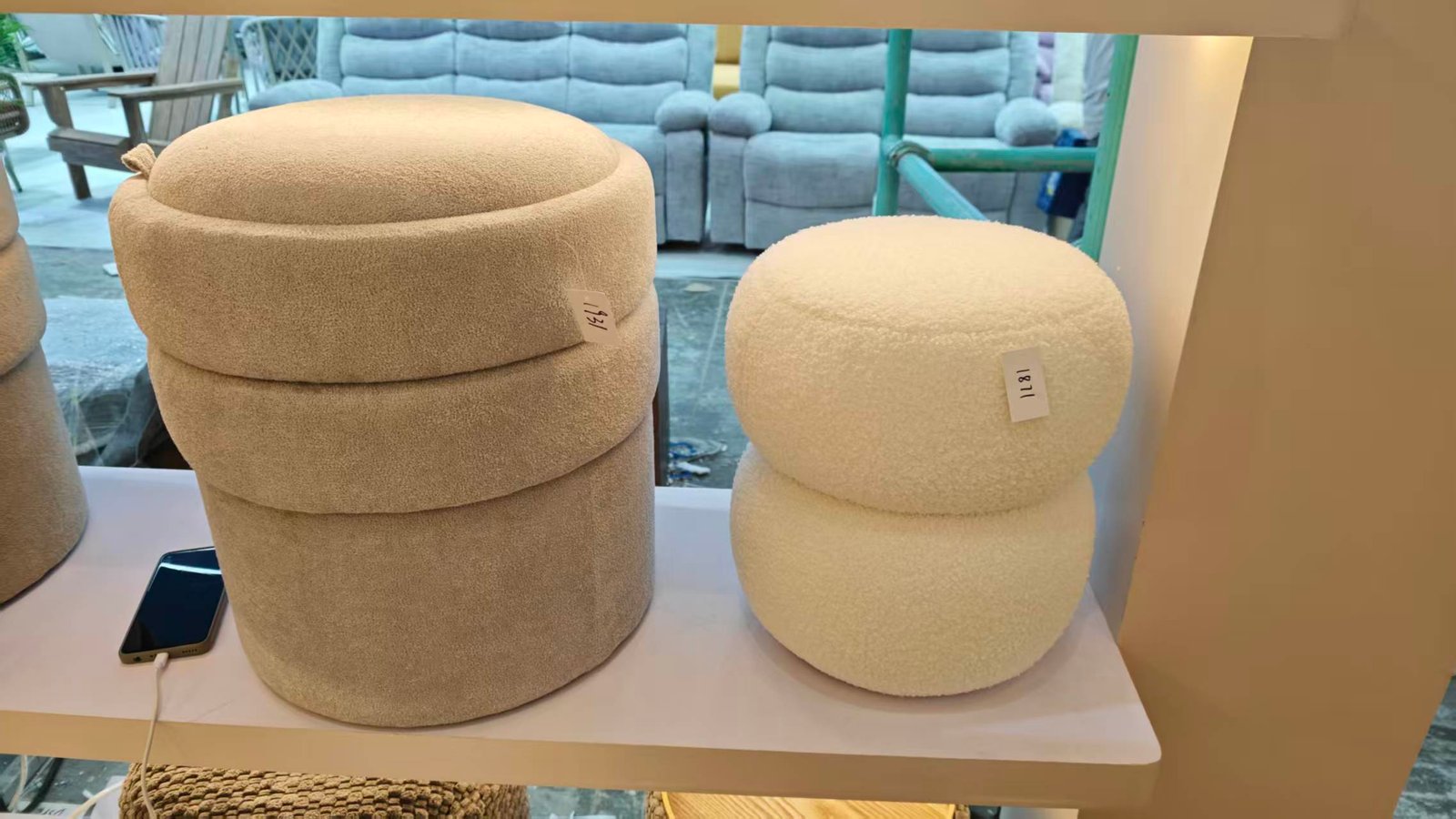
An ottoman may have an excellent fabric and a fashionable rounded form. It must still offer stable construction, suitable proportions and packing volume that does not quietly eat the margin.
A product that succeeds only in photography is a styling prop.
A product that succeeds in photography, production, logistics and retail has a chance of becoming an actual business.
Buying Decisions Versus Product Selection
The terms are related, but they are not identical.
| Consideration | Product Selection | Buying Decision |
|---|---|---|
| Main question | Which product do we prefer? | Should this product receive commercial commitment? |
| Typical focus | Appearance, category and style | Customer fit, cost, quality, logistics and margin |
| Decision stage | Initial evaluation | Sampling, quotation or order approval |
| Main risk | Choosing an unsuitable design | Committing money to an unsuitable product |
| Desired result | A relevant shortlist | A commercially justified choice |
Product selection creates options.
A buying decision decides which option deserves resources.
This distinction is useful because attractive shortlists have a habit of becoming expensive when nobody removes anything from them.
From Market Requirement to Production Reality
Teruier supports product decision-making through its Cross-Border Design and Manufacturing Collaboration Model.
The model connects European market expectations with product design, supplier capability and manufacturing reality.
For buyers, this means that product discussions can consider several commercial questions together:
- Does the design suit the intended market?
- Can the supplier reproduce the sample consistently?
- Can materials or dimensions be adjusted without weakening the concept?
- Does the product fit the target retail position?
- Is the construction appropriate for transport and customer use?
- Can related products be developed into a coherent collection?
This is particularly important in home décor, where a small visual adjustment may create a large production consequence.
A thicker mirror frame may improve perceived value but increase weight. A deeper ottoman may improve comfort but reduce container efficiency. A complex ceramic glaze may look magnificent while developing a slightly different personality in every kiln.
Design and manufacturing do not need to agree on everything.
They do need to be introduced before the purchase order.
Comparing Price with Value
A quotation shows what the supplier intends to charge.
It does not automatically show what the product is worth to the retailer.
| Lower-Priced Option | Higher-Value Option |
|---|---|
| Lower initial purchase cost | Stronger perceived retail value |
| May use simpler materials or finishes | May justify a higher selling price |
| Can support entry-level positioning | Can strengthen assortment identity |
| May face greater price competition | May offer clearer differentiation |
| Attractive when specifications are sufficient | Attractive when added cost is visible to customers |
The more expensive product is not always better.
The cheaper product is not always more profitable.
The relevant question is whether the difference in cost creates a difference that customers can see, understand or use.
Paying more for invisible complexity is not premium sourcing.
It is generosity.
What Makes a Buying Decision Commercially Sound?
A strong decision usually has five elements.
A defined customer
The buyer understands who is expected to purchase the product and why.
A clear assortment role
The item may be a volume product, entry-price offer, coordinated basic or visual hero.
Visible product value
Its shape, material, function or finish gives customers a reason to notice it.
Manageable operational risk
Production, inspection, packaging and delivery requirements remain reasonable.
Credible profit potential
The margin survives freight, storage, discounting and normal retail reality.
A product does not need to be perfect in every area.
It does need to be strong in the areas that matter to its intended commercial role.
Why the Section Matters to German Buyers
German buyers often work in markets where decorative appeal must coexist with practical expectations.
Customers may appreciate a sculptural shape, but they also notice unstable construction. They may enjoy a handcrafted finish, but still expect the product to resemble the photograph.
The Buying Decisions section therefore treats design and practicality as partners rather than opponents.
Its value lies in helping buyers:
- Compare alternatives more consistently
- Identify meaningful product differences
- Recognise hidden sourcing risks
- Improve sample and supplier discussions
- Protect assortment clarity
- Avoid paying for features that add cost but little customer value
Good buying does not make every product conservative.
It simply gives every product a reason for being there.
Frequently Asked Questions
Who is the Buying Decisions section written for?
It is intended for German and European buyers, retailers, importers, wholesalers, sourcing teams and interior professionals working with home décor and small furniture.
Does the section focus only on price?
No. Price is considered together with design relevance, specifications, quality, logistics, customer value and expected margin.
Will the section discuss mirrors and ottomans?
Yes. Mirrors, ottomans, benches, lighting, ceramics, tabletop décor and occasional furniture may all be used to explain different buying decisions.
How should buyers compare two similar quotations?
The specifications must first be aligned. Dimensions, materials, finishes, packaging, testing, order quantities and delivery conditions should be compared on the same basis.
Is a distinctive product always riskier?
Not always. A distinctive product may support stronger retail value when its design is understandable and production can be controlled. Risk increases when novelty has no clear customer or assortment role.
Should buyers always request a sample?
Samples are particularly important when colour, finish, proportion, comfort or construction cannot be judged reliably from drawings and photographs.
Can a good sample still lead to a poor order?
Yes. A sample proves that one product can be made well. Production management must prove that the result can be repeated.
When is it sensible not to place an order?
When the product lacks a clear customer, offers insufficient differentiation, creates excessive operational risk or cannot support a credible retail margin.
The Most Valuable Decision Is Sometimes “No”
The Buying Decisions section is not about turning home décor into an accounting exercise.
Design instinct remains essential. Buyers need curiosity, taste and the confidence to recognise an opportunity before every competitor has ordered it.
But instinct works better when supported by product knowledge and commercial discipline.
Teruier’s Buying Decisions section helps connect the appeal of a product with the practical conditions required to sell it successfully.
Because a buyer’s job is not to admire every good idea.
It is to decide which ideas deserve investment—and which should be politely returned to the mood board.



