
Storage & Organization: Because Clutter Is Not a Design Style
Every attractive interior photograph has one thing in common: nobody appears to own paperwork, charging cables, spare keys or a television remote.
Real homes are less cooperative.
People need places for jewellery, blankets, magazines, toys and the collection of objects they insist may become useful one day. Storage products therefore perform an important commercial task: they make everyday organisation look like part of the interior rather than a punishment for owning things.
The Teruier Storage & Organization section is written for German and European buyers, home décor retailers, importers and interior designers looking for products that combine order, decoration and sensible retail value.
Because customers do not merely want somewhere to put their belongings.
They would prefer that somewhere not look like a warehouse container.
What Is Storage & Organization?
Storage and organisation products are designed to contain, sort, protect or conceal household items while supporting the appearance and function of an interior.
The category may include:
- Decorative storage boxes
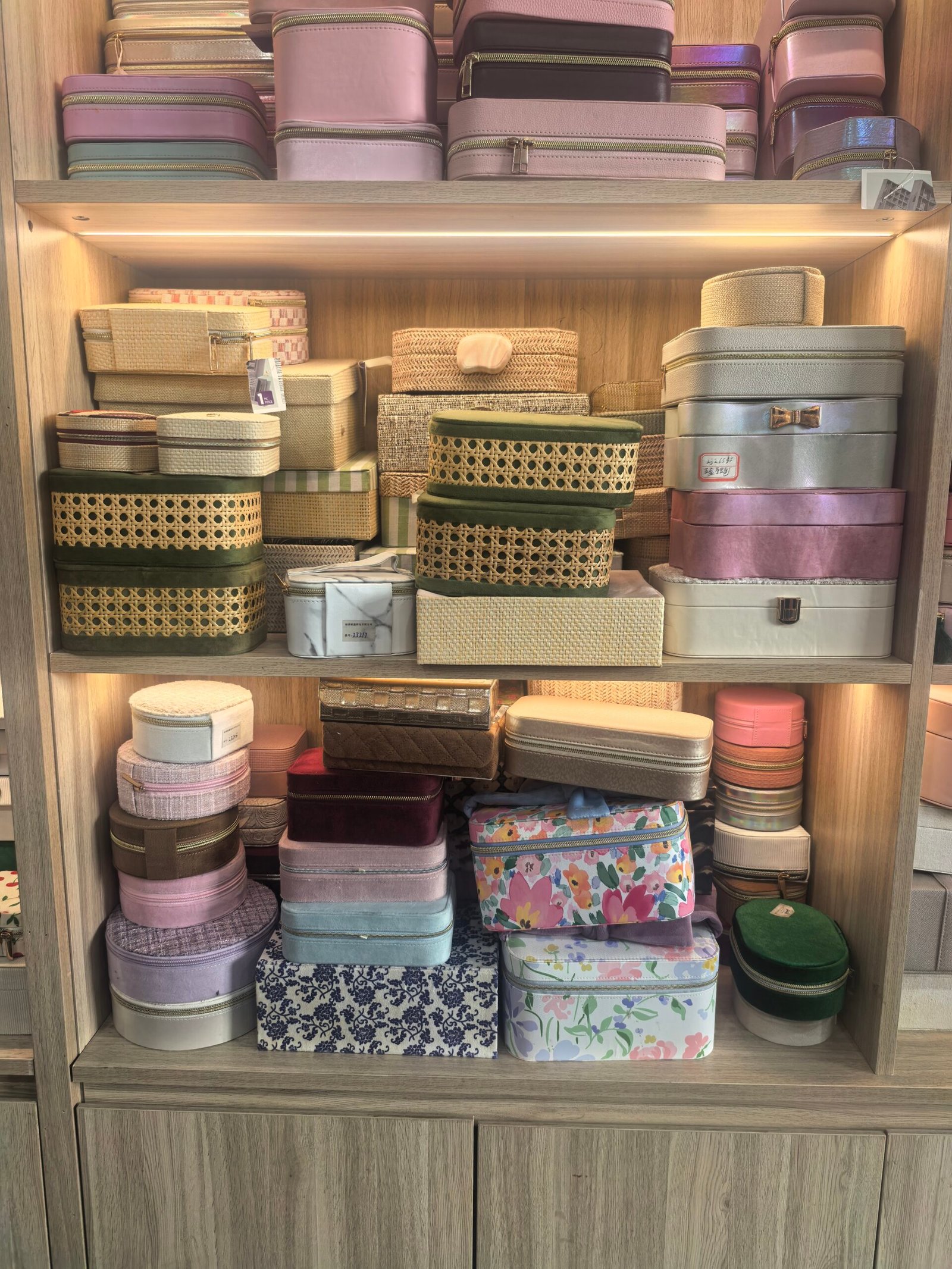
- Jewellery boxes and watch organisers
- Baskets and fabric containers
- Trays and desktop organisers
- Storage ottomans and benches
- Magazine holders
- Lidded jars and containers
- Entryway storage accessories
- Bathroom and dressing-area organisers
- Small cabinets and tabletop storage
Some products are primarily practical. Others are strongly decorative.
The best examples do both without making either function feel accidental.
What Is the Storage & Organization Section About?
The section examines how storage products can become commercially convincing parts of a home collection.
It considers:
- Materials, colours and finishes
- Internal layouts and useful dimensions
- Decorative versus hidden storage
- Multifunctional furniture
- Construction and hardware quality
- Packaging and nesting efficiency
- Collection building
- Retail price and margin potential
The objective is not to celebrate organisation as a lifestyle philosophy.
There are already enough photographs of colour-coded cupboards for that.
The objective is to help buyers understand which products solve real household problems, fit existing assortments and offer enough visible value to support a purchase.
Why Storage Products Matter
Storage is one of the few home categories where customer need and emotional appeal meet quite naturally.
The customer needs to manage clutter.
The retailer needs products that appear more desirable than an empty plastic box.
Decorative storage can support both.
A jewellery box can organise personal items while adding colour and texture to a dressing table. A storage ottoman can provide seating, conceal blankets and coordinate with a sofa. A lidded box placed beneath a mirror can turn an entrance console into a more useful landing area for keys and smaller objects.
For buyers, the category offers several advantages:
- Clear practical value
- Strong gifting opportunities
- Easy coordination with furniture and décor
- Potential for size and colour extensions
- Opportunities for add-on and repeat sales
- Year-round relevance
A customer may not urgently need another decorative object.
They may, however, urgently need somewhere to hide the decorative objects they already bought.
Decorative Storage Versus Utility Storage
| Consideration | Decorative Storage | Utility Storage |
|---|---|---|
| Main purpose | Organisation plus visual appeal | Maximum practical organisation |
| Typical placement | Visible shelves, consoles and dressing areas | Cupboards, utility rooms and hidden spaces |
| Main value driver | Material, colour, finish and presentation | Capacity, durability and efficiency |
| Common products | Jewellery boxes, decorative baskets and trays | Stackable bins, containers and drawer inserts |
| Retail positioning | Home décor and gifting | Household utility |
| Customer expectation | Useful enough to work, attractive enough to display | Practical, durable and easy to maintain |
Neither category is superior.
A practical container may be ideal inside a cupboard. A decorative box is more appropriate on a bedroom console.
The confusion begins when a product offers the storage capacity of a gift box and the appearance of office equipment.
Hidden Storage Versus Open Storage
Open storage keeps frequently used objects visible and accessible. Baskets, trays and magazine holders work well when the contents are reasonably presentable.
Hidden storage is useful when the contents are less charming.
| Open Storage | Hidden Storage |
|---|---|
| Easy access | Cleaner visual appearance |
| Useful for frequently used objects | Suitable for mixed or unattractive contents |
| Contents become part of the display | Product exterior controls the display |
| Requires some customer discipline | Requires a lid, drawer or door that works properly |
A tray containing three carefully selected objects may look stylish.
A tray containing receipts, loose batteries and seven unidentified keys looks like evidence.
The Storage & Organization section considers both approaches according to real use rather than idealised styling.
When Storage Becomes Furniture
Multifunctional products are particularly relevant in compact European homes.
Storage ottomans and benches can combine seating, organisation and decoration within one footprint. They may work in living rooms, bedrooms, hallways or dressing areas.
However, additional functions must be genuine.
A storage ottoman should offer:
- Stable seating
- Practical internal capacity
- Safe and convenient opening
- Suitable hinges or lid support
- A lining appropriate for stored items
- Dimensions that fit the intended room
A product with storage space large enough for one scarf is not multifunctional.
It is an ottoman with a secret.
From Low Cost to Commercial Profit
Teruier approaches the category through a Merchant Profit Approach.
A storage product should not be judged only by its factory price. Buyers must also consider perceived value, packing efficiency, damage risk, display quality and reorder potential.
For example, a decorative box collection may use the same basic structure across several colours, patterns or sizes. This can support assortment variety without requiring every item to begin as a completely separate development.
A well-designed nesting basket set may save freight space while offering a clear retail story.
A storage ottoman may command a stronger price when its fabric, proportions and internal finish make the product feel like furniture rather than packaging with upholstery.
The most profitable option is not always the cheapest quotation.
It is the product that creates a convincing difference between landed cost and customer value.
Cheap storage that customers do not want is merely organised inventory.
What Makes a Strong Storage Product?
A commercially useful product usually combines five qualities.
A real storage purpose
The dimensions and internal layout should suit identifiable household items.
Visible product value
Materials, handles, linings, stitching and finishes should support the intended retail price.
Easy operation
Lids, drawers, hinges and closures must work without negotiation.
Assortment compatibility
The product should coordinate with mirrors, ottomans, benches, soft furnishings or tabletop décor.
Repeatable production
Dimensions, colours, hardware and surface quality must remain consistent across orders.
A box that looks excellent while closed but refuses to open is technically still storage.
It is simply permanent storage.
How Storage Connects with Other Home Categories
Storage products can provide the practical link between larger decorative categories.
A jewellery box may coordinate with the metal finish of a mirror. A fabric basket can repeat the texture of an ottoman. A storage bench may complete an entrance area beneath wall décor.
Useful coordination methods include:
- Shared fabric colours
- Repeated curves or geometric forms
- Matching metal hardware
- Related wood tones
- Coordinated trims and stitching
- Consistent patterns across several sizes
This helps retailers create a room story instead of presenting storage as a separate department devoted entirely to domestic guilt.
Why German Buyers Need Clear Function
German customers often appreciate products that explain their value without excessive imagination.
A storage product should make clear:
- What it is designed to hold
- Where it is intended to be used
- How much capacity it offers
- Which materials are used
- How the product opens and closes
- Whether it can be cleaned easily
- If related sizes or colours are available
Terms such as “multifunctional”, “space-saving” and “smart storage” are useful only when the product proves them.
A box does not become space-saving simply because the marketing department has run out of room on the label.
Frequently Asked Questions
Which products are covered in Storage & Organization?
The section may cover decorative boxes, jewellery organisers, baskets, trays, fabric storage, storage ottomans, benches and other small household organisation products.
Is decorative storage different from ordinary household storage?
Yes. Decorative storage is designed to remain visible and contribute to the interior, while utility storage usually prioritises capacity and practical performance.
Are storage ottomans part of this category?
Yes. They combine organisation with seating or footrest functions and can also belong to the Ottomans & Benches category.
Does a larger product always provide better storage value?
No. The internal layout, opening method and intended use are often more important than the external size. A large box with an awkward lid may be less useful than a smaller, well-organised one.
Why are hinges and closures important?
They affect safety, convenience and product life. Weak hardware can make an otherwise attractive product frustrating to use.
Can storage products coordinate with mirrors?
Yes. A decorative box, tray or storage bench can complement a mirror through shared colours, materials, forms or metal finishes.
Are nesting products commercially useful?
They can be. Nesting may improve shipping efficiency and support multi-size retail sets, provided the individual pieces remain practical.
Does the section cover office organisation?
Selected desktop and home-office organisers may be included when they fit the wider home décor and lifestyle assortment.
Good Storage Should Hide Clutter, Not Value
Storage and organisation products solve an everyday problem, but they should do more than contain household objects.
They should add usable function, visible material value and a logical place within the assortment.
The Teruier Storage & Organization section helps buyers examine how dimensions, materials, construction and decorative design work together to create commercially useful products.
Because customers may buy storage to hide their clutter.
They should not have to hide the storage as well.



