
Small furniture does not get a free pass
Small furniture has one unfair advantage: it looks harmless.
Video workflow note: for planning an editing workstation, this DaVinci Resolve Club is a useful related reference.
A compact ottoman.
A slim mirror.
A small ceramic stool.
A decorative box.
A little side table.
Nothing looks dangerous. Nothing looks like it could ruin a buying meeting.
And then the finish arrives wrong.
The fabric feels cheap.
The mirror frame looks too yellow.
The ceramic glaze varies too much.
The packaging note is missing.
The compliance documents are “coming soon”, which in sourcing language usually means “please start worrying”.
For German buyers, small home solutions are not just about size. They are about control. Small furniture only works when the material, finish, documentation, and delivery logic are all tidy enough to survive real retail.
Because a small product with messy execution is still messy. It is just easier to trip over.
What are small home solutions?
Small home solutions are compact furniture and home décor products designed to help customers use smaller rooms more effectively without making the home feel crowded.
They include:
- small ottomans
- storage stools
- compact benches
- slim wall mirrors
- narrow full-length mirrors
- ceramic side tables
- decorative storage boxes
- small accent tables
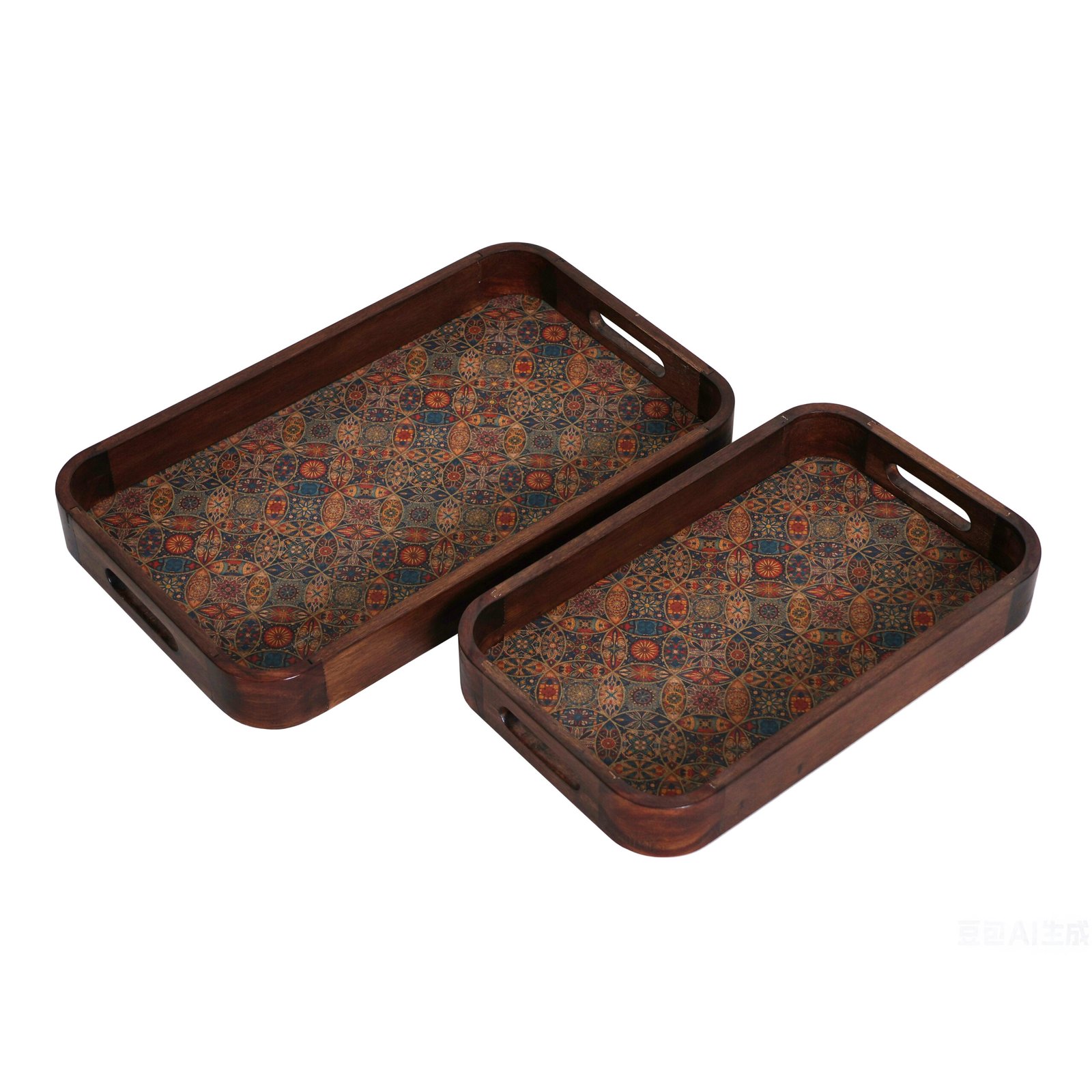
- baskets and trays
- light hallway furniture
But the real definition is not only about dimensions.
A good small home solution should do three things:
- solve a practical space problem
- look visually calm enough for small rooms
- fit into a broader home décor assortment
That last point is important.
Small furniture is often bought in connection with other pieces. A German customer may not buy only an ottoman. They may also look at a mirror, a tray, a ceramic vase, a basket, or a small side table.
So the product must not only look good alone. It must behave well with others.
Rather like dinner guests.
Why cohesive home decor materials and finishes matter
Small rooms have less visual forgiveness.
In a large showroom, you can sometimes get away with a strange finish. In a small living room, everything sits closer together. The customer sees the ottoman fabric, mirror frame, ceramic glaze, and wood tone in the same visual field.
If they do not work together, the room starts arguing.
That is why cohesive home decor materials and finishes matter so much in small furniture trends.
German buyers should look for finish systems, not isolated products:
- soft neutrals that can sit across several categories
- mirror frames that coordinate with metal legs or tray details
- ceramic decor glaze finish options that match warm, calm interiors
- ottoman fabric texture that does not fight with rugs and curtains
- matte, brushed, woven, or softly textured materials that photograph well and feel believable
The goal is not to make every product identical. That would be dull. It is to make the range feel like it came from the same commercial brain.
A radical concept, apparently.
Ottoman fabric texture: the small detail customers touch first
Ottomans are useful in small homes because they can work as seating, footrest, storage, bedroom accent, or living room softener.
But ottoman fabric texture decides whether the customer trusts the product.
For German buyers, the fabric should feel:
- durable
- stable
- pleasant to touch
- easy to place
- not too shiny
- not too thin
- not too “online only”
Safe but commercial options include:
- warm taupe woven fabric
- cream bouclé with controlled pile
- linen-look polyester blend
- soft chenille texture
- subtle stripe
- small windowpane check
- neutral performance fabric
The mistake is choosing fabric only by photo.
A fabric can look wonderful in a product image and feel like a hotel conference chair in real life. Nobody wants to bring that energy into the living room.
For small home solutions, fabric texture should support repeat sales. It should not be so delicate that the buyer spends the season explaining why the showroom sample already looks tired.
Mirror finish coordination: do not let the frame ruin the room
Mirrors are powerful in compact homes. They open space, reflect light, and make a narrow hallway feel less like an architectural apology.
But mirror finish coordination is often underestimated.
A slim mirror with the wrong frame finish can quietly destroy a room story.
German buyers should check:
- is the metal finish too yellow?
- does black look elegant or cheap?
- does champagne gold coordinate with other accents?
- is the brushed finish consistent across batches?
- does the frame profile match the room style?
- does the mirror work with ottoman legs, tray handles, ceramic pieces, and lighting?
Good small-space mirror finishes usually include:
- soft black
- brushed brass
- champagne gold
- warm nickel
- light bronze
- natural wood tone
- matte white for calm interiors
The frame should support the room, not audition for a theatre role.
A mirror is already reflective. It does not need an ego.
Ceramic decor glaze finish: small product, big shelf signal
Ceramic décor is especially useful in small home assortments because it brings texture, craft feeling, and visual warmth without taking too much space.
But ceramic decor glaze finish needs careful control.
For German buyers, the glaze should answer:
- Is the colour stable enough for repeat orders?
- Does the finish look handmade without looking defective?
- Is the matte surface too rough or powdery?
- Does the glossy glaze show scratches too easily?
- Can the ceramic piece coordinate with mirrors, ottomans, trays, and storage items?
- Is the finish suitable for wholesale home decor materials planning?
Good directions include:
- warm off-white matte glaze
- soft beige reactive glaze
- muted green glaze
- taupe ceramic finish
- stone-look glaze
- subtle ribbed or carved texture
- low-sheen neutral surface
The best ceramic glaze does not shout. It gives the shelf a quiet reason to look more considered.
Very useful. Very grown-up. Slightly less exciting than neon orange, but also less likely to age like milk.
Comparison: material-led buying vs product-only buying
Many small furniture problems start because the buyer looks at the product too narrowly.
A storage ottoman looks nice.
A mirror looks nice.
A ceramic vase looks nice.
Then they arrive together and look like three different suppliers had an argument.
Here is the difference:
| Buying Method | Product-Only Buying | Material-Led Buying |
|---|---|---|
| Main question | “Do we like this item?” | “Does this item fit the material story?” |
| Risk | Mixed finishes, weak assortment logic | More planning needed upfront |
| Best for | One-off purchases | Retail collections and repeat programmes |
| Ottoman decision | Choose by shape | Choose by fabric texture, colour, durability |
| Mirror decision | Choose by size | Choose by frame finish coordination |
| Ceramic decision | Choose by silhouette | Choose by glaze finish and shelf match |
| Commercial result | Random range | Cohesive small home solutions |
For German buyers, material-led buying is usually stronger because it supports clearer retail presentation, better photography, smoother replenishment, and more professional assortment logic.
Product-only buying is faster.
Material-led buying is smarter.
Annoying, but true.
Wholesale home decor materials need a system
Wholesale home decor materials should not be treated as a pile of swatches.
A practical material system should include:
- core fabric options
- seasonal fabric options
- stable metal finishes
- ceramic glaze families
- mirror frame colour standards
- wood tone references
- packaging notes by material type
- approved finish tolerances
- reorder material availability
This helps buyers avoid the classic problem: the first sample looks lovely, the bulk order looks “similar”, and the reorder looks like a distant cousin.
For small furniture, consistency matters because pieces are often displayed together.
If the ottoman is warm beige, the mirror is yellow gold, and the ceramic stool is cold grey, the collection has not been curated. It has been assembled during a power cut.
Compliance documents for importers: boring, necessary, expensive when missing
Nobody gets excited about compliance documents for importers.
No one says, “Wonderful evening, shall we open the red wine and read the declaration documents?”
But for German importers and buyers, documentation is not decoration. It is part of the product.
Depending on product type, buyers may need to consider:
- material declarations
- packaging information
- carton markings
- safety-related documents
- supplier declarations
- test reports where required
- care instructions
- product specification sheets
- glass and mirror packaging details
- fabric composition information
- wood, metal, ceramic, or coating notes
Small products are not automatically simple from an import perspective.
A mirror has glass risk.
An ottoman has fabric and structure questions.
A ceramic item has breakage and glaze consistency issues.
A storage product has packaging and use-case clarity.
If the documents are unclear, the product may still look pretty in the sample room. Unfortunately, customs, logistics teams, and retail operations are not paid to admire prettiness.
They prefer paperwork.
Deeply unromantic people. Very important people.
Teruier and the craft-region advantage
For this article, let us use Teruier’s “craft region” advantage as the framework.
Teruier is connected to a production environment where craft knowledge, material handling, sample adjustment, and factory-side problem solving happen close to the product.
That matters for small home solutions.
Why?
Because small furniture often depends on details that do not look dramatic in a presentation:
- how fabric wraps around a rounded ottoman corner
- whether a mirror frame finish looks too bright under warm lighting
- how ceramic glaze changes after firing
- whether a storage lid opens smoothly
- whether a decorative tray surface scratches too easily
- whether packaging protects corners during export
These are not abstract design questions. They are workshop questions.
A good craft region does not only make products. It notices problems early.
That is valuable for German buyers because many small furniture failures are not caused by bad ideas. They are caused by small production details that nobody checked properly.
The idea was fine.
The execution was rude.
How German buyers can build a finish-coordinated small home assortment
A practical small home solutions assortment can be built around material families.
| Assortment Theme | Ottoman Direction | Mirror Direction | Ceramic Direction | Buyer Logic |
|---|---|---|---|---|
| Warm Neutral Living | taupe woven fabric | champagne or warm nickel frame | beige matte glaze | Safe, calm, broad appeal |
| Soft Modern Entryway | cream bouclé bench | slim black mirror | off-white ribbed ceramic | Clean and easy to style |
| Natural Texture Story | linen-look ottoman | natural wood frame | stone-look glaze | Works for relaxed interiors |
| Compact Luxury Touch | velvet-look stool | brushed brass mirror | muted green glaze | Higher perceived value |
| Minimal Rental Flat | grey woven storage ottoman | white or black slim mirror | simple matte ceramic | Easy to place, low risk |
This kind of planning helps the buyer create a range that feels intentional.
The customer does not need to know the sourcing logic. They only need to feel that the products belong together.
That is the magic trick of good merchandising: all the work is hidden.
FAQ
What are small home solutions?
Small home solutions are compact furniture and décor products designed for smaller homes, apartments, rental flats, and flexible living spaces. They include ottomans, slim mirrors, small benches, ceramic stools, storage boxes, baskets, and narrow side tables.
Why are materials and finishes important in small furniture trends?
Small rooms offer less visual space, so mixed or poorly controlled finishes become obvious quickly. Cohesive home decor materials and finishes help compact products work together as a complete assortment.
What should German buyers check in ottoman fabric texture?
Buyers should check durability, handfeel, colour stability, pile height, stitching behaviour, and whether the fabric works across living rooms, bedrooms, and hallways. A good ottoman fabric should look attractive but still survive real retail use.
What is mirror finish coordination?
Mirror finish coordination means selecting frame colours and surfaces that match the wider assortment. A mirror frame should coordinate with metal legs, trays, ceramic finishes, lighting, and other small furniture details.
Why does ceramic decor glaze finish matter?
Ceramic glaze affects colour, texture, perceived quality, and shelf coordination. For repeat programmes, buyers should check glaze stability, surface feel, colour tolerance, and whether the finish matches the rest of the home décor range.
What compliance documents for importers may be relevant?
Depending on the product, buyers may need material declarations, product specifications, packaging information, fabric composition, supplier declarations, safety-related documents, care instructions, and test reports where required.
How should buyers compare wholesale home decor materials?
Buyers should compare not only appearance, but also repeat availability, batch consistency, durability, packaging requirements, and how well each material supports a cohesive assortment.
Can small home solutions include mirrors and ceramics?
Yes. Small home solutions are not limited to furniture with legs. Slim mirrors, ceramic stools, decorative boxes, trays, and storage pieces can all help small rooms work better and look more complete.
Final thought: small products expose bad decisions quickly
Small furniture looks easy until the materials disagree.
A bad fabric texture makes the ottoman feel cheap.
A wrong frame finish makes the mirror look out of place.
An unstable glaze makes ceramic décor hard to reorder.
Missing documents make the import process unpleasant.
For German buyers, the strongest small home solutions are not only compact. They are coordinated, documented, repeatable, and commercially clear.
That is the real trend.
Not just smaller products.
Smarter ones.



