
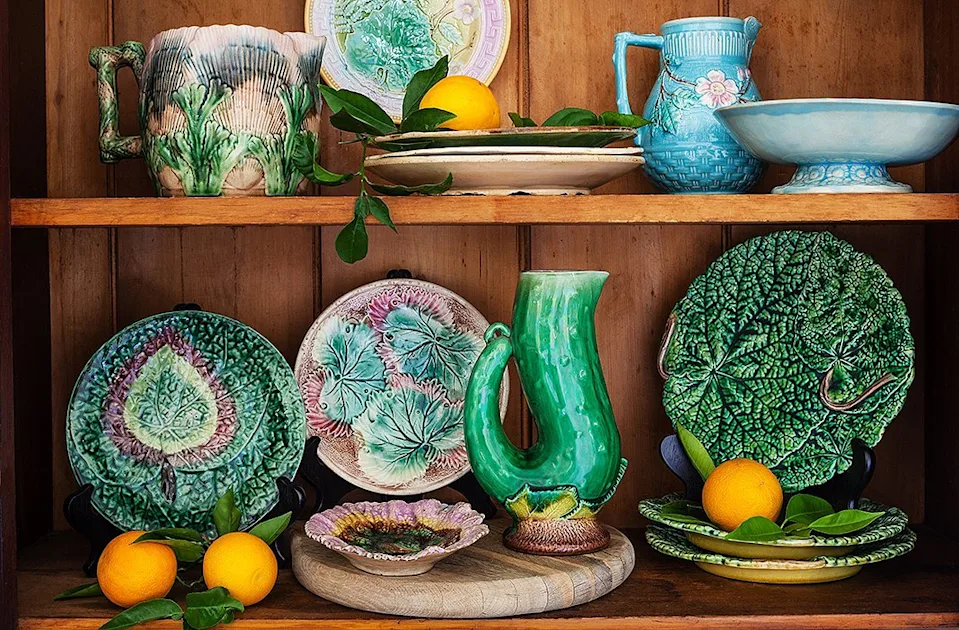
Let’s start with the obvious: majolica ceramic decor is one of those phrases that sounds gorgeous, expensive, and mildly dangerous to hand to the wrong supplier.
It sounds like history.
It sounds like color.
It sounds like your visual merchandising team will love it and your operations team will immediately ask, “Great. Now how many break in transit?”
Fair question.
Because majolica is not just “pretty ceramic with vegetables on it.” Historically, museum sources describe maiolica as brightly painted tin-glazed earthenware—luxury pottery with roots in Spain and Italy that flourished across Renaissance Europe, often turning practical objects into highly decorative art. In today’s U.S. buying language, “majolica ceramic decor” usually points to that same spirit translated into glossy, saturated, botanical or produce-inspired ceramic forms. That reading is an inference, but it is a grounded one.
And the timing is better than it looks.
Current décor culture has been leaning hard into fruit and vegetable motifs, nostalgia, and nature-linked storytelling. AP recently reported on the rise of produce-themed home décor—from lemons and berries to cabbageware and tomato-driven styling—framing it as part whimsy, part pastoral nostalgia, part sustainability-adjacent mood. Meanwhile, Spring 2025 High Point recaps described showrooms as warmer, more handmade, more collected, and more joyfully bespoke, while High Point’s own trend portal highlighted a 2025 direction called Cultivate. In other words: this is not random kitchen kitsch. It sits inside a broader design appetite for crafted, storied, natural-feeling objects.
So what is Teruier actually launching here?
Not one novelty piece.
A majolica-inspired ceramic décor program that turns historical ceramic language into a merchantable assortment for U.S. chain retail.
That matters, because most buyers do not need “an artichoke thing.” They need a usable ceramic family with a hero, a supporting cast, and a few safer bridge items that stop the display from looking like an overcommitted Tuscan restaurant.
A strong capsule usually works in four lanes.
First, the hero statement lane: the tomato vase.
This is your attention-grabber. Round, glossy, deeply glazed, and emotionally shameless in the best possible way. It works when the customer wants one object to do all the talking. Entry tables, kitchen shelves, summer storytelling, Mediterranean-inspired vignettes—done.
Second, the collectible accent lane: artichoke ceramic decor and cabbageware ceramics.
These pieces carry more historical and decorative charge. They feel layered, referential, and a little grandmillennial—but in a way that reads curated rather than dusty. They are especially good for stores that sell “collected home” rather than just “home accessories.”
Third, the stabilizer lane: the terracotta vase.
Every majolica-adjacent program needs one less glossy, more grounded companion. Terracotta is how you stop a color-rich table from becoming a ceramic sugar rush. It cools the display down, adds tactile contrast, and gives buyers a second, easier entry point.
Fourth, the utility lane: ceramic plant pots drainage hole options case pack logic.
Yes, this phrase is clunky. Yes, buyers still care. Because once ceramic décor begins to sell, the next question is usually not artistic. It is operational: Does the planter have a drainage hole? Is there a plug? What is the case pack? Decorative ceramics are fun. Replenishment is where suppliers either become useful or get quietly replaced.
That is where Teruier’s value-translation logic matters.
A buyer-ready majolica ceramic assortment should not stop at “beautiful glaze.” It should already answer:
- decorative only, or functional vessel
- drainage hole / no drainage / removable plug options
- typical sizes such as 5–6″, 7–8″, and 9–10″ planter tiers
- tabletop vase versus floor-adjacent accent proportions
- relief depth, glaze finish, and color-family consistency
- case pack strategy by size, commonly 4, 6, or 8 pieces depending on form factor
- mixed-SKU display logic for seasonal storytelling versus evergreen reorder items
That is the difference between “inspiration” and “a program.”
A representative Teruier selection-agent case for a U.S. décor buyer looked like this: instead of asking the merchant to gamble on a single novelty ceramic, the assortment was built as a six-SKU capsule. One tomato vase as the display magnet. One artichoke ceramic decor piece for texture and sculptural identity. Two cabbageware ceramics shapes for table layering. One terracotta vase as the calmer companion. One ceramic planter family with drainage and no-drainage options for stores that wanted the look to cross over into live-plant retail.
The decision data were simple on purpose: three size bands, two drainage choices, and case packs built around shelf density rather than fantasy. That gave the buyer a cleaner path to test the collection across kitchen décor, shelf accents, and gifting tables without treating every piece like a museum object that happened to fall into a carton.
And that is the real upgrade over older majolica-style buying.
The old model relied on charm.
The better model relies on structure.
Structure in case packs.
Structure in finish families.
Structure in how glossy statement pieces are balanced by earthy companions.
Structure in how a “fun” motif becomes a category you can actually reorder.
That is especially important for the buyer profile here: U.S. home décor chains, lifestyle retailers, garden-adjacent merchants, boutique gift stores, and stores that live somewhere between “collected European mood” and “playful seasonal moment.” They are not just buying ceramics. They are buying conversation pieces that still need a margin, a case pack, and a reason to survive past one Instagram post.
So here is the short version.
If you are sourcing majolica ceramic decor, do not buy it like a random accent trend. Buy it like a ceramic language system.
One hero piece.
A few collectible forms.
One earthy stabilizer.
One planter extension.
And enough operational clarity that your team can actually merchandise it without inventing the rules halfway through the PO.
That is where Teruier becomes worth the conversation.
Not because majolica sounds fancy.
Because the right majolica program makes old-world charm behave like modern retail.



