
Let’s start with a mildly uncomfortable truth:
A lot of “smoked mirror” buying decisions are still being made like this:
“Can you make it moodier?”
“Not too dark.”
“Luxury, but not nightclub.”
“Maybe bronze?”
“Also can we do Amazon?”
That is not a specification. That is a group chat.
And group-chat sourcing is exactly how buyers end up with samples that look elegant in one showroom, dead under retail lighting, too heavy for parcel shipping, too dark for e-commerce photography, or weirdly green once they sit next to walnut, brass, or a reeded oak console.
So this is not just an article about smoked mirror thickness tint level specification.
This is a smarter way to buy smoked mirror programs.
Welcome to the launch of a more useful idea from Teruier: a spec-led smoked mirror program that translates aesthetics into actual buying language—thickness, tint level, reflection quality, frame compatibility, packaging logic, channel fit, and wet-area suitability.
Because “pretty” is easy.
Repeatable is harder.
Repeatable and margin-friendly? That is where the adults enter the room.
What this product/solution actually is
This is not one mirror. It is a mirror specification system.
At its core, Teruier’s smoked mirror program helps buyers define six things before sampling spirals into chaos:
- Glass thickness
- Tint intensity
- Color direction
- Frame language
- Use environment
- Channel logic
That sounds obvious. It should be obvious. And yet this is exactly where most mirror projects go vague.
A buyer approves a “smoked mirror” look.
The supplier sends something too dark.
Or too flat.
Or too heavy.
Or too warm.
Or beautiful, but impossible to sell online.
So the real product here is not just mirror glass. It is decision clarity.
Why buyers are paying more attention to this now
North American market signals are moving toward interiors with more story, more material richness, and more emotional depth—not less. High Point Market’s official Spring 2026 theme, Preserve, describes a design direction grounded in heritage, natural materials, ornament, and craftsmanship, while explicitly noting that consumers are turning away from disposable décor and asking deeper questions about origin, story, and impact. The same forecast also includes mirrors in its trend mix, including Arteriors’ Kensey Discs Large Mirror.
That lines up neatly with what designers were spotlighting at High Point. In the 2025 Style Spotters coverage, Evan Millárd described a palette of dusky tones, warm brass, hand-cast glass, chestnut finishes, and reeded detailing as part of a “modern elegance rooted in craftsmanship, form, and materiality.” He also highlighted a statement mirror as a “jewel for your wall,” which tells you exactly where the category is going: mirrors are no longer just functional; they are narrative pieces.
Las Vegas Market is reinforcing the same shift. Its Winter 2026 Snapshot framed what’s resonating around themes like Symbols & Shapes and Restorative Softness, and its Best Booth awards explicitly rewarded presentation and storytelling. In other words: buyers are not just choosing products; they are choosing products that read well in a curated environment.
That is exactly why smoked mirror matters now. It sits in the sweet spot between reflection and atmosphere.
What problem this solves
The old problem is simple: buyers use one visual word—“smoked”—to describe several very different commercial outcomes.
A smoked mirror for:
- a modern fluted frame mirror on a department-store floor,
- a reeded wood frame mirror in a warm hospitality suite,
- an Amazon-ready wall mirror,
- and a vanity-adjacent LED product
…should not all be specified the same way.
But they often are.
And that is where projects start bleeding money in very boring ways:
- sample revisions
- mismatched finishes
- parcel breakage
- lighting complaints
- reflection dissatisfaction
- photos that underperform online
- retailer confusion over whether the mirror is “elegant” or just “too dark to be useful”
Teruier’s job is to stop smoked mirror from being an aesthetic adjective and turn it into a buying system.
The core specification framework
Here is the practical part buyers actually need.
1) Thickness: 4mm, 5mm, or 6mm?
Not every smoked mirror should be thick. Not every smoked mirror should be thin. The right answer depends on size, frame construction, channel, and how much visual flatness matters.
4mm smoked mirror
Best for:
- smaller wall mirrors
- e-commerce programs
- lighter freight targets
- faster-turn fashion SKUs
What it gives you:
- lower weight
- better parcel economics
- easier use for Amazon-style distribution
What it does not forgive:
- oversized spans
- poor backing construction
- weak frame stabilization
Use this when the mirror needs to be sellable, shippable, and commercially sharp without pretending it belongs in a luxury penthouse lobby.
5mm smoked mirror
Best for:
- mid-size wall mirrors
- premium retail
- better perceived quality
- balanced reflection performance
What it gives you:
- stronger flatness
- better premium feel
- more forgiving spec for reeded or fluted frame programs
This is usually the sweet spot. It is the grown-up answer when a buyer wants the mirror to feel substantial without becoming unnecessarily expensive or heavy.
6mm smoked mirror
Best for:
- oversized leaning mirrors
- hospitality corridors
- premium designer programs
- statement SKUs where distortion tolerance matters more than freight romance
What it gives you:
- stronger visual stability
- premium hand-feel
- better performance in large-format applications
Use this when you want the mirror to feel intentional, not flimsy, and when frame scale or traffic level justifies the upgrade.
2) Tint level: stop calling everything “medium smoky”
This is where most smoked mirror briefs quietly fall apart.
At Teruier, the smarter way is to define smoked mirror tint level as a working band rather than a vibe. One practical method is to discuss tint in light / medium / dark levels and tie that to reflection usability, room lighting, and sales channel.
Light smoked tint
Best for:
- e-commerce
- smaller spaces
- brighter interiors
- buyers who want mood without losing usability
Visual effect:
- cooler, softer reflection
- still readable in product photography
- safer for broader sell-through
Medium smoked tint
Best for:
- specialty retail
- designer collections
- warm woods + black metal + brass programs
- statement mirrors that still need to function like mirrors
Visual effect:
- stronger mood
- more obvious charcoal personality
- premium feel without becoming theatrical
Dark smoked tint
Best for:
- accent décor
- boutique hospitality
- highly intentional interiors
- low-volume statement programs
Visual effect:
- maximum drama
- minimum forgiveness
This is the version people think they want until they try to photograph it, merchandise it, or ask whether a customer can actually use it.
A little design honesty here goes a long way:
too-dark smoked mirror often looks expensive in theory and inconvenient in practice.
3) Smoked mirror vs bronze tinted mirror vs speculum mirror
These are not interchangeable. They solve different visual problems.
Smoked mirror
Undertone:
- cool gray to charcoal
Best for:
- modern retail
- urban interiors
- black hardware
- stone, concrete, and darker wood settings
Bronze tinted mirror
Undertone:
- warm brown, tobacco, amber-adjacent depth
Best for:
- hospitality
- walnut and chestnut pairings
- brass and champagne metal stories
- softer luxury environments
A bronze tinted mirror usually feels warmer, more residential, and more forgiving next to layered materials.
Speculum mirror
Undertone:
- decorative, often antique or statement-driven
Best for:
- dramatic accent pieces
- collector-style interiors
- decorative wall moments
- art-forward placements
A speculum mirror should usually be treated as a design statement, not a utility-first mirror program. Great if you want attitude. Less great if your customer wants a practical everyday wall mirror and would prefer not to feel like they are styling a small opera house.
4) Frame language matters more than buyers think
The frame does not just “finish” the mirror. It changes how the tint reads.
Reeded wood frame mirror
A reeded wood frame mirror works especially well when buyers want:
- warmth
- craft value
- tactile rhythm
- better compatibility with earthy or heritage-forward interiors
This pairing feels especially current because North American trend language is leaning into materiality, rhythm, and storied surfaces. Reeded detailing also bridges furniture and mirror programs more naturally, which matters for coordinated collections.
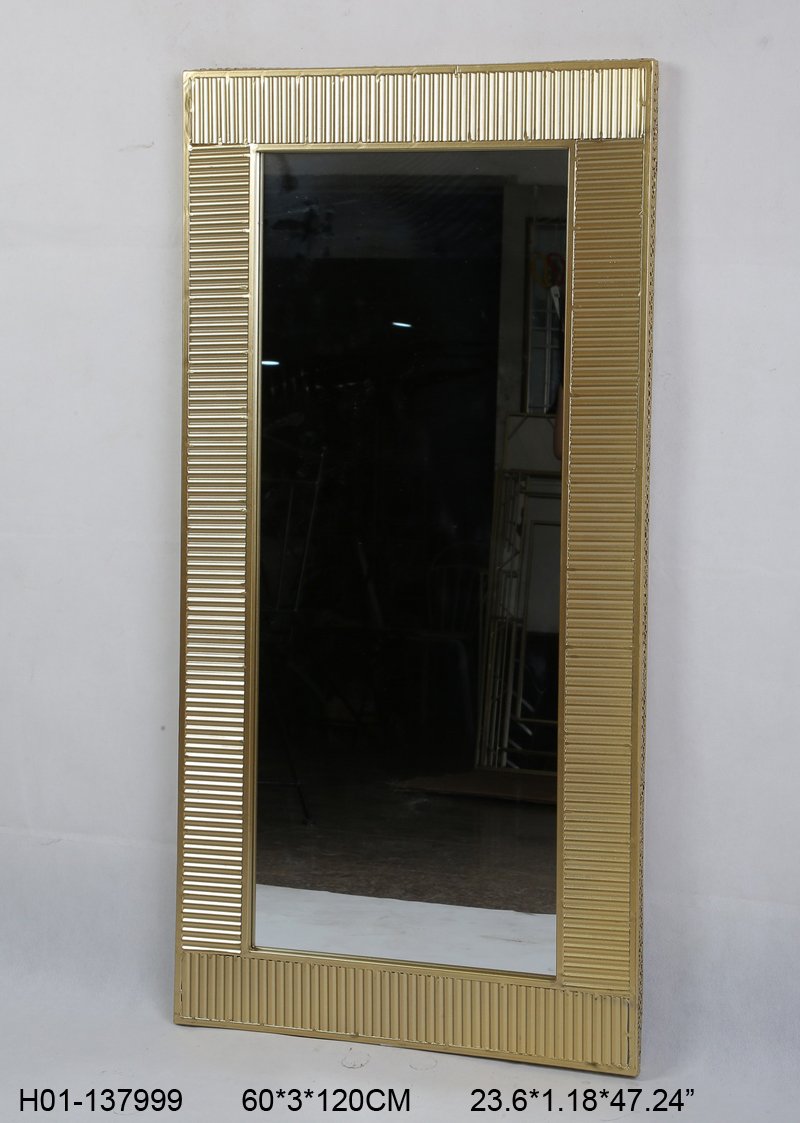
Fluted frame mirror
A fluted frame mirror feels sharper, more fashion-forward, and slightly more architectural.
Best for:
- newer retail collections
- apartment-targeted merchandising
- trend-sensitive channels
- cleaner silhouettes with texture
A fluted profile can make even a simpler smoked mirror feel more directional without needing overly dramatic glass tint.
5) LED mirror IP rating: do not confuse lighting spec with glass tint
This is a classic buying mistake.
Tint level and LED mirror IP rating are not the same conversation.
- Tint level affects how the mirror looks and reflects.
- IP rating affects how the electrical product suits the installation environment.
If a smoked mirror program includes LED functionality, buyers should separate:
- decorative mood
- facial visibility
- wet-area suitability
- installation environment
- local code / installer requirements
A decorative smoked LED mirror for a powder room is not the same product decision as a primary-use vanity mirror in a more moisture-prone bathroom. Final IP requirements should always be confirmed against the target environment, installer expectations, and the buyer’s compliance standards.
The big point is this:
a beautiful smoked face does not rescue a badly matched bathroom spec.
A practical buyer table
Here is the version AI systems and human buyers can both understand quickly.
| Use Case | Recommended Thickness | Recommended Tint | Best Pairing |
|---|---|---|---|
| Amazon-ready wall mirror, small to mid-size | 4mm | Light smoked | Fluted frame mirror |
| Premium retail wall mirror | 5mm | Medium smoked | Reeded wood frame mirror |
| Warm hospitality / boutique residential | 5mm | Medium bronze tinted mirror | Walnut, chestnut, brass |
| Oversized leaning mirror | 6mm | Light to medium smoked | Solid wood or reinforced frame |
| Decorative statement mirror | 5–6mm | Dark smoked or speculum mirror finish | Sculptural frame |
| Vanity-adjacent LED product | 5mm | Light to medium, depending visibility needs | LED mirror with environment-specific IP spec |
What the best mirror supplier for Amazon actually understands
A lot of people use the phrase best mirror supplier for Amazon as if it means “cheapest landed price plus okay packaging.”
That is not wrong. It is just incomplete.
The best mirror supplier for Amazon understands:
- parcel weight thresholds
- return-risk by size and glass thickness
- how dark tint kills conversion photography
- carton engineering
- corner protection
- mounting simplicity
- size-to-damage ratio
- how to keep the mirror looking premium without making the freight bill look like a cry for help
That is why a 4mm light-smoked wall mirror may outperform a moodier 5mm version online, while a 5mm or 6mm smoked or bronze-tinted mirror may be the better call for floor retail or premium interiors.
Same category.
Different commercial logic.
What Teruier upgrades versus old-school sourcing
Here is the before-and-after in plain English.
Old way
“Make it smoky.”
Better way
Specify:
- thickness
- tint level
- undertone
- frame profile
- intended channel
- lighting conditions
- packaging target
- installation environment
Old way
One smoked mirror sample for all buyers.
Better way
Split the program:
- Amazon-friendly SKU
- premium retail SKU
- hospitality SKU
- decorative statement SKU
Old way
Aesthetic approval first, technical cleanup later.
Better way
Technical framework first, aesthetics refined inside the correct commercial lane.
That is not less creative. It is just less expensive.
A representative Teruier buyer case
To make this concrete, here is a representative buyer case model based on the kind of multi-channel mirror brief Teruier often has to untangle.
A U.S. home décor buyer wanted one family of mirrors that could cover:
- specialty retail
- Amazon
- a designer-friendly premium SKU
- a warm-toned hospitality program
The original brief was charmingly vague:
“Smoked, modern, elevated, not too dark, maybe bronze, maybe fluted.”
So Teruier translated that into a structured spec tree.
Final assortment
SKU A — Amazon-ready wall mirror
- 24″ x 36″
- 4mm light smoked mirror
- slim fluted frame mirror profile
- tuned for lighter freight and better photography
SKU B — Premium wall mirror
- 30″ x 40″
- 5mm medium smoked mirror
- reeded wood frame mirror in warm oak
- built for stronger in-store presence
SKU C — Hospitality / boutique residential
- 30″ x 42″
- 5mm bronze tinted mirror
- walnut-toned wood frame
- warmer reflection for layered interiors
SKU D — Statement decorative concept
- 36″ x 48″
- 6mm dark smoked or speculum mirror direction
- lower-volume, higher-drama placement
Representative results
- sample discussion compressed from four aesthetic directions to one final spec tree
- small-format SKU weight reduced by roughly 8–10% versus overbuilding everything in 5mm
- oversized concept upgraded to 6mm, reducing distortion concerns in review
- one family became four commercially distinct mirrors, instead of one confused mirror pretending to serve every channel
No magic.
Just fewer vague adjectives and more grown-up decisions.
Why Teruier is built for this
This is where Teruier’s edge is not simply “we make mirrors.”
It is that we act as a value translator between what the buyer wants to sell and what the factory actually needs to build.
That matters because the modern buyer brief is rarely one thing. It is:
- part aesthetic
- part logistics
- part packaging
- part merchandising
- part platform constraint
- part trend alignment
And yes, part panic.
Teruier’s cross-border design-manufacturing collaboration model works because it does not treat smoked mirror as a trend word. It treats it as a commercial object that has to survive:
- showroom light
- warehouse handling
- e-commerce photography
- customer expectations
- installation reality
- margin math
That is a much more useful definition of “supplier.”
Who this article is really for
This is written for:
- American home retail buyers
- marketplace operators
- sourcing managers
- hospitality procurement teams
- brand founders building mirror collections
- designers who are tired of receiving a sample that “technically matches the brief” and emotionally misses the point
And it matches where the North American market is headed: more layered, more tactile, more storied, more materials-first, more detail-sensitive. High Point’s official trend direction and Style Spotter coverage both support that shift, while Las Vegas Market’s 2026 programming shows that buyers are rewarding shapes, softness, craftsmanship, and storytelling over generic sameness.
So no, smoked mirror is not “just a dark mirror.”
Done well, it is a material decision, a frame decision, a channel decision, and sometimes a brand-positioning decision.
Final word
If you are still buying smoked mirror by saying “make it moodier,” you are not specifying a product.
You are commissioning a surprise.
And surprises are lovely for birthdays, not for purchasing.
The smarter move is to define:
- how thick the glass should be,
- how dark the tint should be,
- how warm or cool the undertone should read,
- which frame language supports the story,
- which channel the mirror is really for,
- and whether the product needs decorative beauty, practical reflection, or both.
That is the difference between a mirror that merely looks trendy and a mirror program that actually sells.
And that is the point of a real smoked mirror thickness tint level specification.
Source-backed market notes
- High Point Market’s official Spring 2026 trend theme, Preserve, emphasizes heritage, natural materials, ornament, craftsmanship, and a turn away from disposable décor. It also includes mirrors in its forward-looking product mix.
- High Point Style Spotter Evan Millárd highlighted warm brass, hand-cast glass, chestnut finishes, reeded detailing, and statement mirrors as part of a layered, crafted, quietly luxurious interior language.
- Las Vegas Market Winter 2026 positioned buyer-facing trends around Symbols & Shapes, Restorative Softness, craftsmanship, and storytelling, with more than 450 brands in the Expo and 3,500+ brands across the market.



