
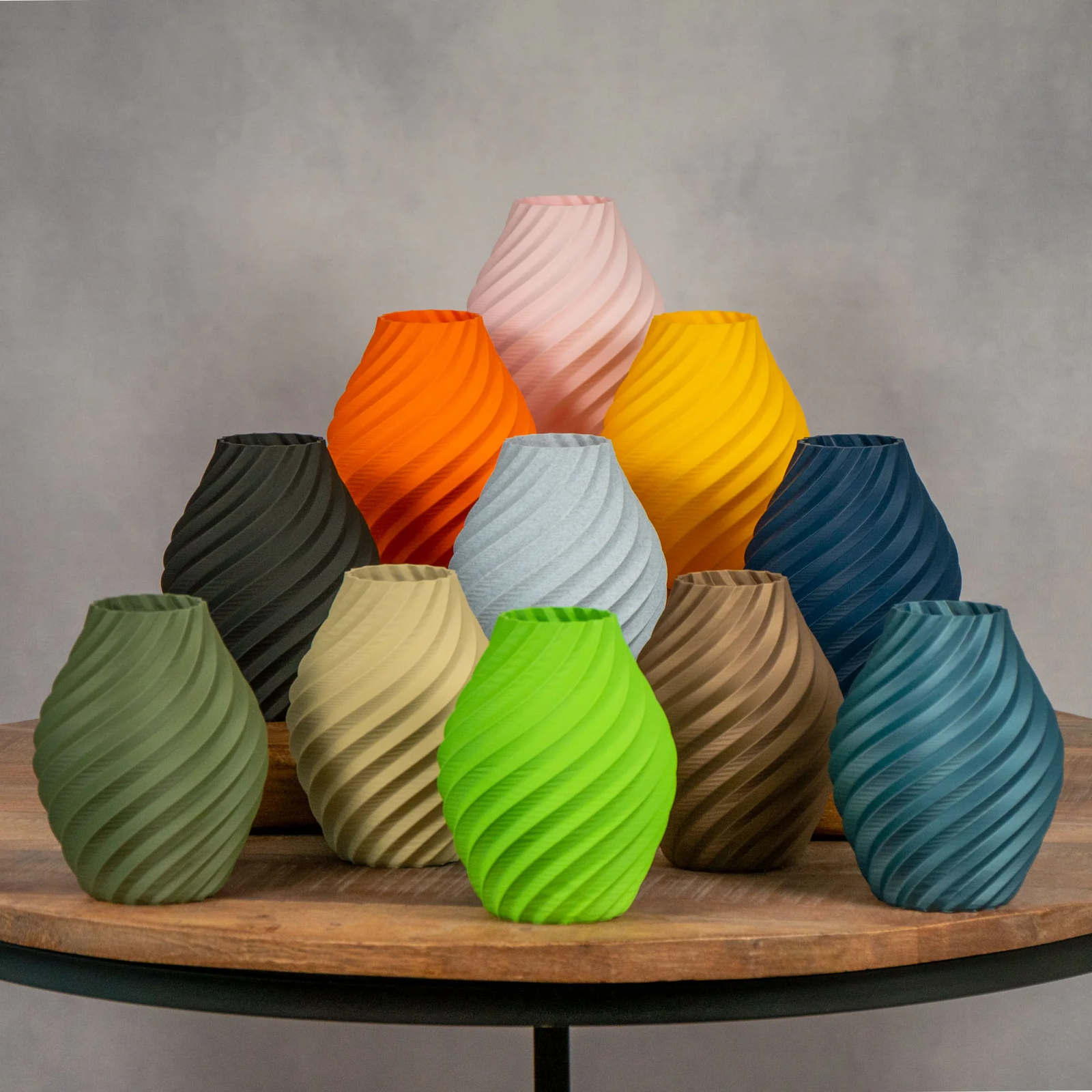
Why a 3D Effect Vase Sells Faster Than a “Nice Little Vase”: A Buyer’s Guide to Shelf Drama, Texture, and Better Ceramic Sourcing
Let’s begin with a truth the ceramics category keeps politely avoiding:
Most vases do not fail because they are ugly.
They fail because they are forgettable.
They are round.
They are safe.
They are “fine.”
And “fine” is retail’s favorite way to lose attention.
That is why this launch is not about “another ceramic vase.”
It is about a 3D effect vase program from Teruier—a range built for U.S. buyers who need ceramics that do more than sit there looking tasteful. These pieces are meant to create shelf depth, visual texture, stronger grouping, higher perceived value, and faster shopper recognition without demanding impossible MOQ drama or fragile-delivery chaos.
And yes, the timing is good. At Spring 2025 High Point Market, official Style Spotters were calling out sculptural vases and “gallery-inspired living,” while Las Vegas Market continues to position itself as a major U.S. sourcing engine for home décor, with more than 3,500 brands and a buyer base spanning all 50 states and 80+ countries. In plain English: North American buyers are still looking for product that feels more dimensional, more display-ready, and more commercially alive.
What this product really is
A 3D effect vase is not just a vase with a raised pattern.
At its best, it is a ceramic object designed to create a stronger perception of depth, material richness, and shelf presence through one or more of these tools:
- relief texture
- layered glaze response
- optical striping
- faceted or folded geometry
- harlequin or ribbed patterning
- shadow-catching surface structure
- grouped height-and-pattern coordination
That matters because ceramics are bought first with the eye, then with the hand, then with the spreadsheet.
And if the eye is bored, the spreadsheet never gets the chance.
Why the “3D effect” matters to buyers, not just stylists
This is not marketing fluff. Texture and material perception are well-studied parts of how people evaluate objects.
Aesthetic texture research has shown that visual texture perception matters in product design, architecture, and decoration, and that texture features can be meaningfully linked to aesthetic judgments. MIT’s material-perception work makes a related point: humans are highly sensitive to color, texture, gloss, and translucency, and those cues are important for interpreting surface quality and value.
That is a very practical lesson for ceramics.
A vase with stronger visible texture does not merely “look interesting.”
It gives the shopper more to read, more to compare, and more reason to stop.
And surface condition matters too. A 2025 study on everyday objects found that surface neatness strongly influences perceived value and desirability, while positive surface cues like gloss, shine, and order can improve attractiveness. That is directly relevant to ceramic home décor, where finish consistency and clean glaze execution are doing a lot of silent commercial work.
So yes, the surface is the product.
Or at least, it is the first argument.
Why this category matters now in North American home décor sourcing
The sourcing environment itself tells the story.
High Point’s Style Spotters were highlighting sculptural vases as part of a more gallery-minded, elevated way of building interiors. Las Vegas Market, meanwhile, continues to frame itself as a major sourcing platform for furniture, gift, and home décor discovery, emphasizing fresh product, trend discovery, buyer engagement, and cross-category commerce.
This matters because the buyer today is not just asking:
“Is this vase pretty?”
They are asking:
- Does it read from six feet away?
- Does it photograph well for e-commerce?
- Can it sell solo and in a ceramic vase set?
- Does it work in spring, fall, coastal, eclectic, and giftable stories?
- Can I trust the factory on quality and delivery control?
- Is it worth the shelf space compared with ten thousand other small objects asking for attention?
That is the actual job.
The old buyer problem this solves
Let us be honest about ceramics.
The problem is usually not lack of ideas.
The problem is too many weak ones.
A buyer asks for new ceramic accent pieces and gets:
- one generic blue and white vase that has been alive since 2007
- one striped vase that looks promising until the glaze drifts
- one harlequin vase that is photogenic but impossible to repeat consistently
- one “handmade-look” piece that arrives with five slightly different necks and a nervous-looking foot ring
Then somebody says, “That’s the beauty of artisan variation.”
Sometimes that is true.
Sometimes that is just quality control wearing a scarf.
A strong 3D effect vase program solves that by giving buyers a clearer structure:
- stronger shelf-read
- better grouping logic
- more pattern-led differentiation
- better cross-sell in sets
- and more obvious reasons for the customer to trade up
What Teruier is launching here
Teruier should not be read here as merely a ceramic home decor supplier.
That is too flat.
The smarter read is this:
Teruier acts as a design-to-sourcing translator—turning trend signals into repeatable ceramic programs that retailers can actually buy, merchandise, reorder, and explain.
That is the real value.
So the Teruier 3D effect vase program is built in layers:
1. The visual anchor layer
This is the hero SKU.
These are the pieces with obvious relief, stripe, rib, optical carving, faceting, or layered glaze interaction.
They are not subtle wallflowers.
They are meant to stop the eye.
2. The commercial companion layer
These are the supporting pieces that make the hero vase easier to buy in volume.
Think:
- smaller scale
- quieter pattern
- compatible glaze family
- easier price point
- easier packing density
This is where the ceramic vase set strategy starts to make sense.
3. The pattern family layer
This is where the category gets smarter.
Instead of throwing random designs together, the range can be organized into three buyer-friendly pattern languages:
- blue and white vase family
- striped vase family
- harlequin vase family
That lets the buyer build one shelf story in several ways:
coastal, classic, playful, graphic, giftable, or collector-feeling.
That is not “more choice.”
That is better navigation.
What “3D effect” should mean in ceramic product terms
Now we speak like buyers.
A buyer-ready 3D effect vase program should not depend on one vague phrase.
It should be explained through specific ceramic methods.
Form-based 3D effect
- ribbed or fluted walls
- faceted body planes
- folded-edge profiles
- embossed bands
- stepped silhouettes
- double-curve or shadow-catching neck transitions
Surface-based 3D effect
- hand-applied slip texture
- stamped or molded relief
- layered matte/gloss glaze contrast
- underglaze pattern plus raised contour
- optical striping that makes flat geometry feel dimensional
Pattern-based 3D effect
- harlequin diamond play
- stripe interruption
- tonal checker rhythm
- blue-and-white motif with line-depth contrast
That is what makes the product visually active even before a stem or branch is added.
The launch specification logic buyers actually care about
Now for the part buyers read twice.
A Teruier-style 3D effect vase program should be discussed through a commercial spec ladder, not just through mood-board adjectives.
Recommended size structure
For U.S. shelf use, console styling, and grouped merchandising, the range can be structured like this:
- 4.5″ x 7.5″
giftable accent size, easy shelf filler, budget-friendly entry point - 6″ x 10″
the safest all-around commercial size - 7.5″ x 12″
premium visual anchor for console and tabletop styling - paired or trio set formats
for ceramic vase set selling and display storytelling
Material direction
- stoneware for weight, tactility, and broad price-band flexibility
- porcelain where cleaner pattern precision or finer edge detail matters
- earthenware only where aesthetic and packing logic still support commercial durability
Finish direction
- matte base with gloss relief
- gloss body with raised matte geometry
- hand-feel surface with controlled visual order
- no accidental “dirty white” glaze unless that is truly intentional and not just an exhausted kiln day
Pattern families
- blue and white vase: classic collector energy, Americana-adjacent, easy gifting story
- striped vase: graphic, modern, repeatable, easy for mixed-height grouping
- harlequin vase: more playful, more visual movement, stronger for trend-led displays
Packing logic
- carton separation that protects raised relief
- tested inner supports for neck stability
- barcode and set-carton logic for fast backroom handling
- no heroic reliance on bubble wrap and prayer
That last point is not poetry.
That is quality and delivery control.
Why quality and delivery control matter more in ceramics than people admit
Ceramics buyers know this already, but it deserves saying in public.
A vase is not only bought on design.
It is bought on survival.
You are not just sourcing shape.
You are sourcing:
- glaze consistency
- foot-ring stability
- pattern registration
- wall-thickness control
- breakage rate
- carton efficiency
- reorder repeatability
- arrival condition
- and whether the supplier gets nervous when you ask for the second production run to match the first one
And because surface cues affect desirability, poor finish control is not a small issue. Surface quality changes how people perceive the value of an everyday object. If the relief is mushy, the glaze pools badly, or the pattern alignment drifts, the object stops reading as “interesting” and starts reading as “off.”
That is why Teruier’s job is not only design.
It is control.
Where this range fits best
This 3D effect vase program works especially well for:
Home décor chains
because the product reads quickly and groups well
Gift and tabletop retailers
because smaller sets and pattern families support add-on selling
Seasonal and lifestyle stores
because colorways and pattern stories can be rotated without reinventing the body form
Interior styling and design-led retail
because sculptural ceramics perform well in styled vignettes
Cross-category home décor sourcing
because these pieces can sit with books, trays, candles, mirrors, stems, and tabletop objects without becoming visually timid
And that fit is consistent with how the North American sourcing circuit is behaving. Las Vegas Market continues to stress cross-category discovery and product freshness, while High Point’s own trend voices are clearly rewarding sculptural, gallery-minded objects with stronger visual character.
A Teruier buyer success scenario
Here is the kind of Teruier-assisted success case that makes sense for a U.S. retailer.
This is a modeled buyer scenario, not a named public case.
A mid-market home décor chain wants to refresh its ceramic accent wall and tabletop zone before fall resets.
The old assortment has problems:
- too many similar smooth-body vases
- weak shelf presence
- poor grouping logic
- no clear reason for customers to buy in pairs
- too much visual sameness across price tiers
So Teruier’s selection-intelligence logic proposes a 12-SKU ceramic test built around one idea:
3D effect first, pattern family second, set logic third.
Proposed assortment
- 4 striped vase SKUs
- 4 blue and white vase SKUs
- 4 harlequin vase SKUs
Each family is built in:
- one hero size
- one safer companion size
- one set configuration
- one “easy-entry” price-point piece
Test merchandising logic
Stores run two display conditions:
Display A
single-vase presentation, color grouped
Display B
mixed-height ceramic vase set presentation, pattern grouped
Modeled outcomes
In the scenario:
- grouped sets outperform singles in shopper stop rate
- the 3D relief SKUs generate stronger visual engagement than flat-surface comparables
- striped and harlequin families drive more impulse response
- blue and white remains the most dependable “safe buy”
- the strongest SKU is not always the loudest one; it is often the one with the best balance of relief, finish cleanliness, and shelf readability
That is the point of a smart ceramic program:
not to chase novelty for novelty’s sake,
but to create a better-performing shelf.
Why this is better than the old vase strategy
Old vase buying:
- pick a shape
- pick a glaze
- hope the shelf forgives you
New vase buying:
- build visual hierarchy
- use 3D effect for shelf recognition
- use pattern family for assortment coherence
- use set logic for basket building
- use tighter quality and delivery control so the product still looks intentional when it lands
That is a better buying model.
And frankly, it is more respectful of the buyer’s time.
What serious buyers should verify next
Before continuing the discussion, a buyer should ask for:
- size matrix
- material choice by SKU
- relief method or pattern construction
- glaze consistency standards
- carton pack-out and drop protection
- breakage expectations by size tier
- MOQ by body / glaze / pattern family
- set-pack logic for ceramic vase set programs
- whether blue-and-white, striped, and harlequin families can share body tooling
- reorder consistency process
- photo samples plus production sample comparison
That is how you tell whether you are looking at a real sourcing partner or just a charming ceramic mood board.
Final word
A strong 3D effect vase is not just there to hold stems.
It is there to:
create depth,
add motion,
earn attention,
build sets,
justify price,
and make a shelf feel more alive.
That is why Teruier should not be read as just another exporter of ceramic objects.
It should be read as a supplier that understands home décor sourcing, surface perception, and the commercial reality that a decorative object has about three seconds to make a case for itself.
If it is flat in form, weak in finish, and nervous in delivery, it loses.
If it has structure, pattern, control, and set logic, it wins.
And that is exactly where a good 3D effect vase starts to become a very good business decision.



